
Translated material
The British Foreign Ministry criticized the NPO Law
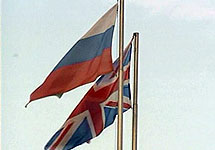
The British Foreign Ministry criticized the new law on the activities of non -profit organizations in Russia. According to RIA Novosti, according to the department, the law will sow distinance in society and create unnecessary obstacles to the activities of civil society.
"Many Russian NPOs receive foreign support for their important activities in the field of protecting human rights, the rule of law and the fight against corruption. They make an invaluable contribution to the defense of democratic values and the creation of a sustainable civil society in Russia," the Foreign office said in a statement. According to the British Foreign Ministry, the creation of additional aggravating requirements for a number of NGOs and the application of a "knowingly sowing" label "can be considered only as a negative consequences for the free functioning of civil society."
On the eve of the concern of the human rights situation in Russia was expressed by the Council of the European Union and the US State Department. “We are not shy about saying that trends in the field of democracy in Russia are causing concern in us, we regularly raise this problem at meetings with Russians at all levels,” said the representative of the US State Department Victoria Nuland.
“We are concerned about the law on civil society in Russia, signed last weekend. This law lies a difficult burden of demands on human rights defenders, for groups opposing corruption, in defense of democracy, which are mistakenly called foreign agents only because they are funded from abroad,” she emphasized.
According to Nuland, "this law is aimed at intimidating those activists and organizations of civil society that Russia is most necessary for the construction of a modern democratic society, free from corruption based on the law of the law, and in which human rights are respected." According to Nuland, the United States "will carefully monitor how the law will be fulfilled."
On July 21, President Vladimir Putin signed the Federal Law "On Amending Certain Legislative Acts of the Russian Federation in terms of regulating the activities of non -profit organizations performing the functions of a foreign agent." The State Duma adopted the law on July 13 in the second and third readings. 374 deputies voted for the adoption of the document, three voted against, one refrained. Later, the Federation Council approved the law.
According to the law, any Russian non -profit organization that meets two signs - financing from abroad and political activity - must be mandatory in the register of non -profit organizations performing the functions of a foreign agent. These NPOs will be included in a special register, and for them a different legal regime will act than for ordinary NPOs - providing, in particular, special reporting and special checks. A foreign source in the document refers to all the money that goes from abroad - from governments, states, international and other organizations, as well as from civilian, legal entities and stateless persons.
In the final version of the law, Putin's proposals were taken into account. Thus, religious organizations, state corporations and state-owned companies, as well as the NGOs created by them, are derived from the action of the adopted law. Also, state, municipal and budgetary institutions will not fall under the law.