Translated material
Boris Akunin: It was something amazing
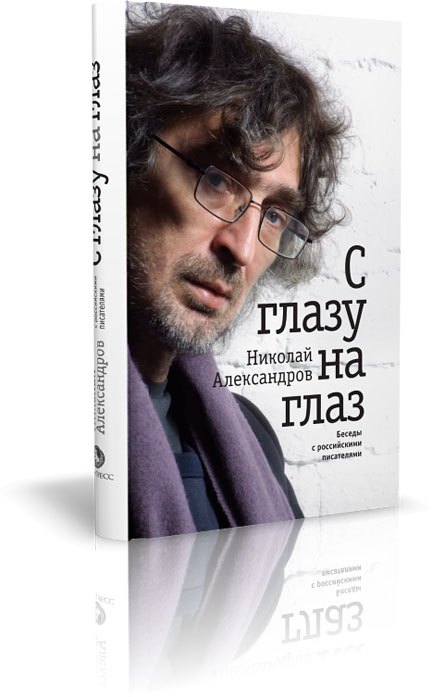
In the publishing house O.G.I. The book of the literary critic Nikolai Aleksandrov “Family on the face. Conversations with Russian writers” (Moscow, B.S.G. - O.G.I., 2012).
Nikolai Aleksandrov (b. 1961)-literary critic and critic, radio and TV presenter, author of the collection of literary and historical essays “The Silles of the Pushkin era” (1999), books of conversations with foreign writers “Tet-A-Tet” (2010), co-author (along with Anton Nut) of the book “Radio Personents” (2010).
A few years ago, the Culture TV channel presented the author’s programs of Nikolai Alexandrov from the New Anthology cycle, made based on the materials of conversations about life, creativity and time with famous Russian writers. However, the hard television format did not allow representing substantial dialogs in their entirety.
The book fully included 15 conversations with modern domestic authors, whose names and works are well known to readers. We publish a fragment of a conversation with the Russian writer Boris Akunin (Grigory Chkhartishvili).
Shortly before the filming of the film, I met with Boris Akunin, I interviewed him for Snob magazine. More precisely, at first there was a correspondence by mail, then a meeting, after which I specified some questions again in letters. As a result, a rather curious body of the texts developed. The publication in Snob never appeared. There was a temptation in the book to include this material, but the temptation was safely overcome.
Let's start with what. Where did Japan come from and when?
Since childhood, since childhood, I believe, that is, I do not believe, but I even remember. I read one book, at the right age, when some interests are determined, which then last long. I would not have taken up this book now, most likely, it would not make any impression on me. But then some correct code words in it were placed. It was a book about the life of the actors of the Kabuki Theater, everything was so wonderful there, it made the impression of such a secret, such a beautiful secret that since then I began to be interested in Japan. Then, due to a random combination of circumstances, in our geography lessons, countries were shared between students and I got Tunisia and Japan. It was necessary to collect newspaper clippings and periodically make reports. There was never anything in Tunisia, there was nothing there, but in Japan it happened. And just at this time, by the way, Yukio Misima committed Harakiri, this famous story was. I remember a large article in the newspaper "abroad" entitled "Heirs of Samurai." It was something impressive, amazing. For the writer to take and cut his stomach! I saw once a member of the Union of Writers, he came to our school. Some kind of children's writer, I do not remember his last name, it was not comparable to imagine that he arranged something like that. I think that since then this coding has happened.
And the school was an English special school, as I understand it? Or not?
Yes, I studied then at a good Moscow, non -central school, which gave such a standard, good Soviet education. The English language, by the way, was taught well there.
The admission to the Institute of Asia and Africa countries was associated with some special circumstances, or did it all happen quite calmly?
This happened quite strangely, because in those days this institution was very, very thieves, it was very difficult to get there without a paw. The main Rubilovo was at the level of the interview, because a small number of people were allowed to the exam, in general, everyone who needs to be cut at an interview. And I also applied to the Japanese language. Everyone served in Japanese, everything. And in our group, in my opinion, 7 people accepted. In general, all this was very strange, the fact that I acted was that I got into the Japanese language. The only explanation I have this: in the 10th grade I went to the so-called school of the young orientalist at the institute, and the two best or one better, I don’t remember now, the graduate of this school was given such a special diploma, and I had it. This is the only explanation. And he was, because I was interested in Japan, everything was interesting to me.
Did the Japanese language even before the Institute of Asian and Africa? Or is it at the institute?
No, I did not know a word, not a single hieroglyph. I remember very well the first teacher, he was absolutely wonderful, he was an absolute Japanese and spoke in Russian with an accent, and his name was Vladimir Alexandrovich Yanushevsky. He was from the repatriates and, apparently, so to speak, the son of some white Russian who married a Japanese man, most likely, I do not know for sure. No, it all started from scratch.
And how strong did the internship make? I understand that after the institute you went to Japan?
I went to Japan not after the institute, but at the institute. We were very lucky because Moscow University concluded an agreement on the exchange of students with one private Japanese university at that time, led by such a colorful, very rich Japanese grandfather, who, I don’t remember why, loved Russia and the Soviet Union very much. And there was an exchange of these students. It was at that time, in the late 70s, incredible luck. And when I first got to Japan (I first got abroad at all), I had the feeling that I got from black and white cinema to color. The first day, it was just painful to look at all these colors. And then, when a year later I returned to my country, I saw it with different eyes, I had the feeling that I was in the film “My Friend Ivan Lapshin”. The predominance of gray, brown color, exclusively gloomy, locked inside yourself, ready at any second for the rest, that is, what you grew up, which you perceived naturally, you suddenly saw with other eyes, from the outside.
And how was Japanese culture perceived, after all, you still looked through the eyes of a European?
By that time, I no longer perceived Japanese culture as exotic. Still, I was engaged in Japan for 4 years, and I already knew a lot about Japan, and it was about culture, and it was theoretically, it was clear to me a lot. And I had no such shock from contact with a different culture, very different from ours. Surprise was a completely children-grip; It’s somehow strange: you look, and all around the Japanese, something like that, as far as I remember. And the rest was everything to me, well, not everything, but much, it was clear. Japan in general for me still ceased to be an exotic country. I love this country, I treat it very well, but it is just a country for me, people like people are good, bad, all kinds.
Typically, the general places for comparison of the East with the West, Western European culture and Japanese seem far -fetched ...
No. They are not far -fetched. And there are very important, essential differences in relation to life. And for me, I think it was useful at this age, when a person is being formed, to face this other look. These are not empty words, these are not abstractions when they say that the Western culture, which, of course, also belongs to ours, this culture in which the key word “why”. But the Far Eastern culture, there is the main word "how". And this is fundamentally, and really important. In addition, I was then struck by some completely different attitude to life and to death.
One of the first days when we arrived at this hefty university campus, there some girl student committed suicide and left a note. The usual story, she was in love with some boy, he did not look at her. The note wrote: "Nothing, in the next life we will connect with him." And for the Japanese who surrounded me, this is “in the next life” is not an abstract sound. It cannot be said that the Japanese were religious Buddhists, but there is no awareness of a returning, reviving life, however, it is spilled in the air and consciousness.
Another story was later when I read the works of the Japanese third -graders on the topic: "Who I want to become." Nine or ten-year-old children. Ordinary children's works who want to become a movie star, who want to become I do not know who, but each of them ended in a description of their own death, which is completely unimaginably with us. I will live for 18 years, because it makes no sense to live further, we can read it with us too. At 18, I will commit suicide. Another thing: I will live for 88 years, I will survive everyone, and I will have great great ones, and I will die quietly and in a dream. Each essay ended with this. This is a different, fundamentally different attitude, sky -free, by the end of my life, it was also important and significantly for me.
Then was the plan formed, which was embodied in the book “Writer and Suicide”?
No. What kind of plan, I was very young, stupid, and I was not interested in any books, I was interested in completely different things, which at this age probably should interest me. No, I came up with the book “Writer and Suicide” and began to write when I was forty years old. I would not have succeeded before, and not the fact that this book turned out to be what it should be. Maybe it was still necessary to wait ten years.
The motive of suicide one way or another passes through your whole life, starting with Yukio Mishima, and as I understand it, it is no coincidence that you started translating it?
The suicide motive is not a very correct formulation. The point is not suicide, but the fact is that our life is worth living to the end, despite all the arrows of a fierce fate. I, in fact, when we took Hamlet in the 8th grade in literature and had to learn this monologue by heart, then I first drew attention to this problem. This problem does not lose relevance until we live.
The seventies are such a flowering of stagnation, the color of Sovietness in everything. Staying abroad somehow influenced you, or was it already quite a definite attitude to what was happening?
Well, firstly, I studied at such a half-mode institute, half of the graduates of which went to serve in all kinds of organs with epaulets, so this was one of the living conditions for me-all these Komsomol meetings, at which everyone was sitting and missing, public work, trawls, fifth to twenties. And when there is nothing to compare with, you live in this coordinate system. And I was a quite ordinary Soviet young man who was going to make a Soviet career. What was the top of the Soviet career then? - to go to foreign labor, to receive Finnish sausage in the order, a Zhiguli car of a prestigious model without a queue. Then I went to Japan and saw how people who have achieved this happiness live there: the employees of our embassy, ITAR -TASS. I was horrified from this, because they lived in a concrete ghetto, looked around, cherished every penny, fed all kinds of rubbish, in order to accumulate more of these checks, certificates, and I thought that no, I definitely don’t need such happiness. So I am grateful to the internship of therefore. She freed me from the model of well -being imposed on me from the side.
To go to work in a publishing house, a corrector is simply completely unimaginable for a graduate of Isaa.
For a graduate of the Institute of Asian and Africa, this was incredible, in Russian, downshifting. But it was actually a wonderful place of work, completely magical. Because there were two present days a week, and I was an absolutely free person. I never went to work every day in my life and did not sit there from nine to six. I could do what I want, another thing is that I did not do anything smart in those years, but at least I did not do anything that I would not want to do.
You began to deal with translations of fiction at the same time?
No. For several years of independent adult life, this is just a fel for a fool, absolute. It’s even strange for me to remember how I was sloppy in those years. But this was generally a time when it seemed that there would be no tomorrow. That we live in a country that is surrounded by a stone wall from all sides, an iron curtain, and soon the rest of the world will forget about us, we will just sit here and rot further. There was an increase in events: the introduction of troops into Afghanistan, the boycott of the Olympics, Poland and "Solidarity", the Korean liner.
The old leaders who died one by one became older and worse, Reagan, the "Empire of Evil." I and everyone who I knew had a complete feeling that we were all here and nothing would never again. Therefore, there were no special incentives to make some long plans, it was a very strange time.
Did your coming to the publishing house be perplexed by those people who in any case oversaw you at the end of the institute? During distribution?
I had only one task during the distribution: it was necessary not to get into any license plate. And therefore, when I saw the “distribution of free, publisher,” I was not going to go there, actually I was called to graduate school-I signed this distribution to the publishing house. Then the Vice-Rector Gabesh, when I said: you know, I would still like to go to graduate school, he said: I signed it, here go there and work. I went there to work because I had no choice, and I remained, in general, as a result, I think, in a win.
It turns out that almost the same spontaneously appeared a little later and the magazine "Foreign Literature"?
Much later. The magazine "Foreign Literature" just appeared as a result of the fact that I began to engage in artistic translation just for myself. I liked the process itself, he fascinated me. At first I did very badly, I did not even show it to anyone. I was infuriated that I was reading a foreign text, I like it, and when I try to convey this beauty, this energy charge is in Russian on paper, some blots are obtained, everything is spreading. And I remember, I chased the same page on my little print machine, chased, just because I had nothing to take myself. It was a kind of meaningless activity. And, in the end, I translated something to the end, it was printed in the magazine, and I was invited to work in the magazine. It was already 86 years old, that is, some movements of the atmosphere began.
Although the magazine "Foreign Literature" was then a completely regime enterprise, they nevertheless took me there. This, of course, was great happiness, a wonderful place, a wonderful job. Before that, I mainly earned a living by a technical translation from the Japanese language. I stuffed my hand, I earned very well. I translated very quickly and very well, not understanding absolutely what "orientation of a satellite on three axes in the airless space." It’s like algebra - it doesn’t matter what a , b , c , the main thing - put everything in its place.
Was the art translations too from Japanese?
From Japanese and from English. But there were many English translators , including a lot of good ones. And with Japanese it was easier. I liked to translate from Japanese, the translation from English seemed too easy for me. It was difficult for me to translate Misima, he is an incredibly difficult writer for translation. Not in a grammatical sense and not because he writes is difficult - although he writes difficultly - but because it is very easy to lose magic, but it is certainly there. And in order to reveal the secret of this magic, you have to twist for a very long time and twirl this very cube of Rubik so that every color rises into place. This activity is wonderful, it occupied me for a very long time, twenty years old. I was engaged in artistic translation, in general, with great pleasure.
If we talk about personal and family. In Western and Eastern culture, in the Japanese in particular, are there any ways to come up with ideas about the family?
I don’t know, I do not presume to judge. The Japanese family is no longer the same as it was traditional. Everything changes. But she, of course, is very different from our family. Firstly, the solid distribution of duties between a man and a woman is still maintained to a large extent. A man earns money, a woman spends it. He is responsible for the first - how much he earned, he earned so much - she is responsible for the family to have this money. Japanese women, as is often the case in traditional, patriarchal societies and in many eastern societies in general, is much older and stronger than men, as it seems to me. Just because they have more responsibility, they have more excerpts and, in general, a Japanese girl was traditionally brought up in the mind that sacrifice is good.
From this, it seems to me, the Japanese wife in a real family is not very happy, but it is on her that the family holds on. However, the family always holds on a woman.
Quite often they say that the Soviet era of the 70-80s brought up infantility in people.
Are we talking about the Soviet Union now? I did not have the feeling that we, the people of my generation, are infantile, rather the opposite. The current young people are infantile, and we are growing up, as it seems to me, much faster. For a very simple reason: the Soviet Union was a dysfunctional society, as it were, in an ethical sense. You at a very early age came across the fact that they lie around all the time.
And in order to live normally in this society, to fit into it, it was also necessary to learn how to lie, pretend. This quickly develops the habit of double thinking, double standards. In an ethical sense - bad, and in the sense of intellectual - very good. This develops resourcefulness, develops several internal protection systems in you, you put, you learn to put these blocks at an early age. The current young man, I have such a feeling, up to thirty years old remains a child, he still chooses the path in life: he tried, he tried it. We, my peers, for the most part lived differently: at 22 you are graduating from the institute-and that’s all, you go into a big life.
If you turn to Soviet experience again. It is understood that the whole generation has grown, on the one hand, in the AT Mosphere of Lies, which in childhood was perceived as a saint of course, on the other hand, in an atmosphere of silence, even often frightened silence in the family. Have you had such an experience?
No. I think this is the experience of earlier generations. In my time , there was no house and silence at home, they talked about anything in the kitchen with guests. Another thing is that my parents, I think, is generally typical of that generation, for that environment - they were all bruised by the XX Congress. This means that they lived in captivity of the concept of bad Stalin and good Lenin. The fact that we all survived later at the beginning of perestroika. Relatively speaking, this very Shatrov period. If Lenin remained, how wonderful everything would be, differently. I grew up in this atmosphere. Of course, they read Solzhenitsyn at home, listened to “Freedom” and “BBC”, but it was perceived something like this: “If the truth is, well, at least a third,” is something like that.
Was there a gap in generations of parents, fathers and grandfathers?
Oh, yes, of course. My grandmother was an old Bolshevik, with the real one. A participant in the Civil War, in her hand, she let me feel, sat a fragment from a white -precious shell. And she was absolutely like that - “Our steam locomotive flies forward” and all that so. She was already old, sat by the TV, dozing, but as soon as some revolutionary song sounded, she immediately shook her head like a war horse, and began to sing along: “Stopping in the commune,” and all that was so.
Did she tell anything? Did the Stalinist time somehow influenced her ?
The affected, of course. She talked a lot about the Civil War, because she had seen a lot of terrible there. I still grew up under these terrible stories about captured and executed hostages, which were perceived by me as something normal. The civil war, apparently, should be waged. And, of course, these stories are about the 30s, who was tapping whom to whom, who did not tapp up anyone. No, this is amazing, our country, in general, in a short historical period gave several completely different types of human life and human behavior, which is considered correct. I believe that in general people of my age were very lucky. I mean compatriots. Because, it seems to me, the interest and value of human life largely depends on how many lives you lived in your interval. If you were born in Sweden, then you will live until 95 years old until you die from Alzheimer. You will live one life in one reality. I have already lived four or five lives in my life and managed to live in several countries. Very interesting.
This is a grandmother from the maternal side, as I understand it. As far as I know, she studied at the Aviation Acadom Acada?
Yes, she was one of the few women who, in the 30s, graduated from the Zhukovsky Air Force Academy, and was very proud of this all her life. And her subsequent troubles were due to the fact that her boss, patron, head of the Academy of Todorsky (was such a general, but then he was not a general), he was her commander during the civil war and then pulled into the academy. Todorsky was naturally repressed, and after that she had all sorts of troubles, but, thank God, she was not arrested.
Did your grandmother and grandfather also met during the civil war?
Yes, yes. Grandpa was also from the Bolsheviks. He was Sol of the Dates of the First World War, the chairman of the regimental committee, then the Chekist. As my mother says, the kindest soul is a person in a family. But this should not surprise us, we know many such examples. I did not find him, my grandmother divorced him, in my opinion on the basis of Trotskyism, back in the 1920s.
And from your point of view, which gave this generation the opportunity to remain true to those ideas that were perceived in a completely different way?
Well, firstly, the developed protective mechanism. Secondly, I think that it is very difficult for each person to abandon his life and admit that he lived it incorrectly. A person drives these doubts from himself. In any case, this requires some incredible courage in order to suddenly admit that everything he lived for and for what he fought was wrong. There are units of such people.
But it was a completely different temperament, as I understand it, comparable with some even religious experience.
You know, I am not inclined to sacralize it. It was still a significant degree - for these people, especially those who have broken out of the bottom, a success story. My grandmother was very fond of remembering her orphan, poor childhood and what she achieved in her life, what orders she has, what medals she has, that she is a member of that, fifth, tenth. And, in fact, I am not even inclined to relate to this with condemnation or ironically, because still tsarist Russia was a country where 90% of the population had no chance in life, completely. And therefore, those of them, who, as a result of the revolution, managed to advance on the social ladder, if they were expressed in such a vulgar language, they had the reason to be grateful to the Soviet regime.
How was the Russian literary classic mastered?
Firstly, I am the son of a teacher of the Russian language and literature. The whole house was littered with books or sprinkled, as was then usual, pages from thick literary magazines, from which everything ideological, otherwise the slightly valuable that was there was carefully preserved. We read at home all the time. Secondly, it is very important for the child, I think that books were hidden from me. There is no stronger incentive to make the child read. For example, I remember very well how my mother forced me to read the novel “War and Peace” when I was eleven years old, or something. She said to me: you see this four -volume, so that I don’t see him in your hands, you are still small, you won’t understand anything, do not touch him. Naturally, when she was not at home, instead of doing some important interesting things, to play soldiers like an idiot, I took it, read and waited for anything that there would be something that could attract my attention.
I also read a huge number of books. It may be too early, but not really early. I read the Masters and Margarita when I was 10 years old. I did not understand anything, but I felt something. Children have a very developed sensitivity. If they don’t understand something, they feel that there is something, something attractive, something charismatic.
That is, an unsystematic reading?
Absolutely unsystematic, I read everything in a row. I was a boy who is sorry to part with reading. I developed my own invention a walking system through the streets with a book in my hand, because I was sorry to just walk along the street, and I walked along the street, reading on the go. And he walked very quickly and never came across anyone. I, like a bat, worked out some sensors, so I read all the time. I signed up in the library, read everything that interested me. I was mostly interested in historical novels. Then he recorded in another.
In other words, the whole classic was mastered at school?
Not without gaps, of course, but yes. Actually, 99% of what I know about life now is subtracted by me in books.
And this literary idea of Russia, Russian culture, was adjusted to the historical one?
Yes, sure. And in different periods of my life I was different to Russian literature and Russian history. And moreover, now I have some internal changes. Now it seems to me that Russia, as a country, has formed only with the advent of great literature and that the forming element is Pushkin, before Russia, in general, did not exist. Just as did not exist to England before Shakespeare, or Germany to Goethe, or Italy to Dante. There should be such a figure, and it must be, as it seems to me, literary, writing. Everything is connected with the language and the form of verbal expression.
In general, the best that Russia has done for the world is the literature it created, the great literature of the XIX, and partly the twentieth century. This, of course, is our most important contribution. So, you have to hold on to this.
Is it possible to restore or repeat the golden age of culture?
The golden age is over, the silver age ended, it can, there will be platinum or diamond. What is in this soil will not go anywhere, this is not necessary to refuse, this should not be forgotten. There will simply be the next cultural layer. I still believe that Russia remains a literary-centric country and that there is still literature, a written word, text mean more in the cultural and psychological sense than in other countries. France is also such a literary, for example.
If you turn to Erast Fandorin - about the childhood of Fandorin, about how he was brought up, practically nothing is known.
About the childhood of Erast Fandorin is a little in the first book - the novel "Azazel". We get some information about his father there, we know that he grew up without a mother, we know that the Englishwoman raised him. We know that he studied at the gymnasium. But this genre does not imply, in my opinion, deepening into the past and lyrical digressions, because the pace is lost from this. Azazel is a starting novel, he is all jumping like a grasshopper, and I, when I had to turn aside, did not find a place for this. This violates the drawing. The structure of the novel is organized on the principle of whirlpool, which begins to move along the edge at first slowly, by the end of the funnel faster, faster, so that it is impossible to stop. And all, there is very little space for maneuver.
In other words, is this a kind of reference to some literary images and samples?
Yes, when I began to think through the rules of this series about the era of one hundred fandorin, I decided that I would use this technique. Since it is clear - in any case, it was clear to me then - that I address the reader a well -read, possessing about the same baggage as me. He can indicate several strokes, and he immediately recognizes this character, I can not waste time describing his story. He immediately sprinkled something, he identified him, and this, in turn, will give me a very productive opportunity to deceive the reader's expectations. Because he already knows that this character will behave like that and so, but in fact-figures. Then I will take and turn this character into something else. This literary and illusive game is also very important in the plot sense. This is not just a game with the reader in erudition, the reader all the time in this genre needs to keep this very fishing line stretched on this very spinning. Otherwise, he will break and leave.
The end of the interview is in the book of N. Aleksandrov "In the eye of the eye. Conversations with Russian writers."