
Translated material
Power: From stability to disaster
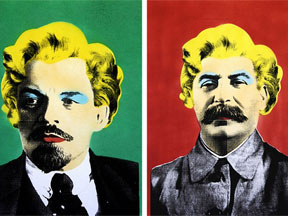
Political scientists are confident that with the help of the latest legislative initiatives regarding the media, NPOs, rallies and the return of criminal prosecution for slander, the power frightened by Bolotnaya is trying to find for itself the very stability that everyone promised in the elections. The results of this search can be either a la Stalinsky autocracy or a disaster.
The latest legislative initiatives regarding the tightening of punishments for violations during rallies, changes in the laws of the media, NPOs and the return of criminal prosecution for slander experts-politicalists interviewed by Polit.ru are evaluated as a way of power to cope with their own position.
The President of the Expertise Analytical Programs, Dean of the Faculty of Applied Political Science, Higher School of Economics, Mark Urnov, is sure that the power is nervous.
“In power, and Putin personally falls popular . This is evidenced by one of the latest polls of the Levada Center: the ratio of the positive and negative assessments of the president in favor of the negative. They got nervous in power, they feel instability. Trying to protect themselves by laws, ”says Urnov.
“These laws are the result of a hysteria of the authorities caused by a misunderstanding of the causes of protests from December to May,” said Alexander Morozov, director of the Center for Media Research at the Institute of Cultures, the chief editor of the Russian Journal. -
And, like any hysteria, the reaction of power is cooler and more than the challenges that it faced. ”
And the expert of the Moscow Center of Carnegie Maria Lipman explains that the alarm of the authorities is confirmed by the choice of time to “turn the helm”: “If before the inauguration of Putin, power showed tolerance, then after it, or, already during it, it immediately moved to the policy of repressions, the chronology of which begins on May 6 (Vladimir Putin’s entry into the position of president of the country passed -“ Polita.ru ”).
“Previously, the authorities lived on their own, people - on their own, and for the most part they did not touch each other. But earlier or later, the requests of society are growing, people wanted more attention to themselves, the internal economy required more investments. People want more and more, and power gives them less and less. Here is the conflict of Kremlin political technologists with a real request of citizens, ”Oreshkin believes.
Gleb Pavlovsky, director of the Effective Policy Fund, believes that the latest legislative initiatives, which he personally calls the Putin Extraordinary Legislation, is a alarm by fear from the authorities who do not trust their previous communications of “controlled democracy” and arrange “restructuring on the contrary”.
“There is no more consensus of society and the ruling elites, fastened by Putin's charisma. Consensus, where a person with Uralmash and liberal establishment, network youth, security forces and housewives were freely united.Yesterday's consent collapsed after castling on September 24 and after Bolotnaya, that is, Putin loss of Moscow. The leader is afraid to become unnecessary, ”says Pavlovsky.
However, not all experts evaluate the above legislative movements as feverish. So a member of the Public Chamber, director of the Institute of Politics and Public Law, Vitaly Ivanov is sure: The government simply recognized the thaw and liberalization erroneous.
“The authorities became clear that such decisions do not end in any good, that freedom is better than not free, but order is better than a mess. And now
The authorities are building an institutional fence, a certain obstacle that will keep its position more rigidly than it was, say, six months ago.The authorities are fighting for stability, ”the political scientist is sure.
The theory of “error correction” is adhered by the doctor of political sciences, professor of the European University in St. Petersburg, Grigory Voosov, who believes the current regime simply to remove the democratic mask by authoritarianism.
“The authoritarian regime in Russia has been in a state of consolidation in recent years. There was a slight deviation from this for the period of election campaigns, but now this process has resumed.
The fact that we did not have an adequate authoritarian regime of legislation - this, from the point of view of the regime itself, was a shortage,Which has now been fixed, ”the expert says.
Many experts associate such a change of the course from the democratic to the authoritarian with the fact that the authorities have exhausted the “gingerbread method” for themselves, and is not able to solve problems with the help of positive stimulation.
- Oreshkin is sure. - The more incomes of the population, the more people require civil rights. The authorities understood this and other methods were used. ”
“Resources for the use of positive, financial incentives are not as large as it was before. The economic situation is less favorable today both outside and within the country, the budget is balanced in much higher oil prices. This reduces the possibility of power, as before, to fill existing problems with money, ”agrees Maria Lipman. -
In the event of a sharp drop in oil prices, power may come to a situation where it simply cannot afford to pay for the passivity of citizens.These risks are taken into account, power is insured, insured and, in turn, creates more risks for health and freedom of the protesting part of the population. ”
Gleb Pavlovsky believes that the power of the system of money in many ways was the need to change the course.
“Putin needs a new solid soil. What to rely on? On a strong bureaucracy? There is no one, but the “vertical of power” is just a community of budgetary owners, not managers. They took all the money that poured it, and they want even more. Party of power? It is turned into a giant budget hernia.
Putin is looking for supports in a certain “folk patriotic potential” - a myth that once destroyed Gorbachev.Putin today is a “Gorbachev -Minus” inverted Gorbachev. True, he sends not only air kisses, like the one, but the kisses are mixed with fear. In response, marginal forces in power are activated, the most unreliable and corrupt that is there. Hardware mob, ”the expert is sure.
At the same time, like the votes, Pavlovsky, Oreshkin and Lipman believes that the further slope of the regime in authoritarianism will only intensify.
“Repressive legislation is adopted to carry out repressions.At the same time, you need to understand that no one wants to carry out repression. They are carried out only if the risks are estimated as high. - argues voices. - These estimates are realistic or not - this is another question. Stalin had paranoia, he even evaluated insignificant risks as tall. This is a matter of psychology, how it will turn here - no one knows. ”
“In the near future, this gives the authorities what she needs. The elites retain loyalty, all the instruments of power impact - in their hands, there are no problems find a judge for any decision ... In general, all the institutions of state power are under control and you can continue to tighten the nuts and create tools for all intimidation, ”says the expert of the Carnegie Center.
Pavlovsky draws a more gloomy picture:
“I would say we are moving into the side of the patrimonial system typologically close to Stalin.”At the same time, everyone sees the distant development prospect in different ways. Oreshkin, for example, believes that against the backdrop of the usual rhetoric, the authorities are faced with the need for mass repressions, followed by a Soviet stagnation.
“The authorities now need to ruin the Internet and recreate the atmosphere of total fear, which will lead us to a system that will collapse later or later,” the political scientist said.
Grigory Golosov is much more restrained in assessments. He admits a directly proportional relationship between the stiffness and vitality of the regime:
“The authoritarian regime as such can exist for a long time, as we have convincingly demonstrated this example of Egypt.Here the only limit is the patience of citizens who are not interested in what is happening. ”
Maria Lipman agrees with him: “Of course, intimidation and constant process of neutralizing protest forces always go with the erosion of the legitimacy of power, with a gradual decrease in its popularity.
But in itself, a decrease in the popularity of power does not lead to any radical actions.Yes, people will begin to talk more and more about the arbitrariness of officials, that neither the police nor the court defend them. But this does not prevent people from putting up with this for a long time. ”
Alexander Morozov also believes that if the repressions do not rise above a certain level, then the situation will stabilize.
Gleb Pavlovsky believes that
The situation is so unstable that it threatens the country with a real disaster.The authorities are not able to move to the logical end along the Stalinist path in the conditions of the global market and free information (“This means a break with its country, the immersion of Russia into artificial ignorance and blood. I do not think that he [Putin] is ready for this”). At the same time, power is not able to turn back (the old system is already broken). Thus, power faces an uncontrollable and unpredictable situation. Having overturned his previous game, the Kremlin, according to Pavlovsky, sent a dangerous signal, saying all the oscillating environments that any rules can be canceled.
“The right is more invalid. The word "law" now means "I will cut it!". The Kremlin himself deprived himself of the role of a universal defender and guarantor of stability. Putin no longer insures anyone from risks.
The previously accumulated political risks are released. Putin's social state hangs in the balance,I am sure Pavlovsky. It is perfectly broken down financially, but the trains will not go far if the switchmen and dispatchers will drink. ”
According to the expert, now we will find an avalanche of conflicts, the government leapfrog, the invasion of impatient dumbasses in half with cynics and semi-reform-semi-tribes.
“So there are usually perestroika and anti -digesters,” says former adviser to the head of the presidential administration.