
Translated material
"Does Putin know me?"
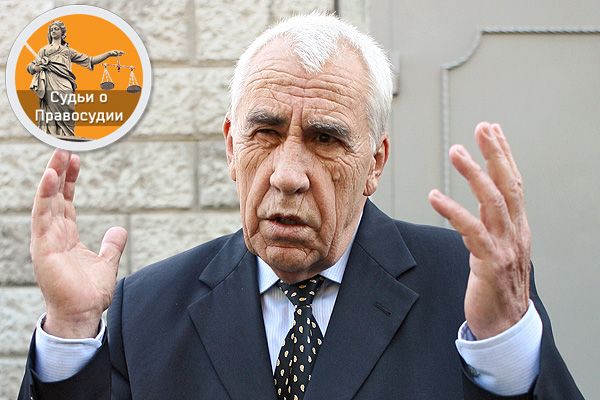 Photo: Valery Melnikov/Kommersant
Taimuzer of the High Delights headed the Supreme Court of North Ossetia for 14 years, back in Soviet times. In 1984, under the pressure of a new leadership appointed to the republic after a loud interethnic conflict, he was forced to leave his post. After he himself was under investigation and even sat in a pre -trial detention center. The case did not reach the court, he was fully justified and rehabilitated. He headed the Central Election Committee of the Republic, then - the Committee of Constitutional Supervision. In the trial in the case of the only surviving terrorist in Beslan Nurpashi Kulayev, he was a representative of the victim.
- How did you become the chairman of the Supreme Court of North Ossetia?
Prior to his appointment, the chairman first worked in the city prosecutor’s office as a senior investigator, then a people's judge, then he went to study in graduate school in Moscow. After returning, he began to teach at the university. Then various party conferences were often held, including the fight against crime. And I, as a candidate of sciences, a former judge at these conferences, performed, along with practical workers, prosecutors, judges. And, probably, they noticed me and one day they called me to the regional committee. They told me: "We want to send you to a responsible position." The first secretary of the regional committee Bilar Kabaloev spoke to me. I refused. And, honestly, I didn’t want to, I was afraid. I was very young - 32 years old. In the conversation, the first secretary said that the party sends me, and I have to go, and if I do not go, then I will be expelled from the party. And then we believed in the party, and that the duty should be fulfilled by party. So went.
- What did it mean to be the chairman of the Republican Supreme Court?
The chairman determined the direction, character, spirit, if you want. He was the first implementer of the requirements of the law. My first task was there - to organize the work of the Supreme Court, to establish normal relations between people's courts with the Supreme.
Judges could come to me for a consultation. They reported the case and asked for advice on how to resolve the case. I did not tell them how to decide. I started asking questions, modeling the corpus delicti, and so I understood what questions it was necessary to find out, and advised: "This is how to find out, take it into account, and this. All this, and the decision to qualify it will come by itself."
Honestly, I will nostalgic for that time. I did not give anyone instructions, only advised, tried to ensure the principle of independence and independence of the judge. These are difficult relationships, first of all, with the prosecutor’s office, with the investigating authorities. This is a constant struggle for who verbaling the truth. And then the prosecutor's office was over everyone. And she tried to be over me and crushed me in a smoked one. Like today. But I could always defend my position. Although it was not easy. Then everything-well, or almost everything-was discussed at different party plenums, party-economic assets, where representatives of the prosecutor’s office could, for example, speak even before the court decision, that they are fighting crime, expose the decays. At the Plenum, the whole case will be discussed, people will be condemned in advance. And we, in court, considering the case, found that the articles were not in the case, the episodes were not proven. Or even in the newspaper, from the submission of the prosecutor's office, they could print about the case before the court. This is also pressure.
I remember a big one. The leadership of the instrument -planning plant (10 people were defendants) was accused of embezzlement of socialist property on large amounts. The prosecutor asked for up to 15 years in prison. And in court it became clear that there was no embezzlement in large sizes, except for negligence. And they are already talking about the case - on the same plenums. The regional committee is in the know, the public is aware that they found and exposed. But the court - contrary to the opinion of the prosecutor and the whole situation, but in accordance with the law - recognized the negligence in that case, and this is a conditional term, and the accused were released from the courtroom.
- Did you put pressure on the judges? Did they feel pressure on themselves as a chairman?
I never crushed other judges in my life. I am now outraged what is happening in the courts. Today there is a continuous crush. Not without, of course, so that the judges come to consult, ask for advice. But I have never said any judge, never in my life, what a decision to make him.
I was also not pressed on me as the chairman of the court. I still showed my character in the prosecutor's office. And somehow, probably, everyone knew that it did not make sense to crush. Well, true, except for calls from the regional party committee. Indeed, in those days, any citizen could get to the head of the administrative department of the regional committee and complain that someone was incorrectly convicted. And then they call me: "We have such and such at the reception, accept it and objectively deal with business." Such a pressure was, if I may call it.
- When you were a judge, did you have justification sentences?
When he was a people's judge, he was the only one. But then there was an institution of pre -investigation. This, consider, is the same acquittal. If I doubted the case, there was a way out - send for a subsequence. Today they say: "There are doubts - justify." And not every judge today dares to justify. So they are stamping: they rewrite the indictments.
- And how did you leave the court?
Here in 1982, events occurred that preceded the aggravation of relations between Ossetians and Ingush. Then people went to a rally, which then grew into riots. After which in Moscow they decided that Ossetia and the leadership of Ossetia were suffering from nationalist moods. Ossetian was accused of immodesty, of nationalism, removed the first secretary, all were removed. One I stayed from that team. A new prosecutor, the new chairman of the KGB, the new Minister of the Interior, came.
The prosecutor was illiterate. The chairman of the KGB was a livestock technician. Then such a practice was - if only you were a party. Well, my troubles began. They sent things, and then it was fashionable to catch directors. For example, there was a case on charges of embezzlement of the leaders of another plant. Well, the process was delayed. I asked the judge: "Why?" She explained that people are changing the testimony at the trial, all sorts of fables tell that they were tortured there, they were knocked out. We checked - it turned out that in fact they crushed the witnesses hard. The woman was taken from the hospital chamber one at night, as it was - in a dressing gown, in slippers, they brought to the police and kept it all night until she gave the necessary evidence. The other was also brought to the pre -trial detention center and threatened: if he doesn’t say what they needed, then the children will be taken away, they will be handed over to the orphanage during the investigation.
And this case raised in court. The investigation, the prosecutor's office stood on its hind legs, also because they received their illegal methods. Let's put pressure on me: "We must condemn this thief." Who was sitting - they were released, and a scandal went. And scandals of this kind after the arrival of new bosses - they were more and more often.
I always had such a rule. If the prosecutor does not agree, he can take a protest for this sentence to the Supreme Court of Russia. And they did not write protests. Because they knew that we were right. Well, and here they all run, the prosecutor runs, the Cagbeshniki run, they complain to the regional committee: "We catch criminals, they let them go." And so, it all was brewing, brewing - they decided to get rid of me. Complex checks for three consecutive years were carried out. Well, and after the next check, I had to go to Moscow, to the collegium. And I knew that they would be removed there, the situation was heated to the limit. In the certificate after checking, they wrote nonsense to the dog. But I was lucky then: the Minister of Justice of Russia, who was at the same time with the new leadership of the republic, was removed for drunkenness. And the deputy minister of justice of the USSR was appointed - an objective, fair person. And the decision was made objective.
But when I returned, he came to the first secretary, and he told me that for two years he defended me while in Moscow they wanted to get rid of me, I realized that I could no longer work with this hypocrite. He left his office and wrote a departure statement. He was delighted, and then the regional committee recommended me to the post of chairman of the college of lawyers, where I wanted to leave. I had a lot of time there, in the college of lawyers, and I sat down and wrote a huge complaint to the Central Committee. It was in 1984. And the epigraph wrote to the complaint: "Only a person with a cold heart can be a communist ..." - well, then there is there in the text. And the first lines were: "As a communist and lawyer, I consider it my duty to inform the Central Committee of the CPSU about the lawlessness that are being created in North Ossetia." And they sent this complaint to the first secretary of the regional committee. This is how they did it before. Hunting began on me. They fabricated the absurd business, put me in the KGB pre -trial detention center, where I served 7 months.
By the way, I am proud that I gained courage, patience, strength and knowledge, to start with these werewolves-kag-Besniki war and defeat them. Although I was seriously broken. The conditions of the detention were very strict. I sat like everyone else, I, as the former chairman of the court, had no discounts. True, the escorts were respected with me. And so - food like in films, an inedible balance, in the summer the stuffiness is impossible in the chamber, there is nothing to breathe, in winter - a terrible cold. They limited everything: in programs, in dates with relatives, in correspondence. Many could not stand it, broke, I - no. Then, when he went out, he found out that they planted the homicings to me, to compromise, of various ambush. They did not stand on ceremony with me. But they could not prove anything. There was nothing behind me. I was not afraid for a minute and did not doubt that they would justify me. The truth was for me.
-When, in your opinion, the court began to change when they began to put pressure on the judges?
I think that everything began to change when the president began to appoint judges. From here, it seems to me, and all the problems went. Although, of course, there is a formal independence of judges. Nobody can take you off except Putin. But, unfortunately, no one can take you off except Putin, and when you break the law. Here is a guarantee of independence what interesting is it. Our judges have now become independent even from the law. They want what they want. And the judicial community turned into some kind of family office to protect its own.
Today's system is bad in that it is not always full of worthy people, the order of selection of judges is not the same. Is it justified - when Putin signs a decree on the appointment of me by a judge? Does he know me? For example, I think that it is necessary to introduce such a double dependence of judges. That is, let the good give, say, the parliament of the republic, and if voters are generally perfect. Well, then Putin signs.
I will say on the example of Ossetia. After all, after my adventures, after I served and left, I was very popular. I was the chairman of constitutional supervision. I was the chairman of the Central Election Commission. When Dzasokhov became president, we had a normal relationship with him. After some time, his flatterers and saints advised him to adopt a law on the appointment of heads of administrations contrary to the Constitution. And I told them: "Do not do this, it is unconstitutional." But the law was adopted. And a week later, the Committee of Constitutional Supervision received a complaint from the Communists, in which they asked to recognize the law unconstitutional. The Committee issued a corresponding legal decision. For this, Dzasokhs were rushed to me. Yes, and I myself, frankly, did not want to work with him. I have not seen such a second hypocrite and I do not know. I then turned to the parliament with an open letter, in which he wrote that he was guided by the Ulyekensk approach in the selection of personnel, that he created the atmosphere of the sneak of sinking, the lycerate, that I did not want to work in this atmosphere, and I left. Then everything became different in court.
Diseases of the judicial system here, in North Ossetia, and throughout Russia - the same. First of all, I would call a violation of the principle of independence of the court and judges, independence from the investigating authorities and the prosecutor's office. Unfortunately, the judges themselves underestimate the importance of the task that they fulfill, occupying the judicial chair. Justice cannot be carried out without being completely free, looking back at someone or at something.
- You were a representative of the victims in the trial in the case of Beslan. What struck you the most in that trial?
I did not want to participate in that process. I thought that in such a case the investigation would be so high -quality and objective that there the lawyer would not be needed by the victim, I said so to the victims. I am publicly talking about this for the first time.
I was immediately shocked, as in court they reacted to my questions. When Nikolai Shepel, the deputy prosecutor general in the Southern Federal District, jumped up and asked my questions to remove. And the chairman of the Supreme Court Aguzarov, who conducted this process, took off my questions. In vain I thought that there would be a normal trial. As a result, it came to the point that I was convinced of complete illiteracy and bias, and when illiteracy and bias are connected, this is already great evil. I was amazed, like Shepel and another deputy general of the prosecutor, Kolesnikov, with their insufficient literacy, the high posts of the deputies of the prosecutor general took up. One fact: in his indictment, Shepel asked for a higher punishment for the terrorist Kulaev - the death penalty, on which a moratorium has been in effect since 1996. Then, by the way, the Supreme Court of Russia issued a private ruling on this fact, in which he indicated that Shepel focused the court to apply illegal punishment. At the trial, Shepel, in public, said "white". And the court often agreed with him. They bent their line.
- And what line did they bent?
I will explain: the whole thing came to charge the only surviving terrorist Kulaev that he was a terrorist, that he was killing, that he kept his weapons, that he participated in the hostage captures - well, there was a lot of accusations. But the crime of such a plan is that it is connected not only with the fact that terrorists fell from the sky and had aimed something here. I started asking questions. Why did they drive so freely? What did local police do at this time? In the case file, I saw numerous telegrams, encrygrams addressed to the FSB of Ossetia and the Ministry of Internal Affairs of Ossetia: "The hostage seizure is expected according to the Budynovsky version", "Take measures to protect the borders." In the local newspaper for August 24, even a note was about a meeting of the anti -terrorist commission, which stated that all our enterprises were covered by care of terrorism, a whole plan for counteracting terrorism was developed, borders have been taken. In fact, none of this was done. And in the case there was no investigation of the causes and conditions of the crime.
-In this process there was something that the public did not find out about, although it should have known?
The investigation from the first day was of a political and extremely unprofessional character. Let's start by examining the scene. If you are a normal investigator, then by ordinary household murder you examine the scene for several hours, fixing all the details that may be related to the investigation. Inspection of the Beslan school was completed in 11 hours. And after 11 hours, if this can be called an examination at all, everything was cleaned with bulldozers - and with fragments of bodies, clothes were taken to a landfill. And so in everything. Witnesses, the victims were not normally interviewed. No one found out the responsibility of the authorities at all. But there was no such that the public did not find out about something. The process was open.
- As a representative of the victims, did you have pressure?
Certainly. Just then the case was aroused at me. I was remembered by the old story. When I worked in the Committee of Constitutional Supervision, I once went on a business trip to Moscow, at the same time went to the clinic, seem to doctors-I had a heart attack shortly before the trip. I was put there in the hospital for surgery. I took the money and was operated on. At this time, my colleagues, members of the committee, who knew that I live on the same salary, did not take bribes, turned to the government. And the chairman Taimuraz Mamsurov - he is now the head of the republic - helped: the government allocated 200 thousand rubles - the cost of the operation. I did not know about it. And when I arrived after the operation, and they gave me this money, I also thought: "Well, now I’ll get out of the debt bondage." And after so much time they remembered this story and accused me of embezzlement of this money. Then another deputy prosecutor’s general, Kolesnikov came to the republic, digging everything here - and represented a lot in the false light.



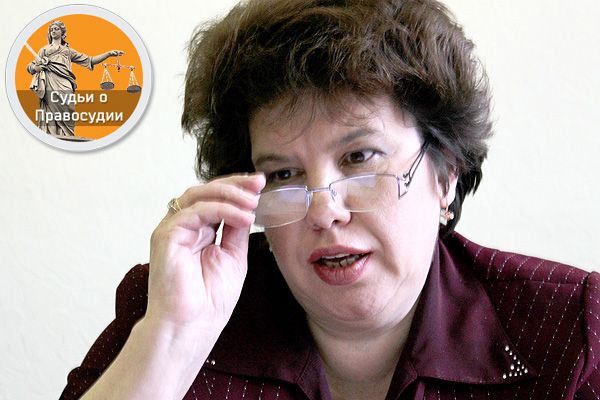 Part 4. Resignation from Novosibirsk Irina Zueva: "The torment of the conscience of the judge is terrible torment"
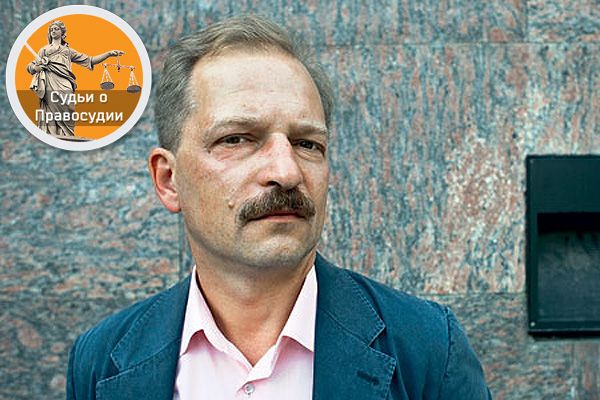 Part 5. Former judge of the Dorogomilovsky court Alexander Melikov: "The independence of judges took somewhere with the advent of Vladimir Vladimirovich"
 Part 6. Former judge of the Tula district court Lyubov Blagushin: " Diagnosis of the judicial system: the patient is more dead than alive "
 Part 7. Former judge of the district court of St. Petersburg Tatyana Zayrth : "Take a flash drive from the investigator, write from above" the name of the Russian Federation "and do not suffer"
Part 8. Former people's judge of the USSR, and now a lawyer from Zhukovsky near Moscow, Gennady Krylov: "Will you go to court - guards with machine guns. Who to guard?