
Translated material
Cute country
Mythology and reality of the noble estate
In the summer, many citizens find that it is nice to travel in old Russian places where traces of pre -revolutionary civilization have been preserved. There are few of them left to the offensive, but in some places the spirit of former inhabitants still live and evidence of the centuries-old life structure has been preserved. The New Times studied the mythology and reality of the noble estate 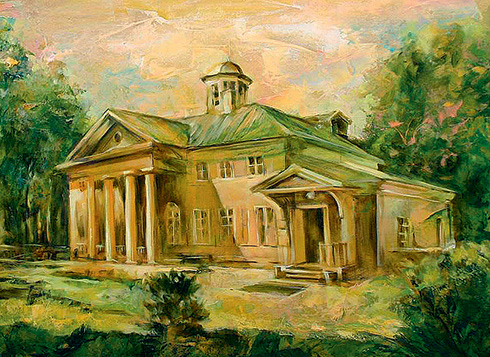
The houses are oblique, two -story
And then Riga, the far courtyard,
Where the trough of geese has important
They are conducting an unfamiliar conversation.
In the gardens of nasturtium and rosana,
In the ponds of bloated crucians.
The old estates are scattered
Throughout mysterious Rus'.Nikolai Gumilyov. "Old estates"
The noble estate is associated with the ideas of ideal existence, about the departed Golden Age. No wonder the poet Evgeny Baratynsky wrote about his estate: “There is a cute country ...” For the owners, she personified the happy world of childhood, the traditions of family and family, pride in her ancestors was embodied in it. For many, the estate was a favorite place for leisure and creative work for life. By definition of Pushkin - "a shelter of calm, labors and inspiration." It was the “ideal reality” of the Russian nobility of the XVIII - XIX centuries. Therefore, the manor world was created carefully, with attention to the little things. Everything had its own meaning: from the manor house itself (yellow, the researchers say, symbolized the wealth of the owner, the white columns of the portico-light) to the surrounding nature, where each tree meant something in general harmony. For example, the birch trunks served as a stable way of the Motherland, lindens of accessive alleys with their fragrance hinted at the paradise broadcast, oak, a symbol of eternity, virtue, was located in a specially prepared clearing, and the “damned tree” tried to mercilessly cut down.
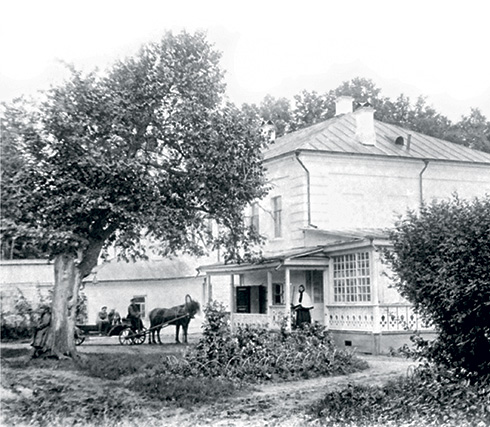
The clear meadow is no wonder that the thoughtful world of the Russian noble estate, which seemed so stable, even unshakable, is so attracted to the person of the 21st century. Especially if among the owners of the estates - Tolstoy, Turgenev, Goncharov, Bunin, Blok ...
Of course, today this world is idealized, few people remember that the manor culture has grown on serfdom dependence of the peasants, that along with an idyll of merging with beautiful nature, Russian literature is full of examples of landowner tyranny and humiliation of human dignity. Nevertheless, one cannot disagree with the opinion of many researchers: in the culture of the Russian estate, a synthesis of the culture of the noble and peasant, the city and the province, Russia and the West took place. Prince Ivan Dolgorukov noticed the poet, on the example of Savinsky, the Lopukhins estate near Moscow, that in the estate the hosts knew how to "take the extract of the whole universe on tithes."
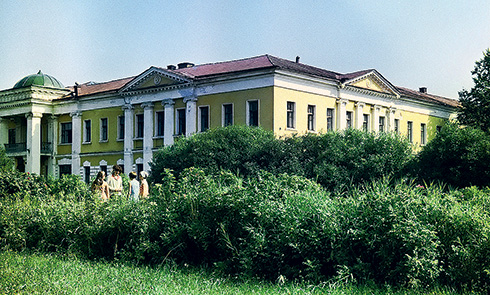
The noble manor house of the late XVIII - early XIX centuries in the Russian province is one of the first examples of “typical” construction. Architecture, painting of the building, the location of rooms, their decoration, set and arrangement of furniture were almost the same for all owners. From the heyday to sunset , the heyday of the rural Russian estate begins after the abolition of the obligatory noble service in the second half of the 18th century. Before that, she was first a residential and economic complex of the estate, then the estate of the servant nobleman. “Initially, the landowners were placed on the ground. To feed him and his children and households. The estate was also a connecting link between the city and the village, and something like a rural center of culture, ”says Andrei Chizhkov, a leading specialist in the Russian Manor Foundation, the author of the Kaluga, Kaluga and Smolensk provinces.
Under Catherine the Great, a general land survey was carried out, all the estates were covered by the register, but by the middle of the 19th century many of them had disappeared. Pushkin’s words are known: “... in Ostankino the music is stalled, the manager of the German sits and thinks how to get a wire plant” - that is, the decline of the old manor life was already outlined in the first half of the 19th century. And they came to the desolation of the estate not only because of the ruin of the owners. The popular version, as if the landowner estates began to be destroyed only after 1917, far from reality. The story with the Red Rooster, which the peasants were allowed to the landowners, was quite common.
In the world of the Russian estate, a destructive element was already internally contained. Some landowners themselves provoked a violence of the reaction. You can recall the notorious cellular, handed over to the fortress bride after the landowner exercises the wild “right of the first night”. And, despite the decrees and laws, the separation of marital couples of serfs when selling them. And the expulsion of the "fined" to Siberia. And recruitment set. In addition, history retained examples of monstrous mockery of people. Everyone remembers from school textbooks Daria Saltykov, Saltychikha, whose Moscow house (here is the irony of history!) Standed on the site of the current KGB-FSB buildings, and in the country house, in the current region of the Teply Stan, the NKVD department was located in the 30s of the twentieth century. But Saltychikha was far from lonely. Charles Masson in his “Secret notes about Russia of the time of the reign of Catherine II and Paul I” mentions Princess Alexander Kozlovskaya, nee Dolgorukov, a powerful and corporate woman, his mouth torn with his courtyard for one objectionable word and retired and stately, she entered the Empress’s office. The doors closed, but no sound was heard because of them. When the doors opened again, a small, bent woman who was held before the crew came out of the office, and she left in an unknown direction ... "
The estates also set fire to due to property disputes between the landlords and the peasant community, but they killed the landowners and their loved ones, more often because of the very tyranny. Count Arakcheev Nastasa Shumskaya, the former serf, the courtyards, the courtyards were killed in 1825 for this.
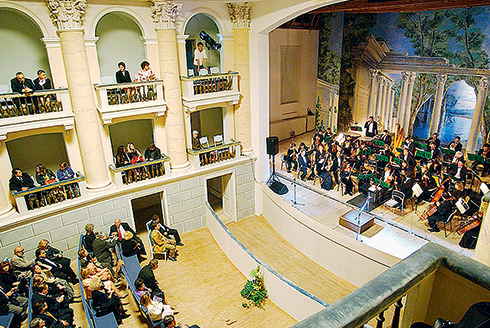
At the end of the XVIII - beginning of the 19th century, there were 173 serf theater in Russia. The theaters of Count Nikolai Sheremetev, Prince Nikolai Yusupov, Count Alexander Vorontsov were considered the best. The crucial manor libraries were Boris Golitsyn’s book meetings in Vyazemi (more than 6 thousand volumes), Peter Volkonsky in Sukhanov (about 4 thousand volumes), Andrei Vyazemsky in Ostafyeva (about 5 thousand volumes). Pictures - Gonzaga Theater (above) and a library in Arkhangelsk 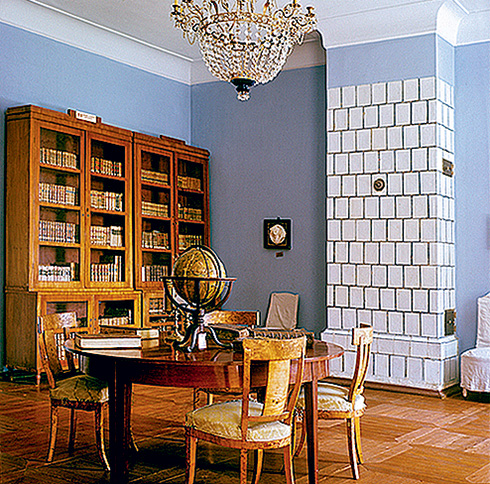
After the abolition of serfdom, when the gift labor ceased to fuel the welfare of the nobles, many estates were sold. Some went to the community of the peasants, and they shared the estates in the areas. As well as furniture, good. Even then, many estates came into desolation and actually disappeared. So, for example, according to the last, tenth, revision of 1858, a little more than two thousand estates were registered in the Tula province. The book of Chizhkov, dedicated to this province, describes 305 “surviving” estates, and only 58 with the main houses, of which the vast majority is in “ruined”, that is, very destroyed, or in a “pre -military” state. Chizhkov in his books keep records of only those estates from which at least something remains. And from many people known in archives and memories belonging to famous people, nothing has been preserved. No buildings of buildings, no fragments of a park or garden.
Not all surviving estates are considered historical monuments, since they are faced with the problem of documentation: there are no passports, there are no accounting documents for the building. “Here is Pavlishchev’s estate in the Yukhnovsky district of the Kaluga province,” says Andrey Chizhkov. - A colossal house, ruined, of course, but a magnificent monument, in Soviet times there was a sanatorium, and there are no documents, and it turns out that it is not a consistent, although this is a unique object. Or the well -known Yasnaya Polyana. It consists in federal security, but there is no primary documentation for any construction! Strictly speaking, even in Yasnaya Polyana you can reduce everything as you like without violating a single law. Say, in the room with the arches where Tolstoy wrote “War and Peace”, equip a billiard or beer bar. ”

Leo Tolstoy with family members and guests. 1899. The estate in Yasnaya Polyana was bought by the great -grandfather of Leo Nikolaevich Prince Volkonsky. The writer lived here for more than 50 years the destruction of memory by the most tragic, of course, was the defeat of the Russian landowner estate after 1917. Good was melted and lost irrevocably. Part of the property of the new government managed to requisition, they tried to take something to the provincial city and even to Moscow, but also a lot of things disappeared from this, dismantled by the authorities. The power took something to orphanages, sanatoriums, hospitals. On the basis of some estates, museums were created, for example, Kasimovsky local history on the basis of the Golitsyn estate or a museum in Kashin, where there was a Levashov manor. But this is a drop in the sea.
Those who pulled the good sometimes used it in everyday life. But then the furniture of the red tree was not dragged into the hut, chopped on firewood. Also, the subject of hatred was musical instruments, porcelain. Researchers say that they especially hated roories. There are materials on the deaths of manor archives and libraries that were destroyed ruthlessly and voluptuously. The archive was taken to the volost control, and what happened there is unknown. The fate of individual archives managed to trace, but still ultimately the materials turned out to be defeated in parts, in various archives, and this already gives the intention of the authorities who followed the pogroms: they wanted to eradicate the memory of the past. Books, documents, photographs and paintings are undoubtedly more personal than musical instruments or furniture. “These losses are a huge misfortune for Russian culture,” says Chizhkov. - When they fled from the Reds, they did not remember any archives. What he left the house, and went to Constantinople. The position is better with the paintings, many have been preserved. Although there were cases when paints and soil scraped off the paintings, and bags were sewn from the canvas ... ”
Greetings, deserted corner,
A shelter of calm, work and inspiration,
Where the days of my invisible stream are pouring
In the bosom of happiness and oblivion.Alexander Pushkin. "Village"
In recent years, the new landowners in the former noble estates paid attention to enthusiasts, and people with money thought. People who are looking for materials for specific estates - descriptions, drawings, plans often turn to the Russian Manor Foundation. Over the past 10-15 years, some estates have appeared owners. For future “landowners”, it is important that the place they want to buy have a story that it previously belongs to some famous personalities.
But so far this area is not legally regulated. It is unlikely that we can talk about restitution today, but it would be right to help descendants of the former owners, if in the absence of claims to this property they are ready to buy and start at least some work to restore estates. The state could provide for tax reliefs and guarantees if the new owners take on the obligations to create family museums, the reconstruction of attributes and traditions as balls, hunting if these estates are included in tourist programs. At the same time, certain encumbrances should be imposed on the potential owner. But this is not only legal problem. Will they understand? In ordinary citizens, Soviet psychology rebels: what, the landowners are returning? Will we, like our ancestors, at the stable? And the authorities, perhaps, thinks about something else: how is this-someone will become a landowner just for money? The landowner is the one we put on the ground ...
** ---
Moscow Region estates **
Grebnevo
The estate has been known since 1585, for a long time belonged to Trubetskoy. Its flowering occurred during the period of ownership by General Bibikov, who arranged the theater in the Grebnevo, invited the orchestra, and set the ballets. Two churches were preserved on the edge of the linden park - the Grebnevsky Mother of God (end of the eighteenth century) and Nikolskaya (XIX century). In the second half of the 19th century, the estate was bought by an industrialist Panteleev, who placed a coupor and distillery here.
Ostafyevo
The Vyazemsky estate is known to the manor house and regular park. Pushkin called Ostafyevo “Russian Parnassus”, and according to legend it was the name of the estate: having arrived once, he did not tell the servant to carry his luggage, but simply said: “Leave it!”
Valuevo
The place of filming of historical films, including the Hussar Ballad. The heyday of the estate fell on the period of possession of her Musin-Pushkin, who retained her classicistic core, organically complemented and developed buildings. The main house is with an ionic portico, outbuilding. A very beautiful hunting house with a grotto.
Large viscous
The first mention of the village of Big Vyazemi dates back to 1526. The estate belonged to Boris Godunov, who built the Church of the Transfiguration. Here were False Dmitry I and Marina Mnishek, Kutuzov and Napoleon, lived Natalya Petrovna Golitsyna, who served as the prototype of the “peak lady”, and her son, the prototype of Vladimir Lensky. Now here is the State Historical and Literary Museum-Reserve named after A.S. Pushkin.