
Translated material
Jean-Claude Trisha: The shortcomings of her leadership are to blame for the problems of Europe
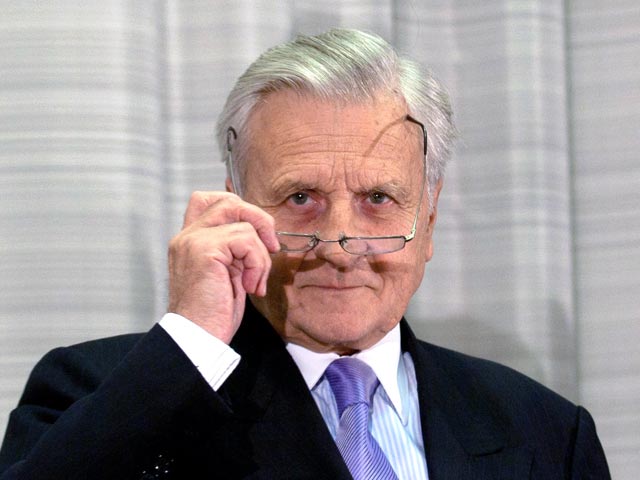
The former chairman of the European Central Bank Jean-Claude Trisha said that he believes in the successful future of a single European currency. This authoritative economist, in addition, is a supporter of the creation of banking and budget unions, writes RBC Daily .
The ex -head of the ECB noted that the world economy is currently undergoing the third stage of the crisis - the state debt crisis. It began at the end of 2009 and partly became the result of an attempt to avoid a crisis in a real economy, which would be worse than the great depression of 1929.
In mid -2009, on both sides of the Atlantic, the same amounts were spent on preventing depression: about 27% of the US and Europe in the form of guarantees, recapestry of banks and creating "bad banks" for toxic securities.
These steps were taken in order to avoid the collapse of the financial sector. Meanwhile, in reality, this money did not have to be paid, since the collapse was avoided, but the amounts were giant, the former head of the department notes.
Trisha emphasized that the crisis of state debts is a consequence of not only measures to save banks, but also to no less chronic non -fulfillment of the provisions of the Pact of Stability and Economic growth. However, even if the governments were fulfilled to the last comma, the conditions and rules contained in this pack, this would not have been enough. According to the economist, there was no more important component - control over joint economic and financial policies.
Commenting on the state of affairs in the euro zone, he noted that the situation is quite paradoxical. If we take the euro zone as a whole, then the deficiency of its budget is only half of the indicators of Japan, the USA or Great Britain. The payment balance of the euro zone is balanced, while in the USA there is its imbalance. Thus, the euro zone, as a whole, is in excellent shape of a large industrialized country.
The main problem is the shortcomings in the leadership. To improve it, a qualitative leap is necessary, the ex-head of the ECB believes.
Speaking of specific steps for saving the Eurozone, J.-K. Trisha noted: “Regardless of the ESM stability fund, I see for the prospect of three rods of economic leadership in the euro zone: firstly, we need an enhanced pact of stability and economic growth. Secondly, we need to ensure control over indicators of competitiveness and imbalances within the currency union. And thirdly, we need a bank union, that is, control at the level of the euro, the possibility of the zone, the possibility of the possibility of direct recapitalization and fund guarantee fund. "
Having concerned additional measures to stabilize the situation in the economies of the currency bloc, J.-K. Trysha also added: "As an exception, I propose the principle of the economic and tax federation. If the countries do not comply with the rules and agreements, endangering the euro, then the community should have the opportunity to put the conditions for them."
Trisha is sure that a single European currency will survive. "This currency has remarkable stability. Pay attention to the fact that Switzerland, a strong and well -controlled country, tied its frank to the euro," he said.
In addition, according to the ex-head of the ECB, Greece will remain in the currency union. "I believe that this corresponds to the desire of the Greeks themselves, the Greece Government, as well as other members of the euro zone. However, all agreements to reduce Greece should be fulfilled," he added.