
Translated material
Anatoly Sobchak - 75
On August 10, it would have turned 75 to Anatoly Sobchak, the first democratically elected mayor of Leningrad, to whom the city owes the return of its historical name-St. Petersburg. It was one of the most striking politicians of the late 1980s-the first half of the 1990s. Sobchak’s speeches at the congresses of people's deputies in the days of the USSR forever went down in history. Then the country saw a politician capable of clearly and in good Russian to express his thoughts, a brilliant polemicist, a courageous person who was not afraid to lead the commission to investigate bloody events in Tbilisi in April 1989, when the demonstration of protest was dispersed by batons and sapper shoulder blades. Sobchak, at that time, a professor of law faculty of Leningrad State University, this investigation went against the powerful generals of the Ministry of Defense and the KGB of the USSR. For which we were hate them. Then there were a hungry Peter, the “gangster Petersburg”, the lost mayor’s elections in 1996, persecution, a criminal case, emigration to Paris and an unexpected death on February 20, 2000. A month later, the President of the country was elected a many -year -old deputy of Sobchak, his shadow was Vladimir Putin. So this is now forever and will remain in history: one of the fathers of Russian democracy led to the policy of the man who buried it. As Anatoly Sobchak remembers his daughter, what influence his father had on her during his lifetime and after his departure - The New Times asked Ksenia Anatolyevna Sobchak 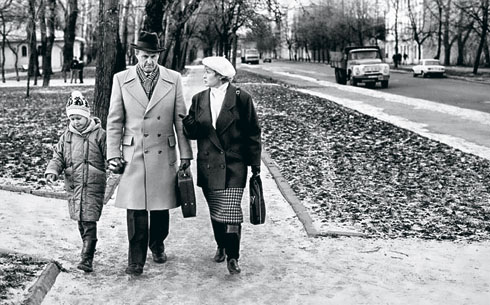
Your very first memory of the father?
We are going along the banks of the Desna - it was in Bryansk, where I was sent to live with my grandmother - and we throw my nipple into the river with a pebble put there ... I also remember how they put me at the subway with a poster “Vote for Sobchak”. I remember I stood in such a funny hat.
In St. Petersburg, the mayor of which was your father, you went to school, and -?
And I enter the classroom, and everyone around is silent. The teacher puts me with someone at the desk, everyone is looking at me and do not say anything. I have a shock. I ran away from this school. I remember I told my parents: “I won’t go there anymore,” because for me it was torment. I was transferred to another school, where there were the most ordinary children. But I could not communicate with them, because any call to the board, any of my answer-and everyone looked at me, and I had a wild stress, because I understood that I could not make a mistake, God forbid something I wouldn’t say that.
Remember, when did you first allow yourself to say: I am the daughter of Sobchak?
No, I was very shy in childhood, what are you! At 12-13, I changed my last name, I escaped from home, I was transferred to another school, but already under the name of Parsus. That is, not even Narusov, because Narusov was also known in the city. 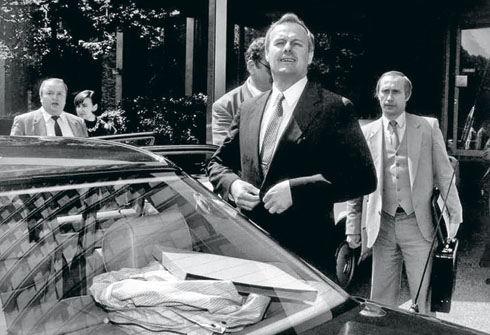
Even your friends did not know that you were a daughter of Sobchak?
Of course, everyone knew. But I was very shy and really did not want to, because behind me are guards, two guards, a tinted car, it was all terrible to me uncomfortable. I ran away from them all the time, I walked the pies with someone, to ride in the subway. I really wanted to be like everyone else. I remember that the St. Petersburg Express Gazeta published a huge article against my father, and the cover was my photograph and signature-it seems like a question to me and my answer: who do you want to become? And Sobchak’s daughter allegedly answered: a currency prostitute. And I am 13 years old, I have a school, there it’s generally scary, teasers. And I'm so ashamed, and I thought: how could they? The father was always liberal to the press, although he was always soaked. Even Nevzorov, who was the worst enemy of his father, said in an interview: “I still respect Sobchak, whom I always did not like, because he never covered“ 600 seconds ”, never pressed the press.”
 |
How did your relationship develop?
My mother and I had a very difficult relationship, my dad was beautiful. Dad has always been a very naive person, so I used it terribly cynically. I remember I was 16 years old, I was going to run away at the disco. I agreed with the nanny with my own. I am in a leather mini-yoke, already in a marathite, and then dad leaves the office, sees me: "Daughter, where are you going?" I say: "Yes, here I am to Seryozha Boyarsky for tea." And my view is not at all about tea. And Seryozha Boyarsky two floors below lived. And dad says: "Listen, and here I found such stunning poems amazing." And he begins to read Tsvetaeva’s poems right in the corridor. And then our Jeanne is already coming out, who says: “Anatoly Alexandrovich, what do you see? Yes, she does not give a damn about your poems, she had already shut up somewhere. ” And so he was like that. He sincerely could read poetry for half an hour, and, of course, I had completely different interests.
And now, having become one of the most recognizable faces of the opposition, do you give your father debts? Therefore, you went then, in December, to Bolotnaya?
I have a feeling about the first campaign there that I could not help but go just for this reason. I just realized that this will be a betrayal in relation to my father.
And when you began to lead “Dom-2”-you were occupied by the question, how would Anatoly Sobchak react to this, who was literally an icon of intellectuals and democratically tuned journalists in perestroika? "
Now there are a lot of decent people, honest, but there is not a single intelligent policy. He was absolutely
“He was an incredible sincerity of a man, and this was very brisk of everyone. He was in what, in my opinion, there was no at all in any acting politics. He had this cultural layer, which, on the one hand, connects with the intelligentsia, and on the other, he was a politician. Now there is a lot of decent people honest, but there is not a single intellectual policy. He was absolutely.
As for glamor and so on ... You see, I began to live an adult life very early, because I really did not want to live with my parents and in everything that I had to live in. I left the house, I was 17 years old. I began to live a civil marriage with a businessman in another apartment. From the age of 15, I lived separately from my parents somewhere in the attic, in some room. It was a rebellion. I deceived the cops, deceived Feesbashnikov, my guards. I went on a train, they went after me, I went out right there, transplanted, five transplants, ran away. I ran away from the guards, along the sheets ... I had a whole scheme with Seryozha Boyarsky. He lived on the ground floor, I went to him in pajamas, like he had a computer. In the package things. I changed clothes, through the window - and ran away. I did not like terribly that I had guards, these endless Hermitations and French languages and such a very lack of free life. But dad just accepted it all. In general, unlike my mother, he was very tolerant of everything. He accepted and understood. And he understood that when they pressed too much, the spring was straightening sooner or later, they pressed so much on me that it took me in some other direction.
In what sense - crushed?
You are the daughter of Sobchak, and you cannot study poorly, you cannot get a three, it's a shame. You must be an example. This is a very great stress, and you want to break out of this. Oddly enough, I saw it when I did an interview and it struck me in Sergey Udaltsov. This is very strange, because Udaltsov is not at all my idol, as you understand. But I know for sure that it is in it. I realized about him that all that is in him now - and I believe that this is all sincere - but this is also the result of the injury, this is a rebellion against the family. We began to talk about some historical facts, he has a good education, he is a really educated person. He is quite a bourgeoisie in terms of his childhood. And this is what led him - absolutely sincerely - exactly to such polar views.
What do you know about the history of the father's kind? Have you been interested in this?
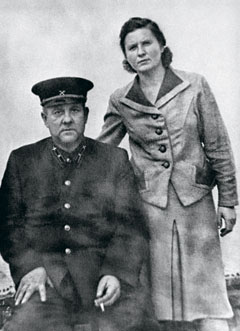
Yes, sure. My grandfather was a Pole. Grandma is Czech. And they fled to Russia, because the grandmother was very aristocratic blood, and grandfather was not allowed to marry her. Therefore, they fled to tsarist Russia in order to get married. And literally six months before the revolution, the grandfather lost everything in the casino. Grandma has been accumulating money for a very long time to open some kind of clothing company or something like that. Grandfather lost everything in a casino, and only because of this they were not dispossessed, after which his grandfather became a Red Army soldier, a commander. And even in the Museum of the Red Army of Chita there is his order. Father was born there in Chita. Then for some time they lived in Tashkent. And in St. Petersburg, dad was because he entered the University of Leningrad, graduated from him, entered graduate school and remained at the university to work - he became a professor. Then the mayor. Then he lost the elections, the persecution began, and just in the days of my birth, November 5, he left for Paris. 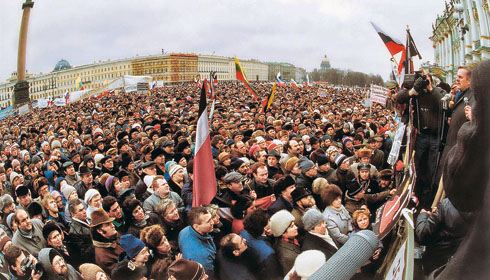
Where the head of the FSB Vladimir Putin took him on his plane ...
I was already told a post -fact about this. And then I came to him in Paris.
Yeltsin at that time already very much hated his father. Although jealousy was before. Even when Yeltsin was chosen for the first time - the President of the Russian Federation (June 12, 1991. - The New Times). Then, when they still decided who would go from the opposition, the choice was between Yeltsin and Sobchak. And Sobchak himself said: “Listen, we all need to unite around one figure now. Let me go to Peter, I will be your representative. ” But Yeltsin did not believe him to the end. He did not believe that Sobchak would agitate for him. Sobchak began to agitate for him, because he really believed that it was so necessary. And in this sense, it is even amazing how through time I think absolutely the same thing that everyone needs to rally around one person, because otherwise nothing will happen. This was the first moment when Yeltsin had jealousy to Sobchak. And the second moment, when before the 1996 elections, Yeltsin invited him and asked: should I go to the polls, - and then my father said: I think that it is not necessary. Well, then Skuratov (at that time, the Prosecutor General of the Russian Federation.-The New Times) began to dig, and got to the bottom of the fact that in a construction company that had a contracted from the city, there was an apartment of 75 meters, decorated with Sobchak's niece. And they began to do a big criminal case. But the matter was a trifle itself, the question of the fact that there was a huge persecution around this. The press wrote: “Sobchak as a mirror of Russian corruption” - such articles were.
Did you somehow feel it then?
On yourself - no, absolutely.
When Putin was declared the heir to Boris Yeltsin, Anatoly Sobchak gave an interview in which he was asked: is it dangerous that a native of the KGB came to power? And he answered in the sense that maybe this was not bad than struck the intelligentsia who loved him. Two months later, he was gone. And even less than a month later, Vladimir Putin has already become the elected president of Russia. Then, in connection with the sudden death of Sobchak, there was a lot of rumors. 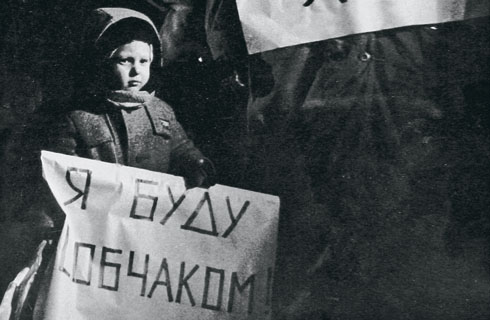
I believe that it is somehow unworthy to speculate on these rumors. I can consider stories related to the fact that there are some other power structures ... But I personally never believed. I just remember how he (Putin. - The New Times) sincerely cried at the funeral. This cannot be faked.
As if today, if Anatoly Sobchak is alive, he would take the fact that you broke a successful career, went to the opposition, ended up under the outside, survived a search, interrogations?
I do not imagine it in the current system of political coordinates. I do not know, maybe this is my idea, but I absolutely cannot imagine Sobchak part of this whole system. I don't think he could.
Do you think he would go to the opposition to Putin?
This is a difficult question. I don't know. He was an absolute democrat. He can be accused of anything, but he was a person of absolutely democratic values, principles. He was incredibly confident in himself, always went to the debate, even if he lost them. He was a large -scale and self -confident person. And democracy, it is in principle inherent in people who are not afraid of people who are confident in their result and are sure that in the competition they can win or take a worthy place. He was definitely such a person. Therefore, a system that exists now, as if it would be organically alien to him, as it seems to me. Maybe I'm wrong. I didn’t agree with him a lot with him. This is my big inner problem. Because at the moment when he was alive, I had completely different interests, and now there is no longer such an opportunity.
He would go to Bolotnaya, do you think?
I think yes.