
Translated material
The expediency of a person
A public lecture in the "new" anthropologist, linguist and semiotics Vyacheslav Vsevolodovich Ivanov. Questions are asked by Julia Latynina

Over the past few years, due to the achievements of geneticists and archaeologists, our ideas about the origin of a person are changing with kaleidoscopic speed. Julia Latynina talks about this with Vyacheslav Ivanov, a Russian scientist belonging to a very limited circle of the world scientific elite. What the conversation is about is not what is written in textbooks is what, right now, before our eyes, is happening in the field and laboratories ...
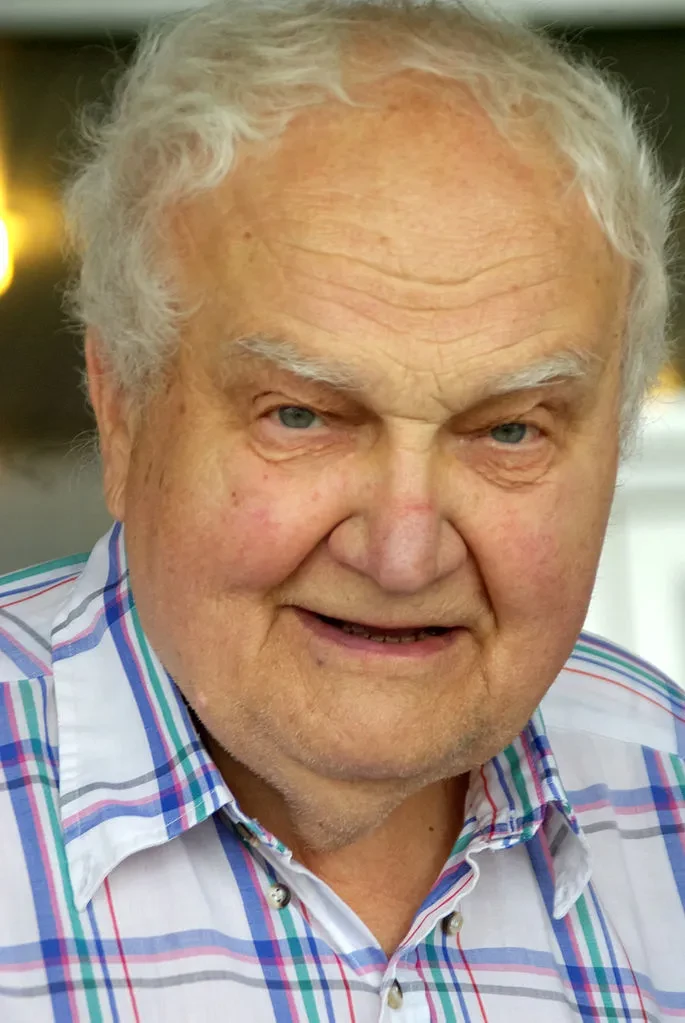
Vyacheslav Vsevolodovich Ivanov is a Russian scientist, belonging to a very limited circle of the world scientific elite. Linguist, Semiotik, Anthropologist, Author of Fundamental Labor “Indo -European Language and Indo -Europeans” (together with T.V. Gamkrelidze), Polyglot, who has mastered several dozen languages, including the wedge -painted Hittsky, which was dedicated to his dissertation, the son of Vsevolod Ivanov, which was prudently lost in 1955.
It belongs to the now-almost breed of scientists-encyclopedists. In the center of his interests, there was always not just a narrow area (mathematical, comparative, historical linguistics, no matter how significant the results achieved by him), and a person as a whole; The iconic systems used by him, which underlie them of the chemical and physiological mechanisms, the origin of a person and his purpose.
Over the past few years, due to the achievements of geneticists and archaeologists, our ideas about the origin of a person are changing with kaleidoscopic speed. We are talking about this with Vyach. Sun. Ivanov. Actually, this series of lectures in the form of dialogue was born simply from our conversations, during which I asked his most important, in my opinion, things on the rights of a former graduate student - and then the journalist in me prevailed, and I was offended that I use the only one that interests many. Once again I want to emphasize: what the conversation is about below is Cutting Edge. This is not what is written in textbooks - this is that right now, before our eyes, it happens in the field and laboratories.
Currently, Vyacheslav Vsevolodovich is the director of the Institute of World Culture of the Moscow State University and the Russian Anthropological School of the Russian State University, teaches at the University of California at Los Angeles (UCLA) at the Department of Slavic languages and literature and participates in the program of Indo-European research at the same university.
- When did the first person appear?
- This is a rather complicated question, because the dates are always angry. We accept the date, but it turns out that you can find earlier. This is the case with individual signs, say, directness. More recently, it was discovered, for example, that our ancestors went right 4 million years ago.
- Why did they start walking straight?
- In other words, why is a person anti -gravity built? This is the question of not only walking, but also the location of internal organs, head and brain. And another technical moment is hands. As long as these limbs were used for walking, this made it difficult to perform different other tasks. Not only work, but also communications, since we tend to think that gestures were originally one of the important types of communication. It is teleologically clear why evolution is needed. And then the question is how to consider evolution. If we assume that evolution is focused - this is the idea of a berg biologist ...
- Another lamarka ...
- Berg (the work of Leo Berg “nomogenesis, or evolution based on patterns” was released in 1922. - Yu. L. ). His approach is closer to the performances that we now associate with cybernetics, but Berg stated it in the 20s. And if we talk about philosophy, then rather this idea goes back to Kant: to what extent is the expediency is needed?
Kant has an idea of expediency without a goal. This is a definition of Kant's art. Art is advisable, although it has no goal. In some versions of the theory of evolution, you can use them. By the way, these ideas under the influence of Berg developed in the Prague Linguistic circle, because the evolution of the language can also be considered as targeted.
So the main thing that seems interesting is that the ancestor of a person began to walk straight, seems appropriate. Hands were freed, the brain was in an upright position. Modern science loves to use the word “system”, and man “this is the most difficult system that we know.” So once Gell-Mann, the creator of the theory of quarks and the founder of the Institute of complex systems in Santa Fa answered me.
If a person is a system, it means that individual parts of a person can be described from the point of view of entering the system. Nevertheless, we do not know the reasons why the goal is planned. So I cannot answer you to the most interesting question.
- But I, as a despicable materialist, understand this: straightforwardness appeared because a man tears from a tree. More precisely: 7 million years ago or so, the Panama Isthmus rises from the water, the thermal -crap circulation of the ocean changes; The jungle, where the ancestors of a person lived, turn into a savannah, so, strictly speaking, this is not a monkey got off the tree, but the tree ran away from under the monkey. And he remained, poor fellow, in the middle of the savannah in the same vertical position in which he hung from the branch. I won, when I pull myself up, no, no, and I think: but a person with the same capture that he hung on a branch began to take a stone.
- As for the tree, this is not entirely clear. We do not very well understand the earliest period of development of anthropoids. Gibbons are very close to anthropoids, but Gibbon is much closer to forest monkeys than all further higher primates, closer to us.
- What time are we talking about? 7 million years, time of discrepancy with chimpanzee?
- Even before. We parted with Orangutan 11 million years ago, and I would like to know what was up to 11 million years, and the orangan was not entirely forest. Maybe a separation occurred - one group preferred trees, and the other, on the contrary, developed the ability to exist not among the trees. I think that the climate change was important, but this is still one of the factors. I would not want to push it too much. You have to think about the system. We poorly know anything about the original ancestor, and to the question of the reason I would not be in a hurry to answer. After all, if the goal is formulated, then it turns out that the goal was the main reason. This is a very serious question. If we accept at least any seriously anthropic principle, that the whole evolution of the Universe involves the creation of a reasonable life, then it is important to understand for comprehension of even recent history.
It is significant to know what is the possible purpose of development. But these are all hypotheses. I do not insist. It seems to me that the history of mankind has a goal, the evolution of mankind has a goal, in this case this goal should be taken into account, even when we evaluate certain causes of development.
At the same time, the reasons may look completely different. For example, from the point of view of the development of mankind, the development of space is the fulfillment of a very important goal, which, in fact, Tsiolkovsky spoke about. ( *Let me remind you that the founder of Cosmonautics Tsiolkovsky was a follower of the Russian philosopher Nikolai Fedorov, who believed that humanity should physically resurrect all the dead. According to legend, Tsiolkovsky, on behalf of the teacher, took up an important utility task, where they all, resurrected, settle. - *Yu.L.L. )
But when the implementation of this goal began, many of those who worked for it considered it as a military program. For those who were engaged in the construction of military missiles, goals and reasons did not look like for a future historian.
- Well, this is even in classical physics. The interaction of the two bodies can be described using the Newtonian equation, which can also be understood that it implies the concept of the cause, or it is possible - through the principle of the smallest action - between the two specified points the body moves so that the action is stationary. As Feinman said: "How does it find this trajectory, sniffing, or what?"
- This is what Niels Bor said when he believed that any phenomenon should be described at least in two ways.
- As soon as the reasons why a person got to his feet, maybe several, I can’t help but ask about one hypothesis that seems very beautiful to me, but completely unrealistic. According to her, a man got to his feet to wear a fruit in his hand, which he handed to the female, in exchange, of course, for mating. This is how some monkeys do it, and wearing a fruit with a foot is not very convenient. I, as a frostbitten Libertarian, of course, are very attracted by the idea that the exchange procedure is sewn into the process of becoming a person as a type. But I'm afraid that the reason is too unreal.
- I think this is included in the general concept of gestures. Gestures associated with the exchange belonged to the number of socially important.
- So, we began to walk just at least 4 million years ago. And when did we start talking?
- Let's talk about the brain before the question of speech. We see that something amazing happened, which led to the sudden appearance of not just a large, but a huge brain. Colossal connection of neurons nervous system. Usually called the number 10 in the 15th degree (1015), but this is only the number of neurons themselves. However, they are connected by different ways, so the total number of neurons and their combinations is incredibly large. In the final form, a person is determined by this, a person is, first of all, the brain, as Descartes formulated. Such complexity of the brain may have occurred directly before the appearance of a person, 300-400 thousand years ago. Apparently, the head of the Neanderthal is already close to such a brain.
- So the Neanderthal is a person or not?
- One of the main tasks is now to explore when and how the frontal lobes that distinguish a person (including from a Neanderthal) and make possible logical thinking and organization of behavior developed. We know the sequence of nucleotides in the human genome (I do not want to use the word “decoding” - because we do not always know their meaning) and we know their sequence in the Neanderthal genome. They are very close.
“But what do we know about the behavior of Neanderthal?”
- We know that they were engaged in the manufacture of not only stone tools, but also primitive drawings that we call ornaments. What it was is not clear. Either they already had symbols that we do not know how to read, or they were just ornaments - that's how flowers on the curtain. It is very difficult to imagine that someone will draw without putting a meaning into it. This is then the symbol degenerates into an ornament, and at first it should be a symbol.
The difficulty here is that the biological proximity was so great that there was probably general offspring. And since there was a mixture, from some time the general features of a person and Neanderthal can just be explained by the influence of people. Both biological and cultural. It is known that Pygmies in South Africa and chimpanzees can imitate each other. People and Neanderthals lived nearby. In this case, why could the ornament, which was drawn by the Neanderthal, could not be an imitation of the symbol drawn by a person?
There are two areas in which it is undoubtedly that very ancient people and Neanderthals lived together. This is Europe, which a person settled very late, about 40 thousand years ago, and South Altai.
- So Denisovets lived there. (Denisov’s man was found in the Denisova cave on Altai several years ago by an expedition under the leadership of the director of the Institute of Archeology and Ethnography of the Siberian Branch of the Russian Academy of Sciences Anatoly Derevyanko. His genome was sequenced at the Leipzig Institute of Evolutionary Anthropology under the leadership of the Swede Svante Peep in 2008. - Yu. L.))
- Just a very big dispute is about this, because the Denisovites are another group, and they looked like a person. From Denisov, we so far have part of the finger and tooth. But this is enough for genetic reconstruction, and Denisovites are very close to both people and Neanderthals for this genetic reconstruction, but these are not the same. But that's the matter: Neanderthals also lived in the same cave before and after Denisov.
- So, in fact, my question. Denisovs and Neanderthals are side groups or is it part of our family tree?
- This is a question that causes great disputes. I will, if possible, will outline the theory of Derevyanko himself. What do we know now? A person seems to appear 200 thousand years ago in equatorial Africa, south of the equator, this is about 400 thousand years later than the early Neanderthals. Neanderthals and people, obviously, have a common origin, their common ancestor is unknown, but it is very different from chimpanzees. This common ancestor lived, according to the molecular clock, about 1 million years ago, although this can be very disturbed.
- And this common ancestor is also the common ancestor of Denisov and Homo Floresiensis.
-Yes , Derevyanko suggests counting four lines (or even five with the East Asian person different from Altai), although everything is not yet clear with Homo Floresiensis.
-Since most of our Sapienes readers do not know that they had a cousin-hobbit, tell us more about him.
- Homo Floresiensis is a very unexpected discovery on the island of Flores in the western part of Indonesia. ( Homo Floresiensis was excavated in 2003 by a team of archaeologists under the leadership of Michael Morvud. Attempts to sequenate it are unsuccessful, primarily due to the fact that high equatorial temperatures lead to very poor preservation of DNA mammoths easier. *-Yu . L.) *
He lived in a relatively limited area, and what is important, people also lived in this area. He lived there at least 100 thousand years ago - maybe earlier and died out - probably about 18 thousand years ago.
- At the same time, there are quite detailed legends about “little people” on the island, which survived almost until the 16th century, almost until the arrival of Europeans.
- Legends about small people are very popular in the Caucasus. There are a lot of them there. Perhaps they are justified, like legends about a snowy man. It is very likely that a snowy man is Denisovets.
The most important difference between Homo Floresiensis is that they were arranged as modern nonpatological dwarfs. There are pathological dwarfs, which have the normal functioning of the genome, and there are lilliput dwarfs, which are reduced copies. Why do we think that Homo Floresiensis was a reduced copy? He knew how to make stone tools as well as his lovers. Even if he borrowed this from people, so what - the Japanese also did not invent a lot from what they copied - this does not speak well about them.
There are a number of interesting discoveries associated with those genes that determine the size of the skull. How much can you reduce the brain so that it is the complexity of it and all its wealth remains human? There are two alleles that can lead to such a strong decrease, and it seems that the Homo Floresiensis brain has decreased in the same way as it happens in humans. At the same time, in a person, the size of the brain is associated with the characteristics of the language, namely - has a language of musical tones or does not have. On the territory of the globe, the spread of tone and non -ton languages is more or less obeyed by geographical laws.
Tone languages are Africa south of the equator and part of the territory of Southeast Asia.
- And China.
- Apparently, in China linguistic tones arise late and precisely under the influence of southern languages. This is all to the fact that according to this tone hypothesis, the division into tone and non -ton languages is associated with the Microcephalin genome.
- Roughly: if you have a small brain, you sing, but not say.
- These are two independent consequences of one gene. And since it is not clear when he mutated, then with Homo Floresiensis everything is not very clear. It may turn out that it turned out as a result of secondary mutations.
- I’ll clarify: how is our hobbit related to Pygmy?
- No way. About pygmies and groups associated with them, a little later.
-So, I hope that our reader has learned that there was no one-onlyhomosapiens, as we were used to taught before. There was a man, Neanderthal, Denisovets and a hobbit, or maybe someone else who had not yet been dug up, and IQ was comparable. That is - that we had a happy large family with many cousins, which we either replaced or ate. And - as stated in my beloved novel “River Tagging” (unfortunately, this is also the favorite novel of Mao Zedong), who wants to know what happened next, read the next chapter.
To be continued