
Translated material
"Formation of Europe"
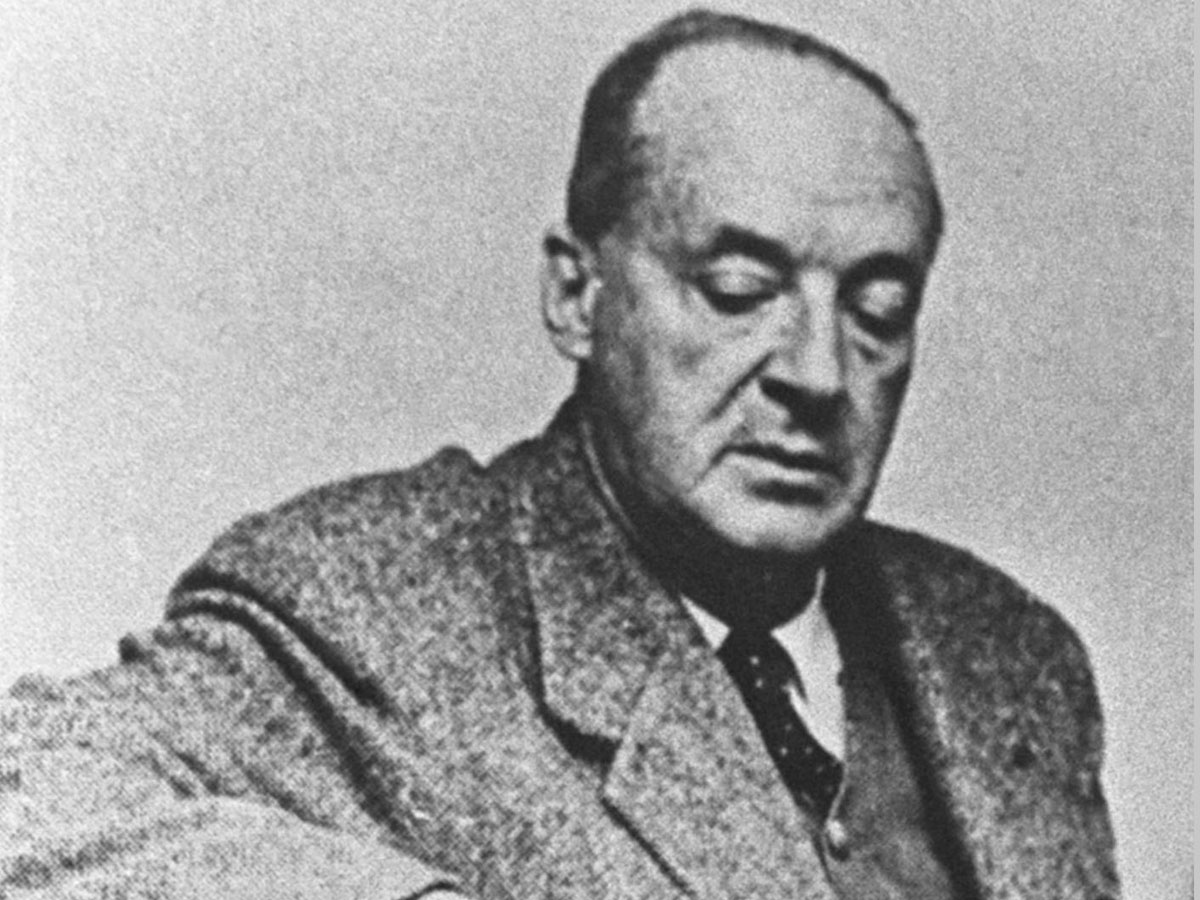
Marina Timasheva: The St. Petersburg publishing house of intellectual literature “Symposium” is preparing new books for the exit. It continues the Nabokov theme, as well as the international popular science series “The Formation of Europe”. Tatyana Voltskaya is talking with the editor -in -chief of the Symposium publishing house.
Tatyana Voltskaya: In many houses on the book shelves there are collected works of Vladimir Nabokov-five volumes of essays written in Russian, and five written in English. All of them are prepared and released by the Symposium Publishing House. But it is very difficult to part with Nabokov, here the “symposium” does not part. Says the editor -in -chief of the publishing house Alexander Kononov.
Alexander Kononov: I am very glad that finally the book of Donald Barton Johnson, one of the oldest nabovists and chairman of the World Nabokov society, came out. In Russian, it is called “Worlds and Antimira Nabokov”. This is a book for any person who is interested in Nabokov. The next book will be the reprint of the book of Alexander Dolinin entitled “The True Life of the Writer Sirin”, which is now in training. She went out once, but he processed it very much and complemented it, and now the new edition will be too.
Tatyana Voltskaya: Alexander, what's new in your other famous series?
Alexander Kononov: Two words should be said about the book series of popular science literature, which is released under our second reprint of “Alexandria”. This is a series called “Formation of Europe”, which was once conceived and implemented by the famous French historian Jacques Le Goff, proposing the idea of a new understanding: who are the Europeans, where did the Europeans come from?
And the essence of this venture is very beautiful, not very having analogues. Jacques Le Goff invited the most famous European historians to write a book on his subject, by the history of European civilization in the context of his subject, and collected such a team on the topic of multilingualism of Europe and Babylonian pollination, the answer to the question of whether Europe is necessary or all or later will come to the same language. Having rely all these attempts, from Adam to Esperanto, he suggested Umberto Eco to write this book, and it was released in a series called “Search for a perfect language in European culture”. He himself wrote the book “Birth of Europe”, in French it is called “Was Europe born in the Middle Ages?”. The wonderful Italian scientist Franco Cardini asked to write the book “Europe and Islam: the history of misunderstanding” - the story of difficult contacts of European civilization with Islam from the moment of Islam to the twentieth century. The only Russian participant, invited to this series - Aron Yakovlevich Gurevich, already deceased - wrote a book called “Individual and Social in the Medieval West”. What he calls “archaic individualism”, that is, this is a difficult issue of collectivization of society under the influence of Christianity and, possibly, the loss of some features of specific individuals along this path. A wonderful little book of our Italian Massimo Montanari entitled “Hunger and abundance. The story of food in Europe” came out. This can be traced from the Roman Empire until today change the change in the power model - what they actually eaten, how much they ate, what they ate. In general, if you take from the point of view of modern historiographic views any object, at least the history of the button, and if you seriously follow its evolution, you will also reach the history of civilization. That is, I opened the book of Montanari and, reading about the situation in the fall of the Roman Empire, in the next century or two, I realized why we have so many items in stores now. There may not be hunger in society, there is no starvation in Russia now, but the fear of hunger from society for one generation does not disappear. And as soon as a fall in the living standards of the population begins ...
Tatyana Voltskaya: The population begins to dry crackers.
Alexander Kononov: Exactly. What is called in Russian “salt and matches”. Well, there are gradations, not to such an extent - “salt and matches”, as in 92, no one is buying up now. Nevertheless, immediately in the diagram the number of products of long -term storage increases, that is, people crawl a little from fresh products to what can be stored. On the same pages, I found the answer why the older generation should not dissuade the potatoes in their areas.
Tatyana Voltskaya: For their calm?
Alexander Kononov: As much as you like, it can be explained to them that the potato grown in the Leningrad region is economically simply gold, transportation of this potato from the region of the Leningrad region to St. Petersburg is simply deadly, but I realized that it is impossible to dissuade them. It is useless people who survived the blockade who survived the blockade to persuade some kind of grocery independence, and this was explained to me by Massimo Montanari on the first pages of the book “Hunger and abundance. History of food in Europe”. But the last little book came out, the “demographic history of Europe” by the Italian demograph in Massimo Livi Bachchi. In general, Italians made a very big contribution to this series. I am not a historian, so with pleasure I draw some knowledge from there that there were no. These are well -known figures, but only on this book I realized that the Great Plague, which was in Europe, took more lives than all the wars in the history of Europe, over the past millennium. I did not have this understanding. Maybe for many these are well -known things, but I did not have this understanding.
Tatyana Voltskaya: including our wars?
Alexander Kononov: Including the Second World War, First World War, of course.
Tatyana Voltskaya: Was there really so many people in Europe then?
Alexander Kononov: The losses lasted for a very long time. He explores the issue of the population of Europe from the moment from which one can speak in some numbers, from about 1000. Because before that you can make any assessments, but no data has been preserved, and in this sense I was very surprised, because the great plague also affected Russia, but the distance and small population stood up by a barrier, did not allow them to spread, or it somehow faded, although the losses were also large.
Tatyana Voltskaya: There is all this in the annals too - the population has died out, the rest fled.
Alexander Kononov: Here is a distant past, and I was very surprised when I found out that in Venice the end of the plague still celebrates, this is a city holiday. For us this is a distant past. In general, it is surprising that in the city of Feodosia there is still no memorial plate, at least that the great plague began from here. Because it is known that the Genoese ship brought it from the fortress of the Kaf, it is dated quite accurately when and from which cities, from what month these epidemics even went. For some, these are obvious things. For me, as not for a specialist, not a historian - no. Five European publishing houses agreed to release this series in one design at one time, in one composition, we joined the sixth language. The following books that we prepare in this series will be the nearest book will be the Italian author Luciano Kangorus called “Democracy. History of one ideology”. The interest in what democracy is actually, what it means and what it does not mean, I think that now it will be higher in Russia than a year ago. Maybe this book will be noticed more than it would be noticed like that. The next will be the book of such Hagen Shulce, a German professor who taught for a long time in England, “the state and the nation in European history”. That is, we also need to figure it out, we cooperate with the concept of “nation” famously and easily, but there were no nations 400 years ago, this is a very recent invention. And a book of such Paolo Grossy is being prepared, which will be called either “History of European Law” or “Europe. Legal history”. It is devoted to the evolution of the legal system of Europe in its deviations and rod directions. That is, it will be the history of legal Europe. This is that in this series, which I like, and I hope that we will continue it for a long time if the electronic revolution somehow does not imprint on this, on the economy, first of all .... No one is against electronic books, but now all publishers are invited for a paid product to compete with free, downloaded and lying on the Internet. All our books are available free of charge on the Internet, nothing succeeds so far.