
Translated material
The US will transfer documents to Poland in Katynsky
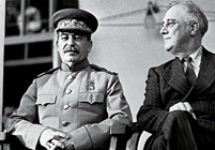
The United States will transfer to Poland archival documents regarding the execution of Polish prisoners of war in 1940 near Katynya, the Rzeczpospolita newspaper reports. Polish experts hope that the documents will shed light on the position of Washington regarding the investigation of these events. “This is a very important initiative. We learn everything that the Americans knew about the Soviet murder of our officers,” said Boguslav Vinid, Deputy Minister of Foreign Minister of Poland.
According to him, after September 10, the documents received from the United States will be posted in public access on the Internet.
The historian of Voicich, the mother, believes that in the transmitted documents the version will find a version according to which US President Franklin Roosevelt knew that the Germans were not involved in the execution of the Poles, although he publicly defended the opposite point of view. "Roosevelt, of course, was afraid that Stalin could be angry and leave the anti -Hitler coalition. But the case is not only this. The Americans conducted an analysis according to which the war with Japan could stretch until the 50s and cost the United States 1.5 million lives. The participation of the Soviets in the conflict seemed the only salvation," said the master's master
Earlier, Poland appealed to the Strasbourg court, expressing the dissatisfaction of the investigation of Katynsky by Russia. On April 16, the court ruled that the Russian authorities did not provide the relatives of the Polish prisoners of war shot near Katyny, sufficient information about the fate of the dead. The applicants complained about the violation of the 3rd article of the European Convention on the Protection of Human Rights (prohibition of torture and inhuman and humiliating dignity), claiming that the Russian side could not provide them with information about the fate of relatives and rejected the relevant requests.
At the same time, the ECHR did not make a decision on the complaint of relatives of the dead officers about the inefficiency of the investigation of this case by the Russian authorities. The applicants in their complaint, in particular, referred to a violation of the 2nd article (the right to life) of the European Convention on the Protection of Human Rights, since Russia did not conduct an effective investigation of the death of their relatives. The investigation was terminated in 2004 on the basis of paragraph 4 of part 1 of Article 24 of the Code of Criminal Procedure of Russia (for the death of the perpetrators).
In Strasbourg, the issue of responsibility of the current Russian authorities for the execution itself, which took place before the entry into force of the European Convention on Human Rights, was considered. “The subject of the complaint was not at all the deprivation of lives in the forty year. The subject of the complaint was violations of the current Russian legislation by our law enforcement bodies,” said Alexander Guryanov, head of the Polish Memorial program. “Whether Russia is to blame for the actions of the Soviet regime and the Soviet Union is a broader question that goes beyond the purely legal framework. But this was not the subject of the complaint,” Guryanov emphasizes.
For almost half a century, Moscow accused of the execution of Polish officers of German invaders. Only in 1990, the last head of the USSR Mikhail Gorbachev admitted that the Soviet Special Service of the NKVD is responsible for this, and did not mention the degree of responsibility for all this personally by Stalin. In November 2010, the State Duma adopted a statement stating that the documents stored in the Kremlin’s secret archives clearly indicate that Stalin personally gave an order to destroy the Poles.
In November 2011, State Duma deputies admitted that the execution of Polish officers in the spring of 1940 was committed by order of the Soviet authorities. The parliament’s statement emphasized that the materials stored in the secret archives “not only reveal the scale of this terrible tragedy, but also indicate that the Katyn crime was committed at the direct instructions of Stalin and other Soviet leaders.” The document also admits that in official Soviet propaganda, the responsibility for the tragedy was attributed to Nazi criminals. “This version for many years remained the subject of the background, but from this no less fierce discussions in Soviet society and invariably gave rise to the anger, resentment and distrust of the Polish people,” the deputies stated.