
Translated material
Do as neighbors
Before the birds, starting in the spring to nesting, there is a serious problem - how many eggs to lay off. The fate of future chicks depends on the decision. In favorable conditions, the couple can afford numerous offspring, and parents do not raise all the hordes into the nurse, the chicks will die, and the female will waste their strength in vain, laying off the extra eggs, so it is better for her to limit herself to minimal masonry. All this is understandable, but the problem is to evaluate local conditions correctly and quickly, because the birds have little time, especially in the north. The summer is short there.
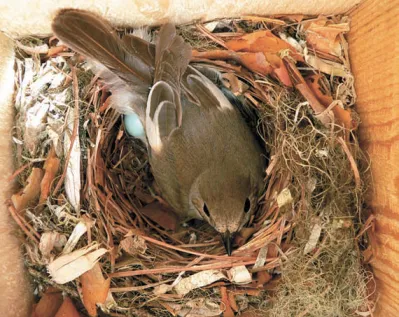
Apparently, the birds successfully cope with this task, but by what signs they determine the quality of the environment, scientists do not know. Finnish biologists from the universities of Oulu and Juvascul, led by Dr. Yukka T. Forsman) proved that the migratory birds, determining with the number of eggs, are guided by the size of the masonry of those species that constantly live in the area and previously begin to reproduce. Researchers experimented with Ficeedula Hypoleuca flywheel. This is a migratory forest bird with a size of 12-13 cm. It hibernates in Africa, and in the spring it returns to their native places and in May sits on the nest, which it prefers to arrange in protected places. Hollows and specially made wooden houses are perfect. The flyer is usually adjacent to the Big Tint of Parus Major. It is almost the same size as flyfoon, lives in forests and parks, eats insects and also loves the birdhouses. The needs of two species are almost the same: what is good for a tint, then a flycatcher is suitable. Only the big tits for the winter do not fly away, and by the time F. Hypoleuca return from Africa, they are already preparing masonry. Fustles often look out for tits into the nests, despite the fact that P. Major is not aggressive and uninvited guests do not complain.
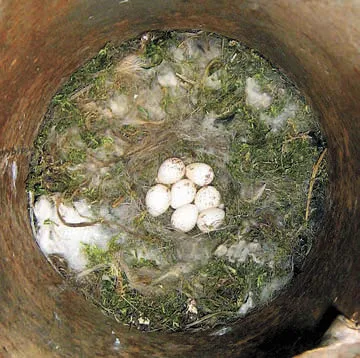
Finnish biologists worked in the vicinity of the city of Oulu in the northern part of the country. They chose several experimental sites where there are no tits, and in each they placed a wooden house with an artificial nest P. Major, made of moss and animal wool, i.e., of the same materials from which tits are pushed. Plastic eggs were put in the nests; They were painted with pale paint and covered with brown specks to look like real ones. There were either 4 eggs, as in minimal masonry, or thirteen, as in maximum. Having laid eggs, tits do not force them, so the masonry, freely lying in the nest, looks natural. All the lines were similar and located on similar trees. Next to each hung one or more empty houses intended for flycatches. Researchers preferred artificial masonry, as they allow you to regulate the number of eggs. In addition, tits are aggressive and noisy neighbors, their presence can scare a flycatcher. Scientists hoped that flycatches will choose the houses prepared for them, look into the neighboring ones, estimate the size of the masonry and, accordingly, adjust the number of their own eggs.
So it happened. F. HYPOLEUCA occupied from 60 to 65 % of the places prepared for them. Over two seasons, the offspring left 80 females; Finnish ornithologists evaluated the time when flycraft began to lay eggs, their number and mass immediately after deposit, as well as the age of the female.
The average size of Mukholovkina masonry is 6 eggs. Birds that were anguish next to the “titmier”, in which there were 13 eggs, were demolished 0.42 eggs (6.9 %) more than the birds that focused on minimal masonry. Their eggs are also slightly harder - by 4.5 %, or 0.072 g. The later the eggs are laid, the smaller they are.
The main conclusion of the researchers is that the number of eggs demolished by flyfoon depends on the size of the masonry of another species that previously proceeded to reproduction.
Moreover, the flycatches could not have doubts that the masonry belongs to another type: their own nests are made of grass and pieces of the bark, and the eggs are palelight. The experimental conditions do not allow you to determine which mechanism is involved here, but adult females respond to the size of the neighboring masonry more than young ones, therefore, personal experience plays a certain role in this. In her lifetime, an adult flycatcher visited a lot of blue nests, showed up a clutch and could compare their size with the conditions for growing her own offspring.
In earlier studies, Finnish biologists have shown that the size of the masonry of a neighbor affects the choice of nest. Scientists painted a bright white triangle or circle around the entrance to the title. The same figures were decorated with houses intended for flycatches. The birds had a choice, and it turned out that F. Hypoleca females prefer houses, marked in the same way as tilies with a large masonry, and if there are few eggs in the nest of the tits, flycels settle in houses with another pattern. So the size of the masonry of another species that lives in these places constantly and earlier proceeds to propagation, affects different aspects of the behavior of migratory birds and is the most important source of information. The ability to use this information is an adaptation that allows migratory birds to evaluate the quality of the nesting territory and the future of their own offspring. Alien experience is invaluable for them, it remains only to find out where the tits know everything about.
Natalia Reznik
JUKKA T. Forsman, Janne-Tuomas Seppanen, &
Inka L. Nykanen “Observed Heterospecific Clutch Size Can Affect Offspring Investment Decisions”,
Biol. Lett. June 23,2012 8 3 341-343; DOI: 10.1098/ RSBL.20U.0970