
Translated material
Bernanke gave hope
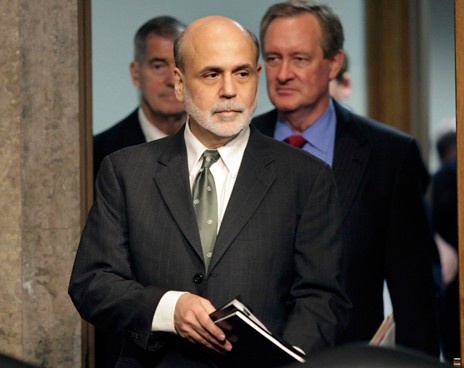
Expectation. Part 1
In anticipation of Ben Bernanke’s speech at the symposium of the heads of world central banks in Jackson Hall, analysts and market participants are building assumptions. Everyone held their breath: statements of the last day of summer will set the tone of an active autumn session. The main question: will hopes be justified? The market participants, of course, are waiting for additional stimulating measures. And although the open announcement of the next stage of quantitative mitigation (QE3), as it was in 2010, are waiting for few, almost everyone expects a subtle hint of possible assistance to the market.
According to the analyst of the Criminal Code of Raiffeisen Capital, Mikhail Kuzin, the script is most likely when Bernanke reports only the readiness of the Fed to act in case of deterioration of the situation. Surely, in his appeal, the head of the Fed will pay attention to the possibility of a “fiscal cliff” at the end of the year, but it is unlikely that the beginning of QE3 will be announced.
The main reason is the Beige Book published on Wednesday. The report on the economic situation in July - early August says that in most states, activity indicators demonstrated moderate growth. In other words, the US economy feels pretty good. “Published on the eve of the growth rate of the American economy in the II quarter by 1.7% (versus 1.5%), strong data on the sales of new houses in July and stable numbers in the labor market, they say, most likely that active measures will not be taken,” the junior portfolio manager of the Fleming Famile End Partners Alevtin Voronova agrees.
But it is impossible to say with complete confidence that QE3 will not be: after all, Ben Bernanke recently said that help could come not only in the absence of economic growth, but also in case of insufficiently rapid growth. And this is a new reason for hopes. But there are other factors not in favor of the immediate monetary stimulation of the economy: the approaching ceiling of public debt, the end of the tax benefits of George Bush, as well as the beginning of the presidential race in the country.
In a patient expectation, the world market has been in the first week. “Stock markets continue to trample the same levels, and any attempts to reduce or growth are quickly suppressed,” writes Vladimir Bragin, director of the analysis of financial markets and macroeconomics of the financial markets and macroeconomics of the Criminal Code, Vladimir Bragin . Uralsib Capital analysts are sure that they will not be able to radically change the situation in the market: investors will arrange an announcement of either new stimulating measures or a fundamental abandonment of a new round of quantitative softening. But the first is not too likely, and the second is completely contrary to the latest statements by representatives of the monetary authorities.
Market participants will be disappointed, almost all experts believe. The question remains open-how strong the disappointment of the bidders will be, and what kind of subsidence in the markets this disappointment will lead, Stanislav Kleshchev from VTB-24 is sure. But if not now, then when? Vasily Evdokienko from the brokerage company Kit Finance believes that the maneuver spaces are less: “QE3, if it is announced, either today or at a two -day Federal Construction Service of the Fed in mid -September, then, taking into account the election fever, large solutions should be waited only at the end of the year.”
If today the promises of support for markets from the Central Bank will not follow, the base script for the markets will be a lowering trend, writes the senior analyst of Alfa-Bank Angelik Genkel . The reaction of the Russian market to Bernanke’s words will only be followed by the next trade week.
Expectation. Part 2
So Ben Bernanke performed. In his speech, neither the phrase “quantitative mitigation”, nor specific plans of the Fed, did not sound in his speech. But the same “hint” still heard the same hint. The head of the Fed recalled both the pre -crisis years and the difficult in 2008-2009, and expressed hopes for the speedy healing of the American economy, which goes, but too leisurely. Traditional monetary policy or quantitative mitigation: Bernanca weighed pros and cons of his speech.
The head of the Fed expressed serious concern about the possible consequences of non-traditional monetary policy, although he recognized its undoubted benefit: “In the absence of those measures [the first stage of quantitative mitigation] the recession of 2007-2009 would be deeper, and the current recovery would be more slowly than happening.” Ben Bernanke did not give a clear signal about the inevitability of the third round QE, but nevertheless, the head of the federal reserve system said that the progress in reducing unemployment is too slow, and the Central Bank will perform the necessary actions to strengthen economic recovery.
“How we should evaluate the benefits and costs of alternative approaches to monetary policy, so we should not lose sight of the difficult economic problems that our country faces. Stagnation in the labor market, in particular, causes serious concern <...> over the past five years, the Fed has been supporting economic growth and contributed to the creation of new jobs. This is very important for achieving further progress, in particular, in the labor market. Taking into account the uncertainty and limits of its tool, the Fed will ensure additional stimulation of the policy necessary to promote a stronger economic restoration and sustainable improvement in the state of labor market in the context of price stability, ”Ben Bernanke concluded his speech.
In mid -September, the next meeting of the open markets (FOMC) committee will be held, on which, probably, a decision will be made on measures to stimulate the economy. The expectation continues.