
Translated material
The system of two keys
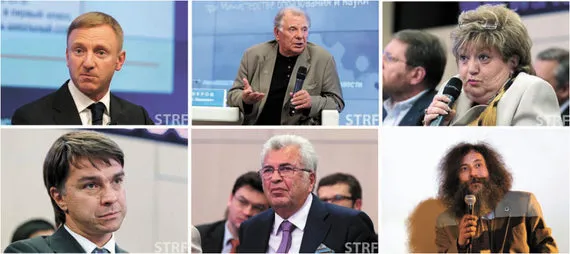
Famous public figures, teachers and scientists may be a real opportunity to influence the policy of the Ministry of Education and Science of the Russian Federation and even make some decisions in the field of education and science. Such a prospect of August 30 was voiced by the head of the department Dmitry Livanov at the first meeting of the freshly elected public council at the ministry.
What happened
The Public Council under the Ministry of Education and Science has existed since 2006, but until recently, this structure was heard little. Livanov, who, from the moment of his took office, declares that from now on the ministry will become as open as possible and will rely on the opinion of the public and experts in his work, intended to give the advice a new life and radically expand his powers. The minister appointed part of the members of the organization himself, and the part chose from the winners of the Internet voting, which took place on the website of the Echo of Moscow radio. In total, 17 people entered the Public Council. Sergei Kapitsa, who was one of the leaders of the Internet voting, was also elected to the organization.
Almost all members of the Council came to the first meeting: there was only only chairman of the SB RAS Alexander Aseev and academician-secretary of the energy department, mechanics, mechanics and management processes Vladimir Fortov. Some of the gathered were familiar, but the majority saw each other for the first time. While members of the Council do not contact each other in any way, and all the interaction takes place through the secretary. However, the minister promised to correct this situation and create an individual page on the Internet for each “adviser”, on which he will be able to upload and discuss his proposals with everyone. The forum will be “screwed” to the pages through which ordinary citizens will be able to turn to members of the Council.
The chairman of the two abstracts was chosen by the Nobel Physics Laureate of 2000, Zhores Alferov (his candidacy was proposed by Livanov), who conducted a meeting with the professionalism of the State Duma deputy with many years of experience. Almost immediately, a clear division of the “elect” into two groups became obvious: scientists and school and university teachers, whose views on the same questions often diverged. For example, scientists considered that the number of people received in universities is a necessary and sufficient criterion for the success of the school; Teachers actively objected to this position, noting that not only future scientists are taught in schools. Dmitry Bykov and Viktor Losk, representing the journalistic community in the Council, clearly fell out of what was happening and did not say a word for the whole meeting.
In total, the Council was proposed for discussing 25 topics, previously sent by the chosen ones themselves. The main part of the list was specific issues that concern scientists and teachers, such as “the connection of the Russian Academy of Sciences with universities and universities”, “what a modern textbook should be”, “the certification system of the Higher Attestation Commission”, “support for talented young scientists”, “Problems of first -class admission”, “The availability of preschool education”. Since the meetings will be held once a quarter and it is planned to discuss two topics at each meeting, until the next time the council members will have to select six of the most relevant points (two topics -the deburistization of education and the planned reduction in the number of universities -the Council touched on the first meeting). A couple of questions that, obviously, will become the reason for subsequent discussions, were determined immediately: the USE and the availability of higher education now and then crawled out in the disputes of the “advisers” on the seemingly far from these misfortunes.
List of members of the Public Council:
Alferes, physicist, Nobel laureate
Aseev Alexander, physicist, since 2008, Chairman of the Siberian Branch of the Russian Academy of Sciences, Dmitry Bykov, writer, journalist
Venediktov Alexey, journalist, editor -in -chief of the Echo of Moscow radio station
Volkov Sergey , teacher of the Russian language and literature of the 57th school of the city of Moscow
Gelfand Mikhail , Bioinformatics, Deputy Science of the Director of the Institute of Problems of Information Problems (IPPI) of the Russian Academy of Sciences
Georgiev George , biologist, founder of the Institute of Biology Gene (IBG) of the Russian Academy of Sciences, director of IBG from 1990 to 2006, supervisor of IBG
Ivanov Mikhail , Director of the Lyceum "Physics and Technical School" at the Physics and Technical Institute named after A.F. Joffe RAS
Karachinsky Anatoly , President of IBS Group, member of the Expert Council on Electronic Education under the Committee on Education and Science of the State Duma
Leontovich Alexander , Director of the House of Scientific and Technical Creativity of Youth, Moscow
Loshak Victor , editor -in -chief of the magazine "Ogonek"
Maya Pildes , director of the 56th gymnasium, city of St. Petersburg
Rukshin Sergey , Associate Professor of the Russian State Pedagogical University. Herzen
Smirnov Stanislav , mathematician, winner of the Field Prize, supervisor of the mathematical laboratory named after Chebyshev at the St. Petersburg State University
Fortov Vladimir , physicist, academician-secretary of the energy department, mechanical engineering, mechanics and management processes of the Russian Academy of Sciences
Khromov Artem , Chairman of the Russian Student Union
Yamburg Evgeny , Director of the Center for Education No. 109, Moscow
The meeting, which lasted 2.5 hours, was somewhat chaotic, and in some places the conversation became completely common - although, perhaps, the excessive “watery” of the meeting is explained by the fact that it was the first and the participants did not really prepare for the discussion. But the format of the event, apparently, will remain unchanged: one of the council members acts with a prepared report for one of the problems, the rest opposite or support him-and the minister and his deputies monitor what is happening and “take into account”. At the first meeting, Livanov clearly showed interest in discussions, periodically marked something in his ipad, sometimes agreed with the speakers and explained how exactly the ministry plans to solve certain problems. Other officials from the Ministry of Education and Science at the end of the meeting yawned and clearly bored.
What is wrong
In the first third of the meeting, dedicated to the reduction of the number of papers and instances to which they must be sent, school teachers soloed: obviously, their exhausting endless reporting took especially strongly. The director of the 56th St. Petersburg gymnasium Maya Pildes complained that the filling of meaningless and often duplicate papers would take away a huge part of the time from teachers, headlines and director. For example, the initiative “Our New School” actively advertised by the previous head of state requires the teachers to fill out 12 reports - and this is not counting four more monthly. The so -called prognostic reports in which it is necessary to indicate, say, how many people with disabilities will study at school in 5 years or in which lesson in 10 months (with the exact number!) The teacher will go through a specific topic or even liquidate students on those topics that have not been adequate sufficiently annoyed.
Judging by the reaction of officials and the “camps” of scientists, the horrors told by teachers were new to them, although the situation with reporting in the ministry itself is known. The researchers themselves also had what to say about unnecessary papers and bureaucratic obstacles that catastrophically slow down the work of laboratories - sometimes until the impossibility of continuing research. The sorrow of the scientific community was briefly set out by the Academician of the Russian Academy of Sciences Georgy Georgiev, the founder and many years of the Institute of Biology of the Gene (IBG) Institute of RAS, who organized one of the most successful and transparent programs for financing the science “Molecular and cellular biology”. In the list of Georgiev, the eternal brakes of scientific activity were shown, such as the 94th Federal Law, which regulates public procurement rules and complicates the work of scientific groups, specific features of Russian customs, because of which experts are forced to transport valuable samples and reagents in pockets and suitcases, slow-resistant distribution system of budget money, requiring researchers requiring the work of their work a year in advance-at The fact that in science a situation very often arises when the results obtained require the researcher to radically change the entire experimental scheme.
The scientific part of the Council is too well familiar, so they nodded and complemented Georgiev’s words with colorful examples. The Laureate of the Field Prize Mathematician Stanislav Smirnov, who received a megagant (monetary allowance, very solid even by world standards, which was played in order to attract leading scientists to Russia), said that in Switzerland a report on a grant of a similar size occupies 25 pages, and in Russia - 5 thousand. Teachers listened with interest, although they did not always understand the specifics of the situation. As a result, Alferov proposed to accept all the proposals of Georgiev to overcome the listed difficulties, although what kind of effect this action should have been unclear.
The second topic for discussion - a potential reduction in the number of universities - was presented by Dmitry Livanov himself. The fact that there are too many higher educational institutions in the country (1.1 thousand universities and 6 million students are now against 500 universities and 1.5 million students in the USSR), to the quality of training in which serious issues arise, the minister spoke from the first days of his appointment. “Today, the situation with higher education is critical. This is my assessment, ”Livanov said and said that by the end of September the ministry will end the first stage of the system reform - monitoring of all Russian universities. Higher educational institutions were evaluated by five dozens of parameters, which included the study of the composition of applicants and graduates of the university, clarifying how actively teachers are engaged in research work, assessing the material and technical base, and clarifying the average cost of learning of one student.
Livanov emphasized that according to the results of monitoring, the Ministry of Education and Science will not draw up a university rating, noting that non -state companies should be engaged in this work. Instead, the department will highlight the so-called “risk group”, which, presumably, will include about 25-30% of all higher educational institutions that will show bad results in several parameters. The Ministry plans to discuss the situation in these universities with experts, as well as with representatives of the region where the university is located. As a result, part of the universities and academies will be attached to more powerful educational institutions as branches, in some universities the leadership will be “strengthened”, and some of the “exalted” will be gradually closed, stopping students. Universities that ended up in the “risk group”, but are preparing specialists extremely necessary for the region, will be supported by “targeted”. At the same time, despite the reduction, the number of accessible budget places for school graduates will not change, the Minister of Relations with the open government Mikhail Abyzov emphasized separately.
The brightest quotes of the meeting:
I still do not know why Rono needed, who collect a lot of reports from us.
Maya Pildes, teacher with more than 30 years of experience
The essence of the work disappears in these huge reports: it is impossible even to understand whether it is completed or not. Especially for reading reports, the Institute of Monitors was created. They say there are good monitors. But I did not meet like that.
Academician of the Russian Academy of Sciences Georgy Georgiev
The school has turned into a place where children prevent teachers and administrations from working with documents.
Honored Teacher of Russia Evgeny Yamburg
After I met with teachers and spent them, as it seemed to me, heavenly beauty a seminar about how to teach literature, I could not understand why they had evil faces at the end. And then one teacher broke out: “You see, you will leave now, and we will write a report on a meeting with you.”
I’m also a State Duma deputy. And I know very well how many necessary, the necessary things have not been solved for decades.
Academician of the Russian Academy of Sciences Zhores Alferov
None of the members of the Council began to argue with the minister about the advisability of closing part of the universities. The only concern was expressed by the director of the Moscow Education Center No. 109 Evgeny Yamburg. The honored teacher of Russia called on Livanov and his subordinates to be very careful when evaluating pedagogical and medical universities. These educational institutions may not “go through” in the ranking according to many criteria, for example, according to the index of the civilian articles of their teachers, since teachers, if they write some work, are placed in magazines that are not indexed in international science publications. The editor -in -chief of the Echo of Moscow radio station, Alexei Venediktov, did not agree with such a question, saying that universities should not release bad doctors and teachers, even if they were very needed, but his position did not receive support.
What's next
Participants in the meeting, even those who are usually inclined to speak very skeptical, appreciated the meeting and its prospects with restrained optimism. “From three hours of conversation, it is difficult to expect some practical result,” says Stanislav Smirnov. - But the meeting had several dozen specific offers, and if the ministry had taken them to implement, then it would be good. For example, each of the proposals of Georgiev, very specific and practical, increases the efficiency of scientific activity by 5-40%. It would seem that 5% is a trifle, but when a simple solution allows you to improve something by at least 5%-this is a noticeable plus. The effect of such improvements is comparable to what would happen if people were 1.5 times raised - but these decisions do not require investment of additional money. We’ll see-we will see, but if the ministry takes up these proposals, then some effect can be expected, probably in six months. ”
The teacher of the Russian language and literature of the 57th school of Moscow, Sergei Volkov, who at one time attracted the attention of the media and parents to new standards for high school (as a result of the noise they were not accepted), spoke even more clearly: “So far, sensations are much more positive than the day before. A simple, clear and, it seems, sincere position of the ministry has been demonstrated openly and cooperate. I did not hear either in words or in the intonations of some kind of deception or desire to create a screen. I don’t know what will happen next, since the ministry is young, and the minister is only at the beginning of the journey. The positive point is that there are many people, scientists who are accustomed to bring things to realization, to achieve something, and not just say. Another thing is that not all decisions depend only on the Ministry of Education - there is also a government, the Ministry of Finance and other structures that may have a different position. Expected today is the beginning of the next stage of work. Some great indignation must mature, which was not at the stage of making incorrect decisions. The work of the Public Council is another pebble on the path of making correct decisions. We just do nothing so simply. ”
“The council has a certain number of living people, and I think that some moments will be able to squeeze. Membership in the public council is useful in the sense that it is an umbrella that can cover those people who are really ready to solve problems. Another significant role of the Public Council is that it should insist that everything that happens at meetings and between them is public. And if the council does not work, then it will become a tribune for public scandals, ”said Mikhail Gelfand, bioinformatist, deputy director for science of the Institute for Information of Information Information Mikhail Gelfand.
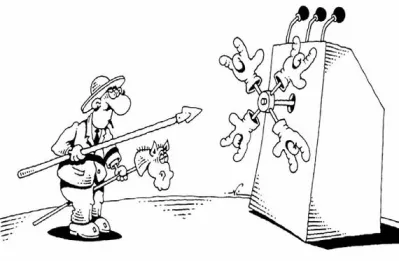
Livanov himself promised that in the future the functions of the Council can be significantly expanded - up to the fact that when making some decisions, the Council and the Ministry will work on the principle of “two keys”. That is, these decisions can be made only with the approval of both structures. In addition, the council will conduct a preliminary examination and analysis of various proposals, discuss cases related to the field of education that have social significance, to debate about the systemic strategic problems of the region.
Associations like the public council at the Ministry of Education and Science always have a risk of turning into a place for a rapid discussion of global issues, and not an organ that is able to solve real problems, attracting the attention of the ministry to them. Publicly, Gelfand announced this fear, and as a “test for lice” proposed the council and the minister two specific issues. The first is the reduction in financing of two leading Russian scientific funds - the RFFI (Russian Fundamental Research Fund) and the RGNF (Russian Humanitarian Scientific Fund). Despite the promise to allocate more money to them, the total amount of the “premium” was cut by the Ministry of Finance. The second example is the story with a very strange admission to universities of several schoolchildren who allegedly participated in a certain Olympics and received the right not to take entrance exams. Эти два примера, по мнению Гельфанда, смогут сразу показать, насколько эффективны Совет и его посредническая роль между обществом и министерством: «Если до следующего заседания в этих вопросах не произойдет никаких сдвигов, то на следующей встрече я попрошу министра публично объяснить, почему так получилось».
Irina Yakutenko,
"Lenta.ru"