
Translated material
Widely open window
This year has turned 50 since the beginning of astronomical observations in the X -ray range. The “X -ray view” at the Universe allowed to open and learn a lot of interesting things. The study of neutron stars would be almost impossible without x -ray observations. For a long time, we received information about black holes only thanks to X -ray satellites, and even now they remain the main source of data about these objects. Even cosmologists now look with hope on the upcoming mass observations of the clusters of galaxies in the X -ray range. Some important stages in the early history of X -ray astronomy are described in the article by Pavel Amnuel , the author of the wonderful book “Heaven in X -rays”.
The international conference dedicated to the anniversary of X-ray astronomy will be held on September 17-21 on the island of Mikonos in Greece. Among the invited speakers is Riccardo Jaccony, who opened a new era in the history of space research half a century ago. The eighty -year -old Patriarch will remember, of course, how he, a young, full of hopes and a certain skepticism (it is interesting to ask him now: what really was more?), Surrending his eyes taking a rocket with X -ray meters on board.
At that moment, the 30-year-old researcher, too, possibly recalled, for example, how it all started. Like he and his colleagues-friend Bruno Rossi, Frank Paolini and Herbert Gursky decided to look for sources of cosmic X-ray radiation, not related to the sun.
Until 1948, no one tried to see the sky in the X -ray range. The problem was that X-ray studies cannot be carried out from the surface of the Earth. The proof (with an energy of more than 20 CEV) is completely absorbed by the atmosphere at altitudes up to 20 km, and for observations in the so-called “classic” (1-20 KEV) and especially in the soft (less than 1 KEV) ranges, it is necessary to raise the equipment to a height of more than 200 km.
The X -ray radiation of the Sun was discovered by a group of Richard Barnaite from the Marine Laboratory (USA). In 1948, they launched a rocket raised to a height of 200 km. On board was a photo emulsion covered with filters of berylia and aluminum. The emulsion was blackened. A year later, another American researcher - Herbert Friedman confirmed the opening using the photon meter installed on the rocket. It was so proved that the sun emits x -rays.
The thermal brake radiation of transparent plasma is the mechanism of radiation of the sunny crown, the crown of ordinary stars can also radiate. But the X-ray flow from stars, even the closest, can hardly exceed 10-3 photons/(cm2/s). It was impossible to detect such weak radiation in the 50s, and within ten years the problem did not go out of the stage of theoretical discussion.
In the late 50s, Riccardo Jacconi, Bruno Rossi and several of their colleagues became interested in the US problem. The difficult task of detecting cosmic X-ray radiation, not related to the Sun, they tried to solve in two ways: firstly, increasing the sensitivity of the receiving equipment and, secondly, choosing not the sun and stars for research, but other intermediate goals. Perhaps they believed, there are some other previously not discussed types of radiation that will allow you to point to heavenly objects that potentially capable of intensively emit X-rays.
And unexpectedly the most promising purpose of research was the moon. The fact is that in the late 50s, after the launch of the first APZ and AMS, a solar wind was discovered-a stream of particles expiring from a sunny crown. At the Massachusetts Institute of Technology Bruno, Rossi was appointed to lead the program of research of the solar wind. It was necessary to determine the concentration of wind particles, the speed of their movement, etc. And then the attention of the researchers was unexpectedly attracted by the moon. After all, the electrons of the solar wind, reaching the moon, are sharply inhibited in its surface layer. So, brake X -ray radiation may occur. And even more than that: the surface of the moon is able to fluorescy under the influence of the X -ray radiation of the sun falling on it. Indeed, unlike the Earth, where X -ray cosmic radiation is delayed by the atmosphere, on the moon it reaches the surface.
Estimates showed that from the moon you can expect a stream of approximately 1 photon/(cm2s) in the energy range of 1-10 KEV. This stream is one million times smaller than the sunny, but X -ray meters, developed by that time, were a hundred times more sensitive than the previous ones, and this circumstance increased the chances of success.
Riccardo Dzhakkoni and his colleagues decided to use the Aerobee-150 missile as a carrier, capable of reaching a height of 200 km (Fig. 1). Three Heiger counters with an area of 10 cm2 each were installed on the rocket. The counters worked in the energy range from 1.6 to 6.2 KEV.
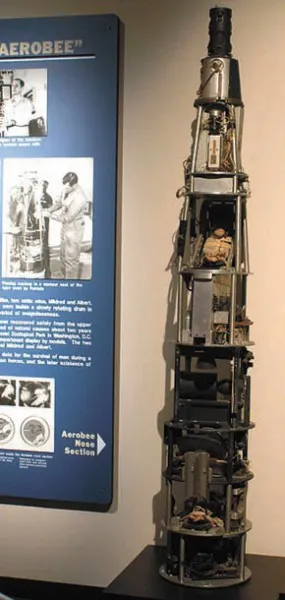
The launch took place on June 18, 1962 from the White Sands missile training ground in New Mexico. As soon as the observations began, two of the three meters immediately showed a sharp increase in the speed of the photon account. The signal intensity changed with the same period with which the rocket itself rotated around the axis. This meant that not a background radiation came from all sides, but a local source, motionless relative to the stars. It was difficult to determine reliably the position of the source in the sky, the device was not designed for accurate guidance. It was clear, however, that the direction to the source (constellation of Scorpio) does not coincide with the sun, the moon, or with any other object of the solar system. The devices recorded the radiation flow, five more than expected from the moon.
First of all, the participants in the experiment thought: maybe there was an error? Was it, for example, a device for the influence of any unaccounted processes in the upper atmosphere? To weed out possible doubts, it took several launches. Finally, the existence of a bright X -ray source outside the solar system has been proven.
So, the source is discovered. But what is it? If this is a celestial body, really located outside the solar system, at least the nearest star - the proxima of the centaur, then its X -ray luminosity is 10 million times higher than the X -ray radiation of the Sun! And if (what could not be excluded) the source is much further? None of the famous classes of stars is able to give even a small share of this powerful radiation!
So the first attentive “look” at the sky in the X -rays set the task, for the solution of which years were needed. This point in the constellation Scorpio (lat. Scorpius) became the starting in the history of the new direction of astronomical science.
The source was named SCO X-1 (for some time it was precisely the following shape to designate sources: the three-letter abbreviated name of the constellation, X-since X-rays are called X-rays, and the source number in the order of the opening; i.e. Cyg X-3-this is the third open X-ray source in the constellation of the Lebed, understanding, the numbering in each one constellation begins with a unit). In 1963, during the flight of a rocket launched by another group of researchers, the existence of a source in Scorpio was once again confirmed. Moreover, another bright source was opened. He turned out to be 8 times weaker, was in the constellation Taurus (lat. Taurus) and was called TAU X-1. The coordinates of the source coincided with the well -known residue of the outbreak of supernova - crab -shaped nebula.
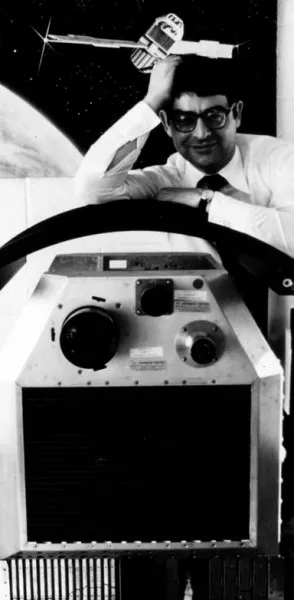
It became finally clear that the X -ray astrophysics not only pushed the narrow boundaries of the window through which the researchers studied the universe. She opened a new, unknown world to people. For the creation of X-ray astronomy, which began with the detection of SCO X-1, Riccardo Dzhakkoni in 2002 received the Nobel Prize (Fig. 2).
Studies of the X -ray sky cannot be led from the Earth, but it is impossible to study the X -ray sky without coordinating research with simultaneous observations using ground optical and radioteleescopes. Astronomy half a century ago became Vsevolnova. Now in space, satellites fly in whose devices cover almost the entire range of electromagnetic waves-gratifying (Russian spectrum), infrared (spitzer) and optical (Hubble) radiation up to hard X-ray and gamma rays (Fermi, Integral, Fig. 3).
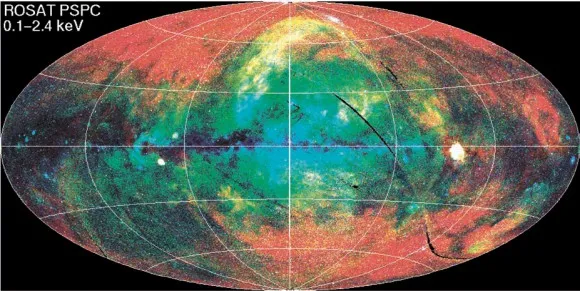
The number of cataloged X -ray sources is already calculated by many thousands, and at least ten satellites launched by different countries (Russia, the USA, the European Union, Japan, Italy) send information about the most mysterious objects of the universe. For 12 years now, the CHANDRA and Hmm-Newton have been actively observations and have been active observations (Fig. 4).
About how diverse objects of X -ray space research are, one can judge at least under the program of the anniversary conference in Mikonos. Reports of X -ray radiation will be read:
- hot intergalactic gas, heated to temperatures reaching tens of millions of degrees;
- nuclei of active galaxies (in the center of which are super massive, up to ten billion solar masses, black holes);
- ordinary galaxies (from where the total radiation of all objects that is in our galaxy is observed);
- clusters of galaxies;
- double star systems with relativistic stars or white dwarfs;
- ordinary explosive variables;
- remains of supernova flashes;
- star winds from young star clusters;
- Star winds from blue supergiants;
- hot star crown;
- And many other objects that half a century ago would have never occurred to anyone to say that they could be sources of X -ray radiation.
Over time, when the sensitivity of X-ray telescopes and counters will increase even more, it will be possible to observe in other star systems and the effect, in search of which Riccardo Jaccony and his colleagues launched Aerobe-150 missile half a century ago: it will be registered as an ordinary earthly land planet in a distant star system reflects the X-ray radiation of their star.
Optical astronomy took four centuries to go from the first telescope Galileo and the opening of the satellites of Jupiter to the detection of exoplanets and super -demolished galaxies. X -ray astronomy has passed a similar path in half a century. True, the path of this X -ray astronomy has passed in hand with optical and radio. And this is one of the main features of modern astronomy - we look at the universe through a wide open window.