
Translated material
All stars
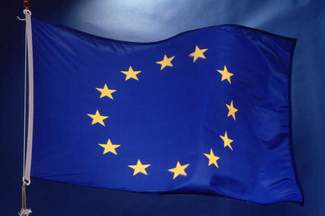
11 Ministers of Foreign Affairs of the European Union, part of the group "On the Future EU", proposed to create a post of EU president, elected by universal vote. And also form a common Foreign Ministry, introduce a single European entry visa, and, possibly, make a single army. What is the pathos if he is here? In general, it is interesting. Only first it is necessary to clarify the disposition, for example: what kind of group is this, how does it correlate with the official EU and in what context did its proposals appear?
Group
Backstory: after the project of revising the EU constitution failed in 2005, Germany did not leave this idea. At an informal meeting of foreign ministers of the EU countries in Copenhagen, March 9, 2012, Guido Westerwelle, the German Foreign Minister said that it would be necessary to improve the decision -making process (referring to 27 countries and the variety of their opinions). That is, somehow nevertheless centralize in this part. Then he called on France and another countries to restart the constitutional project. Then he was supported by Belgium, the Netherlands, Poland, Portugal and Spain. Sweden and Italy criticized, London - rejected immediately. But the group was formed.
" German Minister Calls for New Eu Constitution" ("The German Minister demands a new EU constitution"), then the media wrote. Yes, from the very beginning it was not announced about the details, but immediately about the constitution. Which, in fact, already determines all the problems of the document and its slow future with any embodiment of the development of the event.
Further, already in June, a group called very uncompromising-“ Study Group for the Future of Europe ” (approximately “a group of studying the future of Europe”) gathered and made a pre-conceptual press release that allowed the media to issue headlines of the type “ 10 Countries for a United States of EUROPE” ("10 countries - for the United States of Europe"). It was reported that the purpose of their unification is the desire to carry out pressure in order to transform the EU into something federal, such as the United States. In June, they prepared something under the name Plan for Transformation Into A European state (“transformation plan into the European state”) and sent it to the EU leadership. The addressees were the President of the European Commission of Barroso, the President of the European Council Van Rompuy, the President of the Central Eurobank Draghi and the president of the Euro group Junker.
The pathos there is simple: it is finally necessary to terminate the dominance of national governments and transfer more powers to the European Commission, in particular, their president. In general, it should be elected in a nationwide way, which would guarantee the opportunity to create a "government team", which would make it (the President of the European Commission) one of the most influential politicians in Europe.
Then it was not without malice. Say, Die Presse noted that it is completely not surprising that the initiative comes from countries that have lost their influence after the adoption of Treaty of Nice in 2001. They simply look for a way - using the crisis - to regain the previous status of the values of the Europolitics. However, even in this note it was noted that - however - this idea still looks like the best scenario for the future. However, German, nevertheless, the publication.
Accordingly, the current document of the group publicly formulates their proposals. So, 17 September 2012, " Final Report of the Future of Europe Group of the Foreign Minists of Austria, Belgium, Denmark, France, Italy, Germany, Luxembourg, The Netherlands, Poland, Portugal and Spain "(" The final report of the "Future of Europe" group of foreign ministers of Austria, Belgium, Denmark, France, Italy, Germany, the Netherlands, Poland, Porrutaglia and Spain ").
There is a nuance: in the document, some phrases and proposals are in brackets and this means that not all of the above ministers agree with them.
Context
Not only is the group’s statement not news, it is also directed to a specific context. Now - the beginning of the political season in Europe, the EU leadership acts with reports, building a summons for the season. The main moment of approval of the agenda is the EU summit on October 18-19 in Brussels.
On September 5, Herman Van Rompuy (President of the European Council) was a speech on the occasion of Annual Conference of EU Heads of Delegation (the annual conference of the EU delegations).
On September 12, José Manuel Durulate Barroso (President of the European Commission) performed with his " State of the Union 2012 Address" ("Regulation of the Union 2012").
Barroza had the main part about the economy, but it reached politics. Moreover, it is with the keywords about the federation: " Let's not Be Afraid of the Words: We Will Need to Move Towards A Federals of Nation States. This is What Wes Our Political Horizon. Must Guide Oour Work in the Years to Come (“There is no need to be afraid of these words, we need to move to the federation of national states. This is what we need. This is our political horizon. This is what should become our scenario for the coming years”).
Van Rompey compared to a retrograde. He has no references to the federal model. He talked about financial integration, without mentioning the Eurobonds, but speaking of a centralized Eurobody. Political integration in his speech was absent, in terms of unity of Europe, he limited himself to words on the topic of general European intensities and European spirit. In this embodiment: " More Generally Speaking, There Are No Grounds to the Existential Pessimism that Someigni Foreign Policy in Decline. Infact Its Impressive Jew How How How "Common" and Wide-Ranging Our Foreign Policy Has Become. Underestimated by Outsiders - and Even By Insiders! " That is, the fact is that the whole world feels that in fact, 27 eurostroost is shared by a common posia. "But this is really unhappy with third -party people, and even its ..."
Apparently, the summit in October will be interesting. Of course, the economy is still the main thing, but it seems that it will not do without political integration. Federalization should manifest itself, even if in Barrosis it appears only by the end of its "state of the union 2012 Address". However, the latter is remembered.
What exactly is the document "Study Group for the Future of Europe"
The document is competent. There is a substantiation there, and pouring its line is almost tender justification, for example, and such (this is already for those who are interested in details, so I don’t translate): “T He Crisis Has Long Also Had a Political Dimension. In Many Parts of Europe, Nationalism and Populism are on the Rise, Feeling of Solidarity and Sense of Belonging in Europe are dwindling ABOUT THE FUTURE OF THE EUROPEAN PROJET HAS to BE CONDUCTEDNE, and It HAS to TAKE PLACE ALL ACRESS Europe. Increased - that the half -tick consequences of the crisis were, among other things, a certain growth in some countries of nationalism and populism. Which, of course, is critical for a sense of Euro -public.
Further, first about the fact that "Strengthening the Economic and Monetary Has Absolut Priority " (strengthening the economic and monetary union is an absolute priority ") The phrase" We Believed the Euro Crisis Has Been appears. Overcome, we must also improve the overll function of the European Union (“We believe that after the euro crisis is overcome, the functioning of the European Union as a whole should be improved”
Then the conclusions, in the same sequence:
I. Overcoming the Current Crisis by Fundamentollly Strengthening The Economic and Monetary Union ("Overcome the current crisis, strengthening the economy of the Chinese and monetary alliance")
II . Facilitating Further Integration Steps and the Long-Term Governance Structure of the European Union ("Promote further integration steps, develop the structure of long-term control of the EU")
The authors are experienced people, so this is not a document in the format "to do this and Europe will become powerful." On the contrary, it should become such and such, and for this, perhaps, for example, it should be undertaken by this ... not about the President of the EU (or the popular president of the European Commission) immediately, but " we should strengthen the integrity of the EU foreign policy actions ," " we have the need to strengthen the policy of general and defense security ."
All the above -mentioned proposals for the police, the president, a single visa, etc. Not reduced in one point, but scattered in the text, reinforcing one or another point. " In the sphere of Justice and Home Affairs, We TheFore Propose that Protection of the Schengen Area's External Borders Beengthened Border Police) Or, in the Medium Term, that auropean visa be CREATED. Another Field Wheeed “More Europe” Is Sustainable Energy: We Need to Create a Functioning Internet Energy Market Through European Energy Infrastructure , that is, strengthening the external boundaries of Schengen by creating a common border service, in this regard and about a single visa, but immediately about creating the domestic energy market.
About the president and the second chamber of the European Parliament - in another place, and noting that this is not in a hurry, you can at the very end: " At the end of a long process, a more streamline and efficient system for the separation in Europe Full Democratic Legitimacy Shoup Be Envisaged. The Mambers of his “European Government”, a European Parliament with the Powers to Initiate Legislation and A A A AAMBER FOR THE MEMBER STATES ”. At the same time, it is noted here that the idea of universal legitimation of the EU president, which will then appoint members of the European government, as well as the topic of the Second Chamber of the European Parliament for EU member states, is not the development of all members of the group, but only some.
What can be said about this
Since the status of the document is informal, you can reason in the most free way. In general, nothing sensational. Some problems of the Euro -project, but they are already known - they are not fatal, but something should be corrected. Nothing that changing the Constitution is actually just normal. Moreover, given at least the common commonality of free movement of works and capital, federal additions fundamentally do not change anything, except technologically.
Yes, there is a certain demagogy: what is a well -elected president? Well, there are 450 million and the territory from Narva to Gibraltar, how to hold election campaigns there? Who in Romania will figure out who is better for Europe - van rumpei, for example, or barorrhages? Or maybe Kvasnevsky? And by what, in fact, the principle to hold elections? By party? But pan -European parties - despite all sorts of party groups in the European Parliament - have not developed, they do not set the tone. Especially - in a completely post -party era. So it’s not clear with the elections. And on the public president in this scheme, the appointment of members of the European government is tied.
This item is important: if such a government appears, then individual EU countries will not be able to impose a veto in resolving issues of foreign policy and security, in the ratification of pan -European agreements. That is, they must support the foreign policy measures with which they do not agree. Actually, this is the main point of federalization, "as in the USA."
But only this can be solved without the president, and even without ministers. The document also contains such an idea: " To strengthen the authority of the department of the Supreme EUROUZ for Foreign Affairs and Security Policy and turn it into a full -fledged pan -European diplomatic ministry ." And if this happens, it will close the aforementioned point. Although, inconsistent: this position will become the most important in the EU.
For trifles. It will not work with the common army, some countries have nuclear weapons, and if, on the fact of the common army, to transfer it to the EU, then its distribution will turn out. But there are no problems with the border guards, given the current biometrics. A single visa is also a technical detail.
What else is there? Official announcement of the EU Federation? There are also no problems except emotional. In reality, such a decision will affect when, but urgently - it will not even be necessary to change the passport, they are already a single sample. Anyway, there is, say, State of Illinois, a country for itself and the country. Moreover, in Europe, languages will not allow uncontrolled and unnatural mixing. In a word, the project is not fateful, the course of things is simply emphasized. If, of course, this course of things actually leads to one -man. It seems that many still do not agree. But the project also provides for the fact that the decisions of the refereudes will become mandatory for all countries ...