
Translated material
The logic of the doctor
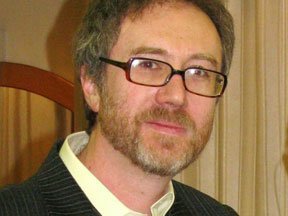
Readers of Polit.ru are familiar with Dr. Honey. sciences, prof. Evgeny Yakovlevich Paranes according to several of his interviews - including evidence -based medicine (see list at the end). In July 2012, we published two essays on a practitioner and scientist, revealing the logic of the author’s medical thinking. And now there are four more stories. Essays are chapters from the not yet published book by E.Ya. Paranes "Studies about medicine in different colors."
What depends on the correct diagnosis?
The head of the endocrinological department meets me on the stairs with the question: "Do you want a mystery?"
Let's go to her office. “So,” she says, “and a 55 -year -old man came to us in connection with the decompensation of type 2 diabetes, but he has already has a temperature for 40 ° C for several days, ESR in 60 mm per hour, about 18 thousand leukocytes in the blood, and recently it has“ loaded ”, so it is no longer possible to talk to him. We all looked - besides this, there is nothing. Well, what is the diagnosis? "
I said that first of all you should think about pyelonephritis.
“Well, Evgeny Yakovlevich ...,” she said upset, “I thought you would say something worthwhile. We, too, first of all thought about pyelonephritis. I have already sent the patient three times to an ultrasound of the kidneys, but everything is in order there, and the urine tests are perfect - both in Nechiporenko and general analysis, and we take them every day. ”
I looked at the patient, looked at the medical history. There is no data for leukemia, there is no autoimmune disease. Therefore, I say: “Looking for an infection , maybe this is an infectious endocarditis, it may be sinusitis, although, in fact, most likely pyelonephritis.” “Yes, here are the pictures of the skull, there is no sinusitis, and they did the echo of the heart - there are no vegetation on the valves.”
It was agreed that they would sow blood three times for bacteria in the blood (and therefore for sepsis) and repeat Echo-kg again.
Two days later I meet her again. “Still, Pyelonephritis turned out to be,” she says. “How did you make a diagnosis?” I ask. “May they take him to an echo-kg, and the doctor who previously conducted a study was absent yesterday, so Natalya Lukinichna did. She did not find an infectious endocarditis, but the left kidney hit the sensor field, and she noticed that there was a liquid under the kidney capsule, and therefore wrote that the patient had apostematous pyelonephritis. ”
Apostematous pyelonephritis (sometimes called the kidney carbuncle ) - a variant of the course of acute pyelonephritis with the formation of numerous small pustules (apostems) mainly in the kidneys, under the kidney capsule, which look like pustules on the skin.
I tied it up for a lifetime ...
A 50 -year -old man was translated from the resuscitation, where he got with the atrial fibrillation and pulmonary edema against this background for the first time. The rhythm was restored, lung edema was stopped, its condition was stable - normal blood pressure, the correct heart rhythm with a frequency of about 70 beats per minute, without shortness of breath, markers on myocardial infarction are negative. But the patient was terribly scared: this happened to him for the first time, and he suffered this whole situation.
I find out the anamnesis to understand what the paroxysm of the rhythm and heart failure is associated with. It turned out that no obvious heart disease - such as IBS, myocarditis, he has no heart disease. One thing remains - a typical “Russian disease”: drinks - sometimes often, sometimes a lot, although he is not a drunken alcoholic and, in general, judging by the conversation, a person is quite adequate.
We talked, as he was very worried about the cause of his disease. I explained that, most likely, he has an alcoholic defeat of the heart, which means that he can’t drink alcohol in the future. “Doctor, I understood everything, I don’t have to convince me; After what I experienced, I "tied up" for a lifetime. "
On this our conversation ended, and I went to the residential history of the disease.
After two or three hours, they call me to the ward: this patient is bad. I come: completely gray, the patient lies across the bed, hanging his legs, and often breathes superficially. Pulse and arterial pressure are not determined. Call resuscitation. They resort, but the heart soon ceased to contract, that is, the patient has clinical death. Thirty minutes of resuscitation - to no avail ...
When the body was taken out of the ward, the patient from the next bed told me: "And you look at him in the nightstand."
In the nightstand stood for three quarters of the empty bottle of vodka.
More about the syndrome
The famous professor - gynecologist addressed me to “correct” blood pressure; The main thing is that she was bothered by extrasystole. I find out under what circumstances she most often has a rhythm disturbance. It turned out that more often - after eating, especially when it lies.
I listen to her in a sitting position - there is no extrasystole, she lay down - at first the extrasystoles appeared, but then disappeared. “So is it an extension syndrome or not? ...”, - I think. [ Extension syndrome is a pathological state of the heart and circulatory organs, the cause of which are diseases of the upper sections of the gastrointestinal tract -ed.]
It turned out that she had already done Holter monitoring, and at the same time revealed frequent extrasystole. I see that extrasystoles were mainly from ten in the evening to 4-5 in the morning. So after all, rather, the syndrome of the uns ...
I tell her that gastroscopy should be done, since the cause of extrasystole is not in the heart, but in the stomach or esophagus.
“But there is no clinic,” she says. - Here you are, young doctors - make a diagnosis by analyzes, but by film, and we, old ones, always trusted the clinic more. Here I have neither abdominal pain, nor heartburn, nor belching .... We can say that my gastrointestinal tract is the only healthy place in the body. No, I don't believe you.
“Yes, the fact of the matter is that you have a clinic, only it manifests itself not with a dyspepsic syndrome (nausea, pain, heartburn, etc.), but lean syndrome, that is, reflex extrasystole,” I answer.
- Of course, I respect you, although I see for the first time, but I can’t believe it.
- Well, let's choose one of two ways to solve the issue with you. Or you go and do gastroscopy, and after you and I will determine which drug to remove the extrasystole, or I will prescribe a proton pump block for you, and if extrasystole disappears, then I was right and you have an extension syndrome.
I see that she hesitates, because it is incomprehensible: why does she suddenly do gastroscopy? On the other hand, I do not want to drink additional medicine, since she lives the rule that a good doctor prescribes very few medicines, and she already got an impressive list. So I left, leaving this patient the right to choose the most acceptable option for it.
Four days later, she called me.
- She was in her clinic, made a gastroscopy. There was a deficiency of cardia, pronounced reflux esophagitis (inflammation of the esophagus due to hydrochloric acid entering the esophagus from the stomach) with the presence of erosion and ulcers.
After that , it does not mean due to this
Of course, he impressed me with his charm, the ability to listen, with a soft rustling voice, a dog with a nickname “In honor” of the famous Russian poet - and how he intrudally he gave me a jacket. Although I explained that I like to dress myself, he did not give me the opportunity to do this.
I have been to him several times, he had problems with blood pressure, diabetes mellitus, and recently frequent episodes of atrial fibrillation have appeared. The problem was that when prescribing drugs that make up and hold the rhythm, he had atrioventricular blockade, and the dose of drugs had to be reduced. But at the same time, the rhythm was not controlled, and paroxysms of atrial fibrillation appeared. The way out of this situation is the setting of the pacemaker. Then you can prescribe adequate doses of antiarrhythmics without particularly worrying about the pulse, so with a sharp time to make rhythm or the skipping of the abbreviations, a pacemaker will work.
He set the stimulator. Now my hands were untied, I appointed a beta-blocker and cordaron. For some time, this solved the problem: paroxysm of atrial fibrillation and other types of rhythm disturbances ceased.
But suddenly the bell is paroxysm again. What is the reason? For a while, the patient did not drink antiarrhythmic drugs. We discussed that drugs from rhythm disturbance should be drunk constantly : he agrees. But since there is a probability of repeated paroxysms, I prescribe warfarin to him in order to prevent the formation of blood clots that are a common cause of stroke in case of rhythm. He agrees. It accepts warfarin, reports the reached by the number of blood coagulation.
Everything seems to be good: diabetes are controlled, the pressure is normal, the rhythm is normal, many are about 2.5. But suddenly again a call, he is bad. I'm going, but not home, as usual, but to another place.
My sick was in the workshop of one artist. It is slightly agitated, with increased manifestations of gallantry - it is clear that his behavior is significantly affected by the presence of a lady nearby: "That's the trouble: everything was fine, but today again the breakdown of the rhythm." I find out that he has not taken drugs for rhythm and warfarin recently ...
I explained that under all circumstances to interrupt the treatment is unforgivable, as this threatens with fatal complications. He completely agrees with me, recognizes his mistake, this will not happen again ...
We score the rhythm, we assign warfarin again. And after two or three days I found out that he was in a hospital with a heavy stroke. And this ended badly: a transfer from one hospital to another, a long exit from a coma, and then still a fatal outcome.
It is difficult for me to explain what these of his passes are connected with. He was absolutely adequate, clearly realized the severity of his diseases and, as it seemed to me at first, is quite pedantic in the performance of medical instructions. For example, once he ended in a drug for blood pressure, which he brought from the United States, so he asked where he could find him to break through several days before leaving. This drug was not sold with us then, but by chance I had a sample of this medicine, which it was very delighted.
Most likely, it was the image of the former conqueror of hearts, who today wanted to seem young and healthy to himself. A sort of Marcello Mastroian in the Moscow manner ... Constantly taken drugs that he persistently reminded him: "No, my friend, you are old, you are sick ..."
It so happened that I am flying his first wife and son; He visited his second wife several times. His first wife is now a similar situation: frequent paroxysms of atrial fibrillation began to occur, while against the background of antiarrhythmics, the rhythm is often reduced to 40 per minute, and a decrease in the dose after a few days leads to the next paroxysm. I recommend that she put a pacemaker. She is categorically with her son: “No, otherwise it will be like with him. Here they put a pacemaker to him, he died. "
See also:
- Evgeny Paulnes. The logic of a doctor-2
- Evgeny Paulnes. The logic of the doctor
- What can be considered a criterion for good medicine? R.M. Frumkina talks with the doctor of medical sciences E.Ya. Parades
- Miracle or evidence -based medicine? R.M. Frumkina asks questions E.Ya. Parines. Part 2
- Miracle or evidence -based medicine? R.M. Frumkina asks questions E.Ya. Parines. Part 1
- The system "doctor - patient - disease": controlled self -studies
Interview Rebekahi Frumkina with Doctor of Medical Sciences E.Ya. Parnes - What is evidence -based medicine? Conversation Rebekahi Frumkina with the doctor of medical sciences Evgeny Parasnes
- A spoonful of honey and a spoon of tar into a barrel of homeopathy // Trinity option. 2010. No. 67.