
Translated material
On the judicial hook
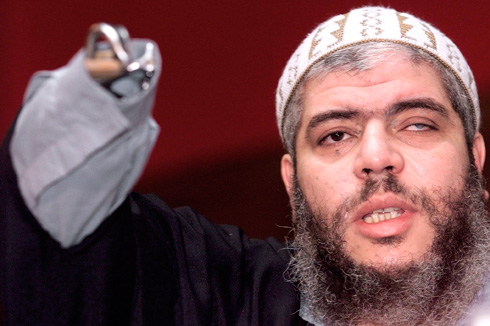
The procedure for the extraction of the radical Muslim preacher Abu Hamza al-Masri from Great Britain in the United States, lasting 8 years, has been suspended again. Despite the decision of the Grand Chamber of the European Court of Human Rights that allowed his extradition, the British Themis gave the Islamist another chance to defend
The Sunni preacher Abu Hamza al-Masri (the real name is Mustafa Kamel Mustafa) was the face of radical Islam in the UK. The native of Egypt, who came to London in the late 70s on a student visa and received British citizenship, managed to take part in two wars-on the side of the Afghan Taliban against the USSR (it was in Afghanistan that he lost his left eye and both hands, one of which was replaced with a steel hook) and on the side of the Bosnian Muslims against the Serbs and Croats. For several years, from the mid-1990s to the beginning of the 2000s, Abu Hamza was the imam of the Finsbury Mosque in the north of the British capital. Among his parishioners were the radical Islamists Richard Reed and Tzarias Musai - both were later convicted of terrorist activities and are now serving a sentence in American prisons.
The preacher of hatred
Abu Hamzu himself was called the “preacher of hatred”: he openly rejoiced at the attacks on September 11, 2001 and praised Osamu Ben Laden, called for the murders of the “infidels” and the creation of the Islamic Caliphate. In the fall of 1999, Imam threatened to start training teenage-suicide bombers for attacks in Russian cities, if Russian troops did not stop the bombardment of Chechnya.
In 2004, Abu Hamza was arrested on charges of propaganda of terrorism, incitement to kill and incite religious hatred (in 2006 he was sentenced to seven years in prison). Then, in 2004, the British authorities received a request for his extradition from Washington. The United States brought the Islamic preacher to 11 points, including participating in the hostage captures in Yemen, the propaganda of Jihad in Afghanistan and an attempt to organize a camp for the preparation of terrorists in the American state of Oregon. If his guilt of the US court, Abu Hazm, threatens up to 100 years in prison with serving a sentence in a prison of a particularly strict regime, where prisoners spend 23 hours a day in single chambers.
To Washington through Strasbourg
It was the possible conditions for the conclusion that became the basis for the eight -year lawsuit of the lawyers of Abu Hamza with British justice. The defenders of the former imam claimed that the content of a particularly strict regime in an American prison is equivalent to “inhuman circulation”, which is prohibited by the European Convention on the Protection of Human Rights. However, not only the British courts, but also the European Court of Human Rights (ECHR) did not agree with such an interpretation: in April, Strasbourg judges gave the “green light” of Abu Hamza’s extradition to the United States, and this week the decision was finally confirmed by the Great House of the ECHR. After the verdict of Strasbourg, the Ministry of Internal Affairs of Great Britain announced the intention of “as soon as possible” to transfer Abu Hamz to the American authorities. The press secretary of the national security department of the US Ministry of Justice Din Boyd, in turn, said that the American side is already “working with the British authorities” in this direction.
However, the legal battles did not end there: on Wednesday, that is, two days after the decision of the Grand Chamber of the ECHR, lawyers Abu Hamza filed a new appeal to the high court of England and Wales, which will consider it on October 2. The extradition procedure is suspended before the end of the court hearings. Nothing is known about the content of the new complaint, however, given that the Strasbourg court has already made a decision on this case, the appeal can be built only on newly opened circumstances or at the state of health of the accused.
Royal word
“I am furious when one thing is considered for eight years. This is unacceptable, ”said the chief judge of England and Wales, Lord Igor Jajj, this week. - Cases should not be considered for so long. This is unfair and wrong. When it comes to accusing terrorism, public interest lies in a fair, but quick consideration of the case. ” The Queen of Great Britain Elizabeth II expressed her dissatisfaction with the protracted process over Abu Hamza: in an interview with the BBC observer Frank Gardner, Her Majesty admitted that she was upset that the radical preacher could not arrest for so long despite the fact that he openly violated the British laws and said that this issue with the Minister of Internal Affairs. The conversation was private, but Gardner decided to convey its content on the air, which caused a serious scandal: according to tradition, the queen never publicly speaks out on political topics and does not interfere in the work of the government. As a result of the BBC Corporation, the Buckingham Palace had to apologize in connection with the “violation of confidentiality”.
Whatever the next attempt by Abu Hamza’s lawyers to delay his extradition in the United States, the decision of the ECHR that the conditions of detention in American prisons do not contradict the European Convention, created an important precedent that will probably be useful to Washington in future requests for the extradition of suspects from the countries of the Council of Europe.
Photo Reuters