
Translated material
Be like Georgia
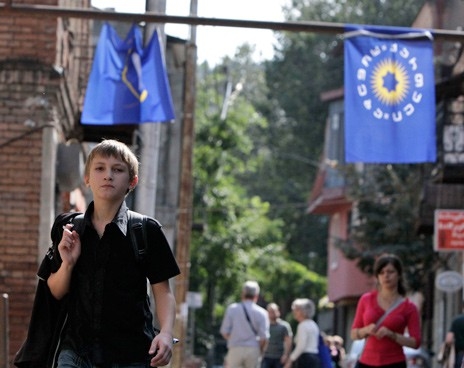
As soon as the vote counted in Georgia, the United States and the European Union greeted the results of the parliamentary elections. The dream of Vladimir Putin and Dmitry Medvedev about the departure of Mikhail Saakashvili is performed, but according to an unexpected script for them. Instead of their geopolitical victory, they received an infectious example of a geographically and historically close country in which the elections are honest.
Meanwhile, the defeat of Saakashvili is perceived as sensational only in Russia. It is difficult for many to understand how it is-if Saakashvili the dictator, then by definition he cannot lose in an honest election (well, we know what elections with a well-known result), and if Saakashvili is really a skilled reformer, then what the hell did his own citizens ride him in the elections? Where is the logic?
In this sense, Georgians are at a higher level of development of political culture. On the one hand, they recognize the successes of the previous power - victory over corruption (at the bottom, domestic level), successful police reform, the destruction of bureaucratic red tape in all areas, modernization of education, successful health reform - just transferring areas in which successful reforms were carried out would take a couple of pages. Even the most ardent oppositionists do not deny all these achievements, they are too obvious. But, on the other hand, Georgians understand well that the country still has as many unresolved problems, which the current government is not able to cope with. Saakashvili actively tried to use Putin rhetoric - they say, "if not me - then who" or "we do not want to go back." But in Georgia it does not work. As all these colorful political shows in the stadium do not work, constant propaganda processing through television does not work. Probably, I would not work in Russia, if we had at least one independent television channel (like a “maestro” in Georgia) and at least relatively honest elections.
There are really a lot of problems in modern Georgia. All entrepreneurs - both medium and large - with whom I had to talk here, complained that they could not calmly talk on the phone about politics, any hint of their disloyalty threatens them with loss of business, or even seizure. An even more banal claim is that their business should be built into the current clan model, for example, they may hint that such and such a company will enter their business with a share of 50%, or their business will be taken away at all. Citizens have claims to the independence of the court, and therefore, under the omnipotent police, it turns out that everyone can be planted. Moreover, even if the smallest crime is a relapse, you can get a giant term for it. Serious pressure is also on journalists. Under the pressure of the West, Saakashvili was forced to moderate his ardor (say, the MUST CARRY norm was introduced to the electoral code, which obliged all cable networks to broadcast opposition channels). But the United States and Europe cannot always be arbitrators between the Georgian authorities and society.
Now, when a new elite has come in Georgia, a book with the name “why Georgia did”, popular among Russian oppositionists, will become even thicker, the chapter about the elections will increase. These are still +100 points for Soft Power Georgia, and therefore -100 to the persuasiveness of Russian propaganda. But soon the elections are Ukrainian, after which the party of Viktor Yanukovych will most likely lose power - and again frightening the color revolution and crises will become more difficult.
But even if the Georgian authorities suddenly turn out to be nothing more than populists, and in Ukraine, under the new government, things will not go in the way - elections in these countries cannot but influence the Russian consciousness. One way or another, but even in Russia, pictures with jubilant Tbilisans, celebrating the victory of their candidate, are breaking through the wall of propaganda, and this sweet sense of involvement in political life cannot but cause some envy from Russia from Russia. This envy is one of the most powerful incentives for changes. Georgia today is an alternative history of Russia. That is why I especially want to wish her good luck.