
Translated material
Operation on gas -bearing vessels
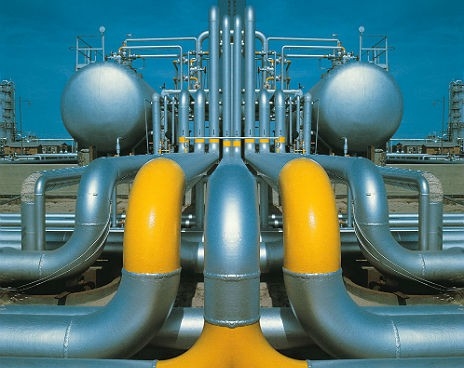
Vladimir Putin continues to set riddles to the government. Yesterday was about Gazprom. The President expressed a wish to change the economy of the monopoly, expanding the capabilities of independent manufacturers for access to the gas transport system . European observers, perhaps, should consider this statement as a step towards - after a batch of criticism at the APEC forum and the famous decree of Putin, who gave the commercial foreign economic interests of state companies a shade of sovereign. But you should not rush.
The Russian president clearly made it clear that it is impossible to separate Gazprom from the pipe - it will fall apart with the cessation of cross subsidies. By the way, this mechanism for financing one - loss -making - activities at the expense of the other - profitable - according to the laws of the European Union is prohibited exactly as well as combining activities for the extraction and transportation of energy carriers.
The paradox is that mining enterprises subsidize the notorious pipe only partially. According to Gazprom’s reporting, the main contribution (almost three quarters) to the financial result of the company is made by the sale of gas, including monopoly exports. The profit of the mining segment, as well as the revenue, is half as much of similar indicators of the transport. At the same time, the notorious pipe has the most significant weight in Gazprom’s assets and requires more than half of the capital costs. To understand the scale of economic imbalance, mildly called cross subsidies, it is enough to note that last year the volume of investment in the company in the transport segment coincided with the revenue of this segment itself. In fairness, it should be noted that the noticeable part of the capital costs is not on the main pipelines, but on the gasification of the regions.
A person who knows in the realities of the Russian fuel and energy complex will probably remember that Gazprom is still the largest gas producer. And, of course, is the main user of his own pipe. This gives Gazprom preferences over independent manufacturers, but in material terms they are not so great. On average, the monopoly “paid” 1127 rubles last year for transporting 1000 cubic meters of its gas, independent manufacturers - 1363 rubles, that is, about 21% more. Theoretically, this discount can be considered a discount on the volume of pumping.
Compared to colleagues from the oil sector, independent gas workers are significantly losing. The ratio of transportation costs to revenue in Novatek exceeds 27%, while Rosneft and Lukoil, this indicator is 8% and 5%, respectively. Why the situation is exactly the case is the secret of the postgraduate: the oil industry workers sell their products at free prices, both in the domestic market and abroad, and independent gas workers - by regulated tariffs and only in Russia. That is, they have the possibility of subsidizing production by selling gas in many ways.
So far, the government is trying to equalize gas companies in rights due to different rates of tax on mining (personal income tax), but not too successful. As follows from the words of the Minister of Economics Andrei Belousov, does not know the government and answer a new riddle of the president, but he thinks intensely. The refusal of the separation of Gazprom in the 1990s was a true idea, otherwise we would now have had a pipe or gas. Not time today is the transition to free pricing (and only this will abandon cross subsidies) paralyzes industry. However, the situation in which one company subsides others, reducing transportation tariffs due to the gas export monopoly, looks absurd.
In the circumstances, the option will not be excluded in which the government will decide in a targeted way to finance the gas infrastructure from the budget - by analogy with Russian Railways. As a source of funds, we can offer increased NDP payments from Gazprom, which are nothing more than a fee for a monopoly for export. The Federal Tariff Service and the FAS will have to establish uniform rules for receiving gas into the pipe from all manufacturers and tightly control their performance. Passing tariffs will also be determined uniformly. In fact, everything will remain as before, however, the government will have the right to report on the execution of the presidential order.
Of course, we can also consider the scenario of the complete deprivation of Gazprom by export by allocating GAZ Exports from it along with pipelines and equalizing in rights with the same “Novatek”. But still this scenario seems fantastic. He completely diverges with the last indication of the president, and in addition, creates additional problems. Indeed, in the case of the restructuring of Gazprom, for example, the owners of its bonds will be able to immediately demand their repayment. Gazprom’s bond loans are not so large, but even for him, their complete one -time payment will become a nuisance that the government and the president are unlikely to condemn the “national treasure”.