
Translated material
Sobyanin rewinded a two -legged
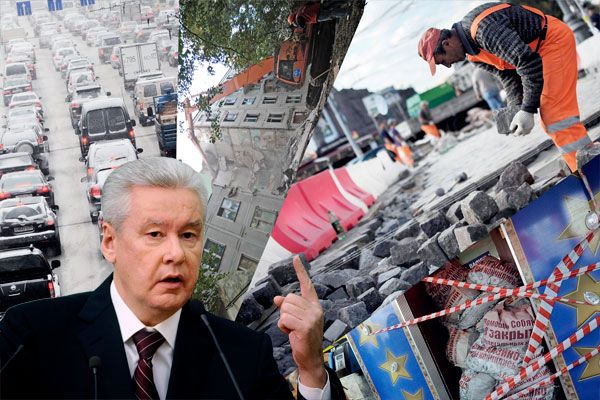 Photo: collage PublicPost
October 21 marks exactly two years, as Sergei Sobyanin was appointed to the post of mayor of Moscow. The former governor of the Tyumen region, taking office, could not promise Muscovites anything, since the inhabitants of the capital were tired of the “unchanged” Yuri Luzhkov with his sealing development and honey holidays. But Sobyanin decided to immediately identify his difference from the former mayor and introduced himself to a man who puts things in order.
PublicPost conducted an audit of this order.

| Demolition of five -story buildings |
| The fight against Khrushchevs began back in 1994. Yuri Luzhkov repeatedly stated the date of the final victory over five-story buildings, in 2006 it was announced that it was 2009 , and when 2009 came, the date was postponed to 2011 . So far, they solved the problem in three of the ten districts of Moscow. Sobyanin said that the struggle would be continued, and Khrushchev will be demolished exactly by 2014. Experts rightly believe that to relocate more than 26 thousand families and demolish the remaining 350 five -story buildings by 2014 - the city does not have funds for this, and commercial firms demolished and built up all the profitable sites where five -story buildings were located. |
| Amnesty for air conditioners |
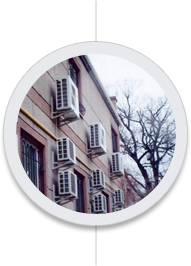
| The permission to install the air conditioner in Moscow was introduced by Luzhkov. In order to put the air conditioner, it was necessary to collect a pile of documents and spend a lot of money. Sobyanin canceled this practice and went even further - allowed the installation of air conditioners at cultural heritage sites (excluding facades). |
| Stripping concrete fences |
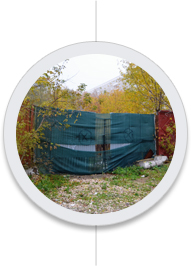
| In 2010, Sobyanin proclaimed a program for the elimination of concrete fences, which are fenced by industrial zones throughout the capital. “No concrete fences, prickly wires on objects, which often do not understand what is happening, should not be. Let everyone see what is there,” the mayor ordered . It was proposed to replace the fences with transparent. However, as they say, the WHO is still there. |
| Hot water |
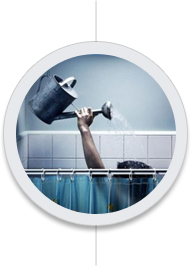
| Under Luzhkov, Muscovites had to heat up pots with water from two to three weeks - it was for such a period that the water was turned off for preventive work. With Sobyanin, the shutdown period was reduced to 10 days. Some Muscovites were especially lucky - in their homes they turn off water for only 5 days. |
| Demolition of kiosks |
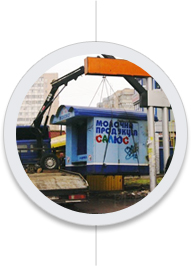
| Sobyanin's famous walk in October 2010 near the 1905 street station, when he was outraged by the abundance of Kiosks and the Antisanitaria around them, turned into serious losses for the small business of the capital. The checks have identified more than a thousand "illegally installed kiosks." They were demolished first. In just a year and a half, six thousand kiosks were liquidated. Other kiosks, for example, Assyrian shoes that existed in Moscow for more than a hundred years, also disappeared along with illegal. Entrepreneurs protested, there were statements that the demolitions were illegal, and the Moscow authorities were suspected of destroying the stalls for the sake of chain stores. It is easy to believe in this version after the next statement of Sobyanin. In October 2012, he stated that in Moscow hundreds of illegal stalls that need to be demolished, in connection with which the mayor endowed the council with such powers. |

| Architect Jan Gail and convenient Moscow |
| The Danish architect Jan Gale , whose work received worldwide recognition, visited Moscow in January 2012 and met with Sergey Sobyanin. At the meeting, the architect told how he sees the development of Moscow. Galewas invited to take part in the development of concepts of a number of large -scale Moscow projects - the improvement of the Central Administrative District, the development of the metropolitan agglomeration, as well as in the creation of a city bicycle infrastructure. Gail accepted the proposal. The composition of the working group was promised to publish by the end of 2012. The fact of the meeting aroused interest , because Sobyanin, with his care for motorists, expanding the highways, a dream of burying all the power lines of the capital, paving the new roads - the antidopa of Gale in their place. Jan Gail is the founder of a humanistic approach to urbanism. The city of Copenhagen, with his direct participation, became the city of pedestrians and cyclists with his native city. Whether they will give Gale to work, or Sobyanin’s proposal will remain only in words, it will become known in the near future. |
| Adios, markets! |
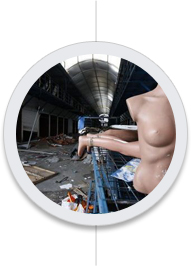
| The largest wholesale and retail market-Cherkizovsky-was demolished under Luzhkov, in 2009. True, on the initiative of Putin, who sharply spoke out against the abundance of smuggling in Moscow. Having become the mayor, Sobyanin understood the party line and continued the fight against the markets. In 2011, 14 markets were closed, including the largest Emeral and Luzhniki. Sobyanin fought for a long time with the Fan Fan Tulip Flower market on Kievsky Station Square, he closed several times in 2010 and 2011. In 2012, 19 markets were planned for demolition, of which three were already demolished. After the demolition of the markets, Muscovites won only in the case of Luzhniki, the object began to work according to its original profile - platforms for sports competitions and outdoor activities. The site is empty in Cherkizovo, but the land of the Emerala, demolished under the fight against traffic jams on the Moscow Art Theater, was urgently busy, the Moscow authorities allowed the All-Russian Physical Sports Society Dynamo to build there the huge South Mall trading complex (230 thousand square meters), which will further complicate the traffic on the Moscow Ring Road. The Fan Fan Tulip Flower Market is currently opened again, now only in the extension to the building of the Kyiv station. |

| Tiles named after Sobyanin |
| Replacing asphalt with tiles on the sidewalks is the most discussed initiative of Sobyanin. The argument for the replacement was that the tile, unlike asphalt, during hot weather does not emit harmful substances into the atmosphere. This, of course, is not fully studied. Even experts are confused in the testimony. For example, the director of the GPU "Mosecomonitoring" Evgeny Semutnikov in July 2010 did not record the release of substances from asphalt, and in 2011 the relationship of the summus with asphalt has changed dramatically . Top bloggers, outraged by dsted sidewalks and the quality of tile laying, waiting for spring,rushed to publish photographs of the pardon in a wintered tile. However, we were not able to find photographs and references to serious pits on the roads laid with tiles on the Rosyama project . When Sobyanin announced his intentions in 2011, he planned not only to replace all asphalt paths with tiles, but also spoke about the need to completely shift the entire Moscow asphalt about the need to completely over three years. The growing discontent of Muscovites with the hobby of Sobyanin had its fruits - the mayor admitted that the asphalt coating in most cases would remain, and the tiles would be used only in parks and squares . |
| Monument to Luzhkov |
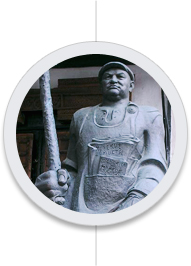
| That under Sobyanin it was possible to remove irrevocably was a monument to the mayor of Moscow Yuri Luzhkov, made by the sculptor Zurab cerethels. The monument to the "mayor-man" was decorated with the courtyard of the Moscow Museum of Modern Art on Petrovka, 25. Where the monument was missing is neither the museum nor the security. |
| The road to cyclists |
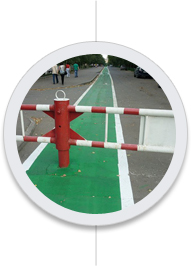
| In 2011, a revolutionary event took place - the first dedicated bicycle path in Moscow was presented, near the Moscow State University building on the Sparrow Mountains. Sobyanin and the rector of Moscow State University Viktor Sadovnichy drove through it on bicycles. Most likely they were the only bicycle amateurs who managed to ride it without problems and anxieties for health. University students, armed with photos and videos, tested the track and came to the conclusion that the first pancake came out lumpy. After some time, when repairing the road near the university metro, part of the track was generally rolled into asphalt. |
.jpg)
| Honey |
| Sobyanin also hit the saint for the ex-mayor Yuri Luzhkov-he canceled the annual All-Russian Fairs of Honey and Beekeeping products. Luzhkov, who, during the smog, saved the bees over Moscow and the nearby regions , could not remain silent and stated that now poor -quality honey would be slipped by Muscovites . |

| Slot machines |
| Dmitry Medvedev pointed to the illegal business in Moscow by Sobyanin and instructed the mayor to "hold the necessary events, raids, see who violates the law." Anyone who is engaged in such a business, according to Medvedev, should go to jail. "Sobyanin launched a large -scale attack on an illegal gaming business in Moscow. In January 2011, Sobyanin reported that the gambling business was defeated." It is possible to confiscate the equipment and close the gambling business! And a month and a half ago they told me that this was impossible! “ -really, there were no slot machines and casinos in Moscow for some time. But already in 2012, the Lottery illegal devices and others with gambling for money appeared in many grocery stores and supermarkets of the city. They began to return to their former places and casinos under the Sample Barov. |

| Traffic jams |
| One of the main directions of Sobyanin’s work was stated for traffic jams. The mayor submitted a comprehensive plan to solve the transport problems of the city. The first decision of the mayor was to remove parked cars from Tverskaya street and ban the park there. This was done, but now on Tverskaya - marking for parking and there are cars again. Sobyanin’s plan to combat traffic jams includes more measures to increase road safety, improve the quality of roads, and increase the information content of various digital displays. Measures to increase the throughput of roads in it are about half. Experts immediately called it raw . On September 1, 2012, the situation with traffic jams did not improve, and Sobyanin, summing up the intermediate result, was forced to carefully say that “unprecedented“ resources ”were concentrated on solving the transport problem. According to the Yandex.PROKI portal, which were on the air of the Rain television channel , if you compare the year 2011 with Sobyanin since 2010, the last year of Luzhkov, the traffic jam has become worse by 15-20%. The idea with pockets for parking along the roads and in the courtyards of houses led to the destruction of a large number of lawns and trees, but did not increase the cross -country ability. |
| Muscovites about the mayor |
| 49% of Moscow residents according to the Levada Center survey, published in early October 2012, would like to see a new person in this post. 32% of respondents are positively evaluated by the activities of the capital's mayor. 44% believe that the results of Sobyanin’s work can be described as average, 19% dissatisfied with the mayor’s policy. Most Muscovites - 77% - would like the free elections of the mayor of Moscow. |
The powers of Sergei Sobyanin in the mayor of the capital expire in 2015.