
Translated material
How to make people happier
Nobel laureates of 2012 in economics
Make people happier. In 2012, the Nobel laureates in economics were American scientists Lloyd Shepli and Elvin Roth, answering one of the main questions of the economy: how to distribute resources so that everyone is satisfied 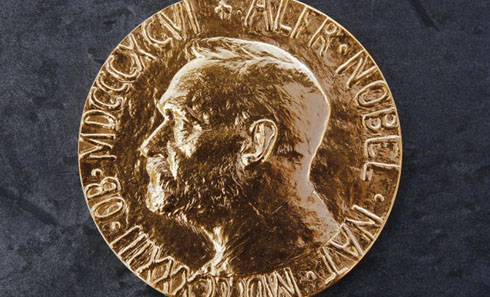
Theoretical algorithm
In 1962, David Gail of Brown and Lloyd Sheplin, who worked in the famous Rand Corporation, proved a beautiful abstract theorem, the formulation and idea of evidence of which can be stated on the fingers. There is n young men and n girls, and everyone has some preferences relative to a possible partner. Every girl can say “in what order” she likes the young men: this one is in the first place, this one is in the second and so on, to the very end. At the end of the list is one who likes the least. And every young man has his own rating of girls. The gale-cheat theorem says that you can divide the boys and girls into pairs so that the resulting combination is stable, that is, there would not be such a young man and girls who would like to throw their couples and become a new couple. Of course, the fact that the breakdown turned out to be stable does not mean that everyone is absolutely happy. Someone could get a partner who is far from the first place in the ranking. Nevertheless, this is already something: it is unprofitable for participants to leave couples created for them with an algorithm.
Actually, the Gale -Shopli algorithm is simple. You can do it. At first, every young man makes an offer to the “girl of his dreams” - the one that stands in his ranking. Each girl chooses the most attractive from her offers (unless, of course, they are at all), but is in no hurry to accept it. After that, those young men whose proposal was rejected in the first round make proposals again. It may turn out that some girl will prefer a new proposal to the one that she chose (but did not accept!) Before, then the author of the proposal, which is now rejected, will be able to make an offer in the next round. The work of the algorithm ceases at the moment when it turns out that everyone crashed into pairs (in the fact that in the end it turns out, the gale -cheat theorem is consisting) - and now the proposals are finally accepted.
This method of breaking boys and girls into couples is not the only one. Specifically, this algorithm is as good as possible (among those algorithms that lead to success) for young men and is very bad for girls. If the girls made proposals, it would be the other way around.
At the end of his article, Gail and Shepli say that they hope that their theory will find application in practice. Many theorists write this way, but not everyone has a dream. Elvin Roth, an economist for a generation younger, has found a way to put a theory into practice.
Theory is practice
The boys and girls who are looking for a pair, of course, are not uncommon, but rarely anyone comes to mind that the search mechanism needs to be centralized somehow. However, there are many different situations when the presence of a center significantly improves the situation. For example, with a study of this market, his mouth began-such a center was created as a private initiative to accommodate internship doctors in hospitals. Every year, thousands of graduates of medical faculties in America are looking for an internship, and everyone has some preferences regarding the clinic. Hospital also has preferences regarding interns. The same task is that boys and girls: here hospitals are “young men”, interns are “girls”.
The mouth found that the center works very efficiently (no one forced the interns and hospitals to participate and follow the recommendations of the center) and uses, in essence, the gale -cheat algorithm. First of all, he improved the algorithm - there were problems with the placement of family couples of interns (they need the same city) - and drew attention to the fact that the participants might want to “cheat”. If you use the algorithm mechanically, the situation may arise that it will be profitable for someone to accept (temporarily) an offer that does not quite correspond to their own rating in order to eventually achieve a better result. The mouth coped with this problem, and the path to the use of the mechanism in various situations was open.
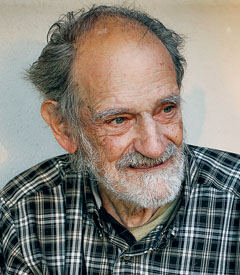 | 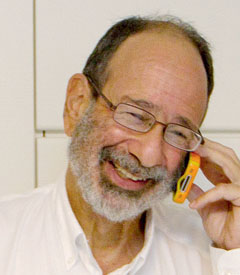 | |
| Lloyd Shepli (left) and Elvin Roth (right) received a prize for applying a specific mathematical result in practice |
The most massive use of the mechanism developed by the company is in the field of education. Speaking at the World Congress on the theory of games in Istanbul in June of this year, Professor MTI Padrag Padrag Padada summed up the first results of large -scale experiments. At the beginning of the XXI century, several large cities in America switched to mechanisms for the placement of schoolchildren in public schools based on the Gale -Shoplopian algorithm and the development of the company and its students. New York crossed in 2003, Boston in 2005, Denver, Newark and New Orleans in 2011. Distribution schemes using the elements of the algorithm work in many world megacities, including in London and Chicago.
In order to analyze the consequences of the transition of the school systems of New York and Boston to new algorithms, Patak and co-authors used data about the students of Boston and New York schools: the results of polls and, in addition, data on those schoolchildren who, for some reason, had the opportunity to choose between participation and non-participation in the distribution through the proposed algorithm, who left the schools where they were sent. Such empirical work requires fantastic skill - it is necessary to exclude a huge number of extraneous factors that may affect the result. "
In the twentieth century, the economy went a path that physics, biology and chemistry have made, which, in essence, has become a full -fledged science.
“The analysis of the data showed that the consequences of the introduction of the new system turned out to be quite serious. The use of the algorithm led to the fact that schoolchildren began to change the place of study less often - this was exactly the theory predicted. In addition, the distance was reduced and, accordingly, the time that the children spent to get to school. This does not mean that the schoolchildren became better (a bad school may be closer), but this is an indirect sign of the fact that this is an indirect sign of the one. that the result is more satisfied with the requests of the children and their parents.
The market is unable
The mathematical beauty is present, the applied value is obvious, but why do economists say that the mechanism of Matching (from the English to Match - corresponds to), invented by the shame and modified by the company, - the central part of modern economic theory? The fact is that this is the answer to the question: how can you achieve efficiency without using prices? Of course, if in some situation you can create a market, that is, a mechanism that determines the price at which the exchange of goods, services is produced-anything, then the effectiveness will be high. If one person does not value the goods too much, and the other is much higher, then you can set an “intermediate” price, that is, to name the amount of money that, by moving from the second to the first in exchange for goods, will make both happier. But what if people do not want to think about something in prices? We do not trade in human organs, although situations arise when one person really needs, for example, a kidney, and another person (who has two) appreciates it not so much.
The mouth and its co -authors solved the problem, creating a mechanism for the exchange of human organs on the basis of the Gale -School algorithm. He works in New England (USA) and has already helped many people to save their lives. According to the company, the most difficult thing was to persuade doctors to use the "economic mechanism" - the use of prices in the market of organs contradicts medical ethics. However, the charm of the algorithm is that it does not use prices, and does not make anyone worse.
Nobel 2013
To predict the Nobel Prize is both easy and difficult. On the one hand, the circle of outstanding scientists is not so great and outlined quite clearly. On the other hand, there are dozens of them, and not everyone will get an honorary award. This year, the author was waiting for a prize for an analysis of economic growth-Paul Romer from the New York University and Robert Barro from Harvard could become laureates. For a long time, the Finance Award is expected: maybe Robert Schiller from Yale for an analysis of inefficiency in financial markets, and maybe Kennet French from Dartmut University and Eugene Fame from Chicago for the “hypothesis of market efficiency”, with which Schiller once began his scientific path. And perhaps the principle - to give a prize for many years of merits - will be thrown back. In the twentieth century, the economy went a path that physics, biology and chemistry have made, in the centuries before, becoming, in essence, a full -fledged science. In physics and chemistry, Nobel prizes give people who are actively involved in research. In the economy - for long -recognized achievements. It is not surprising that most laureates are of retirement age. (89-летний Шепли давно на пенсии, Рот, которому 60, становится в Гарварде профессором — Emeritus, то есть почетным пенсионером, продолжая, правда, работать в Стэнфорде.) Если Нобелевский комитет решит последовать примеру «классических» естественных наук, то премия омолодится и претендентом в ближайшее время станет, например, Дарон Асемоглу (МТИ, экономика труда, Macroeconomics and political economy). Surprises will become possible not only for the general public, but also for working scientists.
There are no ours 
Nevertheless, the achievements of Russian scientists are mentioned in connection with the award of Nobel-2012.
Olga Bondareva (1937–1991), a Russian mathematician and economist, an employee of the Leningrad State University, proved in the work “Some application of linear programming methods for the theory of cooperative games”, published in the journal “Problems of cybernetics” in 1963, an important theorem, independently formulated and proven in an article by 1967 by Lloyd Loles (Bondareva -cheat theorem and noted in the description of the Nobel Prize of 2012.