Date
Author
Александр Генис; Соломон Волков
Source

Preserved copy
Translated material
Pictures from the exhibition

Alexander Genis: On the eve of the elections, when the nervous tension reaches critical, and others rarely talk about anything other than politics, to escape to the weekend from New York to move away on the captivity. This is exactly what our section “Pictures from the exhibition” will undertake today, which will go to the pastoral town of Cheddsford, Delaware, to visit the Museum of the local native Andrew Wyeth.
River Brandiva, on which the beloved artist of America Andrew Whayette lived, is considered picturesque and deceased. On its shores, centuries -old oaks and copper beeches grow. The rich here live in retirement, the rest come on vacation. Here they even grow grapes, but the wine is so sour that it is not a pity to mix it with brandy. In the 17th century, these regions were called New Sweden, which bordered on New Holland and almost entered the war with it. Toponyms remained from those times, one church and northern roots of local farmers - in any case, those whom Andrew Wayette wrote.
He has become my favorite American artist since I saw his work on the cover of the Russian edition of Salinger. Another picture - the "world of Christina", which the New York Museum of Contemporary Art prays - added ardor. But only when I got to the House of Wyeth, I felt not a fan, but a pilgrim.
Cheddsford can be considered a town only because the Wyeth Museum is standing here. Otherwise, little has changed. The agrarian landscape became a summer cottage, life remained pastoral and the air is clean. The entire local industry is exhausted by the monetary yard, and the money, as you know, does not smell.
A century ago, the Whayette Sr., seduced by the surroundings, bought a farm for beauty, not good. The famous graphic artist, he illustrated the entire adventure classics, starting from the "Treasure Island". After the model, romantic costumes were touched by children. They taught all their father to draw, but only Andrew, already at 20, won New York with watercolors. He wrote them with a spontaneous smear - eight a day. It is not surprising that he was quickly tired of.
The fracture was completed by the technique. Whayeth opened the Temper and began to work as masters of the Renaissance: he rubbed paints on yolks and wrote on the boards. Even the father did not understand why he was so tormented. The form, however, was determined by the plan: Whayette wanted to be old -fashioned, which in the twentieth century turned out to be difficult.
Replica to the side. A few years ago, in the Moscow Bookstore of the same name, I had the imprudence that the Americans do not know Russian artists, except, of course, Casimir Malevich.
“Dikari,” the lady resembling a head teacher said squeamishly.
“Well, and you,” I was already offended, “can you call an American artist, except, of course, Andy Warhol?”
“As you can compare,” the lady boiled, “we have Shishkin, Repin,“ the last tavern at the outpost. ”
Not wanting to upset her even more, I did not tell her that all this was in America. The same age of Russia's secular art, American painting went the same way, imitated the same authorities and came to the same results. In the American “Tretyakov Gallery”, which can be safely called the native wing of the Metropolitan Museum, it is easy to find a parallel to every domestic artist. And the landscapes of the Hudzon school, as if written off from our romantics, and paintings by genreists who opened social ulcers in Perova’s manner, and battal exotic, vividly resembling Vereshchagin, and a historical epic of the famous “Washington’s crossing through Delaware”. All that we have purely our own turned out to be universal. True, ours is still better - and closer to Europe, and the customers are richer, and the roots are deeper, and we are more expensive. Actually, that's why I can do without American classics that I have enough of my own. In America, I love something that there is no replacement, and I go to visit him, for example, to Andrew Wyeth. It is already unique because he opposed the flow of time, insisting on his definition of the artist.
The fact is that having ceased to be a craftsman, the contemporary artist tried other roles - a thinker, poet, demiurge, finally, a fool. Gradually, the painting turned away from the world and took up self -expression. Dictating his own laws, she forbade the viewer to compare herself with reality. And she did the right thing, because after Einstein, world wars and social revolutions no one knew what reality is and whether it is at all. Whayette, however, believed in it and tried to find, conducting the search not on his own, but on its conditions.
“In my paintings,” he explained his method, “I do not change things, but wait for them to change me.”
I had to wait a long time, but Whayette was in no hurry and wrote the same thing all my life - neighboring farms, neighboring hills, neighbors. The scarcity of his plots is declarative, and philosophy is alien and enviable.
Peeping for things, Whayet discovered their silent life, which enchants to horror. Other paintings pretend to be a window, its well. Having descended to the bottom, Whayette stopped changing, remaining to the end. (He lived 91 years and died recently - in 2009). Summing up, critics called him the most overated and most underestimated artist of America. This is not so much a paradox as a statement of fact. Everyone knows Wyeta, but no one knows why.
The closest enemies and rivals came to the answer.
“There are no colors in this painting,” they say, “his paintings are dead, like boards.”
So it is. Wayette wrote the world Burem and Mute. People do not smile at him, and things are neither new, nor interesting, nor complete: if a bucket, then empty, if a house, then squinted, if a field, then fruitless. In his paintings, one time of the year reigns - a hopeless November.
And here it is necessary to make another retreat of a calendar-poetic nature. In American, as in Russian poetry, autumn plays a special role. But if we, thanks to Pushkin, is an elegant time, “charming,” then among the Americans, thanks to Frost, it is connected with the gloomy season. Until everything hiding snow fell, November, left without a summer palette, can be loved, only with dirty, devastated nature.
This is one of the best poems of all American poetry "November Guest" by Frost. There are somewhat well -known Russian translations, but I want to share one unknown person who was sent to me by reader Andrei Bethev.
Sorrows that came to me
nicer than other times
when it rains and haze all day;
Her branch without foliage Mila;
Along the meadow, she goes for a thing.
The elaboration is to her - and I hurry after
I listen - says
how glorious that there are no birds,
what is her gray jacket
The fog is covered with silver.
Trees of abandoned longing,
Earth without colors, the sky is rotting,
All the beauty that is close to her,
I am alien to me (imagines to her), and how
I blinded - beats, will not understand.
I am not given to love yesterday
that nakedness of the November days,
What is waiting for snow - to cover yourself,
But she should not say
Yes, and the price of them can be seen.
Here is such a November often falls on the paintings of Andrew Wyeth. There is no snow yet, leaves - no longer, summer was forgotten, spring is in doubt. Having stuck in the mud, nature does not flicker, looks serious, eternal. Awaken by her, the artist is not instantaneous, like impressionists, but unchanging as theologians. Walking after them, he depicts the threshold marking the border of the comprehensive. Having reached her, the artist looks into something that does not have a name, but allowing himself to be saturated. Like a witch damage, Whayette brought nostalgia for the viewer. Things become yours, people are close, a landscape is a house, even if it is a barn.
Looking at him - the blinding whiteness of the walls, the muffled brilliance of tin, uncertain snow on the hill - I cannot get rid of the feeling that I have already seen this in another, but also my life. Tearing a fragment frozen with his eye and, giving him the highest status of intensity, the artist introduced me a false memory.
Who does not know how it happens?! Words, gesture, shade, flap or aroma acquire a frightening, if you think about, power and inexplicable, if you forget about Freud, meaning. Not a symbol, not an allegory, but that part of reality that serves as a catalyst for an uncontrollable reaction. Having shifted the external in internally, it turns the material into the experienced.
Without knowing how to describe the transmutation in words, critics habitually call the realism of Wayet magical. But his cows do not fly, like a shagal, but quietly grazed on a hill desired from the window. Fiction is not in extraction, but in materialization.
I saw this only in Tarkovsky's Solaris. In the film, a reasonable ocean takes out of the subconscious of heroes not only people, but still lifes and landscapes. Since we are transparent to the ocean, he does not know how to distinguish consciousness from the subconscious and materializes the brightest - radioactive - clots of experience accumulated in the soul.
In Wyeth, they hide at such a depth that, as already mentioned, a well is needed. One of the late works of the artist, who, is inspired by the Tarkovsky personnel, hints at him. This extremely unusual picture shows a view from an airplane porthole. From a sky-high height, we see far below the familiar Hedds-Ford's houses. Judging by the name “that light”, so the elderly artist represented an early future in which he would take a fragment of reality, the size of a postage brand. And we will remain different - my beloved - the picture "Snow Hill". On it, taking up multi -colored ribbons, those whom Whayet wrote most often than all by the wheel dance around the pole. Karl Kurner, a German emigrant in a helmet and overcoats of the First World War, his crazy wife Anna, their laborer-assistant with a hook instead of a hand, a red-haired neighbor Helga. The Whayet gathered all of them on the meaningful, like Calvary, a hill, but he did not find a place for himself there: one tape is empty.
“The best artist,” said Wyight, “invisible man.”
Well, now the musicologist Solomon Volkov joins our conversation about the last realist of American painting.
Alexander Genis: It probably went from Stasov?
Solomon Volkov: No, as an aesthetic platform, this was decorated precisely by the mouth of Zhdanov. Of course, it was the idea of Stalin. The period is called "Zhdanovshina", but in fact it was Stalinishchina in its purest form. Zhdanov only realized the ideas of the leader, and on this subject there is evidence in the form of Zhdanov notes in his notebook - he simply wrote down his words for Stalin, maybe he somehow developed them. Zhdanov played the piano himself.
Alexander Genis: What does “realistic music” mean?
Solomon Volkov: No one knows what it means.
Alexander Genis: Including Zhdanov?
Solomon Volkov: Absolutely. Zhdanov's formula was simple: that the music should be elegant - this was equated in his mind to the concept of realistic music. Realistic music is elegant music. We understand that this is all absurd. But the question of whether there is realistic music as a certain limited area (because in the presentation of Zhdanov everything, starting with Bach, was already realistic music), is seriously debated. But let's not talk about realistic music, but about contrasting the music of avant -garde and the one that can be conditionally called traditional.
Alexander Genis: By the way, this is very close to the painting that we talked about, because we can clearly say that this is abstract painting, and everyone understands what this means.
Solomon Volkov: The music is all more or less abstract.
Alexander Genis: This is also true. How will you get out of this position?
Solomon Volkov: We will talk about avant -garde music and traditional music.
Alexander Genis: Then show what avant -garde music is.
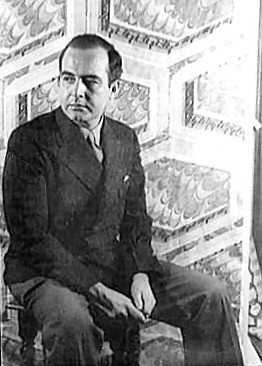
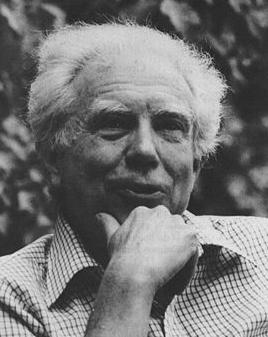
Solomon Volkov: At first I want to say that the analogue of Andrew Wayet, whom you talked about, can be considered (with a certain degree of conventionality, like any parallel) composer Samuel Barber, born in 1910 and died in 1981. And as his (also, to a certain extent, conditional, but still obvious) antagonist, representative of the avant -garde direction, I would choose the American composer Elliot Carter, who was born two years earlier than Samuel Barber, namely, in 1908, but he was still alive, lives in New York, he will be 104 years old! And he is actively involved in the cultural life of the city.
Alexander Genis: I know this well, because a few years ago I was at his concert - he was 99 years old, and he played the violin opus of his own composition. He kept perfectly, you wish everyone such an old age. And at the same time, he is a desperate avant -garde, as he has always been.
Solomon Volkov: It is just interesting that not always. He began as a completely traditional neoclassicist, and here he did not really go. He studied with the famous Nadia Bulanger in Paris, from which all the traditionalists of American music studied - and Aaron Copland and Virgil Thomson. And there was also a Carter, which in the late 50s and early 60s sharply changed his orientation and began to compose suddenly, as Vladimir Ilyich Lenin would say, arranged music. I came up with a special composer method - musicians in the scores of Carter play each of their interval set, in their rhythm, and all this does not close at all. I would liken the works of Carter, starting from this period, Jackson Pollock canvases, when a variety of paints are pounced on the canvas. Such promotional painting. Not auction, but rally painting.
Alexander Genis: Although they buy Pollock at Jackson Pollock.
(Music)
And now we can move on to the work of Samuel Barber, who can also be considered to some extent, and we will talk about this, a representative of regionalism in American culture, which, of course, is Andrew Whayette.
Alexander Genis: Moreover, they are also neighbors, because Barber is from Pennsylvania, and Wayette lived all his life in Delaware, it is very close to each other, and they lived in the same landscape.
Solomon Volkov: By the way, indeed, our ideas about the American landscape are largely formed by Wyeth, isn't it?
Alexander Genis: Undoubtedly! This is an American landscape.
Solomon Volkov: Barber also starts with a quartet. It is impossible to imagine more contrast in relation to the Quartet Carter. Adagio from this quartet is heard by every American who included the radio in difficult moments for America - the death of the Challenger spacecraft, some kind of national catastrophe - this melody usually sounds.
Alexander Genis: Well, yes, in Russia - “Swan Lake”, and here is Barber.
Solomon Volkov: This is the difference. So, Adagio from the quartet of 1936, Samuel Barber, will be performed by the Emerson quartet, the Deutsche Grammophon label.
(Music)
And now I want to show an excerpt from the piano sonata of Barber, where he follows, I think, of the Prokofiev tradition. In general, the influence of Prokofiev on Barber is extremely significant. And an example is an essay that was written by Barber in 1948 ... I note in brackets that this composition appeared by order of Irving Berlin, a composer who can not always be imagined as a philanthropist of classical modern music. Nevertheless, he ordered it and presented it to the American composer league, and the premiere was carried out by a native of Russia (like Irving Berlin) Vladimir Gorovitz in 1949. And this is a live record from the 1950 Hall Carnegie, the RCA label, the piano sonata Samuel Barber, is played by the hip.
(Music)
And finally, we approached the question of the regionalism of Barber, who, as it seems to me, created a very interesting and attractive essay in the vocal genre. Actually, he was a master of a big opera, but in this sense he was terribly unlucky. On the one hand, at first it was once lucky, and he wrote by order of the metro a large opera of Vanessa in 1958, which was very well received. But then, when in 1966 (again for the meter) he wrote the opera Anthony and Cleopatra on Shakespeare, the era was replaced, the tastes of the critics were completely different. If they told her that this is a wonderful work, then the audience would have accepted this opera, but critics attacked it, as Prokofiev spoke, “like a flock of angry dogs from the gateway” and Barber “cut off all pants”.
Alexander Genis: It was an era when the avant -garde was in the center.
Solomon Volkov: When I arrived in America in the mid-70s, I have met the composers more than once or twice, who
Having talked with me, they began to cry in a vest on the topic of how the avant -garde players ruined their life. They wanted to write tonal music, beautiful, with melodies that would be clear and accessible to the audience. But it was in the atmosphere that then reigned in musical circles is impossible. If you came out with the composition of tonal, and not atonal or built on the series, then you were accused of traditionalism, an instant end of backwardness, backwardly, backwards, and in backwardness.
Alexander Genis: Solomon, it does not occur to you that the same situation, but mirror opposite, was in the Soviet Union?
Solomon Volkov: So they said to me then: “We had our persecution. You, in the Soviet Union, had persecution of avant -garde music, and in our country, in the USA - on tonal. " Perhaps not the state, the state was, in the end, anyway, although it was listened to the recommendations of influential critics and composers, and if they promoted avant -garde music, the state said: o'key, we will show at the festivals abroad of avant -garde music. So the situation for composers who composed the tonal music in which Barber specialized was very difficult. And he experienced the failure of the operas of Anthony and Cleopatra as a catastrophe of his life. And in fairness. Despite the fact that he himself, when he studied, was a baritone, and quite successful, performed with concert programs. And for a classic composer in the twentieth century, an extraordinary rarity to own some of these voices. Therefore, he knew very well vocal capabilities, he wrote very beautifully, very convenient for singers, for vocalists. And the example of this is his essay called “Knoxville, Tennessi, Summer 1915”, written on the prose text of the famous writer James Eiji. These are Aiji’s memoirs about his childhood in the southern town, and about that lazy, slow atmosphere ...
Alexander Genis: Such an American pastoral.
Solomon Volkov: Yes, characteristic of the American south.
Alexander Genis: I always said that the difference between the north and the south is a rocking chair in an armchair. As soon as the rocking chair appears - you moved south.
Solomon Volkov: And here is just a seat in a rocking chair and is described in the text of Aiji. You, when you listen to this music, and it is written in a lullaby rhythm, you feel this motion. Это очень красивая музыка, которую раз послушаешь, и уже не забудешь. Звучит она в исполнении Дон Апшоу, нашей с вами любимой певицы, лейбл «Nonesuch».
(Music)