
Translated material
The phenomenon of Solzhenitsyn
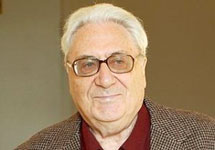
50 years ago, an important event took place in the literary and social life of our country: the story of Alexander Solzhenitsyn “One Day of Ivan Denisovich” was published. The literary critic and critic Benedict Sarnov, author of the recently published book “Solzhenitsyn Phenomenon” (M., Eksmo, 2012) shares his thoughts about the anniversary.
Exactly half a century ago, in November 1962, in the eleventh issue of the New World, the story of the then unknown author “One Day of Ivan Denisovich” was light - and the world first heard this name: Solzhenitsyn.
When the manuscript of “one day” appeared in the editorial office of the “New World”, Twardowski, before starting a difficult and, as it seemed, almost certainly doomed to failure for it, gave it to some closest friends. Among her first readers (except for the editorial staff) was Samuel Yakovlevich Marshak.
Talking to me about her, by the way, he said:
- I always told Alexander Trifonovich: we must patiently, skillfully, diligently lay out the fire. And the fire will fall from the sky ...
Solzhenitsyn, whatever you say, was then for us that this very fallen fire from the sky.
The emergence of this Solzhenitsyn story on the pages of the "New World" was, of course, of course, a huge public event, in its meaning, perhaps, only with a closed report by Khrushchev at the twentieth Congress.
But me - I personally - "Ivan Denisovich" conquered not only this.
At that time I read quite a few camp manuscripts that had already walked in samizdat. Julia Margolina read the wonderful book “Journey to the Country of Ze-ka”, which was already in 1952 in New York, already knew Shalamov ... Therefore, for another reason, but the fact that he raised a new one, as it was then, was not a touched layer of life, Solzhenitsyn did not amaze me. He was struck by his "Ivan Denisovich" as a literary, artistic event.
I remember well the then conversation about Solzhenitsyn with one close to my friend.
Do you really think he is a great writer? he asked.
Maybe not the great, ”I answered. - But he is all from there, not from our Soviet, but from that great Russian literature.
And now half a century has passed. The term is not only for human life, but also for history. A lot of things have happened in our life over these fifty years.
Solzhenitsyn changed (or maybe did not change, but opened, stopped lurking, became more frank?), And my attitude towards him changed.
If earlier, such words as “amazement”, “admiration”, “delight” came to my mind to designate this attitude, now completely different were more appropriate here: “bewilderment”, “disappointment”, “irritation”, “repulsion”. And the further, the worse: “hostility”, “indignation”, “indignation”, and in other cases even “disgust”.
But that of my replica, that answer to my friend’s question, whether I think Solzhenitsyn consider the great writer, I am ready, without croaking my soul, to repeat today. I will not say this about the other books of Solzhenitsyn, but my attitude has not changed to the "One Day of Ivan Denisovich" over the past half century.
*** About then, half a century ago, I began to write (to the table, without any hope of seeing her printed) I had long conceived the book, Mandelstam's Case. Ahead was loomed by Zoshchenko’s case, “Mayakovsky case”, “Erenburg case”. I did not hope then that I would be able to implement all these plans. They were very extensive.
But neither then, nor for a long time, I had no thoughts in my thoughts that it would be necessary to add one more to my intentions - then to add one more: "The case of Solzhenitsyn."
And only recently, already at the end of half a century, I suddenly felt an irresistible need to write about it. And now - wrote. True, he called this book his book a little differently: not “case”, but “Solzhenitsyn’s phenomenon”.
Why did I suddenly have such a need? And why were everyone "cases", and then suddenly a "phenomenon"?
The second one - the question of the answer will be quite easy for me. It is enough to quote a short epigraph, which I suggested by this book of mine:
Phenomenon - 1) a rare, unusual phenomenon or an outstanding, exceptional person in any way; 2) the subjective content of our consciousness, not reflecting objective reality.
( Dictionary of foreign words )
Both meanings of this word are suitable for Solzhenitsyn, like no other. No matter how you relate to him, he is exceptional, truly phenomenal.
It is phenomenal, with anyone else we can’t compare this pressure of the personality, this is a reckless courage with which he - alone - entered into battle with a powerful nuclear power, his amazing performance, even in comparison with Leo Tolstoy, whose collected works were ninety volumes, which amazes the imagination of productivity.
But the second meaning of the word "phenomenon", which gives us a dictionary of foreign words, can be attributed to the figure of Solzhenitsyn rather than to any other.
The fate of every big artist borders on the myth, and often inseparable from the myth. But I do not know another example, when the myth to such an extent "not reflected objective reality" as we see in the case of Solzhenitsyn. It’s the point that Alexander Isaevich was not at all the person for which we took him. (And many also continue to accept.)
As for the first question (why suddenly - and even so late - I had a need to write a book about Solzhenitsyn), then, answering the second, I almost answered it.
*** The literature of Solzhenitsyn is huge. These are mountains of books, articles, scientific works, dissertations, enthusiastic and polemical responses. It would seem what scope for a wide variety of views, interpretations, aesthetic, philosophical and political interpretations of the role and place of the writer in the literary and socio-political life of the country and the world. In fact, however, there is no particular diversity here. All this literature is neatly divided into two opposing categories. One is an apologetics (if we are talking about the work of the "great writer of the Russian land" - kneeling and delight, if about his biography - the halo of the prophet and genius, not biography, but life). And the other, the opposite: exposure, mockery, pamphlets, or even Pasquili.
I decided to try Nasavejo , as Alexander Isaevich himself would put it, to re -read his gigantic artistic heritage by a sober look, without the euphoria in which we all stayed when he appeared for the first time, but without the bias, caused by the transformation of the courageous fighter with a tyrant into the “Apostle of Renality and Panegirist of Tatar” hating the democracy of a convinced reactionary and frenzied nationalist.
What kind of picture was opened to me when I decided to make this attempt?
The first thing that here immediately caught my eye and, perhaps, most of all struck me was the complete inability of Alexander Isaevich to sober self -esteem, an inverted scale of the art values professed and preached by him.
This is most exposed by this inverted scale of values that place that he diverted “one day of Ivan Denisovich” in comparison with his other things, at that time already written, and even more so with those that he was still about to write.
Having finally decided to get out of the underground and give something to the legal Soviet magazine, he chose this particular thing as the most harmless, most "passing". As for the literary, artistic merits, she did not seem to him such a great artistic success. He did not even consider her a story. Considered a story. And he allowed to call the story, going towards the wishes of the editorial office. And it’s not even very willing: “They invited me to name the story for the weight of the story - well, let there be a story ...” (Alexander Solzhenitsyn. The calf with an oak is combed. M., 1996, p. 28).
And the appearance in the same “New World” of his other stories (“Matrenin Dvor” and “Case at the Krechetovka station”) responded with such a remark: “There (in“ Ivan Denisovich ”. - B.S.) - the topic, and here is pure literature. Now let them judge!”
He would never have believed it then - and then, too (then - even more so!), - that “Ivan Denisovich” will remain his artistic peak - the most harmonious, most perfect of all his creations, all that he sophisticated in his entire long life of multi -volume “nodes”, “blocks” and “wheels”.
It was these stillborn, anti -artistic, unreasonable “nodes” and “blocks”, forming the gigantic multi -volume of his “red wheel”, that he considered the main work of his life and his highest artistic achievement. In fact, it was a complete artistic collapse. Even the first, the most living of these nodes - “August of the fourteenth,” - and he could not compare with his novels based on his own, his own, personal life experience: “The first” and “cancerous corps”. But even in these novels, he was already heavily rolled towards socialist realism, and it was no coincidence that the version of the “circle” that he considered the main one turned out to be drier, more rationally, artistically poorer than that, which he neglected the “kinder vevilant”.
And ultimately it turned out that only his "Ivan Denisovich" was from that great Russian literature, whose envoy, a meteorite, who fell to us from the sky, was then Alexander Isaevich for us.
The picture was first slow, and then more and more rapidly fading away, the impoverishment of his artistic gift.
*** The "Gulag Archipelago" does not fit into this picture.
Today, however, this is also evidenced by his creation in the dismissive and universal tone. And not any rabid Stalinists, to whom this book of books is like a bone in the throat, but those who, for their goals and objectives, seem to be bloodly close:
*It is worth noting that the project “The Gulag Archipelago” itself as a book built mainly not on its own, but on other people's evidence and on other people's manuscripts that do not rightfully belong to the author, he (it is about Shalamov. - B.S.) considered immoral ...
(Valery Esipov. Shalamov. ("ZhZL"). M., 2012, p. 263.)*
And - there:
... a book composed of more than two hundred sources that did not belong to the author rightfully, and written in a gloom, with the superficial editing of many texts ... (p. 305)
I do not think that such a tone was appropriate in this case. And in terms of meaning this reproach is very doubtful. Even if, in fact, Alexander Isaevich included in the "archipelago" of more than two hundred texts that does not belong to him, this does not in any way detract from neither the meaning and merits of his book, nor the greatness of his civil feat.
But what happened to this high book, when, in the midst of our so-called "Perestroika", a stream of recently forbidden literature poured into the pages of our magazines.
Alexander Isaevich, whose arrival in the country that was released from totalitarian oppression we all had been waiting for, but he did not come and did not come - from there, from his overseas far away - announced that he forbids to publish all his books in the new, free Russia, until the Gulag Archipelago is printed there.
He thought - and he talked about this more than once - that only the appearance on the open sale of this book will be the most accurate indicator, the indisputable sign of the complete collapse of the inhuman Soviet regime, that it would be for him as an explosion of a hydrogen bomb.
And this finally happened.
Three volumes of the Solzhenitsynsky "Archipelago" lay on all book trays in all Moscow underpasses. They were inexpensive - the publication was cheap, in paper covers. But Muscovites, crowding at those trays, glided on these covers with an indifferent look: then there were completely different books.
This was explained simply: the camp topic was no longer forbidden, and not only about the "first circle" - about all the circles of the Stalinist hell could be read then in any newspaper.
*** In exile, Alexander Isaevich became closer to one of the pillars of Russian Orthodoxy in the West, Protopresbyter Alexander Shmeman. “He is my dear,” he constantly talked about this new friend.
In the diary of Father Alexander, published after his death, the name Solzhenitsyn is mentioned almost on his every page. And always - with enthusiasm, almost even kneeling. But - the farther, the more and more significant reservations.
Here is one of these of his records:
Sunday, February 16, 1975 ...
Yesterday, all day, without looking up, read - and read - "calf". The impression is very strong, stunning, and even with a shade of fright. On the one hand - this spontaneous strength, determination, complete dedication, coincidence of life and thoughts, pressure - delight ... you feel insignificant, incapable of a thousandth of such a feat ... on the other hand, it scares this constant calculation, tactics, the presence of a very cold and - for the first time I feel so cruel mind, reason, some kind of brilliant "ingenuity" is ready, some kind of, somewhat ready, is ready, some kind of, somewhat ready. Bolshevism is inside out ... I begin to understand what he told me on the last evening in Zurich, or rather, in the mountains: "I am Lenin ..." Such people really win in history, but quietly begins to shiver from this kind of victory. All people who fall into his orbit are perceived as pawns of one, terribly tense pressure ...
The farther - the stronger it is "who is not with me, he is against me," no - not pride, not self -love, but some kind of rapture "total war." Those who are not endowed with the same voluntarism - that’s going out of the way, so that he does not hang under his feet. With contempt. With anger. With intolerance. All this is on the other side of talent, all this is amazing, brilliant, but - as a shell, after which they lie and howl from the pain of the victim, even their own ...
(Prot. Alexander Shmeman. Diaries 1973-1983. M., 2007, p. 151)
“All this is amazing, brilliant,” says (writes) about. Alexander. And then: "All this is on the other side of talent."
How to combine this? How can brilliant be "on the other side of talent"?
It is combined simply.
"On the other side of talent" is about the talent of the writer, the artist. And the fact that in Solzhenitsyn is brilliant lies in a completely different area, in another life. This frantic determination of Solzhenitsyn, in which his notorious genius was expressed, was not just incompatible with his artistic gift. Ultimately, it was she who - considerable - the artistic gift distorted, crushed, and then destroyed.