
Translated material
Paid parking: stupid against endured
I live in Moscow, in Bolshoi Karetny Lane. I don’t boast, on the contrary, they put an experiment on me to introduce paid parking in the center of Moscow. The experiment, which the Moscow authorities prepared for many, many months, began on November 1 and as of the morning of November 1, it had already failed with a bang.
 Paid parking lots: they will take money, it will not become better Paid parking lots: they will take money, it will not become betterOn November 1, an experiment begins in the center of Moscow on the introduction of paid parking lots. Experts and legislators told whether it will help to unload the city and save it from traffic jams. >>> |
The essence of the experiment is to force everyone, including the experiment living in the area of the experiment, to pay 50 rubles per hour for a parking for a parking in a quarter located between the Moscow Central Internal Affairs Directorate and the Moscow traffic police. And non -payers are fine for 3,000 rubles.
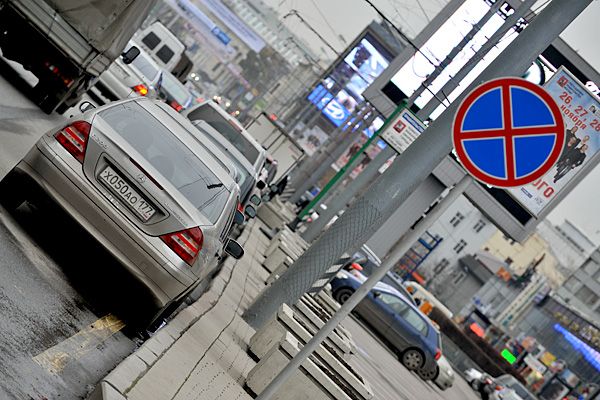
And the experiment failed because in Bolshoi Karetny they forgot to put machines to pay for parking. Before they had time. Or I don't know what. Therefore, on a hefty piece of large carriage - from the house of Vysotsky, where "his 17 years", to the garden ring - simply hung the signs "parking is prohibited" at night. So that neither yourself nor people. But the cars there stood there, they are standing. And, as always, they do not bother anyone at all. Probably, their owners will send a receipt of fines. The fact that the parking will be paid is somehow warned. The fact that she will be banned at all is not.
I'll tell you a little about our lane. We have no present places. We have one miniature shop, the hostel of Godzilas, the picturesque guests of which-intorists with backpacks-are very funny explained in this shop with sellers-ssins using local drunks. We have several low-rise offices, a very good Georgian restaurant of Sahli and some incomprehensible club, opposite which there are always black Bentley and Aston Martin in the same place-unchanged, like a shelter with a Venezuela embassy, a neighboring club. We also have a communal center where local residents and guests of the lane dance Lindi-hop and all sorts of other jazz dances. What was not in our lane and there are no traffic jams and problems with parking. It is wide, one -sided, the most pot -bellied trucks could always drive along it, even if the residents and guests of the lane parked on both sides of it at all like the last idiots.
All neighboring lanes are the same. They say that our area was chosen for an experiment in order to unload the center of Moscow and improve the situation with traffic jams. This is a lie. Our area was chosen because it is located next to the experimenters. For all other parameters, it does not correspond to the declared goals at all. But he is suitable for verification (that is, us, experimental residents) for patience.
Firstly, it is somehow strange to start solving the problem of urban traffic jams with the introduction of paid parking in fairly low-powered residential quarters, and not from fines for incorrect parking wherever you cannot park. Permissibles are well aware of this - which, of course, does not increase their willingness to participate in the experiment. But no one asks us.
Secondly, if the goal of the experiment is to force the townspeople to abandon unnecessary trips by car, then everything is done exactly the opposite. The only way to save on parking for residents is to save from it to leave it. "Household motorists" - and there are many of them in the center - ordered to stand in traffic jams.
Preferential conditions - free parking from 20:00 to 8:00 - are provided only for apartment owners at the rate of one apartment - one car. At the same time, the experimenters refer to world experience, but here they were mistaken: “There are too many people in the area for whom world experience coincides with personal. And the world experience is as follows: in areas with paid parking, it is paid during working hours and free at night and on weekends - for everyone, and not just for local ones. Local (not the owners of apartments, but everyone who lives and works there) can park at any time, for which they pay from $ 50 to 400 euros per year, depending on the area, country and currency. Moscow has a completely different mathematics: 18,000 rubles a month for beneficiaries, twice as much for everyone else. And even if you have a benefit, spend 12 hours a day at work, never get sick, do not go on vacation and leave the car at the house exclusively on weekends - it turns out 5,000 rubles a month, $ 2,000 a year.
The Moscow experiment has another feature that is not very similar to world experience. The correctness of parking and payment is intended to be controlled not by the parking lots, but automatically with the help of vehicles equipped with cameras, which will be driving around the area. The numbers of those who paid for the parking are entered into the database, the numbers of parked cars will automatically merge with them. And this means that a big brother in the traffic police will always be aware of exactly who, where exactly and how much time spends in the experiment zone. And in the future - anywhere in the city. Typically, such initiatives are divided on laws on the protection of personal data. But Moscow does not care about such trifles.
If you do not trust the statements too much that the goal of the experiment is the fight against traffic jams, and look at it critically and impartially, then his tasks may be completely different. For example, squeeze out of a family of a family with low and medium income and elderly. No reasonable family budget will withstand the cost of owning a car that Moscow is trying to install. And the infrastructure does not allow living in the center without a car - the infrastructure does not allow - here it is bad with schools, with sports, with food stores. In fact, Moscow, of course, is not interested in anything like that - not because it is bad, but because no one needs it. The center is only impossible for the rich at least due to the quality of housing and the same infrastructure. Another possible goal is to check the middle class for the resistance of arbitrariness and confiscation measures, to find out how much it allows itself to be milk. This is more like the truth, but this is most likely not so. The most plausible version regarding the features of the experiment is the idiocy and unprofessionalism of its organizers, the managerial helplessness of the Moscow authorities, which are traditionally looking not where they have lost, but where the lights are light. Plus, of course, their complete indifference to the interests and personality of citizens. But this is so obvious and without any experiment that it is even somehow embarrassing to mention.