
Translated material
Yes, the lifeguard will come
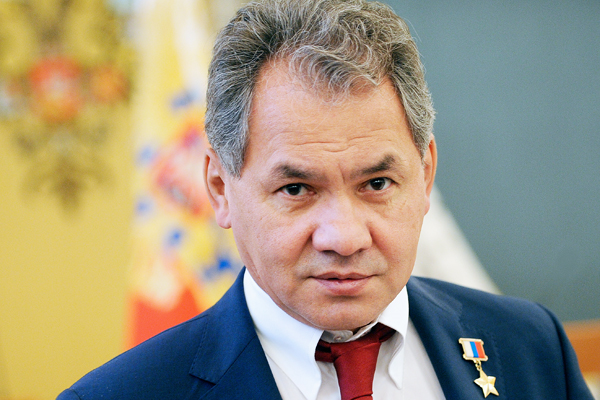 Photo: ITAR-TASS
Not to say that Serdyukov’s resignation was some kind of surprise. And yet she was a surprise. Which also looks like a manifestation of panic - despite the appointment of Shoigu, whose very name, it would seem, must extinguish any panic.
Serdyukov’s military reform scolded a lot. It is not even known who scolded more - abbreviated officers, military industrialists or teachers of mercilessly optimized military universities. Or the General Staff, faced with new problems of controllability in the introduction of brigades and the system of territorial commands.
Nevertheless, military reform looked like one of the most consistent Putin reforms. It was clear that she would take not a year or two. It was clear that the costs would be colossal. But at the exit, instead of a bulky road ineffective and extremely unpopular in the army of the army, the third decade living according to the inertia of the Soviet era, a new one was supposed to appear. Modern, mobile, adequate to solved tasks and, importantly, the army feasible for the state budget.
Serdyukov’s resignation will probably cause a lot of delight: “Hurray, the minister-mebell, finally fired!” Meanwhile, there are not much reasons for joy. Serdyukov’s departure does not automatically mean that the transformations will be folded: they simply cannot be curtailed, drag the army in the volume and in the state in which it is now, it is impossible, it becomes such an anecdotal suitcase without a pen. Russia is not able to stop reducing the Armed Forces physically, for simple financial and no less simple demographic reasons. The need for modernization is also obvious. Without deepening into special military topics, the war with Georgia in 2008 showed too clearly that the problems are not so deep. So there is no special choice before the new leadership of the Ministry of Defense, and in this sense it is not as important as the name of the minister is written.
But it was Serdyukov that was the person who, without hesitation, feeling behind his back the unconditional, as it seemed to him, the support of the tandem, put things in order in army and military-industrial financial flows. It was he who was able to resist the appetites of the military-industrial complex, supplies to the troops for fabulous money morally outdated weapons. It was he who was not afraid that his name would be associated with a merciless reduction in officers and optimizing the military education system.
Most likely, it was the enormous lobbying pressure of the military -industrial complex that became the real reason for Serdyukov’s departure. And if so, it is logical to assume that the new minister simply will not allow acting in the same spirit as Serdyukov. This, with a high probability, means that the Soviet military -industrial complex will continue to creak with its own indistinct gears, taking more and more money from the budget and turning it into trash. It also, with a high probability, means that some measures to reduce the officer corps, optimize military units and military educational institutions will be revised in terms of rollback back.
There is probably an extreme, unlikely option, generally fits into the logic of “getting up from the knees”: instead of optimizing and modernizing the armed forces, Russia will try to completely reanimate the Soviet monster, once holding half a world in fear. But then this is a complete restructuring of the economy and taxation systems, the flight of foreign investment, the ruin of domestic private traders - and in order to recreate the absolute outdated combat vehicle of the Cold War.
Probably, the dismissal of Serdyukov will slightly reduce the pressure on the leadership of the country by military industrialists and will slightly reduce the degree of dissatisfaction of the military, both dismissed and remaining in the service. Probably, this is populist in advantageous - to put an end to military reform, which turned out to be expensive, slow and unpopular.
But cheaper, faster and better, it will not become. The ambitious program for modernizing weapons is now almost doomed to slip, that is, trillions of rubles will probably safely move towards recipients, which can not be said about new weapons. Optimization of numbers is also in question. If someone believes that tens of thousands of dismissed dissatisfied officers are easier and cheaper to return back to the army, then this is a clear misconception: there is no money for them either in the state or behind the state.
This, of course, is somewhat emergency. But there is great reason to suspect that the main Russian rescuer Sergei Shoigu is not the person who will save the situation with the armed forces. An intelligent organizer, in the Ministry of Emergencies, he dealt with a fundamentally different structure. If a person knows how to expand the hospitals of disasters in the event of a flooding of Lensk, this does not mean that he is able to solve a colossal number of problems of the military department - from the forces of nuclear deterrence to the payment of "combat" special forces, just recently returned to the "theater" of the smoldering war in the Caucasus. Personally a popular politician (it would actually be appropriate to add the word "once"), he will hardly be perceived as "his" military community. Whether he could rely on the support of Putin and Medvedev, as Serdyukov relied on her (or thought he was based) is a big question. Shoigu - for a long time no longer the figure of the first row in the current composition of the "Politburo". This may mean either that the purpose is temporary, or that military reform is no longer a priority.
The sealed decision-making system in Russia always leaves a comforting opportunity to think that we do not know something that if we knew, we could not help but admire the justice and wisdom of the leadership. But so far a sharp refusal at all costs support the unpopular Serdyukov demonstrates a deficiency of strength and sequence. It is also a signal to all other areas: considerations of unpopularity at any time can prevail over considerations of expediency. If this affects, for example, the Ministry of Finance, everyone will feel the consequences. It is also a signal that makes us doubt that the team in power still has real long -term priorities.
Finally, this is an inevitable problem in the Moscow region: Shoigu, probably, could have successfully performed in the governor's elections in the suburbs in a few years. But now there are no several years, the elections are unexpectedly on the nose, and Shoigu will not appear on them. However, a strong opposition candidate is not yet visible: in a sense, the decision of the authorities to give a quick fight in the suburbs may be more successful than a delay even with the unsinkable Shoigu in the clip of potential candidates.