
Translated material
I have no right to die
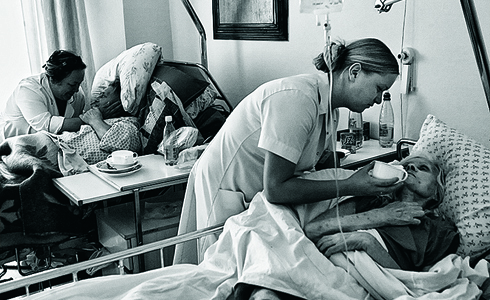
The first Moscow hospice
As expected, the gynecologist did not find any deviations from the norm. And then they diagnosed cancer. What cancer patients encounter in Russia, how much medical tourism costs and what remains of hoping for
Until 35 years old, Masha Ermilova went uphill, and many envied her: an ordinary girl born in one of the dim villages of the Magadan region, Masha moved to Moscow at the age of 14, entered the Gnesinsky School, studied in the piano class and gave great hopes. And then she took it and left Moscow to Yakutsk - to teach solfegio to children.
At twenty and a little, she married a photographer Zhenya Gritsay. Their wedding was very good - for two days they walked in a restaurant, at the tables all the able -bodied population of Yakutsk sat. Soon a son was born, Glory. Now he is 13, he plays in the team of handball players of the city of Chekhov and is amazingly beautiful - a high black -browed blond.
After the birth of her son, Zhenya and Masha moved to the capital, where they founded their extremely successful business at that time: "They helped write coursework, dissertations in humanitarian specialties - economics, jurisprudence." Masha did not get out of the Lenin Library, wrote in the evenings - 20 candidate and even two doctorals in psychology and pedagogy; There was demand for them, people ordered different, including deputies of the State Duma. “They needed scientific degrees, but they don’t know anything,” Zhenya Gritsai hastily says.
In general, Masha and Zhenya made the impression of a harmonious couple: Masha is a tall brunette of the appearance that is commonly called model. Calm, quiet, obviously smart. Eugene is not tall, slightly half -hearted, but very mobile and infinitely talkative. It is felt that he can pierce any wall in any instance. No one could have imagined that this property would soon become the only machine hope.
Masha sits in the kitchen of the apartment of Zhenya’s parents, to which they recently moved. From Moscow - to Chekhov. She drinks tea at a round table and picks a spoon of cake. Zhenya periodically shouts to his wife: "Eat better!" Masha should be eaten because she is sick. She has a 4th stage of cervical cancer, she hardly moves around the apartment. Her short -cut hair is covered with a scarf, under the pink T -shirt Hello, Kitty is hidden by a catheter, and under the shorts - two full ureter. Masha calmly says that nothing foreshadowed the troubles: as expected, she went once a year for an inspection to the gynecologist. As expected, the gynecologist did not find any deviations from the norm, and life continued.
Chronicle of deferred death
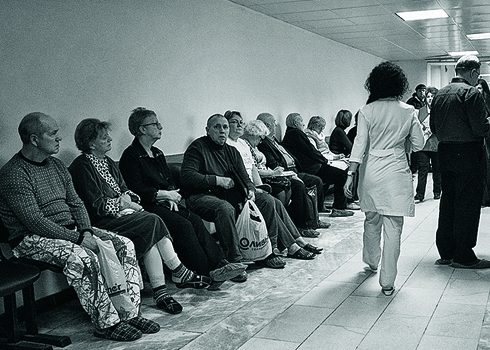
"Kashirka" - the Russian Oncology Center named after N.N. Blokhina
In August this year, the family went to rest in Anapa. And there, Masha began the strongest bleeding: “I realized that something abnormal, wrong, well, should not be so. We hardly reached Moscow, and I immediately ran to the Russian Railways clinic in Moscow, where good specialists work. There they immediately made an MRI and said: "Sorry, a tumor."
Masha describes his walks through the torment: “We went to Ronz* to the Kashirskoye Shosse. Zhenya and I were ordered to undergo a full examination, and even we had to take analyzes in the RONC clinic. From the night we are in turn, and I have bleeding, I can’t walk and stand too. You need to be in place at five in the morning, but the people are already full, there is nowhere to sit, and I waited for my turn lying on the floor. Okay, I laid a rag for half a nurse. ”
The examination in the RONC lasted about a month. The ultrasound showed the cervical tumor with a diameter of 5.5 centimeters, hydronephrosis of the kidneys and a distant metastasis under the collarbone. Only at the end of September, Masha was accepted by Professor Rontz Viktor Kuznetsov.
His verdict was merciless: 35-year-old Maria Gritsai was recognized as inoperable and aimed at “supportive chemotherapy”. So in Russia they always do if they do not want to tell the patient that he has the 4th stage **.
The further life of Masha is described by Zhenya with a chaotic dotted line. He is nervous, often swearing, but it is difficult to imagine a person who will condemn him for this infinite “Bl*d, what kind of medicine is this?” According to him, they refused to write out any chemotherapy to Masha: “She was a chemotherapist by the name of Mustafin right in the clinic Ronz said:“ Have you seen yourself in the mirror? What chemistry is you crazy? " And she wrote the conclusion that Masha is “inconceived”. That is, there is nothing to treat it and there is no need. ”
Eugene ran down the oncocenter half a day, looking for a doctor who would agree to write out to Masha at least some chemotherapy. He refuses to give the name of the doctor, whom he ended up, and does not answer the question of whether he took money for his recipe ***. It only says that Masha was prescribed standard drugs - cisplatin and xelod. According to international protocols, they treat stomach cancer and cervical cancer in the later stages. The therapist agreed to carry out chemotherapy one of the hospitals of the city of Chekhov Lyudmila Mironov, in front of which Zhenya was almost on his knees. In front of each course of chemotherapy, Masha made endless blood transfusion to raise the rapidly falling hemoglobin, and Zhenya personally paid donors for 500 rubles, so that they say important words in the receiving window of the blood transfusion station: “Blood - for Masha”.
From September to October, Masha made seven courses of chemotherapy, they could not. But she was sure that she would recover. She said that at night she dreamed of deceased from cancer. They whispered: "Masha, for you we have no place yet."
Most often, Masha repeated one phrase: "I have no right to die."
And Zhenya said that he would do everything so that Masha could be treated abroad. In his live magazine, he collected money for treatment in Germany with the world on a thread. He sold everything that was possible, and on October 10, Masha and Zhenya left for Munich, to the Gross Harden clinic. This was their last chance.
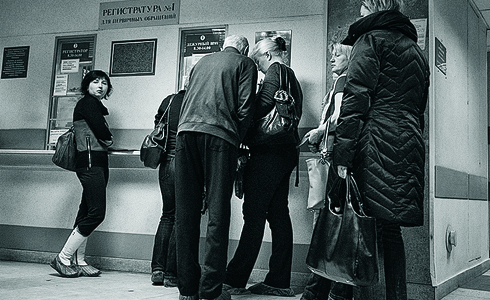
"Kashirka" - queue for life
Mental operations
Lisa Glinka, the director of the Fair Help charity fund, believes that the main reason for the detection of cancer in the lethal stage is when nothing can be done - in the fact that the system of medical examination and preventive examinations broke up with the Soviet Union. The routine and regular examinations of employees of enterprises, students and schoolchildren have sunk into the past - everyone survives for themselves and survives as they can.
When a person is faced with a terrible diagnosis, and Russian doctors shrug their hands, two ways remain: the first is to sell the last one and leave to be treated abroad, the second to charlatans.
In the lobby of the cancer center on the Kashirskoye highway there is a huge announcement: "Do not contact the healers." Under it - the fringe of ads from the selfless healers, promising instant healing. Rodin Andrei Evgenievich offers to cure cervix cancer of the uterine of the 4th stage for € 10 thousand: “Using targeted, energy exposure, cancer cells are destroyed in the body. To remove metastases from the body and prevent their development, bioenergetic resonance is used. ”
Andrei Evgenievich accepts in Rybinsk and in a telephone conversation assures: "The chances of curing are good, I have a lot of such patients." To the question about treatment methods, Andrei Evgenievich answers, removing a little: “I spend mental operations. These are the same operations that the oncological sick surgeon performs, only they are mentally done. ”
Behind mental operations to Andrei Evgenievich you need to go home, but he, if that, "helps to find a good hotel."
Prices of several tens of thousands of rubles for "folk medicine" are standard practice. In addition to the mental removal of the tumor, healers practice droppers from Mirta tincture (grind and pour the leaves with 70 percent alcohol). Aviation kerosene, therapeutic clay and own urine are useful. All of the above is discharged orally. With stomach cancer and ulcers, healers give five times a day from 1 tbsp. l. Up to 100 ml of pink foam protruding on stumps of birch tucked in the spring. “They are treated with woodcuts, rolling into eggs - an egg is rolled along the patient, and the disease enters it. Drink hydrogen peroxide. Until the morning I can list what liquids they pour into myself, ”Lisa Glinka*complains. Glinka patients - to put it mildly, poor people. For them, rolling into eggs is the only opportunity to extend life. “Many of them do not even want to go to the doctor, because they will be overwhelmed and a bribe will be asked. It’s much easier to turn to a healer who will not say: “Why did you come so late?”, And he will take his hand, look affectionately in the eye and the testicle will take it out. ”
Good attitude
“Medicine in our country was so discredited precisely by the bestial attitude, that people do not want to go anywhere, except to the dentist in a paid clinic, because - with a smile, because they do not humiliate you. And to go to the clinic - like to the police, we will not go until the thunder is stuck, ”said Nyuta Federmeser, director of the Vera Hospice Charity Fund for Help.
The daughter of the legendary Vera Millionna, chief doctor of the first Moscow hospice, Federmeser is sure: the most important thing is lost in Russia - trust in the Russian doctor. “It is known that everything goes from education. I work in a medical institution, in a hospice, for my colleagues children in medical institutes, and we will find out every session what bribe the teacher takes for the test and how much - for the exam **. And then such graduates go to hospitals, and you come there with your misfortune, sit in the clinic for hours, they drive you to different offices and strive to spend more money. And abroad - flew in, and the next day you were examined in the clinic and an operation was done in a day. ”
Nyuta considers the main advantage of foreign medicine not so much therapy itself as leaving: “There are many types of cancer where the quality of treatment abroad and in Russia does not differ ***. Both there and there is an operation, chemotherapy. But there is such a thing as departure at any stage, and I consider the lucky ones those who have money to avoid rudeness, humiliation, and pseudo -sales services. More honest when you go to the western clinic and pay in the account. I often hear: “You know, the second course of chemistry in Israel was no more expensive for us than the first course - on Kashirka.” And the first seemed to be made on a quota, and they should not have taken money for it. ”
In the lobby of the First Moscow Hospice, jazz is playing quietly, sculptures from felt are placed on the tables. On trolleys, restaurant quality food is transported along the corridors, the wards are double, with large windows and good ventilation. Here they find painkillers and good care. Almost like abroad, only for free and very late.
Just blood
The 23-year-old student of the Faculty of Journalism Faculty Lena Sadikova was one of the most famous cancer patients in Moscow.
In 2010, Lena, a beautiful blonde with delicate skin and huge gray-blue eyes, was diagnosed with acute myelobilic leukemia ****. After the first course of chemotherapy carried out at the Moscow Hematological Center, bone marrow transplantation was required. Lena did not have a kind of donor - for such an operation, the bone marrow of her brother or sister is required, and Lena was the only child in the family.
They could not make a transplantation from an unrealistic donor in Moscow - they did not find a suitable donor. But he was promised to find in the USA, in the clinic of Fred Hatchins at the University of Seattle, the best place for transplantations in the world. American doctors rated an operation of $ 423 thousand. Lena's friends courageously raised money for her. Nobody believed in success, but they coped: they held charitable auctions, fairs at which they sold their things, books, hats, hand-make, home cookies, Christmas ball. In January 2011, the money was raised. In February, Lena wrote in a living magazine that a donor is already being held in the USA. To do this, the Seattle needed to constantly transmit blood samples, and it is impossible to legally carry a test tube with blood across the Russian border to an individual. From this moment, an almost debugged scheme had a failure. And when it became clear that it would not be possible to find a donor in the United States, and the choice of clinics narrowed, the neighbor Lena in the ward in the hematological center advised the clinic in Israel.
On April 18, 2011, Lena and her mother Alla arrived in Israel, on the same day Lena was put in the clinic, and Alla’s mother faced unexpected problems: “They immediately took an prepayment of $ 150 thousand from us, and then additionally attributed several thousand dollars for each day in the clinic: for medicines, procedures, tests.” Alla cries: “You fight for the money, and they say to you:“ Well, you are so melting, this is your daughter! ” And the numbers for services seemed to be taken from the ceiling based on the amount in our account. ”
Lena and Alla spent two months in the clinic. Alla admits that doctors and nurses were perfectly treated: “Doctors are universals, any disease knows thoroughly. Miracles occurred in Israel in a month - Lena began to walk. Then Lena performed chemotherapy with an experimental drug by clofarobin. But although remission did not happen, the doctors said they could make a transplant. Money, alas, melted. "
Lena did not survive until her mother would have to encounter a monstrous dilemma - to lay an apartment in Moscow and pay a transplant or hope that the doctors will be clenched and the operation will do for free.
“Trips abroad are effective only if distrust of domestic medicine is combined with a serious financial resource,” knows the director of the research of the bone marrow of the Center for Hematology of the Ministry of Health Valery Savchenko. - At the same time, patients should understand that when they go to TCM abroad, they should be there at least six months. We categorically object to the patient to go to Israel for transplantation for € 200 thousand, and a month later was discharged to us - then we correct their errors for millions of rubles. I do not believe in medical tourism, ”Savchenko summarizes.
"Medical tourism"
In 2002, Alexander Ivanov, a therapist from Kazan, at the request of his patient with a stomach ulcer, founded Medhaus-one of the first companies in Russia to provide medical and tourist services. It was not difficult to do this: Alexander himself left Kazan in Dortmund in 1991, but he came to his homeland quite often and knew everything about the problems of Russian healthcare.
Following the first Kazan patient, a string of compatriots stretched to Germany. “Then,” says Alexander on Skype, “only the chosen ones went for treatment, and then the well -being of people has grown up and the stream increased.” Now up to 150 people annually turn to Medhaus, and more than half of them with oncology. Alexander assures patients, put in the best university clinics in Germany. There are forty such clinics. According to him, “they leave most often with cancer of the 4th stage. People who have funds want to understand that they have exhausted all their possibilities. ”
The German healthcare system involves a single treatment protocol for everyone - in other words, the German homeless receives the same care and the same drugs as the Minister of the federal government. And for the Medhaus client, the trip costs € 100 thousand. For this money, they make cocktails from chemotherapy with strawberry flavor so as not to be sick. In time, without a stamp of a district oncologist, they give anesthetic. For this money, a platelet mass is regularly poured to maintain the proper level of hemoglobin. They select individual nutrition, feed from the spoon and daily arrange consultations with the best professors.
That is, they do what in Russia should - no, they are obliged to do it for free, without any bribes and tearful requests. And what if the money ends? After a pause, Alexander answers this question: “Yes, there are a lot of such cases, almost every second. A person comes to chemotherapy, and doctors understand that you can’t get by with one therapy here, you need an operation. The patient does not have funds for her. ” And then he gets only what he has enough money for.
Maria Gritsai
Masha Gritsai died on October 22, 2012, spending exactly 11 days in the Munich clinic "Gross-Harden" in the Munich clinic.
They treated her very well, anesthetized with morphine every day and gave medicines for panic attacks - she was afraid of death, did not want to die and all the time said that she had no right to do so. She asked: "Make it so that I am not scared and painful." They told her: "It will not hurt, we promise." So it happened.
For 11 days in a German clinic, her husband Zhenya paid exactly 1 million rubles, but he does not regret anything.
Because in Russia, he believes, she would definitely be scared.
Photo: Alexey Kukharsky
*** Russian Oncological Scientific Center. N.N. Blokhina accepts patients from all over Russia and the CIS countries; It is impossible to sign up for an initial reception by phone - the patient must personally come to the registry.
*** “In 2009, in Russia there was a high neglect (identification of the 3-4th stages) with tumors of visual localizations (...) it amounted to (...) 37.9% with cervical cancer.” E.M. Axel, “The state of oncological assistance to the population of Russia and the CIS countries in 2009”, “Bulletin of the RONC named after N.N. Blokhina RAMS ", 2011.
*** Patients of RONC surveyed by The New Times call different corruption rates - a doctor can receive from 20 thousand to 400 thousand rubles for a prescribed course of chemotherapy - depending on the drug, the services of a nurse cost 1200 rubles per day (two approaches to the patient for 600 rubles), and the installation of a catheter - 2000 rubles. Плата за место в палате составляет от 2 тыс. до 8 тыс. рублей.
****Помимо платных услуг целителей онкобольные в России часто прибегают к самолечению. Тираж газеты «Вестник ЗОЖ», в каждом номере которой публикуются народные рецепты «от рака» (чаще всего это настойки распространенных на дачных участках растений: бузины, чистотела и т.п.), составляет более 3 млн экземпляров.
****Студенты московских медвузов в разговоре с корреспондентом The New Times называли цифры порядка 10 тыс. рублей за зачет и 20 тыс. рублей за экзамен.
****Для сравнения: пятилетняя выживаемость больных с раком шейки матки в России — 68% (РОНЦ, 2011), в Японии — 70,2%, в США — 64,4%, в Германии — 62,9%, в Великобритании — 58,8% (OECD Health Data 2011).
****По данным «Вестника РОНЦ»
за 2011 г., 29,6% больных с лейкозами в России умирают в течение первого года после постановки диагноза.
фотографии: Алексей Кухарский
div