
Translated material
Diagnosis
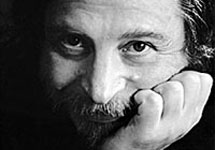
1. Paranoya and leader
In 1964, Richard Hoffstedter published the famous essay "Paranoid style in American politics", where it was about a certain style of thinking, characteristic of American right, in particular, addiction to secrecy, suspicion and conspiracy search. Two years before, Elias Kanetti published the no less famous book "Mass and Power", in which he wrote that Paranoya is an integral feature of all power. Over the past 50 years, fair literature has accumulated on this subject, confirming the correctness of Kanetti and Hofstedter.
Since the retention of power is one of the main goals of those in power, in their minds, a fixation on self -preservation inevitably arises. Kanetti writes about the complex "Survival". This complex always implies suspicion. But the real paranoia, according to the researchers, does not develop immediately, but after eight to ten years of stay at the helm. At the same time, paranoia arises in almost any "ruler" without exception. This is due to the fact that no person can maintain mental health, when for years all his word is enthusiastically caught, and all desire is instantly fulfilled. As a result, pathological narcissism, a sense of its exclusivity and irreplaceability, is inevitably,, but at the same time a sense of narcissistic loneliness, when everyone around, without maintaining comparisons with their own “greatness”, begins to seem insignificant (“no one to talk to. Gandhi died”, etc.).
Kanetti believed that only a constitutional restriction of his stay in power for eight to ten years and ongoing criticism can be a means of paranoia of the ruler. Paranoa is a deep crisis of subjectivity that loses social ties. It leads to non -recognition of others differently as in the context of its own narcissistic significance. Everything that is happening around is perceived by those in power exclusively as aimed at his support or its destruction. All processes taking place in society are personified and cause an acute emotional reaction. Inadequate, isolation of the leader, even from the immediate environment, is growing, monstrous suspicion. The usual manifestation of paranoia is increased secrecy "above" and the requirement of increasing transparency "below". Enemies and conspiracies seem to be everywhere.
2. Paranoya and society
The presidential paranoia would be simply an uninteresting episode in the history of the disease of one private person if the authorities did not plant paranoia in all areas of life. This topic is relevant today for Russia, since politics here has established a distinctly paranoid style, which combines the growing narcissism of the first person and signs of deepening suspicion, the search for enemies. All these laws on foreign agents, delusional fantasies about the hand of the State Department fit into the classic type of paranoia along with Siberia and amphoras.
The danger of the paranoid style lies in the fact that the power, struck by this disorder, is trying to extend its nonsense to the whole society and force him to believe in their hallucinations. The need to turn psychotic delirium into reality is rooted primarily in the passionate need of the authorities to convince oneself of its adequacy and insight. Unlike the usual modest paranoid, the government has a unique ability to subjugate reality to its fantasies. In addition, the paranoization of society is the best way to survive the ruler, which in the wave of his own delirium enters into a dangerous resonance with society. This resonance can extend the stay in power for many years and significantly strengthen the leader of the leader.
Many people ask themselves: why does the Investigative Committee so carefully fabricate the case of "riots"? After all, the authorities are more likely to damage the scale of protest performances. Where tens of thousands were protested, official sources usually find a “handful” of tipsy hooligans. What is the reason to see the "mass" where it was not? It is suggested that this is necessary to decline the opposition or tighten punishment. In my opinion, whatever the practical considerations of the Bastrykin Sokols were, the Investigative Committee primarily fulfills the order for paranoid construction of reality coming from the very top. So that the mania of the conspiracy does not look like a symptom of a mental disorder, the conspiracy must be exposed (that is, fabricated) by any means. Reality with batons is driven into a matrix created by a sick imagination. Reality must be forced to match the delirium under the muzzle of a gun.
This is a massive imposition of paranoia to society - a game with unpredictable consequences. Kanetti distinguished between successful and unsuccessful paranoids in power. Successful are those who managed to infect society with their illness. This is, for example, Stalin, who inspired Soviet people with the idea of widespread spread of spies and conspiracies at the same time with the idea of his divine greatness. The success of paranoid in his case led to millions of victims in combination with the incredible flowering of charisma of a mentally ill leader. Unfumed paranoid, as it is easy to guess, are those who are unable to infect society with their delirium. Such a leader more and more discovers his dangerous inadequacy, isolated and is eventually eliminated.
It seems to me that Russia is standing at a dangerous intersection today. Her fate largely depends on her readiness to recognize paranoid nonsense reality - or her ability to reject the hallucinations of the leader as symptoms of the disease. This is the only way to avoid a nightmare and at least to a certain extent to preserve the mental health of the nation.