
Translated material
12 angry books
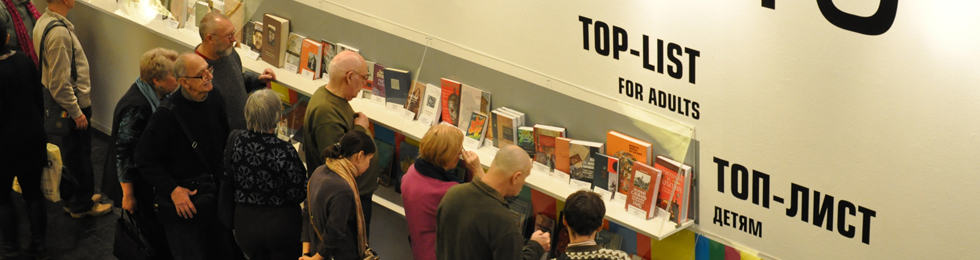
We are accustomed to the fact that the literary process build large awards. But I think it's time to forget everything that we understood by the literary process in the last ten years, because collapse has come in it.
The readers felt it for a long time: a huge number of smart, reading, but not working with books professionally people have long lives with a constant sense of guilt, because he does not read novels. It seems to them that somewhere nearby there is a violent and fascinating literary life, and they only in their laziness or employment do not find a way to take part in it. And I, as a book observer, partly for this in the answer: we support the disorienting navigation system, which no longer meets reality by inertia, checking out according to the outdated literary calendar. In fact, if the new Gogol appears, they will report to you. Life is really seething, but in another place. We have not yet come up with a new navigation system - but first you can go to the Non/Fiction fair: everything is there.
In part, the literary stagnation can be attributed to the socio-political seething of the last year, in which there was simply not to fiction (although poems and journalistic genres were re-updated). I checked the sensations with many book acquaintances, and everyone agreed: contrary to the usual, in September 2012 I simply took the literary season, and did not come. What is being done there in premium short lists-no one is interested; There was no reason to notice the September Book Fair, the new items were not rattled - they were few, they were saved for non/fiction. The old premium system stalled. This could happen last year, and could have happened in the next - but so, in coincidence, it happened now.
Large bonuses are very conservative mechanisms that are used to building a liter process in some understandable hierarchical cake, crowned with a great Russian novel of ideas. But in reality, literature under the vertical genre hierarchy is no longer subjected to, and which is subjected to incredibly boring. What is the difference, which of the indistinguishable and bursting without a trace of paper bubbles will win if the pulse has long beaten in another place. Prizes, it seems, are aware that they work idle, and are trying to look for new ways.
Say, the most respected and benign prize “Russian Bouquer”, tired of his own venality, in search of fresh air two years ago awarded Elena Kolyadina's jurisen-pornographic novel “Flower Cross”. Then in the critical ranks there was a pleasant revival - what a scandal and what a scope for wit! From this novel, only the word “Afedron” remained in the memory of the people, but there is no one left from many laureates. Anyway, as it becomes now visible, Kolyadin in the simplicity of the Soul really was the first to poke into some actual public abscess-he was later revealed the reaction to the business of the Pussy Riot group, whom many defenders of the Orthodox faith voluntarily dreamed of tearing out in the square. After that, in the year 11, the prize was not awarded at all - instead, the laureate of the Russian booker of the decade was elected, which, unfortunately, was already, Alexander Chudakov, the author of the truly amazing book “The haze on the old steps ...” was already elected. Having rustled, but not changing, the Russian booker returned to the shores: we will find out the next laureate immediately after non/fiction, but the short list does not excite the slightest excitement.
Another important award - a “big book” - was handed just on the eve of the fair. The intrigue in the short list was one - the book of Archimandrite Tikhon (Shevkunov) “The Nednered Saints” (she won according to the results of the reader's vote). They say, on the one hand, she has an incredible million-year circulation. On the other hand, they say that the book on order is distributed by all church shops. On the third party, they say that literary virtues, nevertheless, are obvious, and reader interest is not incomprehensible. With the fourth, it was curious whether the jury would fragrant and reward the writer, who is called the confessor of Putin. On the fifth side - it seems to me that it would be funny to reward her, an indirect, elegant rhyme with Elena Kolyadina would come out. It would be, in general, what to discuss, but did not have to - Daniil Granin, who was awarded twice: the main award for the novel “My Lieutenant” and the Prize “For Honor and Dignity”, became the laureate.
As Wikipedia says, one of the small planets of the solar system is named by the name of Daniil Granin. The list of his awards and titles (ibid.) The little shorter than his bibliography, but what is curious, actually literary prizes (not counting the President of the Russian Federation in the field of literature and art) until recently, did not appear there; And only last year, Granin received the Bunin Prize, but now - a “big book”. This is very clear: 93 years old, of which there are more than sixty of them in the profession, and not a single normal bonus - it was inaccurate, recovered. But this story refers to literature indirectly.
Of course, there are still some other unstoppable tripods; For example, an independent literary prize of Andrei Bely, whose prize fund of 1 ruble and a bottle of vodka - a call to large prizes of other awards, where the honor is largely determined by the amount; It is awarded during non/fiction. So, there is even the nomination “For Merit in the Development of Russian Literature” - but in the last three years the jury has not been using it. Nobody deserved, well, that's all. This, I understand, is a position: so that for three years in a row it is not to give slack, in humanity, and not to reward any fragrant gray hair, you need to have a character. But today the prize in this nomination went to Henri Volokhonsky, and it would not occur to anyone that out of politeness. Other laureates cause no less respect - I was especially pleased with the award of Yuri Cynikov, the translator of the “diaries” of Vitold Gombrovich. This is an amazing book that came to us with a delay for half a century, not at all fingering during this time and without having lost relevance.
That's all the point. The book fair finally took shape as the main event of the year, because it has horizontal hierarchy - books on the counter. The vertical hierarchy cannot work anymore, because the system of race of new products is like a crown devouring its children.
Writers must write new products on a year on the terms of the contract with a large publishing house. Critics must survey new items because they are dependent on reader interest, and he is heated by information farmers, and the information farmers create bonuses, and the premiums are given to freshly baked works. Readers swallow new items from the conveyor, not having time to chew-the last, however, is healthier for the reader, but only by this I can explain for myself some positions in the Buker short list.
The soil is exhausted, nothing will grow on it now, it needs to lie down under steam. We really thought that this would come from our hands endlessly? Sitty agriculture - this is what Russian literature needs; Lord, burn!
At the fair this year, of course, there were loud and long-awaited novelties-but it is characteristic that a very large part was written a long time ago. This is a misunderstanding, which still existed and finally completed blind spots, like Guannino Guareski or the already mentioned Vitold Gombrovich. These are the collected works of new classics, which they thought well and non -banally - like the collection of Dmitry Aleksandrovich Prigov - or simply collected a full corps of texts - as a three -volume of Sergei Gandlevsky. This is, say, a lot of work by Linor Goralik on the creation of biographies of modern poets. This is a photographic album or an essay about photography. It surprises me when people speak and grieve about the crisis of culture, about stagnation and degradation. There is time to collect stones - I felt this in its entirety, while I carried books home. This is a very happy time. Here is my crop - books that you really want to write about (and we will write):
1. Dmitry Aleksandrovich Prigov , Monads. M.: New Literary Review, 2013.
2. Susan Sontag , about photography. M.: Ad Marginem, 2013 - in cooperation with the center of modern culture "Garage".
3. Bruce Chatwin , “UTC” and other stories from the world of arts (novel, stories and essays of different years). M.: Ad Marginem, 2013
4. Giovannino Guareski , Small World. Don Camillo. M.: Center for Book Rudomino, 2012
5. Eduard Limonov . In cheese (novel in the industrial zone). St. Petersburg: Limbus Press, LLC Publishing House K. Tublin, 2012
6. Kit Richards , life (recorded by James Fox). M.: Astrel: Corpus, 2012
7. Alexander Skidan , the sum of poetics. M.: New Literary Review, 2013
8. The three -volume of Sergei Gandlevsky - poems (the book includes texts written from 1973 to 2012), prose (the story “Treepanation of the Skull” and the novel “<NRZB>”) and essays, articles and reviews of different years. M.: Astrel: Corpus, 2012
9. John Lennon . Letters. The preface and comments of Hunter Davis. M.: Word/Slovo, 2012
10. Linor Goralik , private individuals: biographies of poets told by themselves. M.: New Publishing House, 2013
11. Natalie Sarrot . Plays. M.: Publishing House "Fluidfrlay", 2012
12. Soviet era Markov-Grinberg , photo center named after brothers Lumier, 2012
-

Barbara Babitskaya
Journalist, critic, translator, editor
Born in Moscow. She worked as a correspondent in the Russian Newsweek'e, editor of the Literature department at OpenSpace.ru, moderator of the Culture blog on Snob.ru, the editor of Colta.ru, and a school teacher.