
Translated material
Need a house
In Russia, there are 654 thousand orphan children. Parents are 84% of "orphan" are alive and well, and they threw children*. This is a disaster in itself. Even larger is that, having left orphans to the world, graduates do not know how to live in it 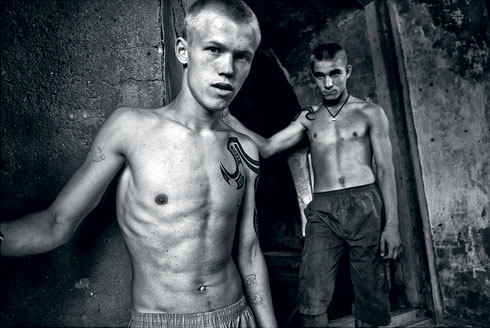
| *Source: Pavel Astakhov Commissioner for Child Rights, May 2012 |
| ** On May 17, 2011, at a meeting of the Presidium of the Government of the Russian Federation, the Ministry of Education and Science and the heads of the regions was instructed to establish systemic monitoring, that is, individual supervision of each graduate of the orphanage. Then Prime Minister Vladimir Putin emphasized that in 2011, 6 billion rubles were allocated for the purchase of housing for orphans, and therefore it was necessary to “protect them from risks, from various kinds of crooks and candid criminals”. |
The question was the same for everyone: how could you help you when you just left the boarding school?
Lida said that it was very necessary for someone to teach to cook. Nadia Petrova said that it would be easier if one could not return to the apartment to the grandmother, which thumps. Kostya joked. Nadia Kiryushina replied that it was impossible to help - no one would replace her mother.
Neither Lida nor the Petrov family, nor Nadia Kiryushin, probably never thought that in the eyes of the state they are all members of a separate social group - “graduates of orphan institutions” **.
Lida
“We are no different from the parent. Unless at first they were wild. We did not greet the neighbors in the entrance, we were afraid. When someone wanted to meet us, they ran away. Wild were, right wild. "
Lida Bazhanova is 36 years old. She graduated from Moscow boarding school No. 80 in 1991. We are sitting in my kitchen, drinking tea, and it’s hard for me to believe that Lida was “wild”. I know her for many years and, among other things, I remember how almost ten years ago she came up to me in the courtyard of our house, looked into the stroller where my daughter was sleeping at that time, and said that I would not be worried if the child sucks her finger. "In our boarding school, up to eight, everyone sucked, and then stopped." Then I only adopted my child - this finger, of course, cared me very much.
When Lida says “wild”, she has in mind her feelings: there are “they” - children from boarding schools, and there are all the rest. They always tried to hold together. When Lida was given the room, she settled in her not alone, but with her friend Natasha. The moment when Natasha got married and they had to part, Lida recalls as the most terrible in her life. “I walked and went, then I’ll sit down, then get up, did not know where to put myself. For all childhood, but in general, in my life before that I don’t remember that I have left alone. ”
A few years later, Lida also married. I got a job by profession-a male-stucatur, worked from morning to evening, and on weekends I took private orders-whitewashed ceilings, put the tiles, painted the walls. All this time she saved up money - they taught this in a boarding school. I bought two rooms in my communal apartment. It was treated for infertility. Then her husband Zhenya, who was barely 30, died of cardiac arrest.
Lida was born when her mother was not even seventeen. Grandma wrote a rejection of the child. In the boarding school, she was visited only by mother's sister Aunt Lucy. “She brought sweets and money, but did not take home. But one day, when I was adopted, Aunt Lucy arrived and ordered me to be returned. ” Lida was six years then. All that remembers: some aunt came to the boarding school, and Lida hid behind the battery. Then Aunt took her to her home, fed her and put her to bed. And the next morning she took it back.
Now Lida is married to a very cheerful guy Edik, their son Pasha is already two years old. It’s not easy to live: Lida sits with a child, and Edik cannot find a job. So she is in a hurry to get out of the decree - to whiten and paint again. She did not choose this profession: “I wanted to go to the sewing - to learn how to sew, but the educators collected our documents and took it to the construction. So we studied there the whole group. ”
Tatyana Polonskaya tells me that this is a common practice. “Usually everyone goes into a couple of simplest professional schools. Mainly in those who have a hostel. ”
Tatyana Polonskaya lives in Ufa and works in the Foundation named after Vladimir Lvovich Zasov. This is an amazing fund. Vladimir Zasov was an Ufa businessman and a member of the Legislative Assembly, helped a lot of orphans. Then Zasov died, and his friends created the fund and handed him for use an office building, which is now leased, and for the proceeds help orphans, graduates of orphanages and low -income families.
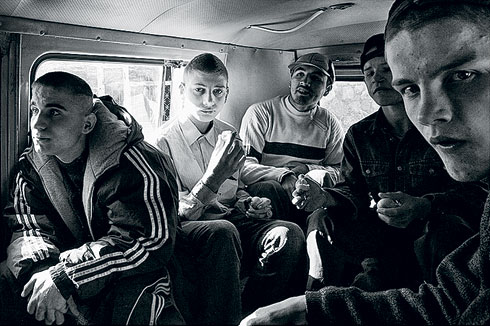 |
| The senior group of the boarding school. One of the guys is taken to the court on the occasion of theft in the village (stole a tape recorder, bicycle and sausage), the rest - on an excursion to the district center |
Tatyana worked in boarding schools for more than ten years, took three adult guys under guardianship, and then went to the Zasova fund.
The main method of Polonskaya and the fund is to start working with the children back in the orphanage, after graduation it happens too late: “At some point I noticed that all city homeless people greet me by name and patronymic.” The Zasova Foundation began with simple programs - for example, in one of the boarding schools, an open class was arranged, where students from the Ufa pedagogical university had additional classes. Pretty soon it turned out that many people want to attend such lessons. Then the children began to choose schools. Then-to enter the tenth and onendenth grades. Now many are studying at universities. Those who, after the boarding school, went to jail or drank many times less.
“It is believed that the main problem of graduates is domestic inability. They do not know how to wash, cook, calculate the budget. But you can learn this in a month, ”Tatyana explains. “What is really difficult to teach-a simple idea that you are worth something and you can do something in this life.” Polonskaya tells how pupils of orphanages describe themselves in special tests. They write: "obedient, easily come to contact with children, teach." They say about themselves with the words of adults, so, how they would like to see them - they do not have their own language, and they do not realize themselves as a separate personality. “I do not blame the educators,” says Polonskaya, “the system is arranged so that half the working time you must teach children to fold towels according to the instructions - either a triangle or boat. What is the right to success? "
Nadia and Kostya
Nadia and Kostya Petrov (the surname changed) and their four children - the eldest, Rita, 12 years old, the youngest, Dima, 4 years old, Yegor and Lidochka in the middle - live on the second floor of the panel Balashikha five -story building. As soon as you open the door to their porch - the strongest smell of dog is hit in the nose. In the corridor of the apartment - puddles of cat urine. Alice and I - she is a volunteer - stand in the corridor, because there is nowhere else to stand here. Huge cockroaches are sitting on the fact that once was the wallpaper. A very beautiful and bright children's drawing hangs under the cockroaches. In the center of the drawing, it is ideal handwriting: "Happy birthday, mother!"
Both Nadia and Kostya are graduates of boarding schools. Kostya was in an orphanage since birth, Nadia got into a correctional boarding school at the age of seven, when her mother was deprived of parental rights for drunkenness. After the graduation, she, like thousands of other orphans, returned to where she was forcibly seized from her several years earlier-into the destroyed apartment of the alcoholic mother. Nadia immediately went to work as a nanny in the hospital, in the oncological department. She works there to this day.
Nadia does not pronounce many sounds and is explained by completely simple, children's phrases - unless the case concerns sick animals: then Nadia turns into a real medic and can discuss as much as he likes about vitamin deficiency, ticks and plasma -which therapy. Just because of the animals in the Petrov family, problems began: the guardianship authorities almost took away all the children. The oldest - twelve -year -old Rita - puts a small pink notebook into the corridor and proudly shows us the list: now they have 10 dogs and 13 cats. In addition, a one -eyed rabbit sleeps in the cage, in a small box - three hamsters, there is still a dove and a Honorik. All this walks, crawls and jumps through huge heaps of trash, which is littered with the entire four -room apartment. "
You must teach children to fold towels according to the instructions - either a triangle, then a boat. What is the right to success?
“I ask Nadia whether the guardianship often comes. Nadia replies:“ This is a Bagira. Her paw was burned. Right to the bone. She barely walks, now she’s running into the street. ”Bagira - a black hefty mongrel - clings to Nadina's leg.
The only new and pure thing in this house is a metal door. Nadia bought her on credit.
Neither Kostya nor Nadia drink. Both work. Children, absolutely happy, sleep on the same bed with dogs and cats. Rita every day goes to the hospital with her mother. In cut five -liter bottles, she brings home food from the dining room - the one that the patients did not eat. Both animals and children like it. “Great savings,” says Nadia.
Julia Kurchanova told me about the Petrovs. This young beauty spends half a life in smelly cluttered apartments, boarding schools for mentally retarded children, ships and guardianship authorities. She works as a psychologist in the Foundation “Volunteers to help orphans” and is trying to make children from problem families not be taken to orphanages. This program is called "Prevention of social orphanhood."
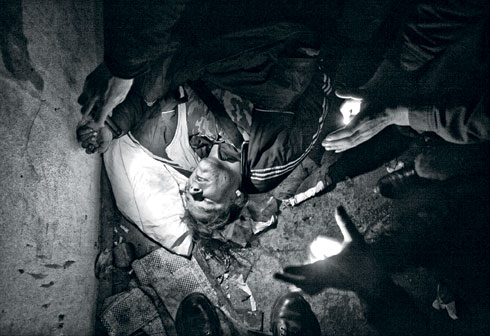 |
| Alexei got out of the boarding school first. The younger brother Misha shines on him, who was looking for him for a long time and found drunk in an abandoned house |
Julia tells about the Petrovs: "We once brought the children of the kinter-surgees, so each of them gave a soul mate to his mother."
Nadia does not know how to lay the bed for children, because no one has ever laid her herself. Now the state wants to pick up her daughter Rita from Nadi so that she sleeps on clean linen. And Julia offers to teach Nadia the housekeeping - then Rita will be able to live not only cleanly, but also at home: "Children should not originally live in barracks, then you will not have to adapt them."
Nadia Kiryushina
Nadia is a Moscow student. Very polite, smiling and free. She is stylishly dressed, she has a neat manicure and tastefully-just a little-tinted eyes. In a word, if some stereotypes about the graduate of the boarding school exist, Nadia destroys them. She goes to work from the university-she is a sales consultant in a clothing store, and after ten in a hostel.
There were five children in Nadi's family. They lived in the Ryazan region in the urban -type village of Alexander Nevsky. Mom died when Nadia was thirteen, dad - five years before. All children, except for the oldest girl, were sent to a boarding school. The eldest even earlier took an aunt. “We thought that other aunt and uncle would take us away, but they could not, they already had it closely.” The younger brother of Nadi after that was silent for a whole year. She does not like to remember about the boarding school, she only says that it was very bad. Nadia was always easy to study, but in the 10th grade they did not take her: "They did not take anyone, they said where you are." Nadia says that then she first thought that "she would still prove them to all."
And proved. She graduated from a college with a red diploma, handed over the exam herself, sat in an electric train and went to Moscow for the first time in her life - to enter MGIMO.
She was not taken to MGIMO, she arrived again and took the documents to the pedagogical. There, Nadia immediately said that they would accept: in addition to a good score, she had an orphan benefit. “Only I did not believe it and every day from Ryazan called them: what, is it true that I did?” When Nadia finally believed in her happiness, she bought a cake and went to the aunt - to mark the admission. Aunt Nadia scolded: they say, you will disappear in this Moscow, why do you need it. Not disappeared. Including thanks to Elena Kharitonova, curator of the Moscow Students group.
Kharitonova became the director of the orphanage in Lakinsk, Vladimir Region in 1991. “Every day it began with the fact that I had to come up with how I would feed children today.” There were no clothes, shoes, food, but there were hazing, the lack of educators and annual commissions, which, according to Kharitonova, “attributed the children”.
Write down children
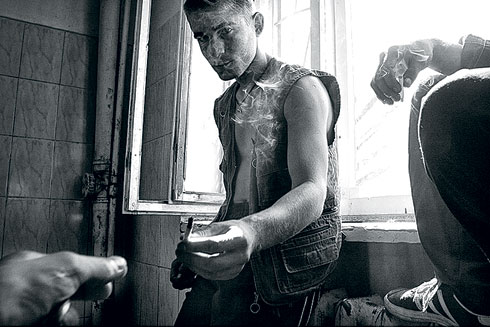 |
| Kurilka in the toilet of the older group of the boarding school |
In ordinary orphanages, children who are able to engage in the school curriculum live and study. Are they able to-determines the pedagogical medical and psychological commission (PMPK), which each child passes once a year. Those whom the commission recognizes undergoing are sent to correctional boarding schools. Children who can’t cope even there leave for boarding schools for mentally retarded: the state believes that such children do not need development. They only need to eat and that someone washed the ass on time. This is "written off children."
Julia from the Rostock Foundation has been working in the Pskov region with pupils of the Belsko-Ustinsky boarding school for mentally retarded children for many years. Julia says that a variety of children fall into such institutions-someone with intelligent intelligence, but with cerebral palsy, someone is simply hyperdiagnosis, someone has really serious mental disorders. “We always have a different set of medical tasks,” says Julia, “but the main thing, from which we come from: none of the above is a contraindication for socialization.”
In other words, whatever the diagnosis, former orphanages have the right to live with people among people.
In the Pskov region, graduates through the efforts of "Rasto" live so. Someone is in the family center, someone is in a social hotel. They go to work in the artel to weave baskets, plan a budget, cook food, walk, make purchases, create families. The Rostock Foundation is a non -state organization. And according to the plan of the state, children from boarding schools for mentally retarded should move to neuropsychiatric boarding schools for adults.
Once, in the Lakinsky orphanage, Elena Kharitonova did not allow to “write off” 15 boys with a diagnosis of oligophrenia. They hired a tutor who led them from the first to the fourth grade, and on the fifth they went already with everyone to a regular school. With this, the transformations of the orphanage in Lakinsk began.
“I then counted and realized that I have ten inspecting organizations and only one helping-American volunteers,” Elena Pavlovna recalls. Kharitonova made friends with their orphanages who came to their orphanage from the United States, and together they created the Hope Foundation. First of all, Kharitonova began to rebuild the orphanage, dividing it into five small family centers. 
She saw how graduates of previous years are on the street. They entered the vocational school completely unleashed to life; In the schools there were neither social teachers nor psychologists - anyone who would understand how a child from an orphanage differs from an ordinary teenager. The Nadezhda Foundation began to create social hotels in which graduates could live and learn to live outside the boarding school, conducted trainings for teachers, paid for psychologists and social teachers, opened something like clubs where those who had nowhere to go-just to stay next to familiar people. Gradually, the “Hopes” programs earned in four more areas except Vladimir. The fund bought several apartments and hired couples to work so that the children live in large foster families, see how parents wash, kiss each other before bedtime, and cook jam. The state does not need to take care of the adaptation of such children: foster parents will help to make lessons, tell you what documents you need to collect for admission to the university, and if you act, they will be happy for you.
When Elena Kharitonova later moved to Moscow, it turned out that the graduates of her orphanage or those who were helped by her fund, in the capital were already dozens. Now Elena meets them every week. And if necessary, always visits in the hospital. Those whom the state is accustomed to reckon with the abstract group "Graduates of the orphanage", it remembers by names.
Photos: Dmitry Markov