
Translated material
December 2011
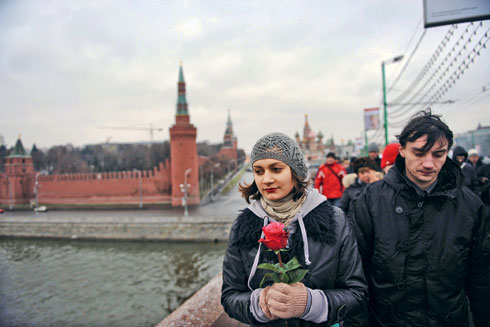 |
| Rally on Bolotnaya Square on December 10, 2011 |
Near story is written by winners, distant - those whom its results are no longer related to.
What will our children want to know? How did it start? Why didn't it work? Was there a chance?
We write about how it is seen a year later.
... and this word was event
“On the evening of December 5, we are going to discuss the results of the so -called "Election". Everyone who believes that his voice was stolen was considered incorrectly who wants to change the situation - come to clean ponds! ” Such a message appeared on a specially created Facebook page on November 29: on the slang of social networks, this is called Event - an event open to everyone. The page was created by the activist of the Solidarity movement Denis Bilunov: “We thought the page on the social network would add a couple of hundred people to us. According to the practice of 2007-2010, the main means of attracting people to the rally was a radio, the same “Echo of Moscow,” says Bilunov.
On December 4, the Internet was boiling with links to videos and posts, which talked about “carousels”, castings of votes, fake protocols. “The impression was like a slap of slap in the face, because they were heard from all sides,” recalls the current member of the coordination council of the opposition, and then journalist Sergei Parkhomenko. On that day, he was an observer on the site in the ATC area (“do not believe from the Communist Party”) and chased his “Subaru Outbek” behind the crowd of members of the now well -deceived Prochrevsky movement “ours”, who, like goats on a rope, moved behind the curator from one polling station to another. There were thousands of similar statuses, posts, blogs, repeatedly replicated using Twitter. Why this was not four years earlier, when there were no less falsifications, and Putin had just declared a successor to himself - a separate question. But in December 2011, “Your neighbors began to talk about politics-as one of the regulars of the cult among the 20–30-year-old cafes“ Jean-Jacques ”put it. “This was not told television, not radio - everyone talked about it.”
However, on the Eventh page “let us summarize the“ elections ”by the night of December 4, only 120 people announced their readiness to go to the square. “It seemed to me that“ gathering guests ”for a rally can be organized using social networks more efficiently,” says Ilya Faybisovich, a graduate of the London School of Economics, then. Organized: the posts of famous bloggers, pages on Facebook and VKontakte were spent with messages: "December 5, 19.00, pure ponds." After a day, only on Facebook the invitation received 20 thousand people, 2.5 thousand answered: let's go. More than 7 thousand were reached clean. “I did not expect so many people,” says Alexei Navalny, for whom this rally ended 15 days of his very first arrest, and from the police department to Mitino he was already leaving hundreds of people: “Navalny is our president!” “I didn’t want to go there at all, to clean, because the rally organized“ solidarity ”, and I was terribly angry with the“ nah -nah ”campaign (“ vote against all. ” - The New Times). But when I saw the numbers (United Russia) in Moscow, when I saw that they “drew” 46.5% in Moscow, when even in Vladivostok there were 25-30% - it caused me wild rage. I went, although I thought that the rally would be a failure. ”
“I have a funny correspondence with Navalny an hour before the rally,” Ilya Yashin shares. - I wrote to him the SSMES: “An hour ago, the Communists gathered 100 people on Pushkinskaya Square.” He replied: "There are fears that it will come to us not much more."
Four days later, on the eve of the first rally on Bolotnaya Square, under the Event on Facebook, created by a network journalist Ilya Klishin, almost 36 thousand people have already signed, 20 thousand on the VKontakte social network.
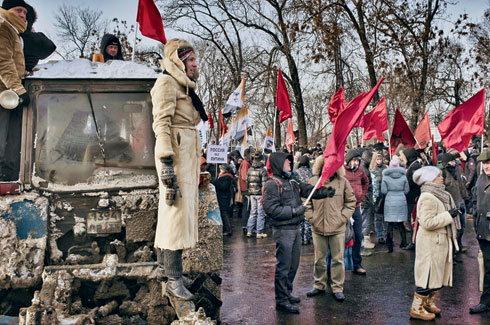
More than 100 thousand came out to Bolotnaya.
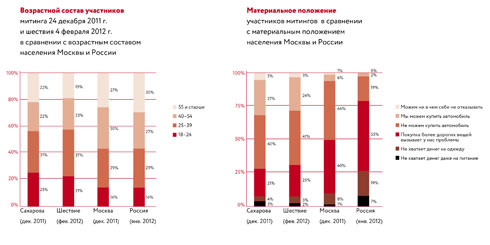
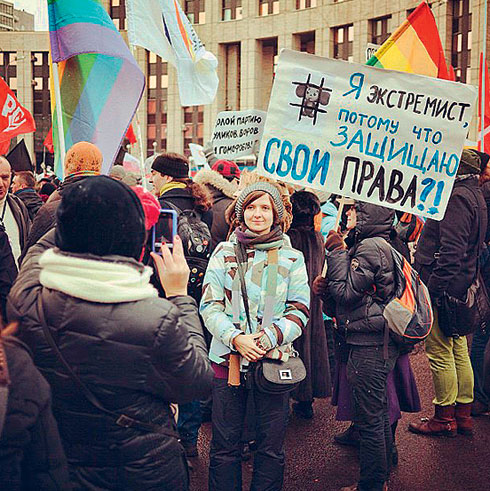
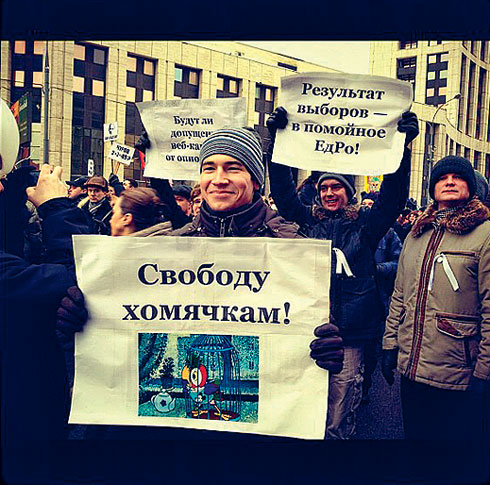
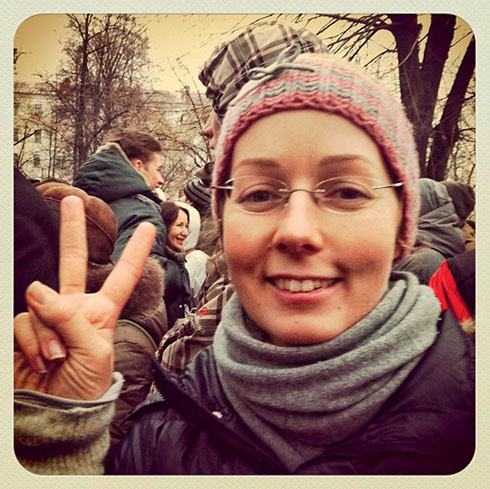
People came out who, in their absolute majority, had never come to the opposition rallies before. Programmers, artists, designers, young people up to thirty, in ski jackets and ladies in expensive fur coats from the Maybachs and Mercers hidden in the alleys - Moscow had never seen such protesters before. “Enough to lie!”, “Return our voices!,“ The Party of Thieves and Crooks stole the elections! ”: 73% surveyed by sociologists a little later, at subsequent rallies explained that“ they were outraged by falsifications in the elections, ”53% said that“ decisions in the country are made without their participation ”.
In Bolotnaya Square, also for the first time, Ksenia Sobchak, and the writer Boris Akunin, and television journalist Leonid Parfyon, stood from the rostrum: not on the triumphal, where each 31st is an unauthorized rally in defense of the right to a meeting, nor on the “disagreement marches” have never been. Two weeks later, on Sakharov Avenue, Sobchak had already protected from the rostrum-like the Deputy Prime Minister and the Minister of Finance of the Eleven Putin years, Alexei Kudrin, just dismissed. Nationalists, which all previous years seemed to have dominated the political glade, in Bolotnaya were an absolute minority - less than a percentage, on Sakharov Avenue - 6%, left in December about 13%, those who called themselves “democrats” and “liberals” - there were almost 70%of them. The pro -government media and the parties immediately glued the label to these rallies - “Mink fur coats protested”, the experts called them “angry townspeople”, sociologists recorded: in large cities of Russia, the middle class finally formed.
And the snow fell. And December Moscow with its usual gray sky, sliding down under her feet, a short day and an endless darkness, lived a festival: the lanterns sparkle in snowdrifts, a long night - a refuge for hot underground, a green lamp behind the curtain, waiting for tomorrow. There will be a victory tomorrow.
 |
| Click to increase the picture |

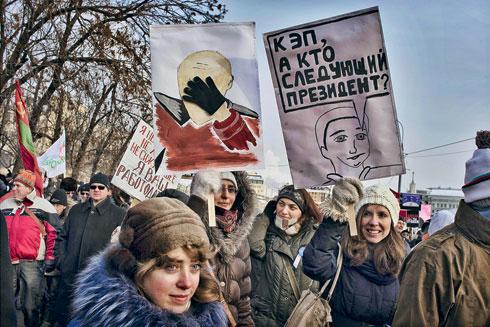 |
| Rally on Bolotnaya Square on February 4, 2012 |
Split
The beginning of the night from December 8 to 9, some of those who are called the leaders of the opposition would prefer to forget. And they forgot - up to an interview with The New Times, when this material was preparing. The phrase sounds like this: "Now I will tell you a terrible thing: when everything was already decided and signed, the door opened, and Gromov entered the office."
Alexei Gromov is the current first deputy, and in December 2011-just the deputy head of the Presidential Administration of the Russian Federation. The “door” and “cabinet” - the then and current deputy mayor of Moscow Alexander Gorbenko, whose circle of duties includes mass events in the capital of Russia.
People in the frame at a large rectangular table in the Vice-mayor’s office: Gorbenko himself (he is at the head of the table), Vladimir Kolokoltsev, head of the Moscow Central Internal Affairs Directorate, Vasily Oleinik, deputy head of the regional security department of Moscow, Gulnar Penkov, press secretary of the mayor, and before that, the Kremlin press service, Vladimir Ryzhkov-one of the leaders of the opposition Parnasa, still State Duma deputy Gennady Gudkov (however, he does not remember this), the editor -in -chief of Echo of Moscow Alexei Venediktov and journalist Sergei Parkhomenko - it is he who owns the above and very unexpected revelation. Alexei Gromov settled in a free chair opposite the vice-mayor. The subject of a conversation at the table is the transfer of a rally on December 10, 2011 from the Revolution Square to Bolotnaya.
However, everything is in order.
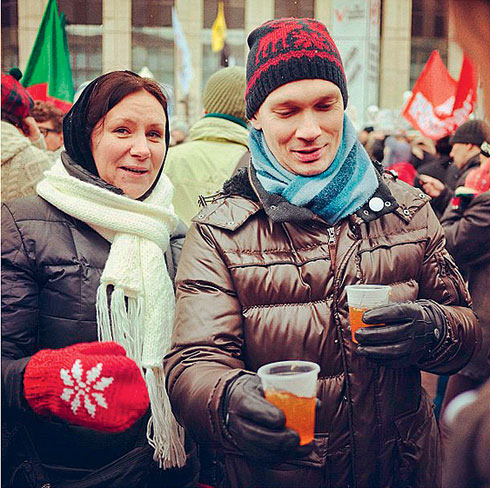 |
| Rally on Sakharov Avenue December 24, 2011 |
The application for December 10th of the Udaltsovs (Left Front) and Nadezhda Mityushkin ("solidarity") were submitted in advance, even before the election. The number indicated in the application was 300 people - they did not count on more. But then there were pure, a procession to the CIC, ending with an arrest of about three hundred people, including Navalny and Yashin, an unauthorized rally on the Triumphal Square: according to official figures, 569 people were detained, many, as a well -known secular observer of Bozhena Rynsk, for the first time. The star and Sveta from Ivanov lit up there: she was on the side where activists of “ours” beat the drums. The tougher of riot police, which defended drummers from Muscovites, worked only then in May, in Bolotnaya. Ilya Klishin, the correspondent of the then Internet portal OpenSpace.ru, did not get into the autozak happily: “He returned home, found a note on the Internet that the authorities agreed on a rally on the Revolution Square, asked his friends if there were a rally on Facebook Event, and found out with surprise.” It was on the night of December 6 to 7. By morning, on the rally page about their decision to come to the Revolution Square, 10 thousand people have already announced. "I was woke up by foreign journalists with the question: are I organizing a revolution in Russia?" - Klishin recalls now.
On the same day, the city authorities reported that the underground waters broke under Kitay-Gorod, and next to the monument to Karl Marx appeared fences with the signs of Mosvodokanal (The New Times then immediately found out that it was no worse with underground waters than it was the day before): to coordinate the rally in walking distance to the FSB buildings, the Presidential Administration and the Presidential Administration The city authorities clearly did not want. But they did not know how to refuse. Meanwhile, the work was in full swing on social networks: “When we realized that more than 50 thousand people will come to the rally, who would pass through the revolution area through two metal detectors, it became clear to us - this would turn out to be a Khodynka. And it scared me much more than any special forces, ”says Parkhomenko. As for the special forces, the New Times announced two days before the rally a source in the power organs: fearing almost the assault on the Kremlin, the authorities were going to block the area around the perimeter, passing the declared 300 people to the rally, and cut off the remaining thousands.
Further events developed rapidly. On December 7, in the cafe "Chocolate" near the Tretyakovskaya metro station, Parkhomenko agrees on joint actions with Vladimir Ryzhkov and Boris Nemtsov. The next day, Alexei Venediktov (then a member of the Public Council at the Central Internal Affairs Directorate) meets the head of the Moscow police Vladimir Kolokoltsev. “He invited me as a person who is monitored by mass events, and asked my assessment of the situation,” Venediktov told The New Times. “By this time, I had already looked at all the materials on pure ponds - newspapers, the Internet - and it seemed to me that we could have a rally of several tens of thousands of people in Moscow, although then it seemed fantastic.” Then Venediktov called Vice-mayor Alexander Gorbenko, whom he met at the time when he was the general director of the Russian Newspaper. “I told him that in my view on the Revolution Square there may be a landfill - not political, but technological,” says Venediktov. - To what Gorbenko asked me: and who, in fact, the applicants and organizers? And can I give them (Boris Nemtsov and Vladimir Ryzhkov) to give his mobile phone, and to him them? I said, "I can do everything."
“Gorbenko called me, whom I have long known since the 90s. He said that there was a problem - too many people are recorded on social networks on the Revolution Square, a crush may arise, ”recalls Ryzhkov. “Gorbenko told me that he could not find Nemtsov to discuss the situation with him.” Boris Nemtsov at that time was in Nizhny Novgorod and returned to Moscow only late in the evening of December 8: that's exactly why he was not at a meeting at the Moscow City Hall on December 8. He also did not know that among the participants in the discussion, he also did not know the deputy head of the administration of the President, he learned from the correspondent of The New Times only now, and this information was extremely surprised: “They (Ryzhkov and Parkhomenko) did not say a word about Gromov.” Gorbenko expressed the same fears as his colleagues in the opposition: “I see Facebook that there will be tens of thousands, and you are 300 people.” Moreover, he (Gorbenko) proceeded from the figure that more than ten thousand is a disaster, ”says Nemtsov. He claims that quite quickly during a series of telephone negotiations, he managed to agree to transfer the rally to Bolotnaya. They argued only on how to be with those demonstrators who would still come to the Square of the Revolution. “And despite the wild problems, the problems are purely administrative, I convinced him to allow us to hold a march from the Revolution Square to Bolotnaya,” says Nemtsov. “It was the only march in the center of Moscow, up to the walls of the Kremlin.” “Kolokoltsev said: there is the only thing I will protest against is a passage through Red Square,” Parkhomenko recalls a discussion of logistics of how those who nevertheless come on December 10 to the Revolution Square are safely delivered to Bolotnaya Square. “We will try not to let anyone go there,” Kolokoltsev said. As for all other routes, you can go through Lubyanka, Ilyinka - it happened. ”
However, the applicants of the rally, like everyone else, did not know anything about these negotiations. The applicants of the rally (still on the Revolution Square) Nadezhda Mityushkin and Anastasia Udaltsova (Sergey Udaltsov at that time was serving his next arrest) on December 8, they spent the whole day of the Moscow government on New Arbat, where they were persuaded to transfer the rally to Bolotnaya. What they did not agree to: it was completely not clear, how to notify tens of thousands of people about the new place of the rally, or what to do with those who come to the monument to Karl Marx.
 |
 |
| Rally on Sakharov Avenue December 24, 2011 |
The main “graters” on the same evening went on Tverskaya, 13, in the very office of Alexander Gorbenko, from which we started this story, and lasted several hours - until we ended with abundant drink and universal satisfaction. “Here is the door, here is the entrance to some secret rooms, the meaning of which is unknown to me, where Gorbenko was removed from time to time, there is a long table, at which we are sitting, here is the head of the boss with phones,” the Vice-Mayor’s office Sergey Parkhomenko painted at our request during the interview in the editorial office of The New Times. “Kolokoltsev immediately reacted to our information (that tens of thousands of people will come to the rally. - The New Times) with extreme understanding. So is Oleinik. And Gorbenko rested for the longest and explained that nothing bad, we can handle it, ”says Sergey Parkhomenko. In a few hours we agreed: the rally is transferred to Bolotnaya Square, to people who will nevertheless find themselves on the Revolution Square will give the opportunity to go to Bolotnaya if someone (read: Limonov) will want to stay on the Revolution Square, they will not detain him. ”
For what purpose did Gromov looked at the light? “He entered with some words that he was with Sobyanin, walked past and so on. This means that, apparently, he was the person with whom Gorbenko supported the relationship, ”Parkhomenko recalls. -Gromov sat down at the table and led some kind of conversation. It seems to me that he wanted to make sure that everything happens exactly as Gorbenko tells him. ” “Alexei Gromov just drove to see how negotiations with the mayor are going on, he himself did not actively participate in them,” confirms Vladimir Ryzhkov. - He said that this is the city’s business - let the city decide. Apparently, he was simply sent to tell how negotiations are going on, ”he said.
“Gorbenko called me - I was sitting at work - he says: listen, come, we agreed on everything here,” Venediktov recalls. - I brought a whisk with me. Drank. And with Gromov too. Since I was told that "we agreed," I decided that this case needed to be washed. " (The New Times was sent by Vice-mayor A. Gorbenko and the deputy head of the presidential administration A. Gromov a request to give a comment. However, we did not receive an answer.)
In the middle of the night on December 9, a document was posted on the network for No. 07-23-169 of the Moscow City Hall, from which it became clear: there will be no rally on the Revolution Square. Ilya Klishin changed the name of the page on Facebook to "Saturday in Bolotnaya Square". “I had to answer more than a thousand reports that the rally was really transferred that the page was not hacked, that the rally was agreed,” says Klishin. What accusations did not pour on the heads of the negotiators: they were called “traitors”, they were accused of “leaning”, that they were negotiating behind everyone, including the applicants of the action. The culouraness of negotiations - although to universal good - conquered, if - did not insult. The crack of distrust - she went through the protest to that night and could not drag on so far.
 |
| Rally on Bolotnaya Square on February 4, 2012 |
Power VS Opposition
Two days before the new, 2012, December 30, in the Toro Grill restaurant at Belorusskaya, three met at breakfast: Alexey Kudrin, Sergey Parkhomenko and Vladimir Ryzhkov. The initiator was Kudrin (Ryzhkov confirmed this). “There was an idea to supervise approaches about the possibility and formats of dialogue between representatives of the protest movement and power” - so he himself wrote in electronic correspondence with The New Times.
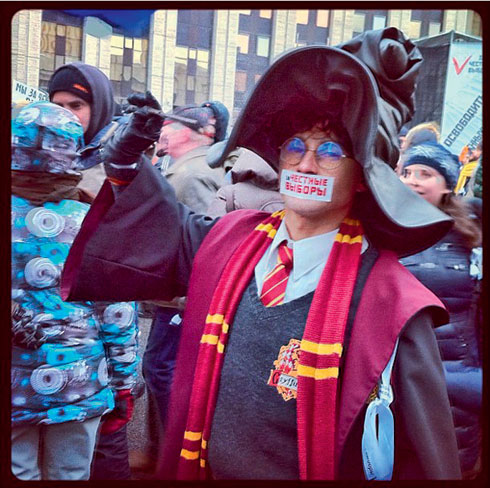
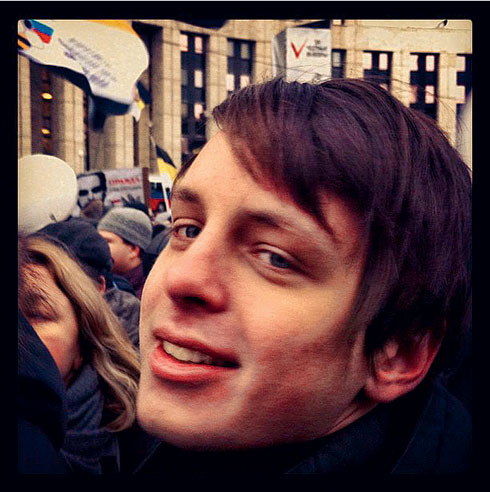
The grounds to assume that the authorities can go to the dialogue was, as it seems to the authors, three. Firstly, the rally “For honest elections” on Sakharov Avenue on December 24, to which about 100 thousand people came again. True, the youth, according to the Levada Center, was already smaller than on Bolotnaya two weeks ago: either they went on vacation, or they were scared away by the backy negotiations in the city hall and the fierce bureau of the opposition’s leaders on Twitter-this was the truth of the soul. The second reason: the police behaved extremely loyal to the protesters - nothing similar to what was happening on pure ponds or triumphal in the first week of December. И это несмотря на то, что премьер и уже кандидат в президенты Владимир Путин 15 декабря, в ходе четырех с лишним часов общения с народом по телевизору, назвал белые ленточки протестующих «контрацептивами», а самих митингующих — «бандерлогами». Наконец, третье и, может быть, самое важное: 22 декабря еще президент Дмитрий Медведев в своем последнем послании Федеральному собранию заявил о планах политической реформы: прямые выборы губернаторов, упрощенная процедура политических партий, создание Общественного телевидения и проч. Чем все это обернулось сейчас, год спустя, мы уже знаем, но тогда казалось: власть готова идти на уступки. А тут еще путинский министр финансов готов выступать посредником — чем черт не шутит?
 |
| 10 декабря 2011 года - Болотная площадь |
 |
| 24 декабря 2011 года - проспект Сахарова |
 |
| 24 декабря 2011 года - проспект Сахарова |
К Кудрину в протестном движении относились с понятной осторожностью: не засланный ли казачок? «Я его на Сахарова в лоб спросил, — рассказывает Немцов: — «Леш, можешь мне честно сказать, тебя прислали сюда или ты сам?» Он мне ответил: «Клянусь, я сам». Потом выяснилось: сущая правда».
Так вот, накануне Нового года, да еще ранним утром в ресторане было пусто, и трое строили планы. «Мы договаривались, что как только получим согласие от власти на какой-то вариант диалога, — пишет Кудрин, — представители оппозиции проведут формирование группы представителей протестного движения. Как вариант обсуждалось проведение голосования в интернете».
Пархоменко детали разговора не вспомнил: «С Кудриным мы разговаривали о бренности всего сущего. Был общий политический разговор — что называется, по широкому кругу вопросов. Ничего конкретного он не хотел, ничего не предлагал».
Кудрину тот разговор видится сегодня несколько по-другому: «В тот же день Пархоменко написал пост на «Эхо Москвы», в котором проинформировал о нашей встрече и ее целях. А я позвонил Путину и также пересказал идею. Путин выслушал и предложил перенести разговор об этом на время после Нового года. Но ближе к середине января сказал, что необходимости в таком формате нет».
«Формат» появился другой: митинг в поддержку Путина на Поклонной горе, куда со всей страны свезли больше 150 тыс. В тот же день, 4 февраля (мороз был под 25 градусов), митинговали на Болотной: практически те же выступающие, те же призывы, такая же, как и на первой Болотной, резолюция. «Протест топчется на месте, оппозиция не может ничего, кроме «Путина в отставку», предложить, что дальше, куда дальше — полный туман», — написал тогда один из авторов The New Times. Зато Кремль демонстрировал чудеса креативности: на митинге в Лужниках за неделю с небольшим до своих выборов Путин уже говорил стихами — из лермонтовского «Бородина»: «Умремте ж под Москвой, как наши братья умирали!» Оппозиции он посоветовал «не заглядывать за бугор, не бегать налево, на сторону, и не изменять своей Родине» и закончил: «Битва за Россию продолжается». Так стало окончательно ясно: никакого диалога с властью не будет — это было объявление войны.
«Несмотря на то что диалога не случилось, я считаю, — пишет Кудрин, — что для всех и для меня лично есть результат: был шанс диалога, мы должны были его использовать».
Но все это было уже потом, за рамками декабря. Москва тогда опустела, как пустеет всегда, разлетелись на отдых и лидеры протеста: кто в Белые пески штата Нью-Мексико (США), кто в Мексику, кто во Францию, кто еще куда.
«Впервые вижу революцию, которая уходит в отпуск», — повторяя друг друга, писали из Москвы корреспонденты западных газет.
| The New Times поговорил с экспертами о шансах протестов в России |
фотографии: James Hill/The New York Times, Yuri Kozyrev/NOOR, пользователей Instagram mikerogov, gali_zinchenko, userpig, instasergei, niprov