
Translated material
Dear candidate
Social Democrat Pier Steinbryuk, the chief competitor of the Chancellor of Germany Angels Merkel in the upcoming elections, earned almost € 2 million in a year. How did he manage to become the richest deputy of the Bundestag in German history and why not German voters like it?
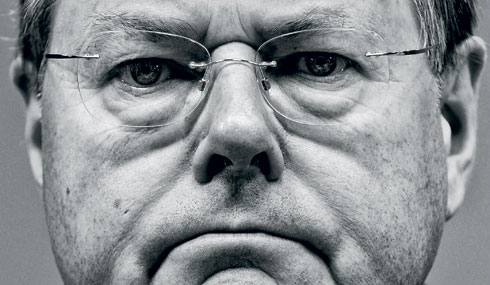
All his life he was lucky. With his wife Gertrude, a teacher of biology, he lived in a happy marriage for 40 years. Every fourth German, according to polls, is not averse to lunch with him, and every sixth fan of chess is to play a party with him. “Steinbryuk plays almost like a Fisher,” the same partyists say about him. “Grandma is to blame for everything, she taught how to play,” he answers playfully. When at the beginning of summer we were talking about who will be a candidate for the Chancellors of the Germany from the Social Democratic Party of Germany (SDPG), the main opposition force in the country, there were almost no doubts in the party ranks: Steinbryuk. And only a few recalled the episode of a year ago, when, on one of the on -party parties, he made himself in the candidates, saying about it as a faitted fact. “It was somehow unpleasantly pricked, but I decided that it was better to keep silent,” said The New Times on the basis of anonymity, a colleague of Steinbryuk in the Bundestag faction. “Moreover, the party is now a real problem with leaders.”
On October 1, 66-year-old Peer Steinbryuk was approved by the official candidate from the SDPG for the coming universal elections next year. And two weeks later, the numbers became the property of the publicity: Steinbryuk starting since 2009 to this day in addition to his deputy salaries of € 7960 per month (since 2013 - € 8252 plus not taxable € 3868 for official expenses) earned, according to some sources, € 1.25 million, € 1.87, € 1.87 Milly almost everything - on public speeches on private invitations. Moreover, neither the Bundestag nor the voters Steinbryuk did not report these income.
"He can do it"
Steinbryuk was lucky not only in love, but also in politics. He is a favorite of two former federal chancellors at once - Helmut Schmidt and Gerhard Schröder. In October 2011, Schmidt, commenting on the possibility of nominating the candidacy of Steinbryuk to the post of chancellor, literally said the following: "He can do it." In May 2012, Schroider also said his word: "Steinbryuk has all the prerequisites for success." Of the entire Social Democratic “First Troika”, which also includes the Party Chairman Zigmar Gabriel and the head of the Bundestag faction Frank-valter Steinmeier, Steinbryuk really is most popular among SDPG supporters.
But the Steinbryuk, who was born in 1947 in Hamburg, according to the local tradition, seemed to be the shone. “He studied poorly, often changed schools, and even remained in one of the gymnasiums in the second year,” Berlin journalist Ulrich Kyun told The New Times. “But, apparently, genes played a role: his cousin was one of the founders of Deutsche Bank, and his father was a famous architect in Hamburg.”
Having served in the tank troops, Steinbryuk successfully graduated from the university with a degree in the "National Economy" and in 1969 joined the SDPG. Soon he became one of the referents of Helmut Schmidt, then headed by the Bureau of the Prime Minister of the largest land in the country of the North Rhine-Westphalia Johannes Rau, the future president of Germany. Then a few more ministerial posts in different land governments. But in November 2002, Steinbryuk, in many ways unexpectedly even for himself, became the Prime Minister of the Northern Rhine-Westphalia, and three years later he, not without the patronage of Schmidt and RAU, invite angels Merkel as the Federal Minister of Finance to the office. At the end of 2008, at the peak of the financial crisis, he demonstrated remarkable composure, publicly promising the Germans, the safety of their bank deposits. “Longly thanks to him, the threat of mass panic has passed, Germany survived a crisis with minimal losses,” Ulrich Kyun believes.
"
Steinbryuk at least twice received fees of more than € 20 thousand pure for consent to give an interview
"
However, in four years at the ministerial post, Steinbruck managed to light up in a pair of truly scandalous episodes. One of them is a rude attack on Switzerland, which defended the secret of bank deposits, the diplomats had to be reserved for the conflict. Another puncture of the Steinbryuk-minister happened in April 2006. The journalists were at the disposal of the letter written by him on the official form and sent to the two largest German state -owneds - Deutsche Telekom and Deutsche Post. “As a passionate chess player, I recently had a lot of pleasure to play against the world champion Vladimir Kramnik and only gave him a little bit,” Steinbryuk praised himself, after which he turned to the leaders of the concerns with a request for “voluntary donation” in the amount of € 950 thousand to € 1 million for a chess tournament between Kramnik and the strongest in Kramnik and the strongest in Bonn. That time by the Deep Fritz chess computer. At the same time, Steinbryuk added that he was promised: in the event of a successful fight, the next world chess championship will be held in Bonn. And this will more than pay for sponsorship costs.
The then heads of the Kai-Uwe Rickke and Klaus Tsumvinkel enterprises rejected the “tempting proposal” of the minister. And, as it turned out in the end, they did the right thing. “Having unfastened Steinbryuk the requested amount, both top managers would be in prison,” Professor Michael Adams, professor at the New Times, explained in a conversation with The New Times. - After all, the main shareholder of both concerns is the Ministry of Finance. The fulfillment of such requirements is unambiguously regarded as a violation of the conditions of management of other people's property and is persecuted by law. The call for sponsorship, also issued on official paper, may well be regarded as the use of official position for personal purposes. ”
The scandal, however, did not have serious consequences for Steinbryuk-he made a statement for the press through his spokesman: his initiative was dictated exclusively by the desire to take into account the interests of millions of Germans worshiping the great game.
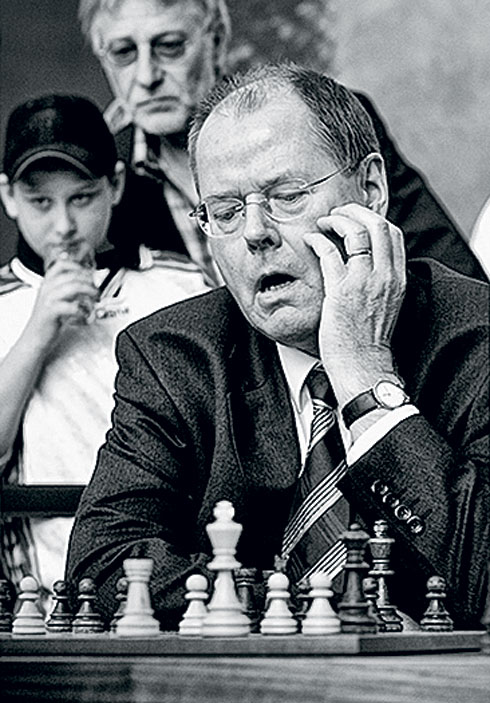 |
| Pier Steinbruck, perhaps, has not yet played his most difficult part |
"Favorite of speculators"
Having left the Cabinet of Ministers in 2009, Steinbryuk sat down for three years safely in the deputy chair until thunder broke through: Transparency International (Ti) accused the Chancellors of the Federal Republic of Germany of covering the income and demanded to name not only the intermediaries when organizing his public performances, but also their actual customers. And Steinbryuk was forced to do this. It turned out that during his deputy he made more than 80 paid reports and gave dozens of paid interviews. ABGEORDNETENWATCH.De (tracks the behavior of deputies of different levels) issues, for example, such information. On April 23, 2010, Bundestag discussed the issues of stimulating the economy, creating jobs and introducing a minimum salary. However, the deputy Steinbryuk, the leading financial expert of the SDPG, did not participate in the meeting - at that time he played in Mannheim in front of the guests of a large consulting company. Naturally, for money. And here is another case: in 2011, Steinbryuk received a “ordinary” fee in the amount of “more than € 7 thousand” For a performance at the Freshfields lawyer, which specializes in financial and economic law. The catch, however, is that this particular office of Steinbryuk, holding the post of Minister of Finance of Germany, gave multimillion -dollar orders to prepare bills on the salvation of the banking sector in the context of the financial crisis.
However, most of all, German public opinion was outraged by Steinbryuk’s interview, included in the Bilfinger construction company for 2010. For ten answers to questions on the topic “Social-private partnership”, the Brunswick intermediary agency issued a construction company an account of almost € 24 thousand. Most of it, of course, received Steinbryuk.
And last year, judging by the data presented in the Bundestag, Steinbryuk at least twice received fees of more than € 20 thousand pure for participation in “correspondence interviews”. Perhaps that is why the general secretary of the Bavarian Christian Social Union Alexander Dobrint Hlestko described him as a “favorite of speculators”. Another general secretary is in solidarity with him - the free Democratic Party (SVDP) - Patrick Dering. “The candidate of the Social Democrats clearly blocks all fuses as soon as it comes to personal benefit,” Derring noted in a conversation with The New Times. “If he becomes the chancellor of Germany, then something happened to Germany itself.”
Until the very recent time, Steinbryuk was a member of the Supervisory Board of the ThyssenkrupP concern with appropriate reward. “He quietly put the money in his pocket, although, as a deputy, purely for ethical reasons, he had to abandon this post for a long time,” says Professor Adams.
The point is ethics
Steinbryuk is not the only rich deputy in parliament. According to the consulting company DEDUCTO, 156 deputies of the Bundestag of the last convocation earned in one year in addition to a parliamentary salary of more than € 6.5 million - an average of € 43 thousand each. Bundestag deputies are not forbidden to engage in sideways and receive money for it. But they must report on additional income. And what, the reader objects, didn’t Steinbryuk report? After all, he indicated that he received "more than € 7 thousand." For a speech in a lawyer office.
But the fact is that for their reports, deputies came up with a crafty formula: up to € 1 thousand per month are not taken into account, from € 1 thousand to € 3.5 thousand - this is the so -called first step, to € 7 thousand - the second, and everything that is more is the third. In the published report of Steinbryuk in the column “Honorar”, the same “third” step is almost everywhere. But what is "more than € 7 thousand"? 7.1 thousand or 20 thousand? Now all Germany knows how much.
“According to the current law, Steinbryuk is not obliged to declare all his income,” explains Ulrich Kyun. -For this reason, he refused to name the amount of the fee for two books, one of which he wrote in collaboration with ex-Chancellor Helmut Schmidt-here we are talking at least half a million euros. This is the whole thing in ethics. ”
In Germany, where the modesty of the first persons of the state is almost a national idea, and the official salary of the President, even after a recent increase, is € 217 thousand a year, the crazy incomes of the candidate for the chancellors simply outrage citizens. In addition, a lot of questions is also raised by the fact that fees to the deputy often paid banks, which he in 2008-2009 saved the State Subsubsidia from the crisis. Constant public attacks on banks policy did not interfere with Social Democrat Steinbryuk from this policy to feed. “Can a social democrat be a millionaire? - The Munich journalist Suzanne Hell asks a question. And he answers: - In the situation around Steinbryuk, the left electorate is alarming one thing: a politician, due to party affiliation, obliged to defend social justice, continues to increase his multimillion -dollar state, using for years the gained ties with large concerns and banks. All this in the end may not be in favor of SDPG, especially against the background of ascetic angels Merkel. ”
Who is the servant
According to Emnid polls, now the Steinbryuk rating fluctuates around 26–28%. As a candidate for chancellors, he loses Merkel: 26% versus 51% - in the west of Germany, 18% versus 60% - in the east. Nevertheless, the Social Democrats are in no hurry to make sewage. “Still, let's not forget that Steinbryuk did not violate the letters of the law,” the Social Democratus Velfgang Tyrze, Vice-Speaker of the Bundestag, said in a conversation with The New Times. Steinbryuk himself in an interview with Bild's newspaper complained that, as a politician, he "was not protected from suspicion, although he adhered to the letters and spirit of the law." In another interview, he stated that he was by no means a “servant of capital”. What the famous observer Die Welt Hans Tsippert objected: "In fact, this capital is a servant of Steinbryuk." However, from Die Welt, traditionally close to the German right, it was difficult to expect some other remark, especially when Germany enters the pre-election period. The initiative of the leader of the Green Renate Kunast, which demanded to introduce a new scale of deputy income, looks much more interesting - not out of three, but out of ten levels.
“Firstly, many Germans still like the image of the Steinbryuk-minister, and his rating can go up again,” explains the head of the Forsa Institute Manfred Gullner, “and secondly, Steinbryuk is the only one in the SDPG who really wants to become a chancellor, the party just has no choice but to continue to put him on him.”
Today, Peer Steinbryuk acts either for free, or donates fees for charity. The other day, on the German ARD television channel, loud voices sounded in his defense - an “initiative, independent, competent deputy”. True, the ordinary voter is rarely watching political talk shows.
Debtors of the law
- In the USA, congressmen and senators are obliged to publish not only their income, but also the available debts, and even the names of the people who invited them for lunch. The same rules apply to members of their families.
- In the UK, all side income exceeding 1% of the deputy’s salary is subjected to thorough verification.
- In Spain, parliamentarians are forbidden to earn extra money in firms receiving state orders.
- In Italy, the ministers of the government cannot be part -time to engage in entrepreneurial activities.
- In Estonia, ministers do not have the right to be in the supervisory board of companies and corporations.
Source: Transparency International
Photos: ITAR-TASS, AFP