
Translated material
Yuan for export
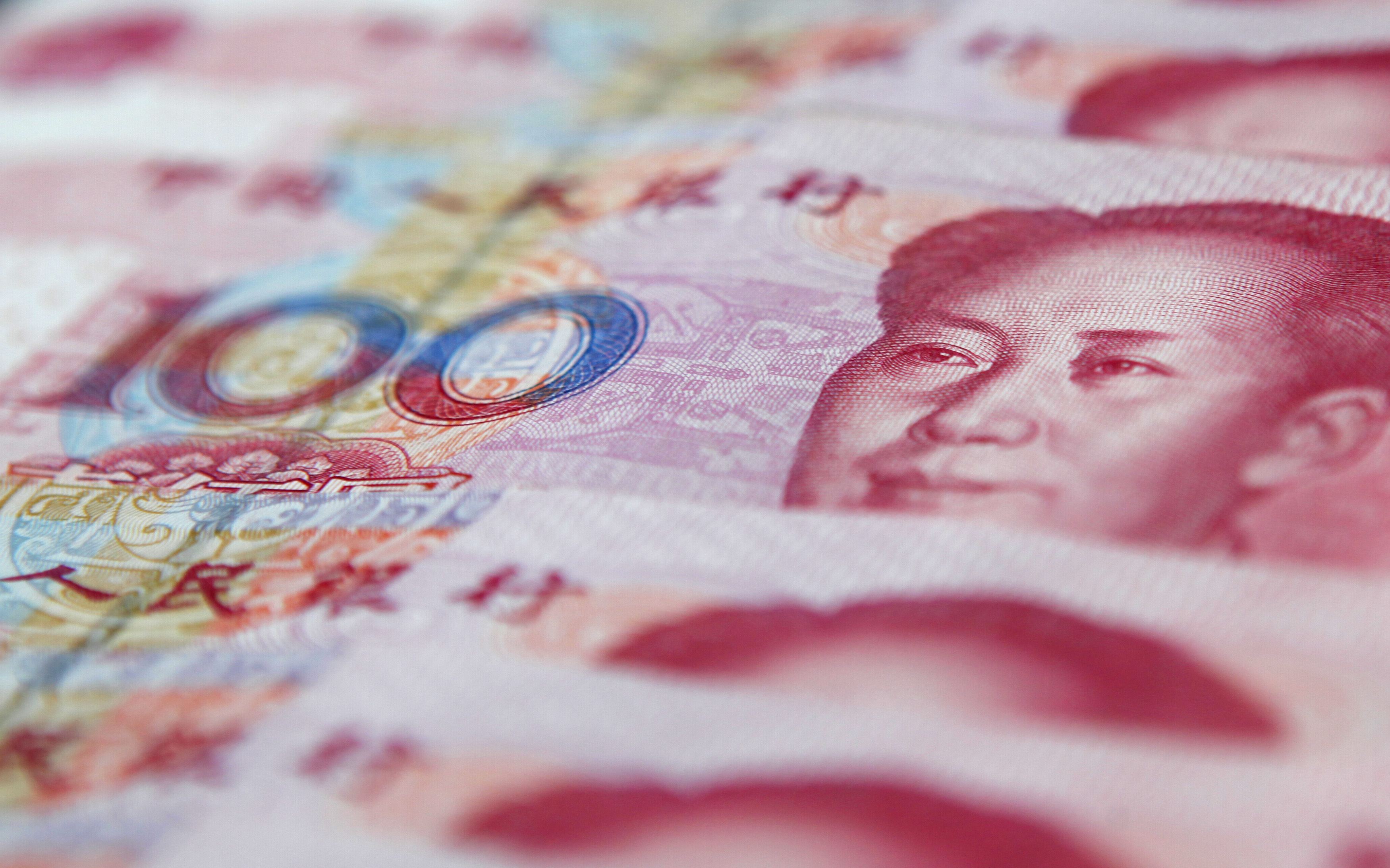
At the end of last week, bonds issued by a large Chinese bank and nominated in the Chinese currency first appeared on the London exchange in London.
The second largest Assets Bank of China, controlled by the China Construction Bank state, placed his bonds for one billion yuan ($ 160 million) here, the British newspaper Financial Times said. By London standards, the placement is small - in contrast to its significance.
Until now, Chinese banks have sold their bonds only in China itself or in Hong Kong. Among the foreign sites where financial instruments nominated in the yuan are traded, Singapore and London are leading by a large margin. Moreover, according to the share of this market, the second after Hong Kong is now going on London. According to Society for Worldwide Interbank Financial Telecommunication (SWIFT), the share of the Singapore platform from January to September this year decreased from 33% to 26%, and London - on the contrary, increased from 24% to 27%. This was the result of several placements expressed in the yuan of debt obligations, which were held in 2012 in London, the British Bank of the HSBC, the Australian-New-Rosolendo financial group Anz Bank, as well as the Banco Do Brasil, the largest assets of the Bank of Latin America.
In addition, back in May, financiers of London and Hong Kong, as reported by the American newspaper Wall Street Journal, combined efforts to form the necessary infrastructure of trade in papers nominated in the seniority, outside Asia, as well as promoting international trading transactions with calculations in Chinese currency. This is, in fact, about the implementation of the plan of the People’s Bank of China, which provides for the maximum internationalization of the yuan.
Two currency five -year planes
The plan was presented in February 2012: over the next ten years (although the exact deadlines were not indicated) to turn Chinese yuan into a world reserve currency, along with an American dollar or euro.
Stronging for the declared goal, China operates in several directions at once, says Professor Mikhail Bernshtam , an employee of the Huver Center for Stanford University in the United States. Among them is the expansion of Yuan's share in international trade. In particular, through bilateral agreements on mutual lending in national currencies. For example, China signed such agreements at the end of March with the rest of the Brics countries at their summit in Delhi. Other countries will be able to provide national companies that are already trading or want to trade with China from China. In nine months of this year, China has concluded such bilateral agreements for more than $ 250 billion.
Another area - direct funding in the yuan of large projects in Asia, Africa and Latin America - most of them are associated with the development of raw materials deposits, in which the growing economy of China is acutely in need.
Thirdly, Professor Bernstam continues - direct lending by Chinese banks of companies and individuals in other countries through units opened in them. But if the second direction has been developed by China for more than a year, experts note, then the visible results in the first and third will require considerable effort and time.
Trade and save in the yuan
Today, only 12-13% of all Chinese trade with other countries is produced even by Yuan, although some expert forecasts, including Chinese, suggest that this share can already grow to 50% by 2015. Supporters of the same forecasts expect a sharp increase in Chinese trade for the yuan, for example, with Japan - at the end of 2011, two countries signed an agreement on expanding settlements in national currencies in the mutual trade. So far, the volumes of this trade are not so large: for comparison, in 2011 they amounted to approximately 360 billion dollars, this is half the turnover of the trade of China and Russia.
At first, China will rather pay more attention to the expansion of trading for the yuan with the same Brics countries and only then switch to such as Japan, the professor of the Department of Synology of the University of Munich , Hans Van Ess . “Japanese companies are oriented, first of all, to the US market. In American dollars, about 60% of all transactions in Japanese trade with China are also produced. And it is not yet the fact that Japanese companies will be ready to expand foreign trade calculations in Chinese currency in a short time. Moreover, it is doubtful, in my opinion, Kitai will be able to increase in only three years in Asia and other countries of Asia. A share of transactions in the yuan at once up to 50%. ”
According to the People’s Bank of China, in 2010, there were 2% of the country's total commodity foreign trade turnover in the yuan, in 2011 - 6.6%.
In 2009, China became the world's largest exporter of goods, bypassing the former leader - Germany. Now he seeks to become a major supplier of money to other countries, and the money is very cheap, says Mikhail Bernsstam. The Chinese banks concentrate huge savings in private depositors, who, for the most part, prefer to save more than to spend. Almost like in Japan. China has the largest currency reserves in the world - more than 3.2 trillion dollars. For comparison, the Japan next to him has 1.1 trillion dollars, and Russia, which closes the First World Three, has $ 526 billion for today.
“Such a base actually makes the resources of Chinese banks unlimited - Professor Bernstam continues.“ And they can afford to provide loans to borrowers in other countries at minimal interest, that is, much cheaper than local competitors. ”
The authorities of those countries where Chinese banks would like to settle down to open, opening their branches. But if the arrival of these banks, for example, to India, where the lending system is only formed, could become for many local borrowers the beginning of a new life, then the expansion of banks from China to the markets of leading Western countries will clearly not be simple, Mikhail Bernsstam predicts.
For example, in the USA, he explains, only two such units have been created-in New York and Los Angeles. The pilot project, in particular, involves not only lending, but also opening, for example, deposits in the yuan as an instrument of savings: Chinese yuan, with its underestimated for national manufacturers, has risen in about 15%over the past five years.
But all this is only the initial stages of the path. This or that currency will not be able to claim the status of the reserve for other countries without appropriate significance in world financial markets. In particular, in the world currency market, according to the Bank of International Settlements, the share of transactions with Yuan does not exceed 1%, while for the American dollar it is 86%.