
Translated material
Congress "Lame Duck"
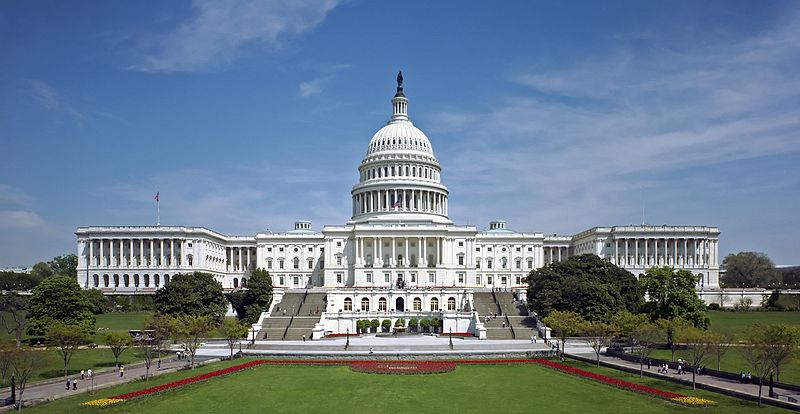
Alexander Genis: After the election, America, in essence, remained where it was. The political picture looks familiar: in the White House-the same democrat president, in the House of Representatives-the majority among the Republicans, in the Senate-among the Democrats. The situation, however, is changing: America, the observers hope, leaves the crisis, which is indicated by at least the first information about the holiday sales. This year, economists predict, Americans will spend 20 percent more than in the past. But despite the fact that the customers are returning confidence in the future (and without it the wallets do not open), the country's economic situation is still shaky. The success of the old new president largely depends on whether he will be able to agree with the Congress of the Lame Duck for a month before the end of the year.
Vladimir Abarinov explains the history and nature of this term and the political reality behind it and readers.
Vladimir Abarinov: Unlike the parliamentary republics, where the leader of the party who won the election becomes the head of government, voters vote separately for the president and members of Congress, and no party lists exist, all single -member districts. As a result, it often turns out that in the American political vocabulary it is called the “divided government”: one party controls the executive branch, the legislative - the other. Many Americans believe that such a situation is more consistent with the principle of separation of powers and deliberately vote for the president-democrat and a congressman-republican, and vice versa.
However, the elections are held in early November, and the Congress of the new convocation begins to work in early January. In these two months, Congress works in its former composition. This last session of the Old Congress is called “lame” - from the expression “lame duck”, which means that the authority, whether it is the president or the old composition of the congress, has incomplete legitimacy and, therefore, is not authorized to make key decisions.
For this reason, lawmakers, as a rule, are refrained from making such decisions and gather for the proof and discussion of minor current issues. But there were opposite examples: the party, the losing election, is in a hurry to take advantage of the last session. If the president belongs to another party, he imposes a veto on the bills adopted in this way.
It happens that Congress is not going to the last session at all. This happened, for example, in 1948: the Congress, both wards of which the Republicans controlled, and Democrat Harry Truman was president, went on vacation in August with the intention of gathering only in December to formally resolve his powers - the majority in both wards received democrats. This last session lasted only an hour and a half and became the shortest in the history of Congress. Two years later, Congress had to solve the urgent issues related to the war in Korea. In 1954, the lower house was not going to the “lame” session at all, and the Senate gathered for the only purpose - to declare the penalty to Senator Joseph McCarthy for the unacceptable methods that he used during his investigations of anti -American activities.
Republican President Dwight Eisenhower out of the eight years of his presidency only for the first two years worked with Congress, most in which his one-party people made up. The remaining six years, both wards were controlled by democrats, and the president required considerable patience and perseverance to interact with them.
At a press conference in May 1955, Eisenhower was asked how he, a military leader, feels like a Washington politician. Here it must be explained that the word “politicus”, depending on the context, means not only politics, but also the political process, the political struggle, and, even, politicism.
Question: Tomorrow it will turn three years since you returned from Europe and plunged into politics. Well, how do you like these political games after three years?
Dwight Eisenhower: The word “politics” seems to mean different things for different people. Often we use it in a dismissive sense. If you used it in this color, I can answer that I, of course, do not like politics. On the other hand, anyone, having received the authorities with which he is able to have a huge impact on the situation in the world, contribute to the elimination or reduction of the possibility of war, for anyone this is excitingly interesting work. This post provides a unique opportunity to meet with interesting people from the world of science, art, medicine, management specialists from around the world. In this work, there is a lot, let's say, fascinating, although at times it happens and very tiring. But in the sense in which you used the word “politics” you, the answer will be - no, I do not really like this activity.
Vladimir Abarinov: After 1954, Congress did not convene a “lame” session for 16 years. President Richard Nixon, all the two times of his stay at the post worked in the conditions of divided power - he was a republican, and in both chambers of Congress, the majority were democrats. In November 1970, Congress gathered at the Lame Session, sat until January 2 and closed the session less than the day before the work of the Congress of the new convocation, but did not approve the majority of bills introduced by the president for him. But he adopted four laws that Nixon refused to sign. Congress could not overcome the presidential veto for any of them - this requires a qualified majority of two -thirds of the votes in each of the chambers.
In January 1971, Richard Nixon turned to Congress of a new convocation with an annual message about the country's position.
Richard Nixon: Mr. Speaker, before I announce my official message, I want to take this opportunity to congratulate those of you that defeated this rather energetic struggle for leadership in the lower house and Senate and express my condolences to the lost. I know the feelings of both of them. I especially want to congratulate the new speaker of the United States Congress, along with the members of both chambers. The new members of the House of Representatives, who may have doubts about the possibilities of productive work in the coming years, I will remind you that the speaker and I first met in this chamber 24 years ago as the newly elected members of the Congress of the 80th convocation. And, as you can see, both since then are alive and well. I urge to do incomplete affairs of the 91st Congress with the first priority of the 92nd Congress. In the next two weeks, I will invite Congress to make decisions on more than 35 bills, the discussion of which was not completed last year.
Vladimir Abarinov: In the end, the confrontation between Nixon and Congress resulted in an investigation of Watergate. The president was threatened by imminent impeachment, and Nixon considered it a good to resign ahead of schedule in August 1973.
After the 2000 elections, the Congress developed a unique situation. In the lower house, the majority received the Republicans, and in the upper place they were distributed exactly equally, 50 to 50. But since the Vice President Democrat El Gor according to the Constitution for two weeks remained the chairman of the Senate, from January 3 to 20, the democrats were there the faction of the majority there, and at noon on January 20, when the newly elected vice president Dick Cheini became a minority. However, in May of the same year, the senator from Vermont Jim Jeffords announced that he was leaving the Republican Party and was becoming independent. Thus, the Republicans lost one place, and most again passed to the Democrats. In the 2002 elections, the Republicans regained the majority in both wards, and in 2004 strengthened it. However, in 2006, they found themselves in the minority in the House of Representatives and in the Senate. The next morning, after the election, President George Bush congratulated the winners.
George Bush: Yesterday the people came to polling stations and voted for a new direction of the House of Representatives. And although the calculation of the ballots filed in the elections to the Senate still continues, it is already clear that the Democrats had a good day yesterday, and I congratulate them on a double victory. This morning I spoke with the leaders of the Democrats and Republicans in the lower house and the Senate. I spoke with the Republicans Senators Freest and McConnell, speaker Hustet, congressmen John Bener and Roem Blut. I thanked them for the stubborn struggle. I appreciate the efforts that they invested in the election campaigns of our candidates. Of course, I am disappointed with the result of the election. As the head of the Republican Party, I bear a significant share of responsibility for this. I told my party to the leadership that our duty is now to leave the elections behind and work together with the Democrats and independent on the huge problems that this country faces.
Vladimir Abarinov: In November 2008, John McCain and the Republican Party in the Congress elections suffered a defeat in the Republican presidential election. Since the country's economy was in a state of severe crisis, President Bush decided not to postpone anti -crisis measures before convening a new composition and introduced a package of extraordinary bills to the “lame” congress, having previously discussed them both with Barack Obama elected by President and the leaders of both wards.
George Bush: Time will pass before all the measures that we take will bring the result. But I am sure that these steps will help to solve the problems of the economy and return it to stability. My administration is committed to the desire to succeed. And I know that the new administration shares this desire.
Vladimir Abarinov: Barack Obama, for his part, convinced the members of the Congress to vote for the plan proposed by Bush.
Two years later, the democrats lost the majority in the lower house, and now President Obama on the next day after the election promised the Americans to work together with the republican majority.
Barack Obama: Last night I had the opportunity to talk to the leaders of the lower house and the Senate and contact candidates from both parties, whether they won or losers. I told John Bener and Mitch MacConnell that I was looking forward to the opportunity to work with them. And I thank Nancy Peloshi and Harry Reed for their outstanding leading role over the past two years. For many of you, I'm sure it was a long night. Of course, for me too. There are invigorating elections, there are depressing. However, any elections, regardless of who won and who lost, remind us that in our democratic country, power belongs not to elected politicians, but to the people to whom we have the honor to serve.
Vladimir Abarinov: After the last elections, the balance of power as a whole did not change: the democrat remained the president, the lower chamber is still controlled by the Republicans, the Senate-Democrats. In this sense, the composition of the “chrome” Congress is not much different from the composition of the newly elected. However, right now, the president and legislators need to find a compromise: the country is on the verge of the so -called fiscal cliff and can fall into a new, deeper phase of the crisis. By the way, the “lame” session of the lower house has already adopted the decision for Russia - voted for Magnitsky’s law.