
Translated material
Interview with Herakut
For the first time in Russian, an exclusive and such detailed interview is published with one of the most status to date of street artists of Europe - the Herakut team.
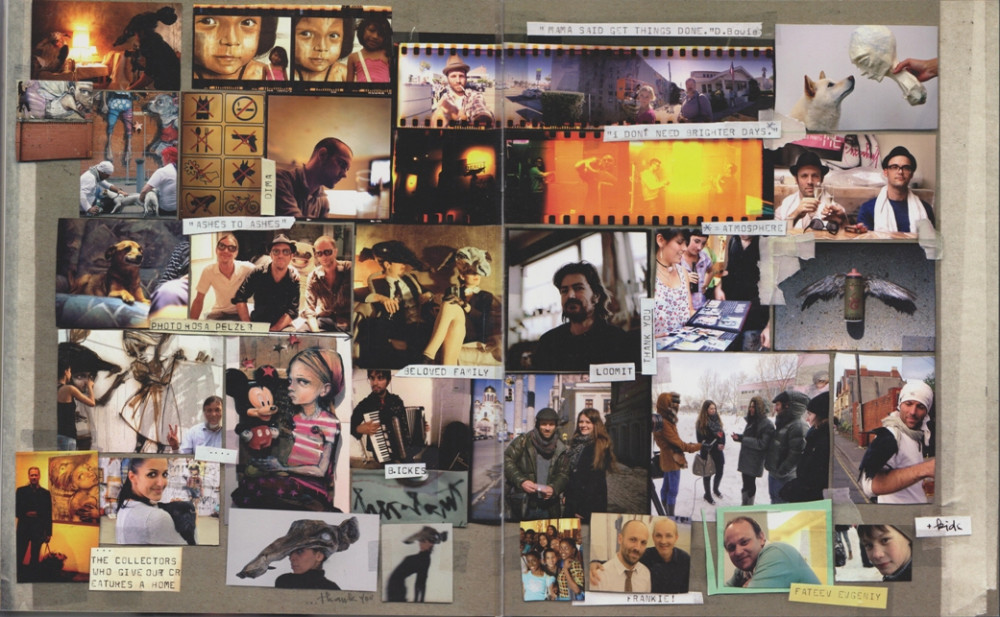
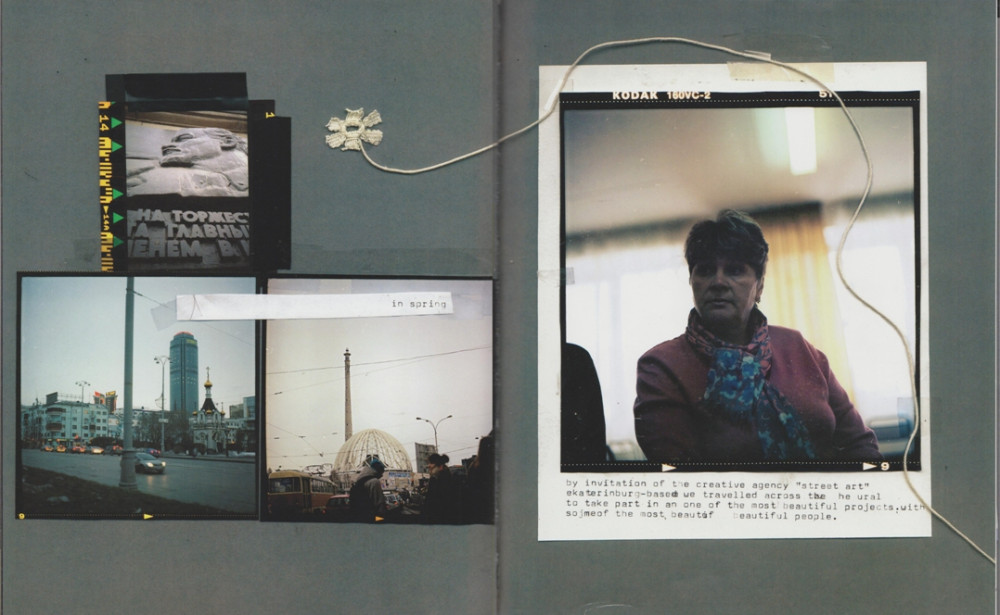
We publish an interview with German artists from the Harakut duet, who came to us in April 2011. A little late we publish it, of course, but better late than never :) We supply the material with pictures that have already been published - they are here as possible. Enjoy reading!
Krupin: What prompted you to respond and take part in our project with an orphanage?
Akut: We wanted to do something good and kind, and it is great that we had the opportunity to work on such a project. Usually, art is a product of the luxury category, an expensive thing for wealthy people.
Herra: I think we were invited by your team, since we can act as a “microphone” of your desires and ideas to tell the world about them. We are only for, we will tell you what we did here.
Akut: in German and in English.
Krupin: Tell us about Lydia Nikolaevna, about your experience of communicating with her?
Herra: She is an impressive woman! A very strong personality! She is a philosopher, she is a teacher, she is a mother, director, organizer. A lot of properties in such a fragile person. She has a lot of energy, she is like an atomic power plant (this refers to the amount of energy, not a danger to society - approx. Ed.).
Akut: She (Lidia Nikolaevna) was against us to write her name on the wall, but such people should be shown, they must be noticed, they need to be admired. People should see that there are such persons. They need to devote a whole wall.
Herra: It is very good that for children there is such an example of an energetic person. For us, she was a source of energy. We did not understand her, but her eyes all told us.
KRUPIN: Tell me, was there something in the orphanage that it remains inside you, a specific image that will remain in your heart, possibly for a lifetime?
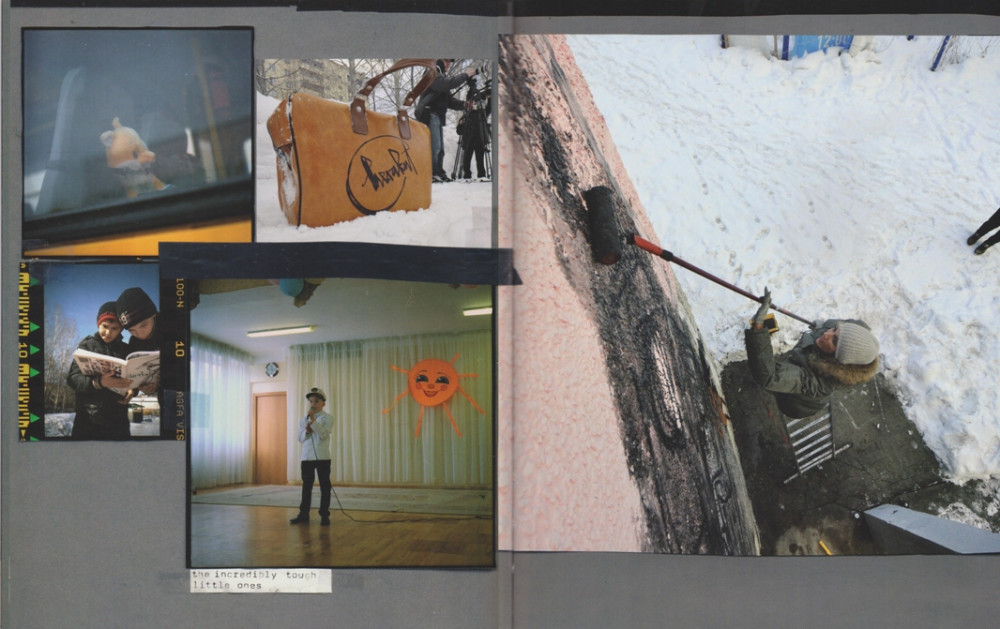
Akut: for me it was, of course, a concert. My heart was poured with blood when I looked at the children. How qualitatively they sang, how professionally! And this left a very big mark in me, I will keep it in my memory for a long time.
Herra: There was one boy, I don’t know how old he is, eleven to twelve, his name is Sasha, he constantly wanted to attract attention. He stood next to the playing player, and he asked me if I liked his music. I replied that I certainly like her. He was always there, and he had many questions. Very smart, adult questions. About architecture, about the Second World War, about high buildings, about how everything happens in Germany, about everything. He is so small, but already so smart, I will certainly remember him. He is so polite, he was always there, he waited all day to approach. Then he thanked us very much, asked if we would return.
Krupin: Akut, you don’t understand the Russian language at all, why did you touch the concert so much?
Akut: Of course, I understand that the words of songs are very important, but at the same time the atmosphere, serve, mood, feelings are important. Children were so good and clearly able to convey all this that it is impossible not to absorb it and not empathize. I will say a little differently. In Germany, I know children of the same age that can not feel the same, they cannot sing with a feeling in the same way. This was the first time for me, and this concert cannot be remembered.
Herra: I think that it was a little rude to German children that they did not know how to feel and sing.
Akut: German children have a slightly different degree of perception, they are brought up differently, they have a different discipline.
Herra: Orphanages are very good, and they must exist, otherwise these children will be isolated from society, living in apartments with parents who do not care about them (children). Of course, we would like to have peace around the world, but this will not work. On the other hand, this orphanage is a very good example. Children here receive education, they are in the circle of their peers. You need to build more such houses. Naturally, we must take care that there were fewer children in such houses, but since there are such children, then you need to build orphanages for them. To give love to such children is simply necessary.
Krupin: What did you like to draw the most in childhood?
Akut: If now I draw from the photos, then in childhood I painted everything that was around me. Even now, my mother can say that the whole kitchen is painted with small soldiers, toys, tablets, pill packages.
Herra: It is worth noting that your house was in a beautiful place where you can draw trees, mountains and so on. As for me. Firstly, I scree from the TV. I really liked to watch TV and draw everything that they showed there. Secondly, the main source of my training was a big book on art, which was at my house. This book can be called my Bible. As a child, I was fond of drawing princesses, beautiful girls, but then I began to watch all sorts of horrors, cartoons with superheroes, anime. The heroes of these animated films had large muscles and so on. Then I began to combine them-princesses and super-heroes. Princesses with big terrible hands turned out. Once, the teacher from the kindergarten called my mother, said that with me, probably, something was wrong, she advised "to observe her child."
Krupin: What did you dream of in childhood?
Herra: I dreamed of blond hair and blue eyes, because of racism. But now I am satisfied with myself.
Akut: I did not have any particularly large, pronounced desires. I just wanted everything to be fine. I wanted harmony to always be, everything was in order, everything is stable.
Krupin: What else did you do in childhood, except drawing?
Akut: I had a lonely childhood. For example, at my birthday I always had only one guest-all because everyone had a vacation at that time. My mother chuckled over me because of this, and a few years later, this only guest moved. In my childhood, I had a lot of time for myself.
Herra: As a child, I did not want to spend time with other children, I was even afraid of them. I constantly painted in kindergarten - it was such a move to isolate myself from others. The teacher in kindergarten constantly said to be left alone, as I draw. And I was left alone.
Krupin: Herre's question about racism. Why did we dream of another hair and eye color?
Herra: Because of the neo-Nazis. I always worried about my father that something would happen to him. My sister and my sister could be sent somewhere from the country, and I was very afraid of it.
Krupin: Was there something concrete with the Nazis?
Herra: We lived in a multi -storey building, where there were many families, various families, including Turks, Pakistanis. In this house, upstairs, there was a woman, a German, who was a fierce nationalist. She spoke evil things all the time, she told us (the children) that we were dirty, that we are not Germans, we are not a pure race. She constantly spoke bad words to my father. We were very afraid that something would happen to our house, since all the tenants were foreigners.
Krupin: Akut, what were you afraid of in childhood?
Akut: I had a little six -year -old brother, he painted strange pictures. When the parents came, they noticed that strange little men, men, women, witches, etc. were depicted in the drawings. And these drawings scared me.
Krupin: What are you afraid of now?
Akut: Fear is probably too complicated, in order to describe what I feel. Rather, what occupies my thoughts is that when we started drawing, we began to engage in art, all the time there was some kind of growth, career, creative, etc. We constantly grew. Success, step behind the step. Now I am worried about the thought - what will happen next? What if there is nowhere to grow further? At the same time, I want to thank my life for what has already happened. And of course, I worry, like all people, for society. Again, what will happen to us next? With our society, with our planet?
Herra: I am afraid that I may not do what I need. Perhaps you need to take a different direction in life. Life passes, I will think in old age whether I took that role in art whether I did everything right.
Krupin: Lida (director of the orphanage) has fear for children, she is scared by the situation in society with pedophiles. There was a case that four men came to the orphanage, whom she later saw on TV, that they were detained for pedophilia. There were no incidents in the orphanage, fortunately. Why do people have a desire to cause pain to defenseless people, people who are weaker than them?
Herra: This is a banal self -affirmation. They choose the weak. For them, this is the only way to dominate the weaker - women, children, animals. Perhaps this is the only situation in their life where they can have some kind of influence, control. This is the worst thing that can happen. Only a prison or psychiatric hospital, where they will understand their minds, can influence such people. Unfortunately, you can encounter these people everywhere.
Krupin: Was there a turning point in your life, or a case that changed everything?
Akut: We had a lot of such moments. They are always found in life.
Herra: Before us there may be a choice between two or three doors. And we must understand which one we must enter. Life is constantly changing, and there are constantly key points that act on me. My sister is very sick now, probably this is a turning point for me. I constantly think about what life is, what a disease is. I can choose this or that door. This is wonderful when you can constantly move and choose options for the development of the future.
Fateev: If you had a choice - either to keep social ties, or engage in art, what would you choose?
Herra: Balance. You must always observe this balance.
Akut: Balance is simply necessary. Herra - she is like an artist Herra, and for friends, relatives she is a jasmine. And it is simply necessary to observe this balance.
Krupin: Who was an idol for you in childhood? Was there anyone who wanted to go to?
Akut: There are always people who affect you. When I was fourteen, there was one adult young man who painted on the walls, he was my idol. Now this young man sits in front of you, only in my guise. That contact with children from the orphanage brought me to the idea-maybe after 15 years one of these children will also sit and give interviews as an artist.
Herra: There was always an example of a woman in front of me who can do everything. For example, a teacher, a ballet teacher who always knew what she wanted. And of course mom, a little bit (smiles).
Fateev: What are human emotions, what images can be conveyed using a font, in your opinion?
Akut: Here we are talking about beauty and standing, aesthetic beauty, when it comes to graffiti. Here is color, and shape, and beauty. In my opinion, few artists who draw graffiti express their emotions, since they set themselves as an example of any other artist. Simply put, they copy. Artists can be different in character and temperament, but they will draw that way, because their idol draws in this way.
Herra: I think differently. Emotion, whether a person wants or not, will still go out, because hands are involved here. A hand is our tool. Through the hand, the whole state of soul, emotions, feelings are expressed.
Fateev: How did you come to originality? How did you look for your style?
Akut: specially we did not look for anything, everything somehow came and happened. In general, the problem in street art and graffiti is that it is very difficult to develop. Everyone has about one style. It is taken and transmitted from one to another, and few develop something new. For example, a person sees Banksy and considers it brilliant. And then he repeats him.
Fateev: Is there a difference between how graffiti and street art scene in America and Europe live?
Herra: Here we can talk not even about the difference between America and Europe. We can talk about the differences within America itself. America is very large compared to Europe. In America, different styles, there is a big difference between what they do, for example, in Chicago, Mexico City, Los Angeles. About Europe, too, cannot be said that there is something one and similar. Each city stands out in its own way, each city has its own rules.
Fateev: And Russia, as a country, is already present in this network of street art?
Herra: Russia really exists on this map. There are brilliant artists in Russian cities, but we cannot say their names.
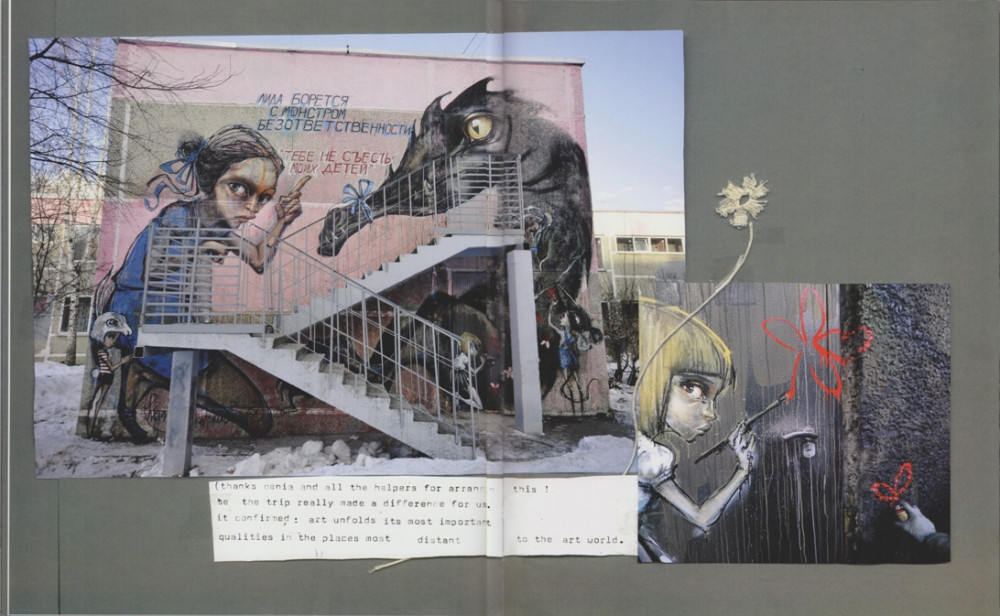
Krupin: back to the orphanage. How did you have the idea of this drawing? What is his meaning?
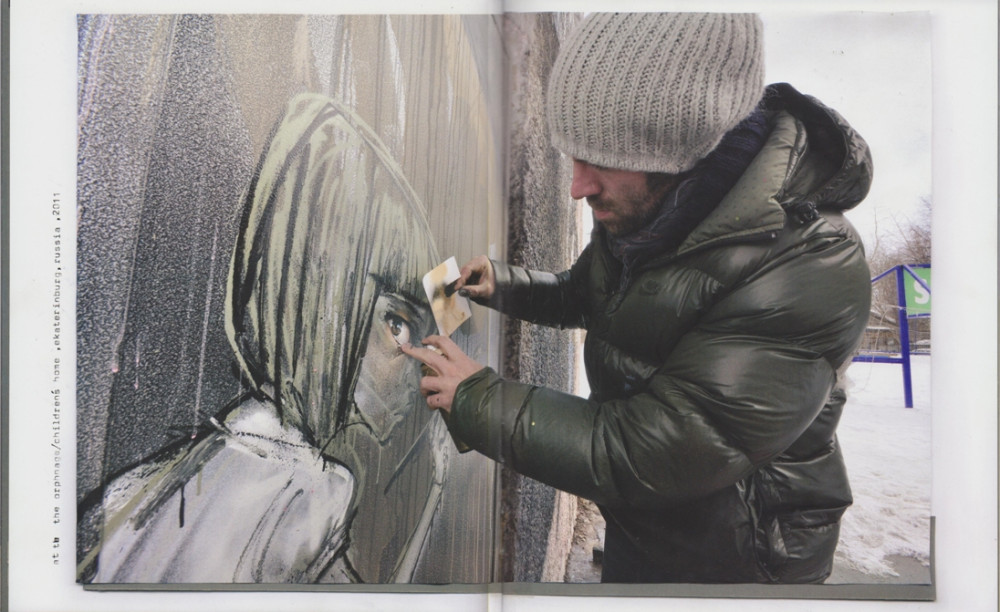
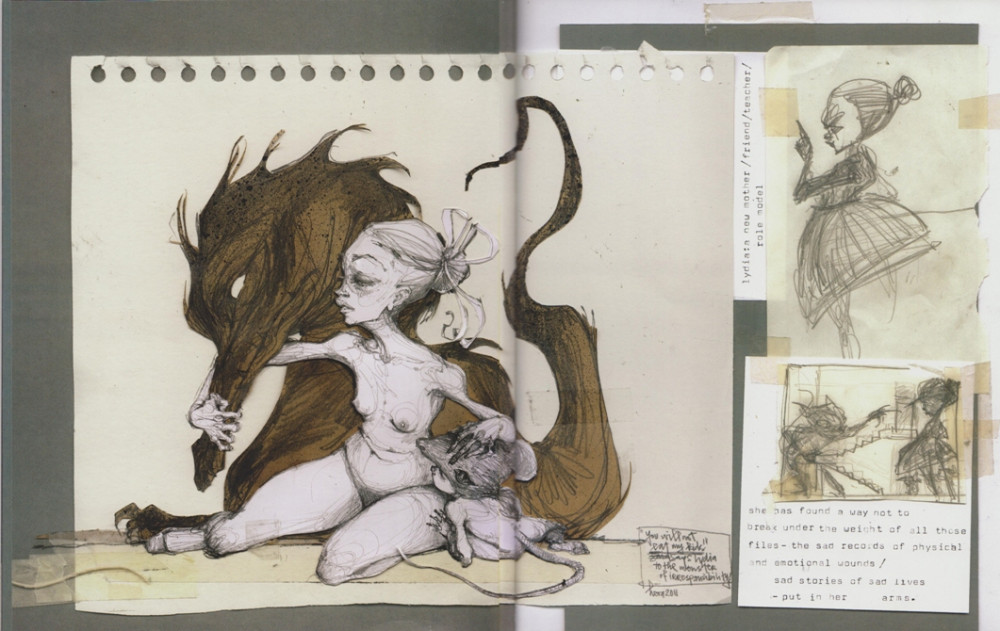
Herra: In general, we painted there what we felt, our sensations from this place and from people. We wanted to convey through the drawing what children might encounter in the future. On the wall we portrayed a woman. Through it, we wanted to show the spirit of the whole team, which fights with the very monster of irresponsibility, which, unfortunately, “eats” our children. The monster is drawn in dark colors. The struggle with this monster does not occur with the help of weapons and violence, but with the help of training - a woman teaches this monster and explains what exactly can not be done, like a teacher with her finger raised. She lies his mouth with a blue ribbon, making him non -hazardous, harmless.
Krupin: Tell us about your sensations from Russia?
Herra: Yekaterinburg is one huge palette of colors. There is everything here for every taste. I really liked watching the people who showed me the city. They all the time asked: "Well, how? Do you like it?" So people behave who love the place where they live. This means that Yekaterinburg should be a wonderful city, since wonderful people live in it, and love it. Even if we did not have many photographs taken in Yekaterinburg, we would still return home with a great mood. It is very good here.
Fateev: Thank you very much for the interview!