
Translated material
New nomads
From which sedentary Tajiks run from
Skinheads, the police, the danger of getting into slavery, go to prison for imperfect crimes or returning home in a zinc coffin - nothing stops Tajikistan citizens from a nomadic life between the Motherland and Russia. What are the sedentary Tajiks from which the New Times found out today in the foothills of the Pamirs
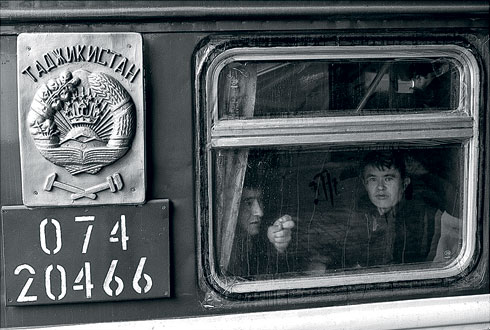 |
| Tajik migrants embody the slogan from the manifesto of the Communist Party of 1848: "Proletarians of all countries, connect!" |
On the iron gate of a private house an announcement: "We do not sell rams, we do not rent housing." “For the police,” the residents explain. The old "Lada" lined up in a row: many earn a private car. Moscow is very close: sparkles with the lights of new buildings, in which happy people with Russian citizenship live. But here, in Pervobyevo, many only dream of a Russian passport.
Plobbievo used to be an ordinary village near Moscow. But the Mytishchi construction fair, located in the neighborhood, brought other residents. Each house now is a mini-public with immigrants from Uzbekistan, Kyrgyzstan, Tajikistan. 4-5 beds in the room, a total toilet and shower for the whole house, cost - from 2 to 4 thousand rubles per month per person. According to the residents themselves, most of the houses belong to the director of the fair, which is very close to - only the field to cross. The inhabitants of Pervobyev are wary of visitors: although they all live legally in Russia, no one is safe from the police and troubles.
"You go without a passport"
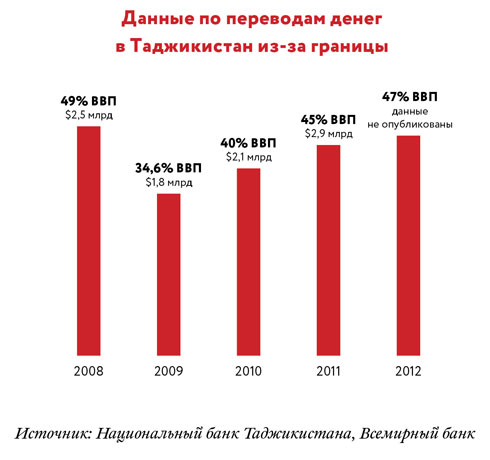
According to unofficial data, almost a third of the total population of Tajikistan lives in Russia - about 2 million Tajiks, half in Moscow and the Moscow Region. Basically, Tajik migrant workers are busy in construction, often live at facilities or just in barracks. Upon arrival, they buy registration for three months (1.5 thousand rubles through special firms), and then, in order not to go abroad every three months, you need either a work permit (from 20 to 30 thousand rubles and the employer ready to get a migrant), or a patent for the homework (get such a patent costs from 5 to 10 thousand, and then you need to officially pay a tax - 1 thousand rubles a month). One thing is bad - you can’t work at a construction site with a patent, if they catch it - you will have to “resolve the issue” for 2 thousand rubles.
"
He beats me in the face, then with his foot. I told him: "Why do you beat me, what did I do to you?" And he fights again: "You, black -assed, not you ***
“However, it is more dangerous to live with documents than without them.“ Do you go with a passport? Do you go without a passport, ”explained The New Times. To contact those who do not have documents at all, the Moscow police can get off with a couple of hundreds. And if everything is in order with the papers, then you can pay the passport with the patent and the patent and the patent and the patent and the patent and the patent and the patent and the patent and the patent and the patent and the patent and the patent and the patent and the patent Registration: go then prove something. “Almost every week, the cops arrange a raid,” the petitions say, “come by buses, take 30-40 people, keep the day in the department, do not feed, force me to sign protocols about the violation of the passport regime, collect money and release.”
“If he wants the money, I will give him money,” 18-year-old Marat connects to the conversation, almost a teenager with children's swollen cheeks, “he beats me in the face, then with his foot. I told him: "Why do you beat me, what did I do to you?" And he fights again: “You, black-assed, are not you ***,” Marat's lips pouted, it seems he is about to cry from a sense of resentment and defenselessness. And there is no one to complain: mother at home, in the Tajik mound-tube, and the father is the same unlawful migrant.
Aslan, a former employee of the Tajik KGB, today - a welder, has been living in Russia for ten years. There is no work at home: according to unofficial statistics, unemployment in Tajikistan is 45% (the local department of labor and employment gives a figure of 2.6%). But even if it is possible to find a place by acquaintance, the average salary is $ 200, it is impossible to live on them. Like other migrants, Aslan drives home to his homeland twice a year for a couple of months. There is a wife and three children, the eldest in the graduation class, is going to enter the Medical Institute. $ 20 thousand, which Aslan has saved in recent years, is needed for admission and training. In Moscow, he has another wife, also Tajichka, works as a cook in a cafe here at the fair. She had a child, but he was sent in Dushanbe: so cheaper. I tried Aslan to marry Russian: “I lived with me for a year, I accepted Islam, only I left - changed. They are unreliable, your women. "
Aslan was lucky - the former colleagues promised to straighten the Russian passport, and for only 90 thousand rubles in Lipetsk. (The usual price is from 150 to 250 thousand, but you must certainly do by acquaintance: they can slip a false one.) Well, there is a light at the end of the construction - they promised to arrange in the FSB.
Karamatu, a rural teacher of the Russian language, who, in old age, had a need for Moscow, was more fortunate: he has relatives, so he lives in a real house. In Russia - with Patent, but is engaged in repair. Clients have yet come across good ones, although friends tell how many deceive and do not pay. Teacher salary - 700 somoni (4.5 thousand rubles), in Moscow in good months it turns out to earn 20-25 thousand. It spends 10-15 on a living, sends the rest home. “Although there is money, but still it’s bad in a foreign land,” says Karamat, “Russians constantly show that you are not happy here.”
Three daughters and wife remained at home, who recently frowned: heart. We need money for medicines and doctors: medicine in Tajikistan is free, but you have to pay for everything, and most Tajiks do not afford $ 100, and if with Kesarev, then $ 200. Appendicitis - $ 200, a simple appointment with a doctor - from $ 30 to $ 50. Karamat must fly home, talk with the head doctor: not a female business about money. This means another $ 800 for a ticket, and how much treatment will cost, even to think scary.
To understand that he had abandoned the karamat in his native land, we went to his village of Vahdatobad, that next to the city of Vahdat, 30 km from Dushanbe.
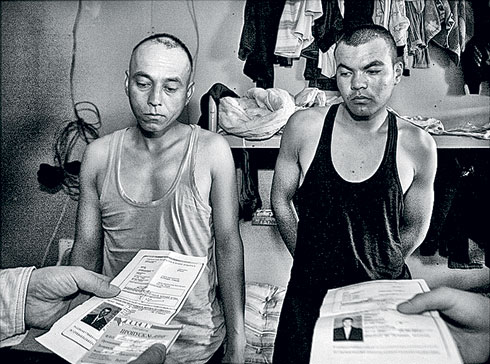 | |
| The availability of documents does not save from police arbitrariness | |
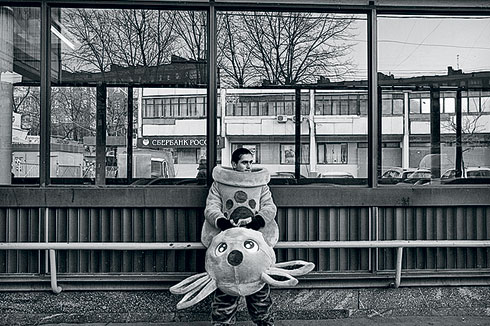 | |
| Luntik is tired. Have to take on any work | |
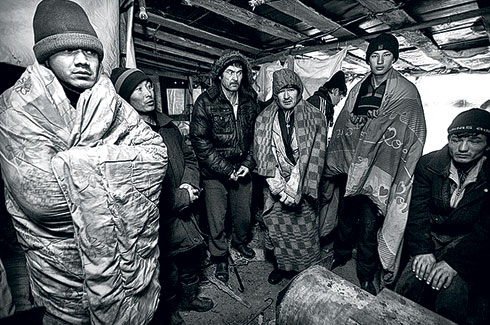 | |
| Due to delays in salaries, migrants are sometimes forced to live in tent camps |
Learning in darkness
A new route built by Chinese companies on a Chinese loan leads from the capital to Wahdat. But you just move out of the main highway, how you have to lead in the second gear, otherwise you can’t drive through the pardon. Around - deserted, sun -flooded hills with snow covered with snow ridges, it pulls cool: in early December, Babier is in full swing.
We are met by the brother of Karamat Dzhumailo and the director of the native school Fathuddin Kadyrov. A representative man in a suit and with a tie admits that he himself went to Russia - "the earth was digging the earth in St. Petersburg." Otherwise, it is difficult to live on a directorship salary with the rate of an English teacher 740 somoni (5 thousand rubles), at least even with the household. At home, Fathuddin is a cow, a calf, goats, hens that a wife is engaged in, part -time primary school teacher. Without six brothers, it would be not to cram - they are all in Russia. Who is champion, who is at a construction site.
“We have a tight work with work,” Jumailo admits. In Soviet times, there were a lot of production in the region: a clay plant, a mechanical repair plant, a plant for precious metals, Lesosnab. Today, all enterprises are either standing or working not in full power. Only a small workshop for the production of cement, built by the same Chinese, is actively smoking. “They and Tajiks take to work, but they pay little, and the work is harmful,” Jumailo explains.
"
He looks from the walls of the palaces - Emomali Rahmon, the father and savior of the nation. With ears in his hands, with smart thoughts, with President Putin
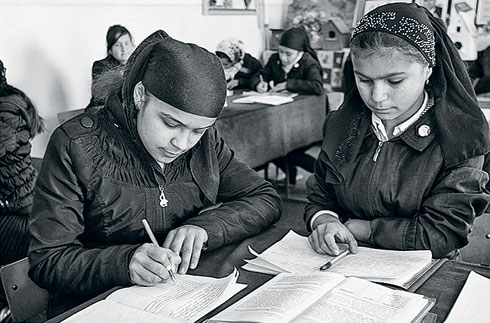
"The blue building of the Vakhdatobad school is not much different from the thousands of other Soviet schools: three floors, two wings, the courtyard and a football field. In the lobby, a banner:" The intelligentsia is the gold reserve of the nation. Emomali Rahmon. "The feeling of something old, forgotten covers at the entrance to the classes. The school serves five villages, is designed for 970 students, but study in it in it. 1479. The diligents are sitting on the desks, as in the picture in the Soviet textbook. There is an all -been electricity around the clock only in Dushanbe, in the regions the light is given for two hours in the morning and for three in the evening.
All girls are in scarves: the population in the Wahdat was always quite religious, during the Civil War of 1992-1997, it was here that the stronghold of the Islamic Renaissance was. When you ask who has more than half of the class, who has parents on earnings in Russia. However, those who left are in every family - if not a father, then an uncle or older brothers. The children themselves do not want to leave for Russia: the dream of a Tajik schoolboy is to find a job at home. Gulnura and her friend Niso from the 5th grade want to enter the Tajik medical university and learn from cardiologists. And Mahmad Rajab from the 11th, a lanky teenager with smart eyes, is going to go to the legal. He was already in Russia - three of his brothers and father work in St. Petersburg. But he himself does not want to go to the construction site. “I will become a human rights activist,” says Mahmad Rajab, “I will help people.” Whether it will be difficult to do, the future human rights activist does not know, although he is going to travel in Dushanbe to the tutors. “Here's an example for you: the whole family is earned so that at least one son will go into people,” says the director of the school Fathuddin.
From the summer house
Dushanbe does not look like Prague at all, but leads to the thought of Kafka. On the main street, Rudaki on Sunday is so empty that birds are heard in high chinars, falling asleep with foliage sidewalks. Among the modest Stalinist five -story buildings, only remotely reminiscent of their older brothers from Tverskaya, real pearls of constructivism come across. And over this life of the provincial Republican Center, the razor palaces of the president reign ominously, from the walls of which he looks - Emomali Rahmon, the father and savior of the nation. With ears in his hands, with smart thoughts, with President Putin - he is everywhere and everyone needs. And only the snowy peaks of the Pamirs surrounding the city seem to be above it.
In Dushanbe with work, it is easier than in the provinces, therefore they go from here not so actively. The professions are all real, but also from somewhere in the past: a bus driver, a car mechanic, a seller in the market, a doctor. No marketing managers or creative directors to you. One of the most enviable employers in the country is state structures. Even the servant in the presidential palaces, although he gets a little, has the opportunity to get hold of something. So, right on Rudaki Street, at the exit from the city residence of the president, which in Dushanbe is called the "Dacha of the President", I was called to the old woman in a national dress and with a knitting firewood in his hands: "Boy, help bring to the stop." She works as a cleaner, and lives outside the city: electricity is turned off there, and you can’t do without a stove.
| | | | --- | --- | |  |
| 
Emomali Lear
Dushanbe is striking in the number of new buildings: office centers, apartment buildings. Many of them, however, are empty, it is clear that the market has been saturated. As for jobs, on a country's scale this is a drop in the sea. Yes, and there are few at the Tajik construction sites: according to the workers themselves, about $ 250.
Most of the construction projects, like the whole more or less profitable business, belongs to the president’s family (his son Rustam is considered a construction magnate). Once Emomali Rahmon loved to repeat that he had no relatives, and therefore, they say, there could be no conflict of interest. However, ten years ago, the wife of the President’s wife, Hassan Asadullozoda, quickly took the only large enterprise to his hands - the Tajik aluminum factory, and then a lot of other businesses - from cotton trade to banks. The plant brings revenues to the budget modest: all products are sold to a mediation company registered in the British Virgin Islands, in the same place, in offshore, it settles profit: according to the most modest estimates, from $ 300 to $ 500 million annually.
If earlier the country's chief businessman was a quick shirin, then recently, Rahmon has grown up children - two sons and seven daughters, five of which got married. Their son -in -law and numerous new relatives became prominent businessmen and government officials. In addition, the president’s brother has 14 children, the sister has 12. It’s difficult to dismiss relatives: when the president tried to resign his matchmaker - the Minister of Energy and Industry Sherali Gulov, he complained to his son, who threatened the presidential daughter Parvina. The latter rushed to complain to her mother, and she soaped her head to the president. I had to back down and pretend that I was joking.
Another example of the family business is the Innovative Road Solutions (IRS), also registered in the British Virgin Islands and is allegedly owned by the president’s son -in -law and, in combination, the First Deputy Minister of Finance Dzhamoliddin Nuraliev. IRS received a Dushanbe-Chick to the concession of the South and North of the country and built on a $ 280 millionth Chinese loan. In order to make the road to pay paid, the government canceled the point in the legislation, requiring the availability of alternative free roads, and also freed IRS from all taxes, with the exception of social benefits for personnel. According to experts, the company's net profit is about $ 30 million per year.
However, in Feoda Rahmon, a related rivalry is increasingly making itself felt. So, the president’s children are in an open conflict with their uncle Hassan Asadullozoda, the son of Rahmon Rustam even wounded him once from a hunting rifle. The conflict is flared between Rustam and his sister Takhmina - for the investment of the largest Bank Orinenbank in the country (also belonging to Uncle Hassan). Takhmina quarreled with her son -in -law Jamoliddin: IRS tried to force Tahmin to pay more for the use of the road, because her trucks, which deliver consumer goods to Tajikistan, destroy the track faster. It wasn’t there: Takhmina flatly refused to pay. According to rumor, other businessmen who want to compete with Tahmin in the wholesale market, pay for the reputation - $ 80 thousand for each large batch.
In addition to the division of large businesses, members of the presidential family do not disdain the good old raiding. So, Takhmina Rahmon, with the help of the General Prosecutor's Office, took away the business from Nur Usmanov, one of the large entrepreneurs of Khujand, the second largest in the city of the country. The businessman hid in China, his restaurants belonging to him, retail outlets and a network of gas stations became the property of Tahmina.
“Family actions are one of the reasons why the Tajik economy remained at the same level as 12 years ago,” says political scientist and independent expert Kamol Abdulaev, “only the business that is roofed by the family and does not pay taxes, everything else, including small businesses, is out of the law,”.
| | | | --- | --- | | 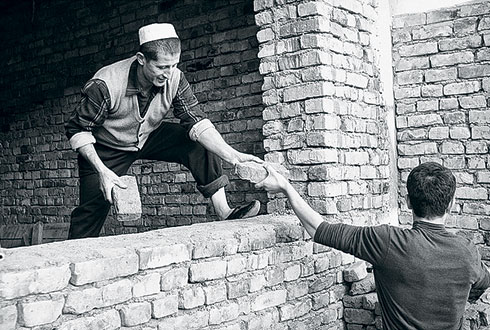 | | | Zafar builds a house for his son: he will return from Russia, marry, will bring where to bring the family | | | |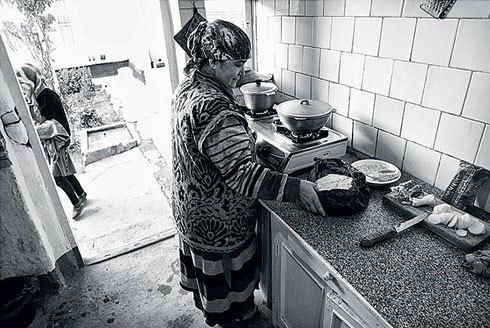
Straw families
Rudaki is one of the few streets in Dushanbe with even roads and repaired facades. Hands do not reach the rest, the courtyards gap in poverty and unsettledness: broken windows in long-free raw and cold entrances, torn asphalt, spontaneous landfills. In sleeping areas the same thing. Shodiyon, a microdistrict in the south of the capital, is built up with private houses, so the devastation is not so felt here.
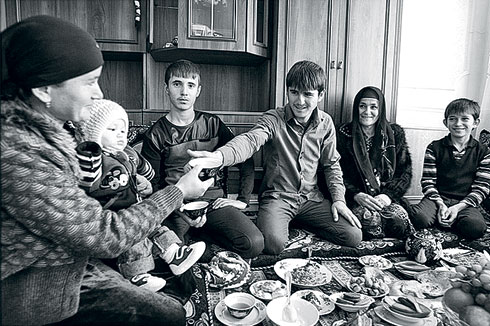
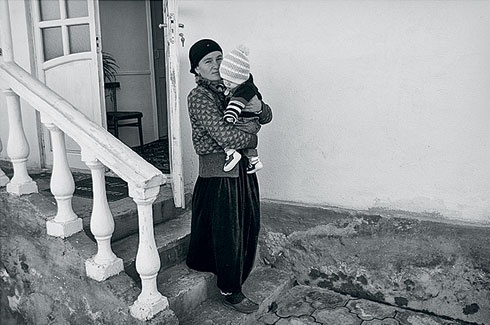
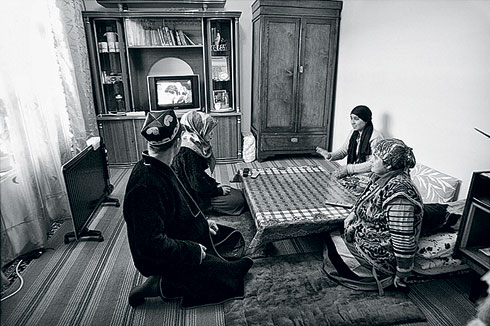
Mokhira prepares lunch, waiting for children from school. Her husband and eldest son - in Russia, only three younger ones remained at home. “It takes about $ 80 per month for electricity, although we heat up with a stove,” says Mojira, “coal for the winter costs $ 200. Not that in the Sino area - there, even during the civil war, the thermal power station was bombed and did not restore it: the entire area is still without central heating, and you can’t put the stove in the apartment. ” The Mohira family lives modestly, the house shares with the mother -in -law. Each part of the family has two small rooms: a living room with a TV and a bedroom. They eat on the floor, spreading the tablecloth in the middle of the room - Dastarkhan. They usually also slept on the floor, but Mohira bought a bed for herself: rheumatism tortured. For two families, one small kitchener with a stove on gas cylinders and a tandoor in the yard: Azerbaijani chapots are baked here - round white flour cakes. “Tea and chapoti, Tajik no more is needed,” Mojira laughs.
The life of the remaining women is unpretentious. Gather children to school, prepare lunch, wash. «Хорошо, если муж уезжает, когда супруги уже прожили вместе какое-то время, — объясняет The New Times Нодира Абдуллоева, координатор программ по трудовой миграции Центра по правам человека, — но девочек часто выдают замуж рано, муж уезжает сразу после свадьбы, а молодая должна жить со свекровью. На этой почве случаются разводы, женщины возвращаются к родителям, для которых становятся обузой». Другая проблема — мужчины, которые находят себе новых жен в России, но не желают содержать две семьи. Алименты получить практически невозможно: доходы мигрантов неофициальны. «Но самое главное — в Таджикистане подрастает поколение, не видящее своих отцов, — говорит Нодира, — исследования показали, что такие дети чувствуют себя ущербными, более склонны к суицидам».
С Нодирой соглашается и Ойнихол Бобоназарова, руководитель НПО «Перспектива Плюс»: «Конечно, детям нужна семья. Но нашим феодальным правителям некогда заботиться о своих гражданах, миллионы которых вынуждены ехать на чужбину, чтобы заработать на хлеб».
На рейсе Таджикских авиалиний из Душанбе в Москву совсем немного женщин и почти нет детей. Только одинаково одетые мужчины с усталыми лицами. Среди них есть чернорабочие и крестьяне, директора школ и юристы. Они могли бы работать в офисах и врачебных кабинетах и каждый вечер возвращаться домой, проверять дневники или смотреть телевизор за дастарханом. Но они летят в снежную Москву, чтобы пополнить собой безликую, унижаемую и бесправную армию под названием «трудовые мигранты».
фотографии: РИА Новости, Reuters, ИТАР-ТАСС, Нозим Каландаров