
Translated material
In Russia, Baby-boom was rejoiced early, experts predict a new demographic blow
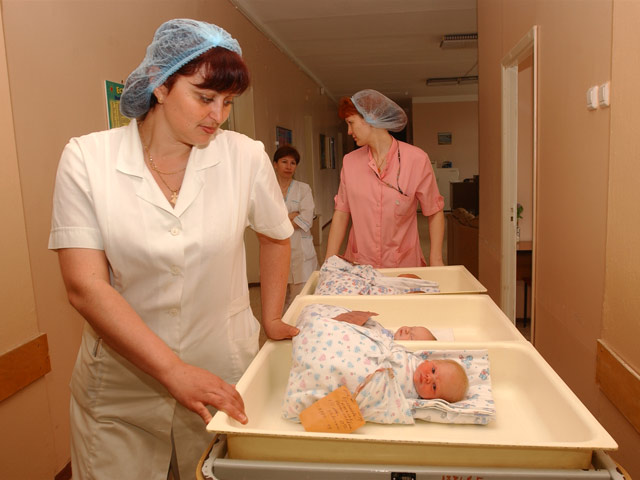
Despite the vigorous statements of the authorities about the successes in the implementation of the demographic program, experts are pessimistic. In their opinion, the population growth, recorded over the past ten months, has nothing to do with the efforts of the authorities and is explained simply: in the 2000s, women who were born in the 70-80s-the last Baby Bum of the Soviet period were included in the 2000s. Experts predict the inevitable decline in the birth rate in the near future, when children are born in the 90s.
On articles on the demographic crisis in Russia, on Tuesday they write "headlines" . In 2012, the Ministry of Labor announced the natural growth of the population in the amount of 790 people last week. The department noted that the result can be considered a breakthrough for all the years of the implementation of the demographic program, because the last time the birth rate exceeded mortality in the Russian Federation 20 years ago.
Dmitry Medvedev, Prime Minister Dmitry Medvedev, did not bypass the topic of the fight against the steady extinction of Russians. In a Friday interview, five Russian television channels, the text of which is published on the government’s website , he announced “some quite favorable changes” in this area. “For the first time in history, since the emergence of our new modern Russian state, we have received births, we received an absolute growth in the population,” he noted with satisfaction, adding that “this may seem to be quite ordinary, trivial, but in fact we have fought with this trend over the past 20 years.”
The prime minister expressed the confidence that this year successes were achieved "thanks to those measures that have been realized over the past, say, six to seven years." “This is actually a combined result of the work of the authorities in recent years,” the head of government is sure.
But independent experts argue that Medvedev hurried to boast of the successes of the authorities in the field of birth rate, the newspaper "Moscow Komsomolets" writes. The population growth was recorded not because of maternity capital or other cash benefits introduced by the government, but because in the zero years, women of 70-80 were included in the maternal age, the director of the Institute of Demography of the Higher School of Economics Anatoly Vishnevsky explained to the publication. According to him, in the 2000s, two tendencies independent of each other coincided - an increase in the number of women of medium and senior reproductive ages and a shift of birth rate to these ages.
According to Vishnevsky’s forecast, already next year the birth rate, if it does not fall, will definitely not grow, the Russian newspaper reports. Then a sharp decline in the number of potential mothers will begin and, accordingly, the number of born will fall.
In turn, the director of the Center for Social and Political Monitoring of the RANEPA under the President of the Russian Federation Vladimir Boykov said “MK” that the decline will occur due to the mood of uncertainty in the future. An increasing number of Russians "do not want to produce poverty." The fear for what awaits not yet born children, in young women of reproductive age reached the level of the crisis of 1993, Boykov emphasized.
According to experts, only a decrease in mortality and an increase in life expectancy, but with the solution of these problems, the authorities have great difficulty will be able to turn over the demographic crisis. Recently, the Ministry of Health warned that if the government does not double financing of the state health care program, a million Russians may not survive until 2020.