
Translated material
Information hunger
Why do we still judge pre -revolutionary events as contemporaries, and not as descendants, weighed down by terrible knowledge. And what is the difference between “hunger” under the king and hunger in advice
Why do we still judge pre -revolutionary events as contemporaries, and not as descendants, weighed down by terrible knowledge. And what is the difference between “hunger” under the king and hunger in advice
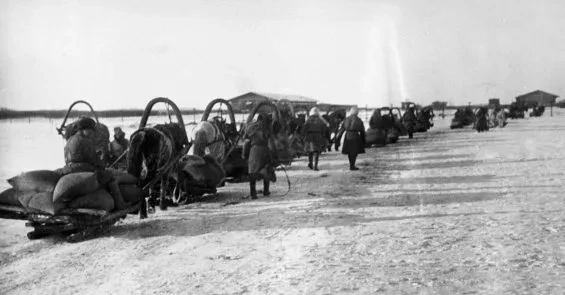
In our society there is no whole idea of our own history. We still perceive it discretely, i.e. Each period is a kind of volume of collected works, or a separate picture in the Tretyakovka hall, or a ticket in the exam, answering which, we immediately forget what happened before and what will happen after this time.
First of all, this applies to post -reform time, by 1856 - 1914. This key era exists in isolation from the neighboring ones, having a nasty reputation of the time of “incomplete” and “failure” reforms that led the country to an allegedly inevitable revolution.
We still judge this period as contemporaries, but not as descendants, wise, more precisely, burdened by new and terrible knowledge of the world.
Only in such a situation is such a clear savagery possible: the word “hunger” is also denoted by the crop failure of 1901, for example, the hunger of the blockade Leningrad.
Understanding history begins with a clear understanding of the terms that we operate.
The reasons that even humanitarian people often have completely ridiculous ideas about the Russia that ended in 1917, are a lot.
One of them is a misunderstanding of the simple circumstance that “presentism” (i.e. the mechanical transfer of our current understanding of individual phenomena, terms, etc. to the past) is unacceptable, since it is able to pervert the understanding of history.
The situation is aggravated by the fact that in recent years - primarily due to restalynization - the history of Russia at the end of the 19th - early XX centuries, in addition to the purely academic, acquired its extremely ugly extra -scientific specificity.
The terrible realities of the Soviet era began to be mechanically transferred to the previous, post -reform era. Imperial power now often seems to be a slightly more mitigated version of the Soviet regime.
In particular, in the media and on the central channels of TV, they began to seriously compare hunger and terror in the USSR and in imperial Russia, quoting fakes distributed on the Internet about “millions of Orthodox souls”, who allegedly died from hunger at Stolypin, etc. It is very important for the modern “agitprop” to equalize the Russian Empire and the USSR according to the degree of state arbitrariness and the number of victims in the hungry years.
The success of this manipulation is capitalically facilitated by the egregious ignorance of many people regarding their own history. Especially those who were born in the 1980-1990s. And he studied in the era of the collapse of the school system.
However, history is not a current show, and here a fashionable focus with popular voting does not pass.
The fact is that the sins of tsarism were described in great detail and scheduled in ordinary Soviet school textbooks, which is still not very difficult to find. And about millions of people who died from hunger after 1861, there is not a word there. Although the Soviet government was very interested in the full exposure of the autocracy and did not ceremony too much, in this sense of decency, the authors had more textbooks than the modern “ideologists” of the failed “bright future”.
At the same time, Soviet power want to give out 150 million inhabitants of the empire from poverty, starvation and “semi -colonial” vegetation - in full accordance with the “brief course of the history of the CPSU (b)”.
The desire is understandable, but painfully shameless. After all, we will never know that tens of millions of people who died after 1917, as well as their unborn children, grandchildren, great -great -grandchildren and great -great -great -grandchildren, with whom we could all know personally, think. By the way, according to the estimates of independent demographers, if there weren’t 1917 - by 1950, the population of Russia (imperial or republican) would be at least 350, or even 400 million people, instead of about 180 million.
It is the “hunger” that is one of the vivid examples of how the semantic inflation of the term completely distorts our perception of its history.
The fact that a hundred years ago, “hunger” was called any flaw of bread is understandable. However, the problem is more complicated.
A simple example. In 1910, for a number of reasons, the domestic market was crowded with a refinade (70–75% of sugar consumption fell on it), the prices of which decreased sharply. At the same time, the country began to feel the lack of sand, firstly, due to the crop failure of the beet, and secondly, because the refiners unscheduledly seized more than 7 million pounds of sugar from the market.
A paradoxical situation has developed. On the one hand, in a number of cities of Russia, “it was impossible to find some kind of sand car,” and on the other hand, the market was literally littered with a refinade, which eventually was equal in the price of sand. Therefore, consumers began to buy a rapidly discriminate refined and drowned in the sand for cooking jam.
And this situation in the then press was completely seriously called "sugar hunger"!
I, of course, will not compare this episode slightly vaudeval for us with the tragedy of 1891–1892, when, as it is believed, about 400-500 thousand people died (I note the opinion of B.N. Mironov that the cholera had taken the greater part of the victims of this cataclysm, which they did not know how to heal then). However, it makes you think about a lot.
Some idea of how easy and irresponsible (from our modern point of view) this term was used is given by the following facts.
For example, in the most popular Russian Word newspaper in 1912, No. 80 speaks of the “manufactory crisis”, in No. 90 - about “cast -iron hunger” and “forest crisis”, in No. 126 - about “cast -iron hunger”, in No. 172 - about “oil hunger”, in No. 238 - about “meat crisis”, and in No. 239 - about “firewood” Hunger ”, in No. 248 - about“ coal hunger ”, in No. 250 - again about“ oil hunger ”, in No. 259 - that“ the country is threatened with meat hunger, and we supply Germany with cheap meat ”, No. 260 and 287 - again about“ coal hunger ”, etc. (I have not listed far from everything). The presence in the newspaper of the permanent section “on hunger”, which described the liquidation by the government of the consequences of the crop failure of 1911 in a negative, naturally, I do not mention.
At the same time, I note that this is not about the times of military communism, but about the penultimate year of the outstanding economic upsurge of 1909–1913!
That is, this word characterized not only the situation of inexpensive bread, it was a duty designation of the slightest violation of the price status quo towards the rise. If in Russia the end of the XIX - early XX centuries, the price, we put it, the pound of iron grew by 0.2 kopecks/pood, then in the country the “metallic” hunger “began” immediately.
Our modern ideas about these phenomena stem from the historical experience of the Soviet era, and it was fundamentally different and immeasurably more tragic.
Each time and each nation has its own “average” threshold of sadness and suffering. Many thousands of pages published before 1917 depicted "folk grief", "distressed", etc. The situation of the inhabitants of Russia, and, I think, a significant part of those who wrote about this was sincere. It is difficult to assume, for example, that Kriville by the soul “in the hungry year” V.G. Korolenko. Within the framework of the ideas of its time in the then/good coordinate system, when not only the tragic events of 1891–1892 were categorically called hunger, but also any later crop failure, these authors, if they tried to be objective, were often right.
However, all these descriptions were actually depreciated at once when the “red terror”, food dictatorship, producers and surpasses, cannibalism and hunger of 1921–1922, not to mention the collectivization and hunger of 1932–1933, became ordinary.
The coup on October 25, 1917 created a new, monstrously cruel coordinate system in all areas of being, and the old standards correlated with it about the same as the insults of the child and the tragedy of a person going to the scaffold. If you constantly do not keep this in mind, then you can forget about the objective study of the history of Russia .
What I would write about the card system of the times of military communism, for example, A.I. Shingarev, who made himself a name on the pamphlet “The Powering Village” (1901), if he had not torn his “revolutionary guard” in 1918? And as Moor's poster “Help” (1921) would appreciate in 1919 in the grief and remorse A.A. Kaufman, who wrote a lot about the transition of the peasants “from a malnutrition to a complete hunger strike”?
In the summer of 1921, shortly before his death, Korolenko was elected to the Honorary Chairman of the All -Russian Committee for Assistance to the Starring, and he wrote to Gorky that "we have not spontaneous hunger (as it was before the revolution. - M.D. ), but artificial." He managed not only to feel himself in the new system of values, but also to express his attitude towards her - to the rage of Lenin, by the way.
The foregoing, of course, does not make the need and inconsistency of people during crop failures of the late XIX - early XX centuries with a fiction, but shows that they should be evaluated in the context of all our knowledge and at their real price.
If we claim to be a solid understanding of our history, if we want to interpret it as a single global and continuous process, then we are obliged to develop accurate criteria, a clear terminology to denote various gradations of the same constant historical phenomena-so that the story does not seem to be a collection of individual “paintings”, and it would be an integral web.
Narodniks, then Soviet historiography, and now the new generation of fans of the “father of all peoples, except for repressed”, love to talk about hunger strikes in tsarist Russia, however, they stubbornly ignore the presence of a food system, food legislation in the country , which ensured the diet of the country's residents in lean years. Ignore, of course, for convenience - an “anti -people” state, condemning its population into poverty, by definition cannot take care of this population.
Anyone who is not familiar with this problem specially, but from school knows about popular suffering, about “hungry export” (who does not know about them?), Completely believes that tsarism pumped bread from the village - like the Soviet government - tearing millions of peasants to the hunger strikes, and did not care about the fight against natural disasters in the form of unless.
However, firstly, until October 25, 1917, in a market economy, the government, in principle, did not have the opportunity to “pump out” anything from the population. In addition, in Russia there was no monopoly of foreign trade, i.e. Bread was not sold by the state, but by private individuals.
Secondly, the imperial authorities spent a significant part of the budget to help those who suffered from the crop failures, to which the intelligentsia paid its high attention only in order to reveal power again and again in incompetence. And this conspiracy of silence was quite successful.
There was a special government body - the rural food part of the Ministry of Internal Affairs, which was in charge of food assistance. No matter how highly evaluate private charity, it made up only a few interest on the investments of the state.
In terms of volume, food assistance during crop failures was sometimes comparable to defense costs (63% of these expenses in 1891).
Starting from 1891–1892. And before the First World War, the government invested about half a billion rubles in the elimination of the consequences of crop failures, and regularly forgave the population hundreds of millions of rubles of arrears on food debts.
In 1892–1893 Alexander III withdrew from his subjects of food debts in the amount of about 52 million rubles. And on November 14, 1894, on the occasion of the wedding of Nicholas II, about 50 million rubles were compared from the population. Such debts.
In other words, the government not only saved in 1891–1892. Tens of millions of people from hunger and crop failure. It actually took responsibility for natural disasters .
The power continued the same line until the end of the 1900s. So, for 1891-1900 From the funds of the treasury and from the general -imperial food capital for various forms of support for the population during the years of crop failure, about 232 million rubles were allocated, of which 211 million rubles. They were subject to return. However, in reality, the population returned only about 19 million rubles, and most of the debts were canceled by the government. The birth of Tsarevich Alexei was the reason for writing off at least 73 million rubles. etc.
Let me remind you that the cost of a large naval program, which by 1930 was supposed to make Russia a world marine power, was estimated at 430 million rubles.
If you call this phenomenon “hunger strikes”, as is done all the time, then from which dictionary to take words to denote the above disasters that began after 1917? ..
Now about the phenomenon of “hungry exports” - an integral attribute of “poor Russia” from populist journalism and Soviet textbooks.
Let's think - the very formulation of the question of hungry exports is quite provocative, because it implies a certain, albeit not universal, but conspiracy against the Russian peasantry. If we bring the ideas of the Narodniks to the logical end (or absurd, which in this case is exactly the same thing), we will have to admit that one of the priority tasks of the government of the empire was the maximum deterioration in the position of their own people. For this, among other means, it used export of bread.
For many years I have been engaged in this problem and proved that the thesis of “hungry export” - more precisely, the negative impact of export of bread on the nutrition of the population of Russia - does not find confirmation in the statistics of production, export and transport of bread cargo, as well as in other sources. The domestic market played the predominant and permanently increasing role in the trade in bread, which completely naturally follows from the laws of the market economy.
In particular, in 1894-1913. The export of rye annually decreased by an average of 2742 thousand pounds, and oats export by 193 thousand pounds. The average annual increase in wheat exports was only 9.5% of the harvest. And only the increase in the export of barley, specially exported, is 45.7% of the increase in fees.
The mythological nature of the thesis about “hungry export” is also very clearly acted when comparing the value of bread exports and the magnitude of the drinking income. The total cost of bread exports for 1894–1913. amounted to 10,361.7 million rubles, and drinking income - 11,766.7 million rubles, and the average annual increase in the cost of exporting bread amounted to 20.9 million rubles during these years, and drinking income - 35.1 million rubles, i.e. 1.7 times more. If such a situation can be called “hungry export”, then something needs to be corrected in the dictionaries of the Russian language. At the same time, Russia, I recall, was by no means a leader in alcohol consumption.
Nevertheless, the idea of “hungry exports” turned out to be a very convenient PR tie from the category “the more absurd, the better” and successfully operated for more than a hundred years, since during this period the need for a negative image of imperial Russia was high.
About the social policy of tsarism after 1861, as well as about much more, our society has simply Neanderthal (in particular, because they are formed by populist and marxist historiography).
Of course, this policy can be evaluated in different ways.
However, it is obvious that it was held by the government of the Christian country, which in 1861 freed 23 million serfs and began the transition of Russia to the Grand City Construction system, and therefore (with all the flaws) this policy could not but fit into certain moral norms.
In any case, this policy categorically excluded the possibility of eliminating the state from assistance to subjects during natural disasters, even hypothetically, not to mention the possibility of using direct genocide to achieve political goals.
The policy of Soviet power proceeded from completely opposite premises.
According to the terrible whim of history, a handful of extremists presented the opportunity to put into practice the ideas of socialism, i.e., according to Dostoevsky, “all this dreamy nonsense”, “all this darkness and horror prepared by humanity in the form of its renewal and its resurrection”.
The power was taken by militant atheists, in principle, who did not have any moral retreats, and actually immediately began to embody “all this darkness and horror” into life with an iron hand.
Let me remind you of Lenin’s well -known thought, expressed on October 17, 1921, clearly showing the depth of the Bolshevik leaders about communism: “We decided that the peasants in the opening will give the amount of bread we need, and we will expand it to factories and factories, and we will have communist production and distribution.”
And these people picked up power in the largest country in the world with a 150-million population!
Where is Marx with Engels!
Military communism demonstrated all the future vices of the Soviet system - and not at the embryonic level. I can’t immediately determine which phenomena of later Soviet history are not found already in 1918–1921.
Военный коммунизм показал, что бывает, когда за управление страной берутся — в прямом и переносном смысле слова — кухарки мужского и женского пола, опьяненные свалившейся на них властью, одуревшие от вседозволенности и не обремененные никакими представлениями о морали.
Крестьяне недолго наслаждались плодами «черного передела» и заплатили за реализацию своих представлений о социальной справедливости цену, беспрецедентную в мировой истории. Немедленный переход к коммунизму обернулся жесточайшей гражданской войной, разрушением крестьянского хозяйства в масштабах страны и массовым людоедством во время голода 1921–1922 гг. как своего рода апогеем первого этапа строительства «нового мира».
Естественно, что в 1921 году такие большевистские «златоусты», как Троцкий и Ярославский, уверяли, «что русский голод — стихийное бедствие, которое нельзя было ни предвидеть, ни предупредить».
Однако современникам были ясны истинные причины катастрофы. Между поразительным обнищанием крестьянского хозяйства из-за продовольственной диктатуры, комбедов и продразверстки и бедствием 1921 года была четкая причинная связь.
Именно 12 губерний Поволжья и Приуралья, ставших эпицентром голода, были главной ареной принудительных изъятий хлеба в 1919 и 1920 гг. Именно оттуда большевики забрали 44% всех хлебных заготовок в РСФСР за 1919–1921 гг. Даже в 1920/21 году, когда интенсивность реквизиций на востоке страны снизилась, государство забрало все же в 6 губерниях Поволжья 15% чистого сбора хлебов, полученного в 1920 году. Изъятие такого количества хлеба в течение двух лет подряд прямо отразилось на состоянии крестьянского хозяйства. Оно усугублялось также варварской жестокостью продовольственных реквизиций. Продармейцы выгребали все «под метелку», игнорируя и продовольственные нужды людей, и их нужду в семенах и корме для скота, и необходимость иметь хоть какой-то запас продуктов в качестве запасного, страхового фонда от неурожая, что особенно гибельно отразилось как раз на крестьянах Поволжья.
Катастрофа уничтожила свыше пяти миллионов человек, а тех, кого можно было еще спасти, не менее 10 млн человек, спас «проклятый империализм», в первую очередь — представлявшая правительство США Американская администрация помощи (AmericanReliefAdministration, сокращенно: АРА), которую возглавлял будущий президент Герберт Гувер.
Еще далеко не закончилась ликвидация последствий невиданного со времен Бориса Годунова голода, когда летом 1922 года на Гаагской конференции советская делегация потрясла мировую общественность, объявив о возобновлении экспорта хлеба.
Осенью 1922 года Кремль сообщил о том, что имеет миллионы тонн зерна, предназначенного на экспорт. При этом было известно, что в ближайшую зиму восьми миллионам жителей страны все еще будет нужна продовольственная помощь, половина которой могла быть удовлетворена собственными ресурсами.
В январе 1923 года в Одесском порту можно было видеть сюрреалистическую картину — американский пароход «Манитоба» разгружал товары и грузы для АРА, а рядом в советский пароход «Владимир» грузили зерно на экспорт. Какое впечатление изъятия большевиками хлеба у голодающих на экспорт произвело на мировое общественное мнение (и в США в том числе) — объяснять не надо.
R.A. Латыпов пишет: «АРА заявляла о непосредственном спасении жизни советских людей, советские лидеры о возрождении индустрии для строительства социализма, который бы ликвидировал голод в будущем. Гувер не желал субсидировать реконструкцию советской промышленности за счет жизней советских людей — это стало источником его отказа от поиска средств и привело к сворачиванию деятельности АРА в Советской России».
Надо сказать, что наша история дает воистину страшные примеры материализации лживых мыслей и слов .
Настоящий голодный экспорт — это когда Сталин ограбил крестьянство в коллективизацию так, как никаким татаро-монголам вкупе с крепостническим государством не снилось, и вывез изъятый хлеб за границу, чтобы купить заводы, заплатить Альберту Кану и др., уморив в 1932–1933 гг. голодом от семи до восьми миллионов человек. Распухшие от голода люди были привычной частью привокзальных пейзажей, а через порты и таможни на экспорт шел поток продовольствия.
В несколько меньшем масштабе ситуация повторилась в 1946–1947 гг., когда «государство рабочих и крестьян» сознательно пошло на голод, накапливая запасы для отмены продовольственных карточек и предстоящей денежной реформы 1947 года. При этом из «соображений престижа» оно не только отказалось от международной гуманитарной помощи, но и вывезло 2,5 млн тонн зерна в страны Восточной Европы. Голод 1946–1947 гг. стоил жизни примерно миллиону наших соотечественников.
До каких же глубин цинизма нужно опуститься, чтобы после этого десятилетиями твердить о «голодном экспорте» при «проклятом царизме», а в наши дни — и о «миллионах православных душ», якобы умерших от голода при П.А. Столыпине?