
Translated material
KS allowed not to coordinate public services
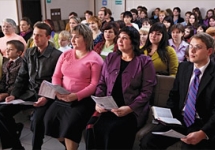
The Constitutional Court recognized the provisions of a number of regulatory acts not relevant to the Basic Law, on the basis of which believers of various faiths were prohibited from conducting public religious events without notifying local authorities. This is being prepared in the court ruling, issued on December 5 and published on Thursday on the official website of the court. The reason for the consideration of this issue in the Constitutional Court was two cases of bringing to administrative responsibility the organizers of the Jehovists meetings in non -wound premises.
The court found that the distribution of the legal regime of rallies and processions to any public religious events without taking into account their potential danger contradicts constitutional principles. Commenting on RAPSI, this is the decision, the KS judge Sergei Kazantsev noted that the organizer of the public service, the meeting or other event, if it is held outside the temples and other specially designated places, should notify the authorities of the authorities "only when this event is a potential danger."
"The unconstitutionality of the disputed norms of the CS saw that they attribute religious collections held in non -residential premises to the same category as the procession or public service on the city square, apparently from the fact that they all represent equal social danger," the judge said. The court found that it could lead to unreasonable state intervention in the affairs of believers. The legislation must be amended that will establish, which of the public religious events can be carried out without notifying the authorities. “And before making appropriate changes, prayer and religious meetings in a non -residential premises can be carried out without notice if they do not violate other requirements of the Constitution and the current legislation,” Kazantsev emphasized.
Earlier, Vladimir Lukin, the Commissioner for Human Rights, turned to the KS. He defended the rights of representatives of the Religious organization "Witnesses of Jehovah" by Kazan and Belgorod Paikar Iriyan and Alexander Shendrygin. They organized public services in non -wound premises. Both were brought to administrative responsibility for not notifying the local authorities. Jehovists challenged fines in various courts, but everywhere they were refused. After the decision of the COP, the Aryan and the Shendrygin case must be revised.
The decision of the CS applies to other similar cases. On September 11, police officers detained the pastor of the demolished Protestant Church of the Holy Trinity of Vasily Romanyuk. The worship that Romaniuk conducted on the ruins of the demolished temple, the police considered "an unauthorized rally." “We just gathered in the same place where we always gathered, and conducted a worship, because after the demolition of the church we have nowhere to hold it. The police appeared and explained that we, it turns out, is an unauthorized rally,” said Romaniuk. On the night of September 6, unknown people plundered and destroyed the gospel church on Starostin Street in Novokosin. They introduced themselves to the bailiffs and "folk combatants", which fulfill the court decision from 2005 on the eviction of the community from the leased land.