
Translated material
Professor battles
Discussion of the Law on Education
On December 14, the State Duma in the second reading will consider the education law - one of the most violently discussed bills of recent times
The teacher-professor environment is seething: the press and the Internet publish open letters of indignant doctors of sciences and teachers without degrees who prophesy the catastrophe of Russian education and demand the resignation of Minister Dmitry Livanov. Critics of the law say that parents will have to be difficult for preschoolers: supervision of children in kindergartens will become paid. Students will suffer: the number of budget places in universities will be reduced. Lyceums and gymnasiums will lose: in the new law, the number of types of educational institutions is reduced, and their division into species completely disappeared. True, as officials say, already working lyceums and gymnasiums will continue their work. NT studied the arguments of opponents and supporters of the law
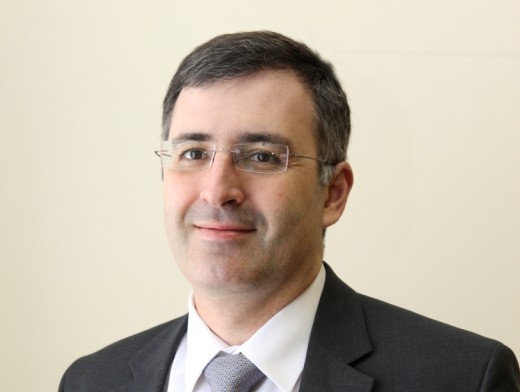
Sergey Guriev, rector of the Russian Economic School: "Any, even a very good law, you can use it wrong ..."
I support the law. Another thing is, it is not known whether it will be well used. Many critics did not even read the law, and many of those who read, see only bad things in it, and priori believing that in Russia everything will be realized in the worst way. I do not see any additional risks from the adoption of the law. And today, if you want to do something good in education, no one will hinder you, no one will put sticks in the wheels. If you want to do something bad-close a good school or university, you can do it without a new law. You want a corrupt university to continue to exist, it will exist after the adoption of the law. In this sense, nothing will radically change with the adoption of the law - this is nothing more than an attempt to rewrite existing rules in a more modern language. And this is reasonable. But there will be no miracles.
Opponents of the law are dissatisfied with the fact that, in their opinion, is happening with education. This is due to the fact that officials do not respect professors. Officials believe that some professors are crooks, that professorships are forged (because the dissertations of officials themselves are often stolen or written off). And so they look at the professors and think: why should we give these people taxpayers? We want our children to have the best teachers, let's we will hire teachers abroad for a lot of money. Russian professors are indignant: “It is dishonest: these teachers who left and studied abroad will return here for a lot of money and ready, and we defended here, held the bridgehead - and we will remain with nothing.”
We need to talk with people, convince. If in some ways it is possible to reproach the Minister of Education Dmitry Livanov, it is that he sometimes formulates his thoughts so much that they can be pulled out of context. He needs to spend even more effort on arguing his position. Because it is part of the power to which society does not have much trust.
The state is spent little on the education. In relative values - more than before. In absolute numbers - significantly less than in developed countries. As a percentage of GDP - also few. In the federal budget for education, 1 % of GDP has been laid, while law enforcement agencies - 3 %, for defense - 4 % of GDP. What kind of country is this? This is a country that is waging a war that is afraid that enemies will attack it. A country that is not interested in the development of education.
On the other hand, the salaries of teachers have grown sharply. The promises of the government that the teacher’s salary will be higher than the average in the region are generally fulfilled.
Any law can be used incorrectly. But believe me: the law does not say that gifted children will be stunned, the law does not say that they will teach some nonsense. It is very important that the law is not written in what children will be taught. It creates mechanisms for the flexibility of education management, so that people have the opportunity to teach what they consider to be necessary to teach.
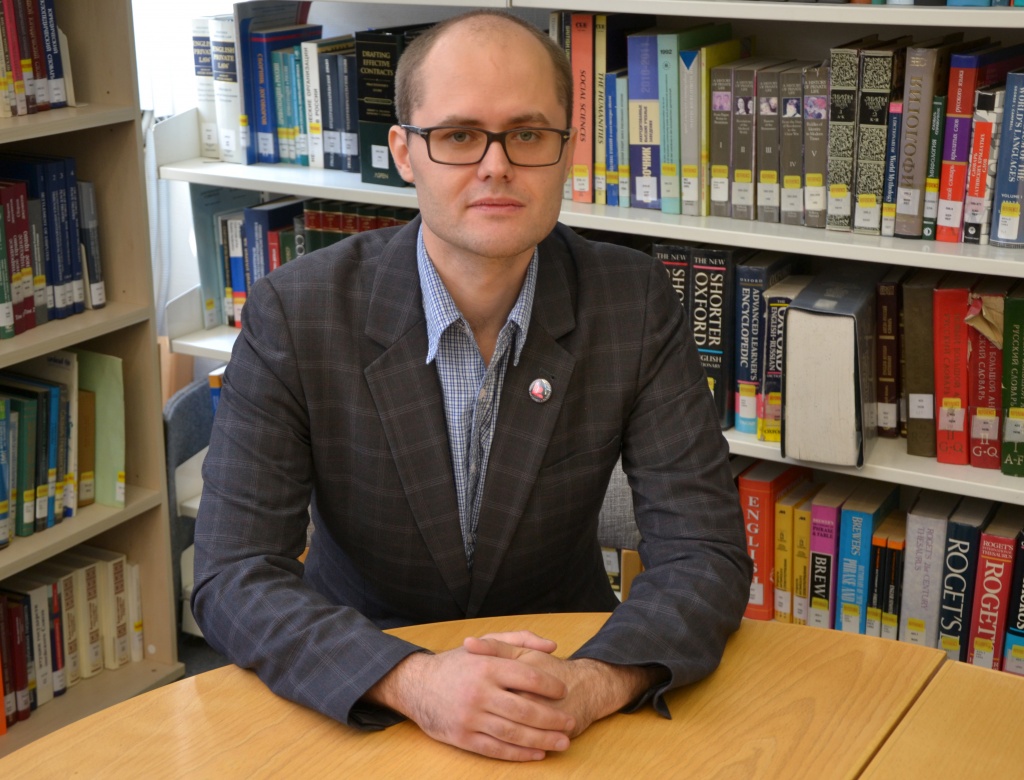
Peter Safronov, Dean of the Philosophical and Sociology Faculty of the Academy of National Economy and Civil Service under the President of the Russian Federation: "The legislator is trying to create uniform rules of the game"
Another step has been taken to admit that the model of higher education that existed in the Soviet Union and was inextricably linked with the Soviet ideal of the social state, died. The state does not refuse to represent education as a public good, but legally admits that this public good is now understood and is provided in fundamentally differently than in the conditions of a planned and socialist economy.
What can be attributed to the merit of the law? He introduces a distance education in the legal field: traditional full -time and correspondence training are supplemented by the opportunity to gain knowledge using electronic teaching aids according to what the famous MIT, Massachusetts Technological University.
The second significant plus is that the law describes all the stages of education - from kindergarten to graduate school and residency. The legislator is trying to create uniform rules of the game and uniform norms, in accordance with which we can evaluate different steps of the educational process.
Opponents of the law believe that we must maintain a system in which all the graduates of the undergraduate by default flow into the magistracy, and all graduates of the magistracy to graduate school. But the situation when people are inertial from one stage to another is irrational. The new law will allow inertia to destroy - because the magistracy is provided for those who want to engage in science. And most of the graduates of the undergraduate should enter the labor market.
Alexander Kovalji, Deputy Director for Science of the Lyceum "Second School": "The teacher turns into a bureaucrat"
The authors of the draft law on education decided that all schools can and should be equally good, which means, in their opinion, it is necessary to eliminate lyceums and gymnasiums. To do this, they want to unite schools and create educational complexes, and teach teachers to work with all students: with especially gifted, and with middle peasants, and with disabilities, and with difficult children. But this is utopia. We are acutely lacking good teachers who are able to provide an individual approach to each student, and with the adoption of a new law they will not come out of nowhere. Talented youth does not go to the teacher: the prestige of the profession is low, the load is huge. There is an illusion that if all teachers take advanced training courses and advanced methods are distributed to them, then they will perfectly teach any children: from difficult to gifted. This is a purely mechanistic approach that likes the children to the boobs, the teacher - the tokar, and the educational process to the conveyor.
The bill reduces education to the service, which is also a fundamental mistake. Moreover, he turns teachers into a bureaucrat. To get a tolerable salary, he will have to petty, who, where and what he taught.
Only the educational minimum will remain free for children, which is clearly insufficient to continue education at the university. It will be more profitable for teachers and school to train applicants on a paid basis.
To increase the average teacher’s salary, schools reduce part -time workers, half a half, hourly, psychologists, speech therapists. So, increase the load on the remaining ones. Work on wear and maintenance quality does not improve.
A very controversial thing is school enlargement. The students will affect the Czech with pedagogical groups. When merging and enlargement, such a thing as class will be lost - children will constantly change the group in which they study. For strong schools, this is a big loss, since capable children from each other learn no less than that of teachers.
It is noticeable that the purpose of this law is under the guise of increasing social justice to reduce education expenses. Obviously, the reduction in the gap between strong and weak schools will not occur due to the growth of the weak, but due to the decrease in the strong. Most of all, alas, gifted, talented children who want and love to learn will suffer. In a regular school, they will very quickly reach the “ceiling”, an ordinary teacher will not be able to give them much, and in the class they seem to be white crows.
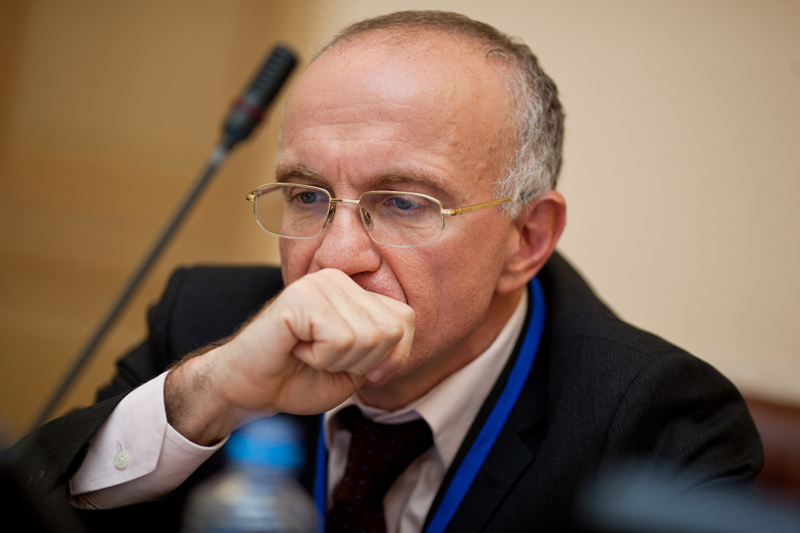
Isak Frumin, Doctor of Sciences, Scientific Director of the Institute for the Development of Education of the GU-SHE, I support the Law on Education. It, of course, is the result of a compromise and this is not always good. In what sense is it the result of a compromise? From my point of view, he gives not enough opportunities for innovation to courageous institutions, too regulates all aspects of activity, erects unnecessary barriers. But in general, it seems to me that this is a step forward compared to applicable law.
This is a compromise between those who see the law as a restriction on harmful or risky activities, and those who see the law, as creating opportunities for free activity.
The fears of opponents of the law that after its adoption of education in Russia will become worse that the high school will become weak, and the best professors will leave the higher school is absurd. These people have been scared for a long time, are still afraid of themselves and scare everyone. I recently asked one famous critic of the Ministry of Education and the Law on why he believes that this law is the last nail in the coffin of Russian education? And he tells me-because a free magistracy will disappear because of him. It's just absurd. The law guarantees a certain number of free places in higher education. And the state, of course, is interested in some of the free places to be intended for magistracy, because the magistracy just works for the labor market, to develop the economy. Close the magistracy is against the interests of the state.
How much did we say that we will only have a paid education due to the fact that autonomous educational institutions will appear? Please show where it happened? We have one of the highest coverage of budgetary higher education in the world, at the level of the richest countries. At the same time, I believe that higher education (for one student) is still underfunded compared to the countries with which we compete. But not to see that financing of general and higher education is significantly increasing is impossible. We are one of the few countries that during the crisis continued to increase education expenses. Yes, this is not enough, but it is not clear why this trend will suddenly change why this trend seems strange to me.
Now there is a presidential decree to bring the average salary in the field of education to secondary economics in the relevant regions. I must say that this is an absolutely radical step, since three years ago the average salary in education was about 65 percent of the average in economics. This is an unprecedented step. It once again shows the absurdity of fears of the reduction of state support for education. This is also confirmed in the draft law that provides these guarantees, more than previous laws. It provides not only social guarantees to people, but also guarantees of freedom of educational institutions.
As for the so -called list of ineffective universities ... The very idea of monitoring higher educational institutions is very correct, because we have the most autonomous higher education institutions in our country. I will exaggerate a little, but there are very few organizations in the world in which the team receives budget money and chooses a leader. The United States, which teach us democracies, could learn from us democracy for universities, because their rector at state universities is appointed by a trusteeship. And the Board of Trustees at state universities, as a rule, is appointed state Senate, the state governor, is nominated for a business community, and so on. And in this sense, they are extremely accountable and transparent. Our universities are incredibly closed. On what share of university sites will you find data on the budget of the university, accurate data on employees' publications, on entrance points for each exam?
Conducting universities monitoring, the Ministry for the first time decided to see how our universities look like a set of indicators and look carefully at a group of universities with low indicators. What is terrible in this? Of course, all this was done, frankly, somewhat awkwardly, in a hurry. However, in a hurry, not only the Ministry of Education, but also the leadership of the country is to blame, because in the presidential decree of May 7, 2012, unrealistic terms of solving this problem were set, from my point of view.
I am not a politician, but a researcher of education. My colleagues at the Institute of Education are trying on the basis of data to answer questions about what the current state of education is. Two years ago, we conducted at 26 universities (including, in very decent), a poll of students in which we asked them what they learned there. So, 16 % of the students we interviewed wrote, for example, that their knowledge of the English language worsened after studying at a university compared to the knowledge that they received in high school. What should this be done with students so that they have knowledge of the language acquired at school, worsen? In this sense, it seems to me that the ministry took a very important step in defense of our youth. Here you have to think about it.
The decree said that until December 15 it is necessary to determine inefficient universities. But at this moment there were no methods, no approaches, no organizations that could do this. As a result, of course, it turned out almost "as always." But on the other hand, it really turned out that there are universities where students go reluctantly (they have very low results in the exam), and there is no science there, and the salaries of teachers are low there. Of course, in this situation the question should be raised - what to do with such universities.
Look, at least in one case, the students of these universities protest? No, of course, because they perfectly understand that they are teaching them lousy there, and they lose their best years of their life there. Of course, rector and professors shout "Let's protect our universities." And whoever protects these boys and girls who went there to study, and there they are taught by the textbooks that were already yellowed from old age.
Pavel Kudyukin, Associate Professor of the National Research University Higher School of Economics: "A hard class model of education is built"
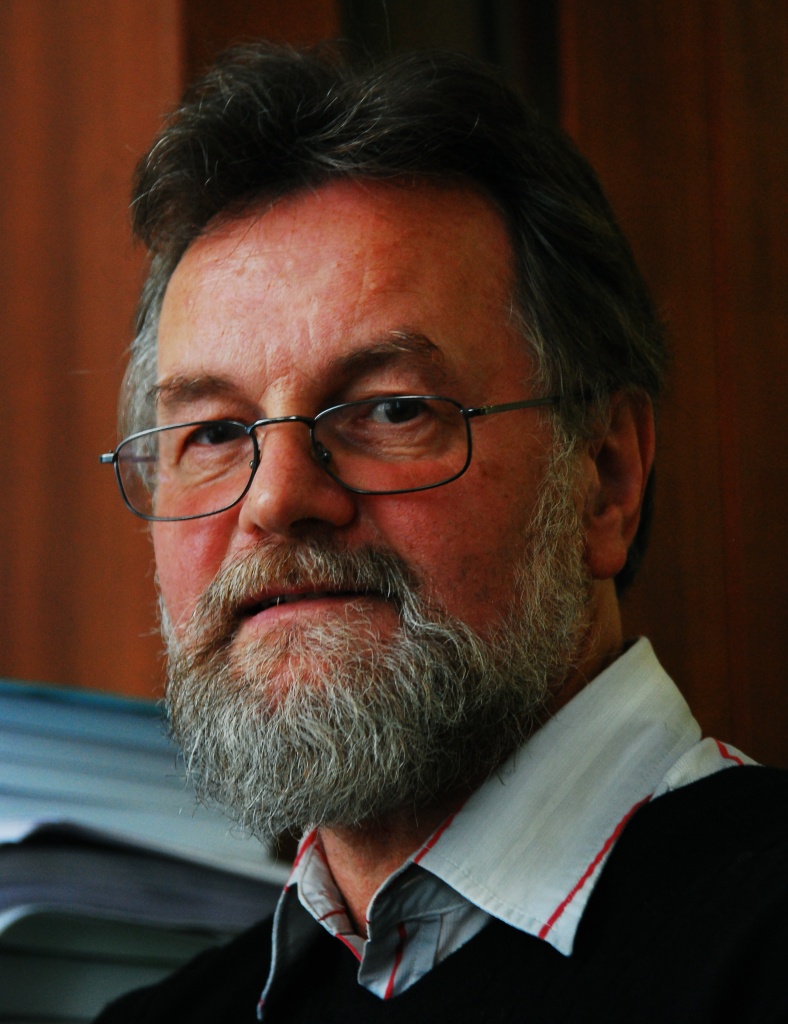 |
The law is murdered for the education system, which is already in a catastrophic state. He opens the way to social segregation in this area. One of the most important functions of education is to be a social elevator, to give the opportunity to capable of any public layers to occupy a worthy place in society. And the new law is building a tough class model, focused only on those who are able to pay for a quality education. The law clears the road for massive commercialization - it will intensify. The possibility of obtaining high -quality free education, both higher and general, is greatly reduced. There is money - your children will receive full -fledged knowledge. There is no money - do not blame me.
The number of budget places in universities will be reduced. Now it is calculated based on the population as a whole, in the new law - from the number of young people aged 17 to 30 years, which sharply reduces absolute numbers.
Most likely, the number of teachers will be reduced in both secondary and higher education, that is, the salaries will increase by increasing the load, and the Russian teacher is already transcendental - 800–900 hours a year. For comparison: in Poland, for example, 200 hours.
And finally, the appointment of rectors is finally eliminated by the autonomy of higher education: even in tsarist Russia and in Soviet times, albeit formally, but the deans and rectors were elected.
Photo on the main one: frame from the series "School" (dir. Valeria Guy Germanicus)