
Translated material
Sex, fashion and beauty
deprived of ideological and national connotations, believes Elena Myasnikova, the long-term general director of the glossy elaboration of Russia, Sanoma Independent Media, and now the vice-president of RBC
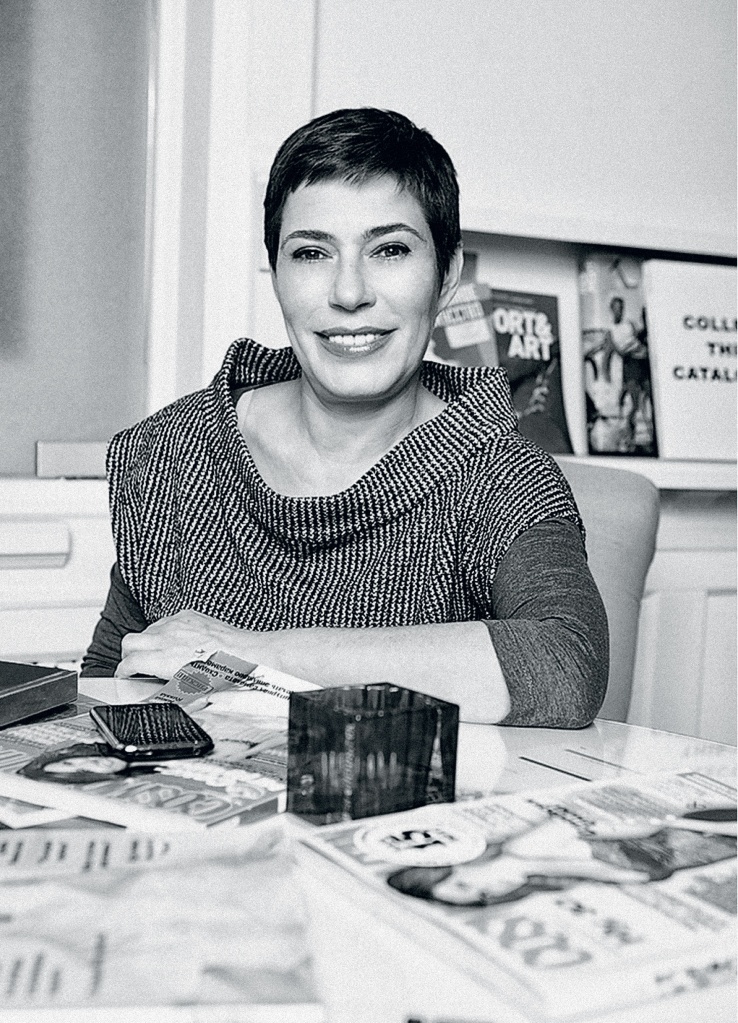
Elena Myasnikova graduated from the Faculty of Philology (Romano-German branch) of Moscow State University in 1986 in journalism since 1992-was the deputy chief editor of Europe magazine, which was published in Moscow by the Dutch journalist DSC Sauer. In 1994, she became the first editor-in-chief of the Russian Cosmopolitan (ID Independent Media), who, as a co-editor and publisher, was engaged until 2001 from 2007 and September 2012-the head of the Sanoma Independent Media publishing house. Now-the vice president and member of the board of directors of the media holding RBC.
You have just been elected to the Board of Directors of the RBC media holding: now you will explain to shareholders how to compete with a publishing house that has been given for almost 20 years?
If you take everything that Independent Media does, then he does not have direct competitors on the Russian market yet. But, of course, Kommersant is a competitor in the newspaper part of Vedomosti, in the journal is a Hearst Shkulev Media, which emits ELLE, Maxim and so on, and Conde Nast - GQ, Vogue.
As for RBC, this is primarily television, the Internet and yes, of course, a newspaper, a magazine. This is a public company that is trading on the exchange, and the shareholders want someone to have someone who knows the media business and could advise what it is worth developing, what is promising and what is not and what, accordingly, it is worth investing money. In the Council of Directors - it was from above, and not in operating management - there used to be no people with a media history, that's exactly why I understand it, I and the founder and chairman of the Sanoma Independent Media supervisory board) were there.
Sauer is the President of RBC and at the same time heads the supervisory board at Sanoma Independent Media (hereinafter - SIM). There is no conflict of interest in this?
This is a question for Sauer.
Business gloss
In one of the interviews after the resignation, you said that the “Independent Media” is “a fantastically stable financial business”. Rarely, one of the publishers of a printed product can repeat your words today.
Firstly, he is not the only profitable. For example, Hearst Shkulev is also profitable. And Vogue is profitable. Of course, I do not know their numbers - the share of profitability is 8% or 18%, but they are definitely profitable.
And what was the margin in your former ID?
I don’t know very different in different publications, but it has been about 15–20%. I think this is a good margin.
What share SIM occupies in our market?
It is very difficult to say - disputes forever, what to consider the market, but in glossy publications, SIM has 25% of the advertising market. In any case, from the list of gloss that is measured by Gallp.
Gloss - it is clear that he is all filled with advertising, and the Vedomosti newspaper?
It is significantly profitable for most of her life.
We have never, even in difficult times, even in crisis tried not to dump at advertising prices, because most publications, not all, but many who are part of the “Independent Media” are the leaders of their segment. The same Cosmopolitan is the most-most large women's magazine. "Popular Mechanics" is the largest popular science magazine. Many SIM magazines take first or second place in their segment, that is, no matter how advertisers cut advertising, they cannot bypass these publications. They are all included in the list that is mandatory for advertisers. And if in a crisis an advertiser should buy five instead of 15 magazines, then SIM publications are entering there. The same applies, of course, competitors - Vogue, GQ, ELLE. That is why, in fact, these publishing houses, even despite the crisis, retained profitability. And “Vedomosti” - if you are a bank and you must make an advertising campaign, you cannot make it without “Vedomosti”.
Then why did the Finnish Sanoma decide to get rid of you with Sauer?
She did not decide to get rid of us in any way.
"
Then Philip says that all these sisy-records, the girls are already sticking out of his ears, I can no longer
"
What happened then?
I just got up and left. Nothing Personal (nothing personal) - just Sanoma builds a vertical control system. This is a large publishing house, one of the largest in Europe: they are the largest in Finland, and by the way, they own the largest newspaper of the country of Helsinki Sanomat. They are in the Netherlands and in Belgium, in the Czech Republic, Bulgaria, Romania, in Ukraine. In short, Sanoma decided to centralize her assets, to develop uniform rules. This is what led to the reduction of powers and freedoms of local management not only in Russia, but also in other countries.
In Russia, they bought a glossy publishing house. Bought from Sauer. And this is the most glossy email in their portfolio. In most countries, they have a different kind of business, more similar to business Burds: weekly, TV guides, cheaper editions. Publications that mainly take sales of circulations and to a lesser extent by advertising. In our Independent Media, advertising income is 70% of the total income, and 30% - from distribution. In many countries, Sanoma, on the contrary, has less: from advertising, more from distribution. These are different businesses in nature. And when I realized that I practically cannot influence anything, then I left.
Do you regret it?
It's hard to say. This is my house, I have it with Dercum ...
built.
In general, she took a great part in its construction, and, of course, especially in the magazine. This is mine, dear. It was terrible to tear off from myself.
Esquire paradox
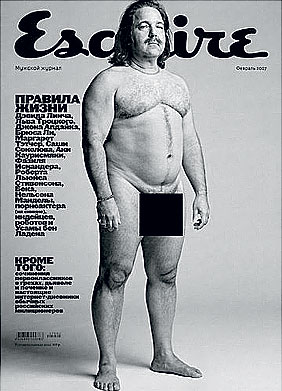 |
| Esquire magazine, February 2007 |
The departure of Philip Bakhtin from Esquire-is this somehow connected with the purchase of the Publishing House by the new owner? With him, the magazine was sharper.
Yes, this is not true: I perfectly remember the spring of the elections, when they had the “third term of the crook and the thief” on the cover - it was without Philip Bakhtin, six months after his departure. Sanoma never once said a word about content at all, and to some extent it was, perhaps, one of my grievances that they were not interested in content. My hands are drawn to snap, touch, touch the magazines. And it always surprises and upsets me when my colleagues do not have this griping reflex. Never units, political, non -political, artistic, design, never for anything - in this sense they have always been an excellent owner.
As for Bakhtin, he worked as the editor of Esquire for seven years. And he is an insanely free person, insanely in any way and in no way controlled, insanely creative and does not know how to sit on the pope exactly at all. Seven years for such a person as Philip, this is unthinkable. He was trying to leave twice. He is tired. And it was also obvious to the market that Philip was tired, and the magazine was tired for the last year. He was offered a huge thing: to create children's camps for thousands of places with the theater and other creative stories. I offered him to remain a columnist, he said: "Len, while I need to take a break from the letters."
How did it happen that the quite glamorous Esquire has become so politicized?
This is Bakhtin. He made FHM with us - this is like Playboy, we then sold it, and at that time we decided that we launched Esquire. And then Philip says that all these Sisi-records, the girls are already sticking out of his ears, I can’t get it anymore, my dream is “Esquire”. Okay, take the Esquire. And he did not hide that it would be a magazine, including about politics. Of course, the question was at the beginning: will the politicized publication be successful in terms of advertising? But you have to try it, you never know.
Were there problems?
We have never had conflicts with advertisers on the basis of politicians. There were others: Esquire, in addition to politicized, it is still visually shocking, anti-eyed: some old ugly naked men. And it happened that advertisers did not want their advertising to stand next to such material. And on this topic we had conversations with Philip: please, please, these members, moreover, elderly people under thick tumbles, let's not put them in the first third of the magazine, because the first third of the magazine is the favorite place of the advertiser, and let's transfer them to the middle or to the end, where, as a rule, less advertising. That is, we will not definitely all our beautiful machines, costumes and clock create such a visual frame. And Philip went to this, because this is not a political requirement, this is not a request to remove the material, but a request to move it somewhere in the middle, so as not to have a bunch of headache later, explaining where you put us.
Esquer immediately became profitable?
Well, no one at once is profitable - in the third year, say. But to make your politicized readers understand: we launched Esquire not at all because we wanted to have gloss with politics, but because we saw that GQ collected a lot of money, thick from advertising before our eyes. And then we had only Men's Health from male publications, but he is in another segment with another advertiser. And I wanted to take the Luxury segment, that is, conditionally “Kiton”, “Brioni”, “Prada”, Bentley, very expensive brands.
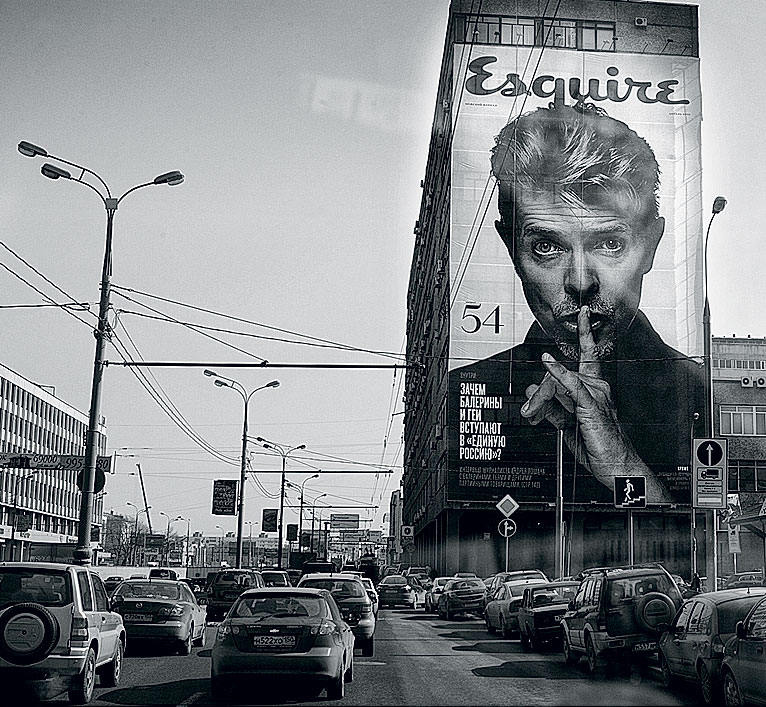
In 2009, this Esquire banner was dismantled due to the phrase on the cover “Why are the ballerinas and gays join“ United Russia ”
That is, products designed for young wealthy men?
Not necessarily young. Just in Russia, whatever you do - everything turns out an audience ten years younger than it should be. Advertisers also have some views on life, and often similar to the views of Philip Bakhtin. That is, many advertisers liked the gloss with politics. They understood that the Esquire was collecting an audience with high income, but with a worldview, completely different from GQ readers. This audience could be reached over the Internet, it can probably be reached through the newspaper, but in the newspaper Kiton costume will not look as good as on a glossy page. And through Esquire they took out this reader.
What is this reader?
It seemed to us that this is a wealthy hipster.
In December 2011, they went to Bolotnaya.
Yes.
Competitors newspaper
And how did the idea come to do "Vedomosti"?
Here I should have said that this is a question for Derus Sauer, because I had nothing to do with the launch of the newspaper. But the story is quite legendary, and I heard it from Sauer, that is, from the firsthand. The fact is that, in addition to Kommersant, there was no business newspaper in Russia. And Sauer loves newspapers. And at that moment, both Financial Times and Wall Street Journal wanted to enter the Russian market, their initiative - but each separately. And they separately came to Sauer. Both those and those agreed to do fifty to fifty a joint venture. But Derca was difficult to choose between these two newspaper giants, and he convinced them not to share the advertising market, but to unite. And the incredible happened: two publishing houses that compete with each other around the world agreed: this was the “Vedomosti”, where each partner has 33%.
How can you explain that the Russian authorities with their almost zoological anti -Americanism and anti -anti -Americanism and all - the West tolerate a high -quality newspaper that belongs to the British, Americans and the Finns?
The editorial policy is determined by the editor -in -chief. The editor -in -chief makes a product that belongs to FT and WSJ by 66%. Do you have questions for the shareholder? The Financial Times and Wall Street Journal is attached.
Then the people tasted a variety of freedoms, not necessarily political. By the way, political at that time was above the roof
"
Sauer remained in the observation council of Sanoma Independent Media because he is afraid for the "Vedomosti"?
I will not comment on it.
Sanoma can sell, as they say, to the structures of Mikhail Prokhorov his third in Vedomosti?
I think these are rumors.
Cosmo as a bearer of freedom
Now about Cosmopolitan that you launched. Let me tell you my story. In the 92nd or 93rd, I ended up in the office of George Green, Hearst Vice President, who was engaged in international projects: rushed with the idea of his magazine, even a name, a nightmare, as I understand, registered-“Life Life”, at that time it was very simple. Well, I set him out about style and so on, and then Green asks me: "Would you like to do" cosmopolitan "?" In response, I threw him about twenty minutes about the fact that the word “cosmopolitan” means in Russian-about the Stalinist repressions of the 1950s and about the fact that in life in Russia normal people with such a disgusting logo will not buy. Now your story.
Sauer then began a joint business with Hearst, and their first magazine was Cosmopolitan: just no other, probably at this moment, could still become profitable, because we still had all these highest brands and brands in the country. Of course, we had “L'Oreal”, “Esti Lauder”, shampoos with lipstick, that is, all cosmetics were in Russia. And (advertising) there was no fashion yet. Cosmo is the most successful magazine in the world. And he just took a beauty advertisement.
 |
| The first issue of Cosmopolitan magazine, May 1994 |
And how quickly Cosmo went here?
He paid off from the second number. My friend, colleague, wife, Sauer, Helen Ferbek, made the first issue and then legally remained co -editors for almost ten years. Then I also became the publisher, was responsible for the business of the magazine.
Have you had no doubt that you would find a buyer in Russia for a magazine?
My doubts were connected with another: the Philfak of Moscow State University, the Dutch language, taught at the Institute of Asia and Africa, parents of musicians, grandmother-doctors, everyone saw me as a professor, and I am a magazine with the word “sex” ... you can not explain how my parents reacted to this. And the second: fear, of course, was - it will not go. I remember that at the presentation at the Radisson Slavic hotel, the journalist asked me: “Everyone starts gloss, and everyone fails-two or three months and the end, are you not afraid?” I say that, of course, I'm afraid. The circulation of the first number, either 40 thousand, or 60 thousand copies, left a week. The second number was 80 thousand circulation, the third-160 thousand .. In the first two or three years, it reached 350 thousand. It reached a million to the crisis. One year in 2006-2007 we made a thick number, held a large advertising campaign and sold 910 thousand.
For me, this is still a riddle: a magazine that has half the covers the word “orgasm: how to achieve an orgasm in 10 minutes, in twenty” ...
The word "sex" more often. And this allows you to sell it for decades around the world by millions of print runs - thanks to a few very simple words. The "Cosmopolitan" has five main pillars. In the first place - relationships in the broad sense of the word: with a man (this is 80%), with a girlfriend, at work, and so on. The second is sex. Then fashion, beauty and career.
Can the same -sex love be?
May be. We had this in the magazine, especially at the beginning, as much as you like.
And in Russia they bought it then?
Then the people tasted a variety of freedoms, not necessarily political. By the way, the political at that time was higher than the roof - we started in May 1994, and pay 150 rubles for the next political freedom - it would not even be funny, it poured from all screens. And they just wanted and paid for this freedom. 150 rubles - it was very expensive for the regions. So, the old-time girls bought in a fold. Gallup measurements showed that the audience was 10-15 times higher than the circulation, that is, one copy was either handed over to each other, or bought one copy for a whole class. Now the multiplier is smaller.
And again: on the one hand - anti -Americanism, obscurantism, on the other hand, American philistine standards represented by Cosmo?
Sex, fashion and beauty are devoid of ideological and national connotations.
You were the editor -in -chief of the magazine “The Cult of Personality”, also gloss, but with brains. Why didn't he go?
This was the first attempt in Russia of an intellectual gloss, which proved very well that it is very difficult for an intellectual gloss in Russia to be profitable. The same famous investigations Vanity Fair are crazy money that we do not pay off. That is, we need already a promoted brand, like Esquire, to which the advertiser will come anyway.
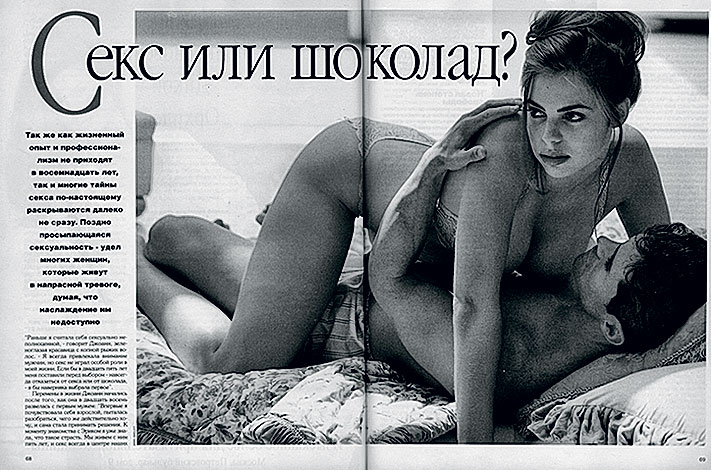
The first issue of Cosmopolitan magazine
About the advertiser. I somehow had to talk with a lady who sells advertising in different “Vogi”-the conversation was not in the Fatherland. So she told me that more pathos brands and with a large number of numbers on the label go to the Russian gloss. Is that so?
Yes. In the same American Men's Health - a magazine about a healthy lifestyle - there is quite average at the price of Levi's, and we have Strelson and Dolce & Gabbana, that is, quite expensive costumes. In Russia, brands are loved, as in Italy, and in the USA or Protestant Europe, especially northern, a demonstration of luxury is considered a bad form.
You are called one of the most successful media managers of Russia, but at the same time you have never had your own business. Why?
I am not an entrepreneur. I am not risky enough to ... I'm afraid to put everything on the end, lose and stay on the beans. I am afraid, and a person who has these fears does not start his business.
Were you not a shareholder of Independent Media?
No.
BW with Sauer maintained a relationship, despite the 20 years of joint work?
We have a very close relationship. His wife Helen is the godfather of my son.
And so you went to RBC together?
Of course: we are a good tandem. He is used to me, I got used to him. He is a global strategist, inventor, and I better deal with business logistics.
Two words about the future. Do you think the paper will die soon, the advertisement will completely go on the Internet?
I think that advertising will be on paper for a long time, but now there is an absolute fall in the advertising market - everywhere, and not just on paper. Of course, there is a redistribution towards the Internet, but this autumn, from the point of view of advertising, was not very good for the Internet.
Paper publications will die?
Absolutely - no. But, probably, in ten years, the printed on paper will become the subject of luxury, and then even with a rarity.
Photos: ITAR-TASS