
Translated material
Golem and robots
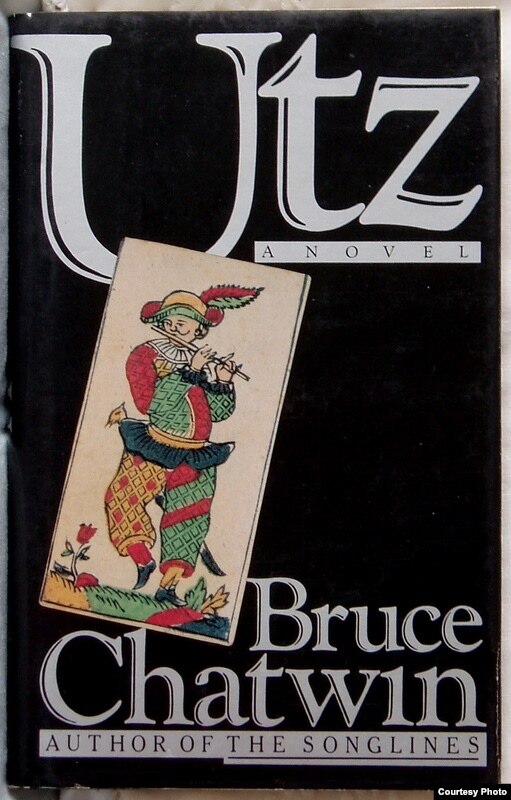
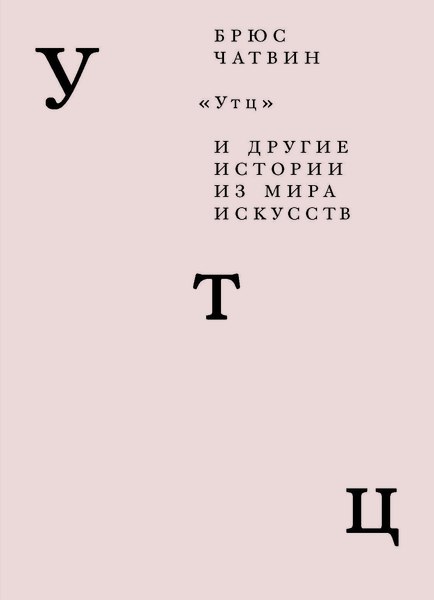
About the book of Bruce Chatwin "UTC and other stories from the world of arts"
In Russia, two books of Bruce Chatwin were translated - his striking travel notes “In Patagonia” and “The Paths of Songs”. The new long -awaited collection is entitled “UTC” - in addition to the novel of the same name, articles and memoirs, united by a through theme: reflections on human and art and collecting as the maximum form of these relations. “We gathered here today to bow to the captured image”: this is how the “moral of things” begins - the speech that Bruce Chatvin made in 1973 at the charity auction and which was published only after the death of the writer, but it is not for nothing that he plays the role of a preface to all texts of the collection. There, Chatwin formulates a theory at the intersection of anthropology, psychoanalysis and philosophy of art, about this kind: a person during evolution has not lost the desire for freedom, understood as a journey; At the same time, civilization made it settled, tied up the passion of things on the accumulation of things: he owns them, but he is enslaved by them - as one of the heroes of Chatwin says, “man is the sum of his things, even if we admit that there are small lucky ones who are the sum of the lack of things.” The ultimate expression of this conflict is a passion for art, perversive and inhuman in its very nature; I will note here only one important idea: "Estete is often subject to fatal addiction to everything related to violence.""UTC" - the story of the collector of the Meisen porcelain, the heir to the noble
Chatwin describes totalitarianism, of course, still cruel, still violating human dignity - but almost more absurd and therefore worthy of contempt for a civilized person: “He treats those who, risking to fall in bars, publishes his poems in a foreign journal. But it seems to him that the true heroes of this incredible life are still other people-not those who endlessly reproach the party and the government, but those who are silent, while remaining full representatives of European culture and civilization. “Their silence,” my friend said, “is a real spit in the face of the state, because it simply does not exist for them.” The position, discussion in the described times and causes a protest today - however with a venerable tradition. The same age as the peer of Chatwin, another journalist, who wrote about the decaying system, comes to mind-Sergey Dovlatov: “Brodsky created an unheard of behavior. He lived not in the proletarian state, but in the monastery of his own spirit.
He did not fight the regime. He did not notice him. And he did not confused about his existence. ” Here is the famous statement of Andrei Sinyavsky about stylistic disagreements with the Soviet regime. The ability to create a person makes a person, but the art is inhuman; The ring has no end.
“Forming his collection, the UTC tried to reflect all the features and features of the“ porcelain ”century: wit, charm, gallantry, love of exotic, coldness and carelessness - in other words, everything that was swept away by the revolution and dull into mud with soldier's boots.” Carelessness is the main word; carelessness can also be defined as the ability to put aesthetics over ethics. Humanity has almost lost this privilege during the recent history, and sometimes it alone gives a person freedom - a speech without which he is a golem. At a certain moment, the decision to ignore the regime itself becomes an important ethical choice.
It is clear that the author could hurt an attempt to reduce the novel to this, in general, the obvious layer. Fortunately, and here I would like to thank the AD Marginem Publishing House - in the Russian edition of the "Utza", the novel is placed in the context that is originally belonging, and this gives the reader a variety of keys to its interpretation.
In an early story, “The Property of Maximilian Toda”, the hero demonstrates another line of the same magnificent escapism. An adventurer, killer and passionate collector, American, in a hurry to become a citizen of the Reich after the declaration of the war: “I chose Germany for aesthetic reasons. I believed that war is the highest aesthetic experience of man and that only the Germans and Japanese understand this. Only they understood the structure of war; It was impossible to think about fighting on the other side. ” Mr. Tod recalls his invasion of Ukraine as part of the 24th Armored Division in the summer of the 41st, “Little luxury in my tank fit in my tank.”
Maximilian Tod-in turn, Doppelganger Ernst Yunger, writer, philosopher, hero of the First World War and the reflective witness of the second, at one time-the National Socialist (the article about him is called "Ernst Junier. Estetes in the war"): "He condemned Hitler as a petty functionary who did not understand the metaphysics of power, but not He did anything to stop him, believing that democracy is one way or another to the end and that the destiny in the Machine Age is essentially tragic: "The history of civilization is a gradual replacement of people with things." Remember this thought - for Chatwin it has become key. And recall the other, from the “morality of things” - about the traction of aesthetic towards violence.
War - this is the aesthetics of violence, aesthetics of male valor and (an important part of this myth) male love, which Freud called narcissistic. Estete goes to war to replenish his collection of trophies - things or exotic impressions.
As Osip Mandelstam wrote (whose prose, by the way, had a great influence on Chatwin), “Poetry, thunderstorms are useful to you! / I recall the German-officer, / and roses clung to his epes, / and Cerera was on his lips ... ". European culture needed to somehow digest the fact that in the second half of the twentieth century, for the first time in the history of civilization, the war became anti-ethical-to such an extent that people wondered whether poetry after the Holocaust was possible in principle.
Meanwhile, in a short period, another art appeared between the two world wars to replace the romantic art of individuality - the poetry of the collective organism, about which Bruce Chatwin writes in the essay “George Kostaki. History of the Soviet collector. " The Russian avant -garde sought to get away from a man and even destroy his image, having gone into an abstraction. According to the concept of Chatwin, the nomads called to return to the tents. To gain freedom from things, dropping the unnecessary memory of civilization from the ship of our time, destroy the useless aesthetics and see the beauty in the machine - which in this system is similar, in essence, the primitive tool of labor.
Chatwin writes in his essay about Mayakovsky, Tatlin and Rodchenko, but I want to quote the creative manifest by the father of the documentary cinema Dziga Vertov, “The Man with the Cinema” (that is, the machine operator located on the forefront): “It is a shame in front of the cars for the inability of people to keep themselves, but what to do when the unmistakable manners of the electricity excite us more than the indistinguishable rush of active active ones and decomposing lethargy of passive people.
We drank the joy of dancing on a sawmill clearer and closer to the joy of human dance.
We temporarily exclude a person as an object of filming for his inability to lead his movements.
Our path is from a picking citizen through the poetry of the machine to a perfect electric person. ”
According to Chatwin, the poetry of the car soon disappointed the Lefovtsy: “Mayakovsky is a good giant who was in the upper pocket of the fountain pen to show how modern he was, he went to America, said that she was good for cars, but not for people, and declared an amnesty Rembrandt, and then put a bullet in his forehead.” It should be noted, however, that this idea once looked a step forward along the path of humanistic progress. Friendly, first of all, Isaac Azimov, will say that robots are better than people. The robot does not have its own evil will and, by its very nature, honors three laws of robotics that do not allow a person to harm a person; People turn each other into heaps of meat. The trouble is that the car, in the end, is humanized in the image and likeness of its Creator (as it was sung in the Soviet song from the Second World War: “So-so,” says the machine gunner, / so, says the machine gun ”). And, like a person, rebels: in a futuristic idyll, an apocalyptic picture of the uprising of infuriated cars is always hidden.
The humanistic illusion of universal equality survived a great crash when gas stoves began to mechanically destroy people. Progress made a pasta somersault, and humanity, on the contrary, was automated - internally and externally: on the one hand - the devilish conveyor, which examined God's creations to spare parts in the camps of destruction: piles of shoes, piles of hair. On the other hand, the banality of evil, described by Hannoy Arenid, functionaries are the screws of this conveyor, parts of a well -established mechanism, deprived of their own evil will - devoid of will in principle.
If we talk about art in the language of religion (as European culture has done for many centuries), in reflection of Chatwin, you can see, for example, such a possible direction. A free person who tasted from the tree of the knowledge of good and evil has an initially abytic nature and often chooses evil - and the more he is more, the more he chooses. However, a person, devoid of choice, is inevitably granted to evil, he is a golem; As Baron von Utz says: “None of the early sources reports whether he knew how to say a golem. But he had a memory, and he had the ability to mechanically comply with orders. It was only necessary to not forget to give them out at equal intervals, otherwise he could get furious. ” Religion is arranged in such a way that God serves only on his own choice; Remove God, and the devil will stand at the switch.
The car is beautiful, because it is even more functional than a living organism, a “picking citizen” with its individual psychology, and therefore is a much more natural than woven fish, shells, swans and dolphins on a cloak of Rococo from the Utz collection - “monstrous deformity, if it were not for the violent joy that everything was imbued with and which really saved the situation.” Beautifully - natural, by ugliness we mean a deviation from the norm; The paradox is that the human mind is ambivalent and the greatest joy often gives him perversion, which is essentially and is art.
Art is an excess, the ultimate embodiment of a thing as an independent value. The person learned to create, having made the first tool, but he was made by civilized, according to the chartwin, the ability to store useless things; And here the Meissen porcelain can be considered an ideal metaphor. In the inhuman paradise of the ominous Mr. Tod, a “collection of rarities that Mr. Todd, acting by exception and obeying the needs of travel, have been stored to an ascetic set of first necessity” - this last word means a dead end of the evolution of art, useless by definition. The UTC solves the same equation differently - he is engaged in alchemy in order to "give porcelain metaphysical dimension and thus insure the collection, transferring it to a spiritual level in case the Communists decided to take it away." That is, we can say, collects in a granary in heaven.
After the death of the Utts, the precious collection is probably destroyed: it will not be expropriately expropriated by new Huns, because, having lost the warmth of the hands of the collectors, things become dead - which means that they should lie in the ground: the ashes that returned to the dust, which was speechless.
In conclusion, I want to quote the incredibly beautiful story of Donald Evans, an American artist who painted the brand of imaginary countries. Chatwin writes: “He was subject to bouts of craving for travel - and even invented a metropolitan city called Vanupids (“ Bosya Tramp ”) to convey his habit of wander around the world. Many artists cry that they are attached to their studio; Donald Evans could get a job in the station station. Probably, the very fact that his work can be worn in his pocket indicates his contempt for the arts and pretense of sedentary civilizations - the nomad's contempt for the pyramid. " Somewhere here is a happy deliverance.
Bruce Chatwin. “UTC” and other art stories: novel, stories and essays of different years. Translation from English - A. Aslannyan, D. Vedenyapin. M: "Hell Marginum Press", 2013
-

Barbara Babitskaya
Journalist, critic, translator, editor
Born in Moscow. She worked as a correspondent in the Russian Newsweek'e, editor of the Literature department at OpenSpace.ru, moderator of the Culture blog on Snob.ru, the editor of Colta.ru, and a school teacher.