
Translated material
The rich also cry
Market-2013: what to wait and where to invest
The Russian economy: the indicators are not bad, but there are problems - corruption, crime, renationalization. The famous American economist is about what awaits us in 2013
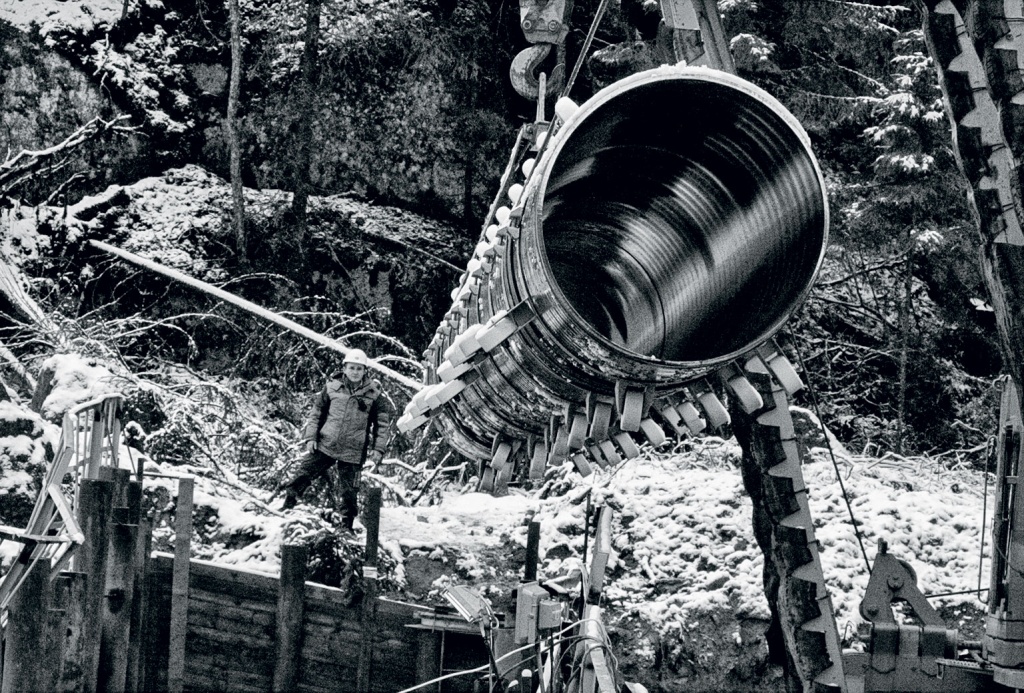
Russia increases investments in the construction of pipelines. Leningrad region, "Northern Stream"
It is rare when short -term and medium -term prospects are as much different as now in Russia. If you evaluate today's indicators and prices for resources, then everything is wonderful. If you think about what can be only in two to three years, then the situation is seen somewhat differently.
Good news ...
In a world where bad economic news prevails, Russia remains an island of excellent macroeconomic statistics. Although economic growth over the past ten years has slowed from 7% to 3.5% in 2012, but compared to Europe, where the recession is raging, this is quite worthy. Over the past year, the decline in economic growth in Russia was less than in Brazil, China and India. While most of the Western countries saves in every possible way on social programs, and the external debt is equal to GDP, the external debt of Russia is 10% of GDP, and there is even a small budget surplus. The current account of Russia is in a strong plus, its international currency reserves are approximately $ 350 billion, which puts it in third place after China and Japan. Inflation has decreased to 6%, which is evidence of macroeconomic stabilization ...
... and the news is bad
Despite the fact that, it would seem, it is better to be, there are reasons for fears. The main problems of Russia are corruption and crime, the situation with which is getting worse. One Russian friend corrected me, saying that the main problem is extortion. Corruption is usually understood as the sale of state property for personal enrichment, but in Russia there are people who require money only for their position in society, without providing anything in return. Extortion is the transfer of money to those in power. According to research, during the period 2000-2008, the nature of corruption has changed. The number of bribes decreased, but their size increased, respectively, their total volume increased, and bribery moved from the lower echelons of power to the highest echelons.
"
Over the past year, the decline in economic growth in Russia was less than in Brazil, China and India
“It is more and more popular the opinion that honest people are fools. And this is a very disturbing call for society. The current anti -corruption campaign shows ordinary Russians how corrupt their state is, but no improvements are expected, since the whole“ struggle ”seems to be directed exclusively at PR.
Corruption exists everywhere, but in Russia its roots are extremely deep. An example of this: the road network remained the same as in 1994, although the number of cars tripled. Russia and other post -Soviet countries, with the exception of Georgia, remain among the most corrupt countries in the world.
Pick up and divide
Renationalization of the economy is no less concern: the public sector is already producing half of GDP. The state-owned companies control, it would seem, only four sectors of the economy, but these are key sectors: energy, transport, finances and a defense-industrial complex. Huge money and power are concentrated in their hands, using which state -owned companies buy one private company after another. In turn, businessmen seek to leave the game and live on earned money, and preferring more comfortable places for this than Russia. Their logic is obvious: all the rules of the game in Russia are directed against business, it is dangerous to expand their job and better sell it now, until it is too late. Companies and oligarchs are buying up companies, which have enough funds for the acquisition of public services, including protection. As a result, the number of small and medium -sized enterprises in Russia decreased compared to 2008, and the obstacles for new ones have grown. Corporate administration has not improved at all, but, on the contrary, has worsened significantly since 2008, which is visible at the low cost of Russian shares. Obviously, competition in the Russian market is practically absent. Prices for the same goods in Moscow are three to four times higher than in Western countries. The reason is obvious: most state and large privileged private companies are monopolists, for which ordinary consumers pay. Together with competition, the pace of development and innovation is reduced.
Thus, Russia becomes more and more dependent on energy tariffs, and this is a dead end. Gas and oil production are close to stagnation, and after nine years of high prices, they are likely to cheer up sharply.
Woe from wealth
The Russian energy sector can become the main headache of Russia, as happened in the early 1980s. Thanks to the shale revolution in the United States, the prices of American gas are approximately 1/4 of the prices of Gazprom. Liquefied natural gas from Qatar and other countries, which was intended for the American market, is now going to Europe. The most likely scenario is a decrease in prices in the European market by a third, which will hit Gazprom, which brings approximately 7% of Russia's state revenues.
Instead of the fight against corruption in Gazprom and the cost of reducing costs, the Kremlin makes exactly the opposite - increases the infusion of pipelines into the construction of pipelines, which is considered one of the most corrupt industries with possible “kickbacks” of 70%. The Kremlin in every possible way breaks through the construction of an unnecessary, but insanely expensive “southern flow”, as well as two new branches of the Northern Stream, completely ignoring the changed conjuncture and revolutionary changes associated with shale and liquefied gas, as well as what is happening on the Chinese market.
"
Thanks to the shale revolution in the United States, the prices of American gas are approximately 1/4 of the prices of Gazprom
In addition to this, Gazprom decided to develop the Chayanda Gas Field in Yakutia in order to export liquefied natural gas to China, but due to the astronomical value of this project-$ 65 billion-it will hardly be beneficial. Gazprom, whose market value is only more than $ 100 billion, plans to annual investments of about $ 45 billion during The next five years, while the income that has been $ 44 billion last year, can simply evaporate It is controlled by the state, the effectiveness and profitability of private companies that are currently working, as they say, the fish rot from the head.
Rosneft can hardly successfully finance its new acquisition, but, undoubtedly, lies a significant reduction in taxes. Given that the oil sector brings about 40% of the state entrance, this will hit a lot on the budget. The current mistakes in the oil and gas sectors will surely lead to the loss of the fifth part of the state income in the next two to three years, which is extremely dangerous for the current government.
In the dry residue
Optimists believe that in the case of an increase in the crisis, President Putin will act carefully. But the trouble is that Russia's problems have a deep systemic nature, and the necessary measures will be taken too late. Fighting aggressive corruption “upstairs” is so difficult, but the longer the former people are in power, the more difficult it is. Usually a real fight against corruption begins with a change in the regime.
So, despite the excellent macroeconomic indicators of today, the prospects for Russia do not look radiant. I don’t remember such a depression that I saw in Moscow when I was in December in December. This is very reminiscent of Brezhnev times. Together with the trends in the global markets, everything looks even worse and suggests that the current regime in Russia will not live long.
Market-2013: what to wait and where to invest
Analysts predict GDP growth not exceeding 3.5%
Text: Svetlana Lokotkova
Expectations
Chris Wacher, chief analyst at the Sberbank Investment Research strategy, believes that Russia's GDP in 2013 has a chance to grow by 3.5%-even if the oil price is lower than $ 100 per barrel. However, Alfa-Bank expects GDP growth by only 2.8%, and in the AFOREX financial company-at all 2.2–2.4%.
According to Natalia Orlova, the main economist of Alfa-Bank, in the second half of 2012, the growth rate of production slowed to 2%, and corporate lending decreased from 26% to 14% (year by year).
Financiers also note traditional pain - reduction in oil prices : since the beginning of 2012, it has already fallen by 3.5%.
Inflation: Sberbank Investment Research analysts predict its level of 5.5–6% by the end of next year.
If this happens, then the Central Bank can go in mid -2013 to reduce the key interest rate, which, in turn, stabilizes consumer loans . The head of the BCS financial group, Andrei Ivanov, the deputy chairman of the Lanta-Bank battery, Irina Lynes, agrees with Weefer. They believe that the fluctuation of interest rates on loans will not exceed 1.5 percentage points in relation to the current levels. BCS also predict a slight decrease in mortgage loans. However, Natalia Orlova from Alfa Bank looks at the problem of interest rates skeptical. In her opinion, despite a certain weakness of credit demand, the bets in 2013 will continue to grow.
Where to invest?
Promotions: Natalia Orlova believes that the stock market in 2013 is hardly beneficial: “This is due to the fact that most investors in a situation of uncertainty cannot make clear decisions to manage their portfolios and prefer to stay in the assets that already have.”
According to Andrei Ivanov from the BCS, the stock market in the coming year will grow by no more than 15-16%. Significant growth potential in BCS is expected in the consumer sector, in banks, in non -ferrous metallurgy, in particular in the shares of Norilsk Nickel, which solved its corporate problems. The steel sector may be the least stable, since here all year there will be an obvious dependence on the news background from China.
Oil: the oil and gas sector, for oil prices in the range of $ 100–120 per barrel of the Brent brand, will show, according to Ivanov, the average market dynamics.
Gold: its quotes, they think in BCS, can grow by 15%, which, taking into account the reliability of investments (compared to the stock market), is a very good result. Chris Weefer adheres to the same point of view: “In 2012, gold showed not too good growth. But in 2013 there is a hope to catch up, since the US dollar weakens due to the aggressive policy of the US Federal Reserve of the Federal Reserve. ”
Bonds: Chris Weef recommends in January - April 2013 to make a choice in favor of ruble bonds. And the stock market should go no earlier than spring - early summer 2013. If he is right, then brokers will have to abandon their unwritten rule “Sell in May and Go Away” (sell in May and leave).
Photo: ITAR-TASS