
Translated material
New Year of Putin
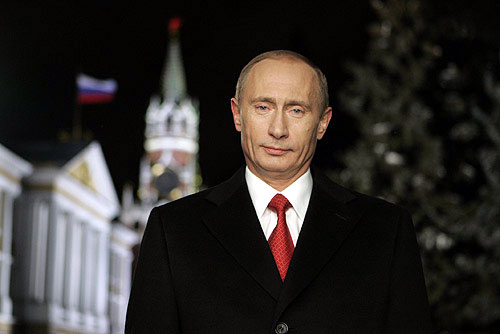
Each New Year is the time of expectations and forecasts, which left the 2011, in the sense of a purely political, especially grateful. The anxious feeling of the “devil-know-well-next” visited then almost everyone who, in one way or another, monitors the domestic political processes in Russia. The controversial “castling” of September 2011, and then not without effort, but with large political costs for the authorities, the conducted elections to the State Duma angered the population of the capital (and not only).
On December 10 and 24, the most massive rallies have been held since 1991 in the recent history of Russia. According to various estimates, from 50 to 100 thousand people gathered on Bolotnaya Square and Sakharov Avenue (the organizers believed that even more, Moscow Central Internal Affairs Directorate believed that 20-30 thousand). The political agenda, which, according to the authorities, was fully controlled by the Kremlin, was overnight overnight. Strictly speaking, it was on December 10 that the new, 2012 political year has come.
The street imposed a real fight in the information field and seriously arose the question of the near future of the country. Moreover, in the wording of the type “And whether power will be held in general” and “In two or three years, all this will crash” (such formulations could be heard not only from regular revolutionaries and people sympathizers ) . Each of the political players in these circumstances tried to invent a new new strategy and tactics of actions, as if, in the opinion of the participants in the events, a new reality.
Vladimir and his team
The new year 2011, Vladimir Putin met in the Prime Minister’s chair and “without five minutes of the president” after the historical congress of “United Russia”, at which Dmitry Medvedev renounced the throne in favor of the elder, as it was still called Tandemocrat. Therefore, the risks of street protest for the authorities were perceived, first of all, as the risks of the prime minister himself. The authorities themselves, in principle, fully supported such an interpretation. Vladimir Putin filed the protesters with his not quite timely rhetoric about “Banderalli” and “small denyuzhka” on a straight line, federal television channels directly described a rally on Sakharov as antiputine, and so on.
After rallies to the AP from the Cabinet of Ministers headed by Putin, faithful Putinites were delegated in the person of the longtime associate Sergei Ivanov, who headed the department, and Vyacheslav Volodin, who was designed to oversee the domestic policy in the administration of the future president.
Volodin took up his work with his inherent enthusiasm: the Kremlin did not dare to go to the option of the presidential elections in two rounds to “let off steam” (such options were discussed). On the contrary, it was decided to achieve at all costs Putin’s victory with the maximum result. Although without very large-scale falsifications-after all, Vladimir Putin promised to hold the elections “honestly”. Just an administrative resource without direct and large-scale falsifications should have been enough and as a result was enough: de facto unpleasant elections in any case would bring victory to the most popular of the candidates.
Feeling already on the eve of the presidential election that in the short term the metropolitan protest (by that time it became more or less clear that it was mainly matured in large cities, and basically localized in Moscow) does not threaten the loss of power or other serious political risks. In addition, it was clear that it was a rather meaningless occupation with protesters. They either do not respond to signals from the Kremlin at all, or perceive them frankly hostile. In the Putin campaign, the authorities focused on contrasting protest and the “Putin majority”/“rest of Russia”. “Guys from Nizhny Tagil” and “Swamp Plague” - the Kremlin political technologists actively contrasted the protest of the “non -test”, which, according to their theory, stands for stability and, therefore, for Putin. The traditional Putin’s electorate did not fail - teachers, military and other security forces, pensioners, prisons and nationals provided a confident victory in the first round by the non -alternative Putin.
The problem of protest, however, remained on the agenda, and the Kremlin, having gained courage and calmed down, decided to change tactics and stop trying to somehow agree with rebellious areas. Namely, resort to the tactics of the split, intimidation and pressure on the protesters. On the fact of the riots at the rally on May 6, more than 10 people were planted, and criminal cases were instituted on some “swamp leaders”, and antiperestic laws were adopted. This traces the specific tactics of the new Putin administration: it is incapable of miscalculation of actions a few steps forward and therefore acts reactively and therefore quite rigidly.
Instead of predicting problem points and early preparation of solving problems, the current Kremlin uses various punitive means available in its arsenal - power, information, legislative. The procedure for their application varies from case to case. The “swamp business” began with force pressure and (as Protestants believe) police provocation. Then, information processing, tightening of laws and again force pressure followed. In the case of the “Udaltsov case”, the “Documentary Film” “Anatomy of Protest-2” was first shown, then criminal cases were instituted. The information campaign preceded the resignation of the Minister of Defense Anatoly Serdyukov.
The Putin team is generally stable - there are few new names and they are not in sign positions. Almost all people who had left the Cabinet of ministers followed Putin to the Kremlin to various positions of assistants, advisers and heads of the presidential commissions.
In the presidential administration, on almost all key issues, new departments and commissions were formed, intersecting with the spheres of the action of similar relevant ministries. The former Minister of Education Fursenko took up education, ex -minister of transport Levitin - the development of the Moscow transport hub (though in an insignificant position of an adviser), the former head of the Ministry of Economic Development of Elvira Nabiullin - economic issues, the former curator of TEK Igor Sechin - the Presidential Commission on TEC.
Even the extremely unpopular Minister of the Interior Rashid Nurgaliev received the status post of the deputy head of the Security Council. Of the rest of the security forces, Putin did not touch anyone at all.
It is not surprising that this team primarily demonstrates loyalty to the president himself, harshly competing among themselves for access to the body. Professionalism here is not particularly important, and mistakes are simply inevitable. However, any request of the leader is executed even with some kind of inappropriate sometimes overwhelming, as it was, for example, when adopting a response to the “Magnitsky Act” adopted in the United States.
Between the white house and the red wall
Dmitry Medvedev, sacrificing the presidential chair, bargained his position of prime minister with Putin: other movements within the framework of the bureaucratic machine, presumably, would look completely humiliating. And Medvedev’s non -power in the layout of the Putin elite of the third era was completely unthinkable.
Only now the Premier chair does not at all suggest, according to the Russian tradition, that the bureaucrat sitting in it will have real political weight. Medvedev seemed to show optimism in this sense, hinting in every possible way that he would decide a lot, almost more than he decided as the president. The office formed at the end of May seemed to confirm such a position. Almost all Putin’s personnel were cleaned from the government, with the exception of the first deputy prime minister Igor Shuvalov, and replaced by the personnel of Medvedevsky or Medvedev recommended by the ex-assistant president and the deputy prime minister of the new government Arkady Dvorkovich and the head of the apparatus of the new office Vladislav Surkov).
However, as already noted, almost parallel bodies were organized in the administration under Putin, designed to deal with strategic issues. This made inevitable a hardware conflict between the administration and the government. This conflict was most clearly and most publicly manifested in the tedious and still incomplete confrontation of the curators of TEK - the new Arkady Dvorkovich and the old Igor Sechin.
Sechin as the secretary of the Presidential Commission on TEC and at the same time President Rosneft and Rosneftegaz proposed a plan to reorganize the energy and oil industries, which implied the de facto consolidation of state coactives in the framework of Rosneftegaz, that is, under his, Sechin, control. Dvorkovich, whose industry reforming the reforming scheme caused bewilderment, answered this with his own plan, which leaked to the press and where a completely different reform scheme was supposed, and Sechin’s plan was harshly criticized, as expensive and essentially pipe.
In other directions, the Medvedev government has not yet occurred with the administration of Putin (or they have not poured into public space), but in September Putin criticized the work of three ministers of the office - Minister of Labor, Maxim Topilin, Minister of Education Dmitry Livanov and the head of the Ministry of Regional Development Oleg Govorun. The latter to criticize, as it seemed unfair to him, answered asymmetrically - laid an application for care.
At the end of the year, the ministers of Medvedev’s office unexpectedly dispersed from the AP on the adoption of Russian orphans by the Americans. Profile ministers Dmitry Livanov (education) and Sergey Lavrov (Foreign Ministry), as well as the Deputy Prime Minister in Socialist Olga Golodets, criticized the law. Dmitry Medvedev himself joined after thoughts after thoughts. The Kremlin, in the person of the chief in politics of Vyacheslav Volodin and Putin Putin Dmitry Peskov, “noticed” criticism from the government, but did not stop pressing the frankly stupid law through the parliament from this.
The further fate of the Medvedev government and the prospects of the Prime Minister himself are extremely vague. Estimates vary from “to the first crisis” to “Medvedev definitely sits down the Putin term” with the intermediate date “in two or three years all this will crash”.
The lower became like the upper
The state Duma, elected with adventures, turned out to be just the same as it was represented before the election. The majority holds United Russia, periodically calling for their banners the “armored train” of Vladimir Zhirinovsky (for mass) standing on the spare track. However, even taking into account the votes of loyal Zhirinovites in the first half of the year, there was no power in power, but there was no constitutional majority in the State Duma at all. For the candidacy of Dmitry Medvedev, only 299 deputies-United Russia, Zhirinovtsy and several settlers, voted for the prime minister. But for three hundred, the parliamentarians failed to switch, although the AP, one must think, was not very tried for the sake of the former boss.
Everything changed when the Kremlin decided to push laws against rallies and other democratic freedoms through parliament. Deputies from the opposition - first of all, flirting with the protesters of individual Socialist -Revolutionaries and a number of communists - even tried to block the work of the parliament, making hundreds of amendments to the response law on rallies. United Russia with great difficulty was able to adopt the law within the time allocated by him in the Kremlin (it was required to adopt it until the next rally on June 12 “in order to avoid”).
The demarche of parliamentarians, which was never observed in Russia, did not like the Kremlin very much and a rather tough negotiating process began. The following response laws (about NPOs, Internet freedom, and so on) were adopted with much less resistance. Then, to explain repressive practices, the authorities actively began to use the motivation “for the sake of children”.
For a boring effect, the Kremlin also decided to take revenge on the deputies-thoughts and punish the most zealous of them. As a result, Socialist -Revolutionaries Gennady Gudkov lost his mandate formally for doing business, which deputies are prohibited. However, the United Russia also went to the ritual victim and kicked out one of their rear -offers with the same wording.
The deputies perceived the signal and all subsequent power initiatives from among the priority for the Kremlin are accepted almost unanimously, including, for example, the electoral toxic “Law of Dima Yakovlev”. In the third reading, despite the public protests, 420 people supported. True, among the remaining 30 that the law did not support were three brave united Russia.
Where such a unanimity is not in a novelty, it is in the Federation Council. The same scandalous anti -sonsation law, like the rest of the power initiatives, was supported unconditionally - without abstained.
When Valentina Matvienko came to the post of head of the Council in 2011, she actively promoted the idea that it was time to increase the political weight of the upper house (read - and the weight of Valentina Ivanovna itself). You can state - nothing came of this venture. Everything was reduced to a change in the procedure for forming the chamber, but this is a formal procedure and few, except for the senators themselves, is interesting. In addition, a new order, having not yet entered into force, was already subjected to revision: Vladimir Putin somehow hinted that it would be nice to think through the direct elections of senators.
Governors: Sometimes they return
The return of direct elections of the governors was perhaps the most significant result of the capital's protest in the field of official and public. Although the authorities say that the reform has been prepared for a long time, it was directly related to rallies: without pressure from the street, the Kremlin could not go to the return of the elections.
Dmitry Medvedev promised to return the elections immediately after the first rallies and, oddly enough, kept his word - he was still sitting in the Kremlin, and the deputies already resolved the issue. However, the elections were returned not entirely straight. Obeying Putin’s desire, the authors of the law rewrote the Medvedev concept and inserted a “municipal filter” there (mandatory gathering with a potential candidate for signatures of municipal deputies of the region). This greatly complicated the access to alternative candidates. It turns out that only representatives of the Communist Party can be everywhere in the elections.
In addition, even before the law entered into force, the Kremlin and the President Dmitry Medvedev was deployed almost the largest cleaning of the governor’s corps, reassigning or replacing about a quarter of regional chapters, not counting the replaced over the previous year. They changed, of course, where the greatest problems had the greatest problems, that is, governors with a low rating, in protest and depressive regions, and so on.
Nevertheless, in the fall, the inhabitants of five Russian regions at once were able to vote in the first governor's elections since 2005. In the three regions - the Belgorod, Amur and Novgorod regions - the authorities did not threaten anything, and the chapters re -elected without any problems. In Belgorod, the opposition, represented by local communists and Socialist -Revolutionaries, refused to exhibit candidates, because it was a clear dead thing to compete with Governor Savchenko.
But in Ryazan and Bryansk, the authorities had more complicated. In Ryazan, the problem was solved by exchanging the participation of a dangerous candidate in the elections for a place in the Council of People's Commissars. In Bryansk, the campaign went according to a tougher scenario: the current governor, a competitor, even managed to withdraw from the elections in court (though the Supreme Court canceled this decision). Nevertheless, a candidate from the authorities won in Bryansk. Thus, the match for the Governor's Cup ended with the “5: 0” in favor of the Kremlin.
The next election series will be held in September 2013, and it can be more dramatic. Unless, of course, the elections will save the elections. The Kremlin is very seriously considering the plan to return the appointment of governors, and Putin even talked about the return of the destination system (for individual regions, apparently, Nutzavnomium) at a press conference. Speakers, probably, may not choose, but will the Kremlin and everyone else will be equated with them? There is no answer yet. Maybe we will wait for it in 2013.
Another question for which this year could not be achieved - this is decentralization. The authorities have repeatedly declared that it was wrong to collect all powers and money in Moscow and at the federal level. In fact, it turns out that if Moscow with the regions is ready to share something, then rather powers or unpopular taxes (say, give an automobile tax or tax collection).
Improve coordination with advice
The new actor participating in the formation of the political agenda this year was expected to have a non -parliamentary opposition. De-factor appropriating the right to speak on behalf of the protesters (there were no other people who wanted to), the most active figures of the "non-systemic opposition" became indeed the "leaders of the swamp". Their recognition of both the protesters and among the rest of the Russians has grown significantly over the year, they began to show them, although mostly in a negative way, on federal channels, the authorities could no longer lose the factor of their existence from accounts.
Several prominent oppositionists were even invited to meetings in the Kremlin, the most status of these meetings was “the meeting of the president (then) Medvedev with representatives of unregistered parties.” As the Kremlin found herself from December shock, the opposition began to crush in various methods.
The opposition themselves showed a well -known political passivity. They could not expand their support and accumulate protest potential. The number of protests compared to last December has decreased significantly, although it is noticeably higher than similar opposition gatherings on the triumphal square on the 31st.
The decrease in the number of rallies to a certain extent prompted the authorities to more active actions against the protesters. The opposition was not able to contrast this. Dictating the agenda in early 2012, by the end of the “Bolotnaya leaders” they returned to the original position: they now react to the agenda that the Kremlin imposes on them.
The rocked elections to the coordination council of the opposition, designed to legitimize the informal “Bolotnaya’s leaders”, could not even correct this with pathos. The election was attended by about the same number of people, which went to rallies in December 2011. What gives moral right to representatives of pro -government propaganda and officials to say phrases like "Who is this bulk?"
The opposition almost ignored the “real” elections in October. Only Evgenia Chirikova took part in the mayor of her relatives Himki (and failed), and Vladimir Ryzhkov with his Parnassus tried his luck and made his way to the Barnaul City Duma (but, being alone, refused the mandate). In general, the opposition leaders were not able to justify the expectations of them: for them the year 2012 was the year of lost opportunities, and there are few hopes for a sharp strengthening of their positions.
What is the coming year preparing for us?
All players of the political glade have a window of opportunities. Vladimir Putin Sorotovyshchi can strengthen repressions against political opponents or not to do this, the opposition of all stripes can give battles of local importance of power and even hope for success, and so on.
Finally, much depends on the first person. If rumors about the deterioration of Putin's health were founded, then the king in some future can seriously start playing a retinue. The mental state of the president is also an important factor. If all these “spiritual scrapers” from the President’s Epistle by the Federal Assembly were not only rhetoric, then “Orthodox authoritarianism”, which so far was only a horror story for liberals from left -handed marginals such as Prokhanov, can really become a reality. What will be the Kremlin’s policy then is difficult to imagine.
Apparently, the country's leadership gradually begins to believe his own propaganda and is no longer very looking at reality. The life of the rulers in the invented world - this is probably the main political risk of the coming year.