
Translated material
Lavrov: Russia cannot force Assad to leave
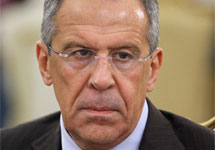
Russia cannot change the position of President of Syria Bashar al -Assad, who intends to remain in power to the end. About this, as RIA Novosti betrays, said the Foreign Minister Sergei Lavrov after negotiations with the special representative of the UN and the LAG on Syria Lahdar Brahimi.
Lavrov emphasized that Assad repeatedly publicly and non -publicly announced that he was not going to resign. “There is no way to change this position,” said the head of the foreign policy.
Lavrov urged representatives of the Syrian opposition to leave for a while the requirement of Assad's immediate care and formulate a "constructive agenda." Russia is open to contacts "with all Syrian sides without exception," the minister noted. He hopes that "our position as a result of such contacts will be more understandable, because there are attempts to incorrect this position to interpret"
Lavrov again confirmed that Moscow would not support the UN Security Council of the UN Security Council under the UN Charter of the UN Charter, which implies the possibility of strict economic measures and even the use of force in relation to those countries whose politics porns the threat to the international world and security. “We really oppose the resolution on the seventh chapter, as it will open the way for external international intervention,” the minister said.
Brahimi, in turn, denied the information that he came to Moscow in order to achieve support from Russia to support a peacekeeping mission in Syria. At the same time, he emphasized the importance of international efforts to resolve the conflict. "The question is not to make any cosmetic changes in Syria, we are talking about deep changes. I believe that the Syrian people should make an appropriate decision. Nevertheless, they cannot start the political process on their own. They need assistance from the outside. I believe that the duty of the international community is to provide such assistance," the special representative said.
Brahimi expressed the hope that next year it would be possible to achieve settlement. Lavrov supported the optimism of the special representative, noting that the conflict should be completed by the "political process in the interests of the Syrian people, in the interests of the region and international law."
On the eve of the head of the National Coalition of the Syrian opposition, Ahmed Muaz al-Khatib refused a trip to Moscow. He demanded from Russia a "clear condemnation of crimes committed by the Syrian regime" and the abandonment of the support of Assad. The opposition leader added that if this condition is met, then the coalition led by him can go to negotiations with Russia, "but only in the Arab country, and if there is a clear agenda of negotiations."
On Friday, through the Russian Embassy in Egypt, Hatibu was transferred to the meeting. The deputy head of the Ministry of Foreign Affairs, the president’s special representative in the Middle East, Mikhail Bogdanov, said that Russia was ready to meet both in Moscow and abroad, including Geneva or Cairo.
On December 22, representatives of the Syria National Coalition said that they would not enter into any dialogue with the Assad regime and are ready to negotiate with him only on the mechanism of transfer of power. Today, more than 130 states recognized the national coalition of the Syrian opposition to the only legal authority in the country.