
Translated material
Our bread is pressing
Alexandra Kateman [1]
Our bread is pressing
(From the history of my family) [2]
Our Father, even if in heaven!
Yes, your name is hooked
May your kingdom come
May your will be, as in heaven and on the earth.
Our daily bread give us now ...
When I was still very small, I somehow begged my mother to show me the daily bread, which I knew by prayer. To this end, we went to the bakery. It turns out that I had my own image of the daily bread, because when my mother showed me a loaf and said that it was he, I did not agree. “No, this is not an urgent bread,” I said confidently. And the baguette, and sweet buns, and even a white “brick” - all this, in my opinion, did not fit under the definition of the daily bread. Finally, having sorted out almost everything, my mother found for me some small gray breads, and only in them I finally recognized the “daily bread.” Of course, then, at four years old, I did not know that the daily bread was not only bread. That this is our daily food, which we eat at home, often without thinking why this dish is preparing in your family. The daily bread connects us with our relatives, with previous generations, with his people ... It is this connection that gives us strength and confidence in life. Family menu is the most visual family tradition. As a relic or family legend, it is carefully preserved and transmitted from generation to generation. In our family there is no culinary book with family recipes, they are quite simple and therefore transmitted orally. But almost every dish has its own story associated with certain people and events. It is usually told at the common family table and entails other stories and memories. After a meal, we sometimes reveal the family albums with photos to look at the participants in those events and remember something remarkable. I build my story in a chronological order, starting with a description of the pre-revolutionary dish that is being prepared for us. I assign my grandmother’s memoirs about the blockade, which are taken from the head of her book about the Great Patriotic War, and grandfathers, and grandparents, and grandfather The story of which I also use. These stories that they considered all their lives the most delicious - the simplest dishes, almost inedible from a modern point of view. I will tell about the dishes of the era of stagnation. I recorded the memories of this era according to my mother’s stories. The description of some dishes related to the memories of my family members, I want to show that the history of the country as a drop of water was reflected in the history of our separate family. In turn, the fate of the people is formed from such individual destinies.
"Nedopad" - the prince's favorite dish
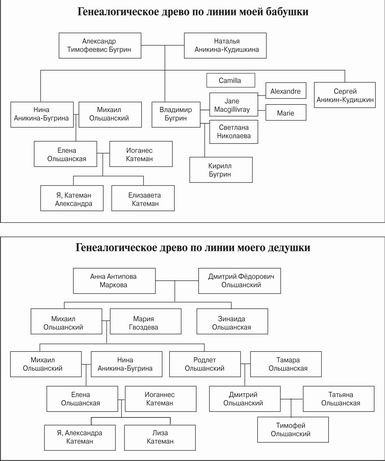
In our family, a dish called "Nedopad" is very popular. This is fried with onions, salt and pepper with a crumbly minced meat, in which sour cream is added at the last moment of frying. This is a very hearty and tasty dish. My great -great -grandmother taught me to cook my great -grandmother, that was my grandfather, and he was my mother. And Prince Alexander Petrovburg, the uncle of the king, loved this dish. He was prepared for breakfast by the “underpay” of the cook, my great -great -grandmother Anna Antipovna Markova. Her husband, my great-great-grandfather Dmitry Fedorovich Olshansky, was a non-commissioned officer in the tsarist army. Apparently, he showed himself well the economic part, for which he was invited by the prince to the position of manager to his palace (Palace Nab., 2, now this building is occupied by the University of Culture and Arts). Anna Antipovna and Dmitry Fedorovich were two children: Mikhail and Zinaid. The servant lived in the basements of the palace, and their childhood passed there. My great -grandfather even remembered the parades on the Marse Field, where he saw the heir to the throne in a sailor suit.
Pie with mushrooms
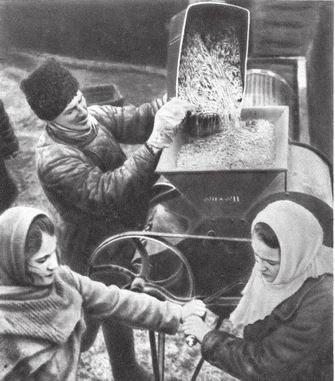
A great -great -grandfather died before the revolution, in 1915. My great -grandfather, Mikhail Dmitrievich Olshansky, studied at a real school in these years. One of the funny facts of his youth. As a student of a real school, he and his friend worked as a statist at the Mariinsky Theater. Once, in the opera Boris Godunov, they had to take the throne to the scene himself Fedor Chaliapin. Friends put the throne on the stage and, not knowing what to do next, they sat on this throne. "Let's go away!" Chaliapin shook at them. On this, their artistic career ended. Mikhail Dmitrievich tied his fate with the fleet. He rose to the captain of the 1st rank, received the civilian profession of an engineer in rowing screws. He had several inventions, for example, a device for experimental study of models of coaxial screws. During the Great Patriotic War, Mikhail Dmitrievich Olshansky fought on torpedo boats: he accompanied military transport in the Baltic Sea, providing him with attacks by enemy ships. His family, his wife, Maria Alekseevna, mother Anna Antipovna and two sons, Rodlet and Misha - was first in the blockade Leningrad, and then she was evacuated to the large land. With this evacuation, the strongest gastronomic impression of my grandfather, Mikhail Mikhailovich Olshansky, who was 4 years old. He himself wrote about this in the story “Pie with Mushrooms”, which is stored in our family archive. The warning of the war crashed into him so deeply that even a long life path could not erase them. He remembered the sounds of war all his life and never heard anything worse and more disgusting in his life. In his memoirs are the exhausted faces of relatives. From food - soup with sawdust instead of cereals. Bread from bran and hay. By recovering his family into evacuation, Mikhail Dmitrievich gave them his only jewel - a monthly ration of tobacco. The pack was estimated in the black market in two loaf of bread. This is almost 1.5 kg. The daily norm of a working person in the first blockade winter was 250 g per day, for children and women stood out 125 and it was the entire daily diet. Tabak was a salvation for soldiers and sailors. Since there was no food, people fought with another enemy - hunger. And tobacco, when smoking, put to sleep the feeling of hunger, and therefore, having given the monthly rations to the children, their father sacrificed the victory over the personal enemy of each person in those years. The family reached the large land. Their car stopped along the road, broke. At dawn, they were already out of danger. Some cars from their caravan left the ice, some got lost in the night. Some of the refugees froze on the way. Grandfather's older brother Rodlet went to get edible. He exchanged part of the tobacco for a pie with salted mushrooms. The taste of this cake remained in the memory of his grandfather for his whole life. He never tried this pie again. My mother says that Mikhail Mikhailovich never tried to bake him, because he was afraid that he could not bake such a pie and his memory would be weakened because of this. This is how the grandfather himself writes about this: “What is the most delicious in the world? Each person will name several of his favorite dishes, but he will not be able to name the one-single, but I can. This, of course, is a pie with salted mushrooms, that pie from distant childhood, from the blockade. I have never met this dish again, I have never tried it again, but I still remember the taste. ” Having mentioned the older brother of my grandfather, I cannot pass by the fact regarding his name. He was born on November 7, 1927, on the tenth anniversary of the October Revolution. At that time, it was fashionable to give children revolutionary names such as Vladlen, Marxin or electrification. The name that the father came up with his son was in the spirit of that era. The Revolution of October is ten years, so the name of Roglet Mikhailovich was deciphered.
Parental sacrifice
Book of memoirs of grandmother
My grandmother, Nina Alexandrovna Bugrina, the entire blockade with her mother Natalya Georgievna Anikina-Kudishkina and younger brother Volodya was in the besieged Leningrad. They lived on the English embankment (the former Red Fleet embankment) first in house 64, then in house 66. The children had a third degree dystrophy. Hungry dystrophy, complete exhaustion, from which most Leningraders died in the blockade winter of 1942. Life in a blockade city, the events of those times crashed into her memory so much that, having matured, she wrote down her memories. The manuscript book turned out. There are several chapters in this book. In one of them, the grandmother talks about the performance of their kindergarten in front of the wounded. In another chapter, she describes the life of wartime. The third chapter is dedicated to the strongest bombing, which the little Nina and Volodya survived some in an empty house. Grandmother describes her first sensations of horror, fear in the chapter “The first shelling and the first bombing”: “Suddenly, oblong black objects began to separate from the aircraft. Where they fell to the ground, there was a deafening explosion, everything plunged into a stench black smoke, flame flashed ... People fled in panic. We also fled. It was impossible to hide on the bare surface of the bridge, and we were just in the middle of the bridge ... panting from the run, stumbling, gripped by some panic horror, I could not take my eyes off the aircraft and from the swarm bombs, continuously pouring to the ground. It seemed to me that they were falling slowly, as if in slow filming, approaching, as if reluctantly ... an explosion of deafening power in front of us. Everything faded in his eyes, the heart knocks like frantic. We rush to the ground, I lie, closing my head with my hands, closing our eyes. When I open my eyes-everything is red, everything is bright scarlet. But this is not redness in the eyes, but really red paved the sidewalk. Blood. We run by blood. Here is a woman motionless in front of us, here are some other people. Fugask fell into the tram, and he, torn, stands across the rails. " There is a chapter in the book about inexplicable things, we can say the miracles that the children survived. The chapter was very unexpected for me, in which my grandmother describes how they, children, after the blockade went to the captive Germans to exchange pieces of bread for home -made toys. The strongest impression on me was made by the chapter called "Father". In this chapter, the grandmother talks about her father Alexander Timofeevich Bugrin, the Leningrad artist. The Great Patriotic War found him on the graduation course of the Academy of Arts. From the first to the last days of the war, he was in the ranks of the Red Army, on the Leningrad Front. Grandma remembers well how to see his father to the front, how long her father held her and his brother in her arms, having no strength to part with them. But when the blockade began, Nina, as it were, forgot her father. And when, on one of the February days of the tragic winter of 1942, his father came to visit them, the children were stunned and evenideed. And the father did not recognize his children, so they changed in six months. “These were two small skeletons,” he later wrote to his mother, “two old men. Their arms and legs are only bones, even the skin was wrinkled on them ... ”Father was given a dismissal for a day to visit the family in the besieged Leningrad. He walked into a fierce cold along the numb and hazardous streets, slipping and stumbling a thousand times, walked all day, through the whole city, under shelling and bombing, in a thin overcoat, a dilapidated tunnel, tarpaulin boots. Under the overcoat, in the iron soldier's court, her father carried Nina and her brother pea soup - his soldier rations. He saved his portions for several days to give this food to children. Grandmother remembered the taste of this soup for life. The grandmother calls the symbol of parental sacrifice this act of his father-soldier, who carried a bowler of soup from the battles under the overcoat in order to feed his hungry children. “With all their lives,” writes grandmother, “our fathers donated for their children. And all of us, now living, owe these fathers to our fathers, who, without a murmur, with dignity and calmly carried all the hardships and horrors of war. It was they, approaching the bright days, split the links of a huge monstrous chain that surrounded the city ... ”Therefore, both mushroom pie and pea soup, such uncomplicated dishes, were imprinted in the memory of my grandfathers and grandmothers as a symbol of the sacrificial love of their fathers in that terrible wartime. Alexander Timofeevich Bugrin not only fought on the Leningrad Front, but also continued to draw. His work, mainly portraits, were presented at a blockade exhibition in May 1943. The theme of war and blockade continued to live in its post -war work. A photograph was preserved, where Alexander Timofeevich was depicted in 1948 at work on the picture “Salute of Victory”.
Egg powder
When the second front was opened, it became a little better with food. American products appeared - coconut oil, surprisingly white, and egg powder. He was mixed with water and fried. It turned out something like an omelet. But it was still hungry. My grandmother’s brother, Vladimir Bugrin, suffered from hunger. In 1944 he was 6 years old. Once he found a jar with dark yellow powder. The find greatly delighted him - after all, this is the same egg powder, so tasty and nutritious! Without understanding the taste, Volodya began to eagerly absorb this powder, he ate almost a whole jar until he felt a strong burning sensation. After all, it was a completely different powder: mustard! His mouth began to burn terribly, so he could not say anything. He drank water, but this only intensified the fire in his mouth. Volodya burned the entire esophagus for himself, urgent hospitalization was needed. In the hospital, doctors saved his life, but he made a disease for himself. This is how severe hunger was the child during the blockade, that he did not even make out what he eats, and he was not more important than the taste, but the food itself as a means of existence. Vladimir Bugrin later became an artist, like his father, graduated from the Academy of Arts. As a member of the exhibitions of unofficial art (for example, the 1975 exhibition at the Nevsky recreation center), he was persecuted and was forced to emigrate. For many years, living outside our country, creating new works, participating in exhibitions, Vladimir Alexandrovich did not forget his besieged childhood, told his wife and children about this. He was able to come to Leningrad only when perestroika began, in 1988. The last years of his life also passed in our city, in the same apartment on the English embankment. At this time, Vladimir Alexandrovich made several illustrations to the book of his sister's memoirs. Interestingly, Vladimir Alexandrovich is a graduate of school No. 238, then still male. I'm studying at this school now.
My family recipes
Parental day pie
The blockade - like all Leningraders, is the most tragic page of the life of our family. The next generation - the generation of our parents - was born in the most prosperous era of the Soviet era, during the period of the so -called stagnation. With regard to food, this was stable time, but without frills. Like the recipes of those times in which simple and affordable products mixed with each other. My mother, Elena Mikhailovna Olshanskaya, like most Soviet schoolchildren, often spent summer in a pioneer camp. Different circles worked in the Aurorovets camp. Mom signed up in the "Circle of a young mistress." There she was taught to cook two dishes: fish under mayonnaise and a “lace pie”. There were few ingredients. But still these dishes are in constant success with us. When my mother baked this sweet pie, she told us how the young housewives had to prepare six “lace pies” for the treats of parents on parental day. Margarine, eggs, sugar, flour - there was only abundant, but for six pies they only had five jars of strawberry jam, which needed to lubricate the pies. Jam was then a shortage, many wanted to try it, and Jem, of course, was not enough. The leader of the circle was very unhappy, she had to open the sixth jar, on which she might have special plans. The “lace pie” causes his mother’s memories of the camp rulers on which they raised the flag, a quiet hour, pioneer bonfires, “visible songs”. And I think that this experience of her, her daughters, is already unique, since it is connected with the era, which occurred in history only once, and is it good, bad, but it will no longer happen again.
Communal recipes
Most of the dishes that we prepare in the family are traditional and correlated with the era of the so -called stagnation, which was then called "developed socialism." It is characterized by large state institutions, factories, factories with a huge number of jobs and salaries, which was enough for a modest life without frills. Food at that time was available in price, but not diverse. Culinary books were not sold in such a volume as now. People themselves made up their culinary books, exchanging recipes with numerous colleagues, cut out recipes from the magazines “Worker”, “Peasant” or even “Science and Life”. Recipes of that time are simplicity and do not include any special ingredients. If this is rice, then this is just rice. And there is no need to clarify what it is - long -grade, white or brown (no one knew about the existence of the latter at all). If a fish was mentioned in the recipe, it was meant that it was a cod, perch or politely, or it was clarified that it was salmon in a bank. It was a time of the so-called deficit, people rejoiced at the purchased products and considered success if they managed to buy something rare or long-gone from the shelves of stores. In Soviet times (and even to this day), people lived in the so -called communal services. Это квартиры, в которых семья или отдельный человек занимали одну или несколько комнат, вместе пользовались ванной, туалетом, кухней («местами общего пользования»), а также коридором и прихожей. Такие условия поневоле сталкивали людей друг с другом, заставляя их выстраивать те или иные отношения. Конечно, в основном люди делили общее пространство кухни. Интересные новые блюда, которые рядом с тобой готовит твоя соседка, не могли не привлечь внимания. Возникали вопросы, давались советы, делились опытом... Бывало так, что вся квартира «заболевала» каким-то рецептом. Моя мама помнит, что в квартире ее бабушки, в которой проживало 14 человек, такими общими рецептами были творожная запеканка, 12-часовой пирог и чайный крем к торту Наполеон. К сожалению, рецепты первых двух блюд у нас не сохранились, а чайный крем готовится просто: стакан с очень крепким сладким холодным чаем по чуть-чуть вливается во взбиваемое масло до полного растворения. Сосед маминых родителей — он был из Одессы — научил их готовить баклажанную икру: 4 баклажана и 4 помидора запечь в духовке, затем, очистив от шкурки, перетереть с чесноком, добавив соль, перец, подсолнечное масло и уксус. Это блюдо сезонное, а вот блюда, которыми мы угощаем гостей в праздничные дни, пришли от коллег моих бабушки и дедушки. Это салат «Мимоза», который у нас называется «Генеральским» (рецепт с бабушкиной работы), это салат «Охотничий» из моркови, лука и зеленых помидоров, залитых горячим маринадом. Маринадами занимался дедушка, и особенно хорошо ему удавались маринованные грибы. Рецепт он разработал сам. И теперь только мама в нашей семье владеет им. Могу лишь сказать, что в маринад для грибов кладутся пряности и сахар.
Conclusion
Семейные обеды, праздничные застолья — неотъемлемая часть нашей семейной культуры. За столом мы рассказываем о прошедшем дне, делимся мыслями, чувствами, слушаем воспоминания взрослых. Я думаю, мне и моей сестре удастся сохранить эту традицию. Мы едим блюда, историю которых знаем, и они являются для нас отголосками времени. У нас довольно часто готовится «Недопад», и мы не можем не вспомнить при этом принца Ольденбургского, чьи заслуги перед Отечеством стали признавать в последнее время. А грибной пирог и гороховый суп, такие незамысловатые блюда, стали для нас символом жертвенной любви отцов наших дедушек и бабушек в страшное военное время. Рецепты времен застоя, записанные от руки в блокнотах и тетрадках, — отголоски того времени, когда из обычных продуктов, которые иногда с трудом приходилось добывать, хотелось приготовить что-то оригинальное. Ненаписанная кулинарная книга моей семьи — это книга воспоминаний. Читая ее, я проникаюсь историей своей семьи, а через нее — историей нашего народа. Кулинарные традиции — это ниточка, которая связывает у нас разные поколения, разные времена. Каждый раз, когда мы садимся за стол, мы чувствуем эту связь. Благодаря рассказам взрослых я начинаю глубже понимать нашу историю, особенно ее трагические моменты. История перестает быть книжной. Через воспоминания близких она становится реальностью и для тебя. Умение сохранять традицию способствует созданию уникальности семьи, ее сплочению и помогает выстоять в трудных обстоятельствах, что как раз и было проверено на примере моей семьи.
[1] Средняя школа № 238, Санкт-Петербург.
[2] Мы продолжаем публиковать сочинения участников конкурса исторических исследовательских работ старшеклассников «Человек в истории. Россия — XX век», который ежегодно проводит общество «Мемориал». Журнал «Отечественные записки» традиционно участвует в чествовании победителей конкурса. Некоторые из их работ впоследствии появляются на страницах ОЗ. Работа, предлагаемая ныне вниманию читателей, вошла в число призеров XIII конкурса, итоги которого подводились в мае 2012 года.