
Translated material
New Russian Middle Ages
Monster, mischievous, huge
Stosevo and barking.
Telemachide, vol. II, book. XVIII, verse 514
(Epigraph to the book of A. Radishchev
"Travel from St. Petersburg to Moscow")
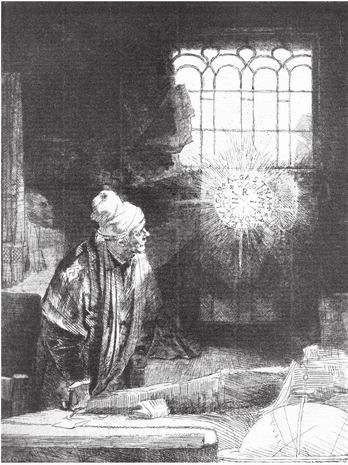
The theme of the “New Middle Ages” was one of the first to be raised by Novalis in 1799 in the work “Christianity or Europe” [1] in line with the romantic criticism of the Enlightenment project. Since then, this expression has been used repeatedly both in the Western and Russian tradition, and here it is enough to recall the “new Middle Ages” by Nikolai Berdyaev. At the end of the 20th century, this topic again becomes relevant in the framework of postmodern criticism of education. But it seems that it is unlikely that the critics of the enlightenment project as an excessively rational, expelling faith, hope and love from human life, expected that this criticism would become one of the reasons for the appearance of the “new Middle Ages” that causes the bend not only among skeptics, but also among the people of believers.
Back in 1999, in the book of Hieromonk Anatoly (Berestov) and Vladimir Reshetov, “Sorcerers in the Law” was said: “There is a massive attack on common sense, science, religion, and education - dark, ignorant, crafty forces preparing the age of total“ obscurantism ”.” And now, including the TV or opening any popular newspaper, we are faced with an advertisement for “hereditary sorceresses gaining at Ksenia Blessed”, “Orthodox psychics”, or from the NTV transfer that Moscow was saved exclusively by the prayers of the Moscow Matrona. And the recent mass psychosis regarding the “end of the world on the Mayan calendar” made us recall the eschatological expectations of the 15th century.
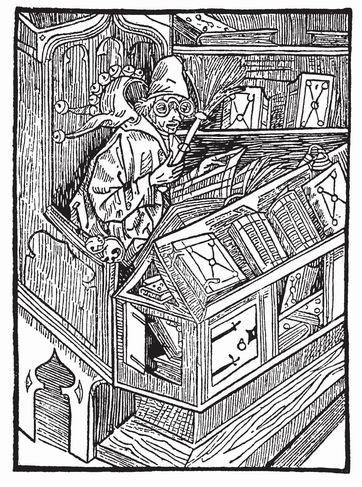
Of course, this is a "new Middle Ages" is a complicated phenomenon. The flowering of pseudoscience, which has covered both humanitarian knowledge (and it is enough to recall the “new chronology”) and the applied industries (for example, Petrik’s “projects”, “torsion generators” and much, much more), which we have been observed for at least a quarter of a century, has been taking place with the active support of the media. The stream of fantasies reinforced by the opinion of “experts” - academicians of exotic academies, “hereditary sorceresses” - pouring almost around the clock from television, destroys the remnants of critical thinking and is actually a commercial advertising of “magicians” and “scientists from a high road”, since nothing is sold as well as “secret knowledge”. But, speaking of the Middle Ages, we mean not only pseudoscience and magic, but also clericalization. Mentions of the onset of the Middle Ages (with different connotation) began to sound during the process of the Punk-Molebne case in the Cathedral of Christ the Savior. It was not the fact of the court that the “Pussy Riot” caused the greatest outrage, but the fact that the examination in the case of the group referred to the rules of the Ecumenical Councils: Trullsky (VII century E.) and Laudician (IV century AD), calling them “generally recognized rules and norms of behavior”. The rules of the Ecumenical Councils are now available for any Internet user, and from them you can learn about many other prohibitions, for example, about a ban on communication with Jews, for treatment with Jews and other rules that have not been observed for a long time. It would be unfair to argue that medieval norms are millets only to the Orthodox or Muslims. In his recent interview, the head of the Russian Pentecostal
“On a certain return in the Middle Ages” as a norm (in connection with the discussion of the law on the protection of the feelings of believers). The bishop of the Russian United Union of Christians of the Evangelical Belief Ryakhovsky said: “I understand that this may be presented with a certain return to the Middle Ages, but, on the other hand, this law will oblige to behave correctly, educates the culture of relations between representatives of different faiths and society. That is, this law will warn: do not go, do not do, do not need to step on the rake again. So, despite the fact that my colleagues in the Public Chamber narrowed the corridor of this law, I advocate for increasing responsibility so that a person was afraid to make stupidity, which he will regret the rest of his life ” [2] .
All of the foregoing allows us to say that the “new Middle Ages” is, of course, not a scientific term, but a metaphor. In modern Russian journalism, it is most often understood as a kind of discourse, within which the rejection of the diet takes place, and therefore, not only the clericalization of various spheres of society, but also paracacient knowledge becomes the necessary component of this discourse. The origins of this phenomenon are rooted in a global cultural crisis. In a situation of searching for a new paradigm, not only “prostes” were, but also political elites, who, trying to construct a new social reality, turned to “traditional values” and what is their basis - to the so -called traditional religions, and primarily to Christianity and Islam. This topic is not new. Gilbert Chesterton wrote in the novel “Migratory tavern”: “You see,” said Pamp, “Lord Ivivud was very interested. Recently, at a flower exhibition, he said that it was time to merge Christianity and Islam together. ” “And to call Khrislam,” Dalra said gloomily. ”
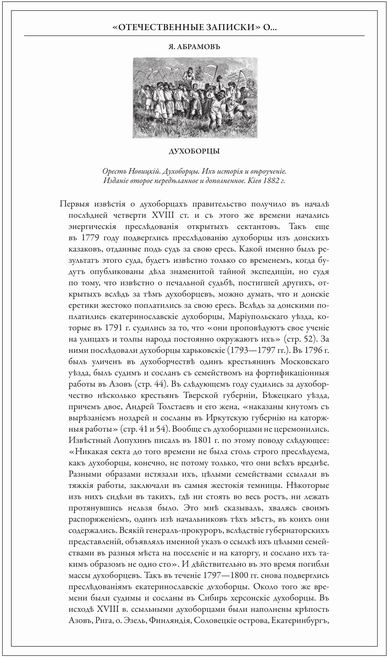
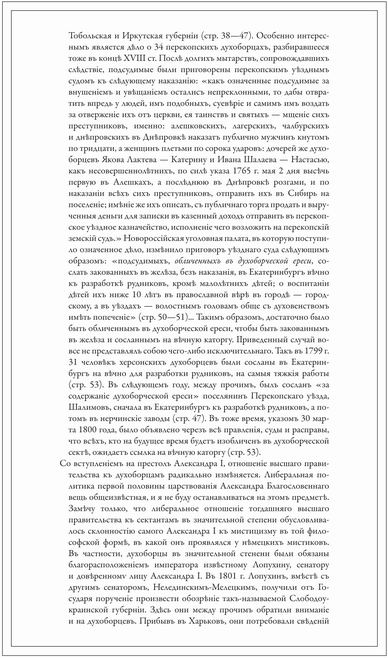
How can the standard of "pious behavior" on the country's scale be created? Obviously, with the help of a certain “disciplinary revolution”. In the history of Russia, attempts at religious and cultural discipline have been made more than once. You can start with the compilation of the “home building” by the confessor of Ivan the Terrible by Protopop Sylvester, but the first serious attempt was made by Tsar Alexei Mikhailovich, who began with the support of Patriarch Nikon, a disciplinary revolution that turned the country's religious and cultural life. Oddly enough, this may seem strange, but this work was continued by Emperor Peter I. The main feature of this revolution was religious discipline, which included the struggle with what we now call the "traditions of popular piety", that is, religious practitioners and superstitions. V. M. Zhivov notes: “Religious discipline can be carried out in various forms.
This is a coercion to the social adaptation of various groups that are knocked out of public regulation (vagabonds, wanderers, beggars, holy fools, etc.), and control over the regular visit of the church, confession and communion of the population belonging to the dominant church, and pastoral activities of the parish priest, not only the healing soul, but also reporting on the authorities about political and political and the authorities about political and political and Moral stagnation of parishioners, and observation of piety in the behavior of a neighbor ” [3] . Unlike Calvinist countries, where the disciplinary revolution was quite successful [4] , in Russia this attempt failed completely at the beginning of the 19th century. In the Soviet period of the practice of folk religious piety, due to the repressions that believers were subjected to, most often became non-intentional, and at the same time, among the churching, a new marginal culture of religious piety arose partially based on rural traditions (“grandmothers in scarves”), and partially gleaned from Russian literature. And after perestroika, the specific culture of the “procession circle” began to form, including a certain dress code with long skirts and, of course, shawls. On the Internet, we can find many resources that discuss the role of a scarf in the life of a good Christian, whole sites like a “site of a modest handkerchief” are dedicated to the scarf, and the clergymen say that the pious parishioners even create religious and anthropological concepts: “One girl says:“ I somehow ran into the temple without a scarf, something was to look quickly, our grandmother was to be fast She saw me:-Why are you without a handkerchief?-I say that she is not with me:-What are you ??? After the Makushechka, after all, the handkerchief holds it, and always go in a scarf, and at home ...-I say:-And how are men, they take off their hats ...-And she is not so, they are not so. At one Orthodox forum, I found a similar explanation of the Orthodox parishioner who appeals to the authority of the Vedas: “I heard that there are information in the Vedas that a man receives energy from the sun, sky, from above, and a woman, like a future mother, from mother-earth, so women wore wide skirts, and covered her head from the tributary of male energy. That is, they supported the natural influx of female energy from nature ” [6] . However, the support on the Vedic tradition is simply explained there: “The Vedas are not ancient Indian philosophy, the origins of this culture come from our ancestors, the ikduses only preserved for us this knowledge at the request of the Aryans to which we relate once” (spelling and punctuation were preserved). Of course, this pious demand was satisfied with a consistent commercial offer. Here is a list of goods from one of the sites: “For pilgrims and laity, the following range of goods is presented: a female long skirt, a pilgrim skirt (transformer), scarves, a scarf, rag handbags, a preserved belt, a baptismal set for children and adults, Orthodox gifts. All products are consecrated by the Orthodox Church. ” The link to the "consecration" of objects is important for buyers. Actually, only what is sanctified is the “right” Orthodox subject. When reading Orthodox women's forums and living magazines, constant references are also found on the traditions of Muslim piety, which is considered “correct”. By the way, and clothing models are often borrowed from Muslim sites.
Pilgrims became another popular manifestation of “religious piety”, and although Diveevo and Moscow shrines remain the main places of pilgrimage, geographical boundaries are constantly expanding, including almost all the old light. The pilgrimage tourism has become an extremely profitable industry, because many people believe that the journey to the shrine will allow them not only to get rid of sins (in Central Russia several years ago there was an idea that twenty pilgrimages will save a person from all sins, both former and future), but also to receive healing from diseases, as well as achieve the fulfillment of desires.
Church policy in the field of religious discipline does not differ in a sequence, because, on the one hand, attempts are made to increase the level of enlightenment of the clergy and laity, on the other hand, perfectly understanding the importance for believers of extra -church forms of salvation, which are most clearly manifested in the folk cult of the holy fools - the church makes attempts to “envelop” them. What was most clearly manifested in the canonization of the Matrona of Moscow, who blessed, according to popular belief, Stalin. Despite the constant attempts of religious discipline (for example, the ban on the baptism of adults without preliminary catechization), in general, the church prefers not to notice the free interpretation of Christian dogmas and practices among believers.
I must say that the “powers of this world” in Russia have repeatedly tried to create a certain standard of “religious piety”, which could become a certain ideal for citizens of the country, a model for their behavior. This is a rather complicated and extensive topic, and we will touch only its small aspect - monumental propaganda.
The transformation of Soviet Russia into Holy Rus' begins with the overthrow of some monuments and the installation of others, which forces the Leninist plan for monumental propaganda. Based on the notion of the didactic role of the images of the “heroes”, drawn in the chapter “The Extremeness of the Assignment of Sciences using Pictures” of the Utopia Tommaso Campanella [7] , this plan began to implement on April 14, 1918, when the decree of the Council of People's Commissars “On the Removing of Monuments, Monitoring of the Kings and their Services, and the development of projects of the Mostimonies of the Russian Socialist revolution. " Such sculptors such as I. D. Shadr, A. T. Matveev and, of course, S. T. Konenkov, who left the memories of the implementation of this plan [8] , in which he gives the list of those who should have been erected: revolutionaries from Spartak to Volodarsky, Russian writers from Radievsky to Dostoevsky and Tolstoy, Russian scientists and artists, artists and artists and artists took part in the creation of these monuments. Composers. Of course, in post -Soviet Russia they did not accept any large -scale plan of monumental propaganda, but we can make a small list of religious figures and saints who most often put monuments in the past one and a half decades. The first such monuments began to erect in the early 1990s by the holy Equal-to-the-Apostles Cyril and Methodius, the creators of Slavic writing. The first monument was erected in Murmansk, where the day of Slavic writing and culture was first held, and then on Slavic Square in Moscow, in Lipetsk, Cherkessk, Khanty-Mansiysk, Vladivostok and others. I would like to note that these saints are in Europe, whose heavenly patrons they were declared in the encyclical of Pope Pavel II “Slavorum Apostoli”, which focuses on the ecumenical activity of the Solun brothers who sought to overcome the disagreements that arose between Rome and Constantinople on the issue of liturgical languages. The impetus for the installation of the first monument in 1990, in addition to the day of Slavic writing, was the celebration of the millennium of the baptism of Rus' in 1988. It became a turning point in the life of the Orthodox churches in the USSR, as the largest of them - the Russian Orthodox Church of the Moscow Patriarchate (ROC MP), as well as the Old Believer churches: the Russian Orthodox Old Believers 'Church, the Russian ancient Orthodox Church, as well as the Old Believers' communities of the Pomeranian and chapel consent, etc. The revival of church life and the return of church property were perceived As an integral feature of democratization, as a real embodiment of the principles of freedom of religion and freedom of conscience. Religious discourse was perceived as part of the liberal-democratic discourse. And it is no accident that the appeal to the Soviet government with a proposal to return the church all temples in the USSR was signed in 1987 not only by Russian nationalists, but also by supporters of democratic reforms. The Local Council of the ROC MP 1988 determined the further development of church and state relations in the USSR and the Russian Federation. The charter was adopted at the cathedral, which changed the “Regulation on the management of the Russian Orthodox Church”, which it has been guided since 1945. After the cathedral, there was a sharp increase in the number of existing churches and monasteries. But this also had the opposite side: the priests supplied people who did not know church dogma and worship. And this has become one of the characteristic features of the church life of the 1990s. After the adoption of the Law of the Russian Federation on freedom of religion in the country in 1990, there was a sharp surge in the number of parishioners during 1990-1994. Mass baptisms became a characteristic feature of the first half of the 1990s. Some of these people came to church because they felt a desire to become members of the Christian community, others because they considered Christianity part of their cultural tradition. Not all of them became members of the Russian Orthodox Church, since the activities of other Orthodox churches, such as the Russian Orthodox Church abroad (ROCZ) and the True Orthodox Church (IPC), were legalized on the territory of the Russian Federation. Many parishioners from the midst of educated youth came at that time to the Old Believers Churches. For most of these people, Cyril and Methodius were those who gave the Slavic peoples the freedom not only to pray, but also to write in their native language, and therefore the popular tradition, trying to make them “their own”, including in the nationalist discourse, ascribes the Slavic origin to the brothers. But modern nationalists do not dwell on this, paraphrasing the words of the Chernorizman of the brave about the holiness of the Slavic writing “The same Slovenian Pisman Svyatoisha is honest. I have a blessing my husband, and I have eaten, and the Grishkaa Elini Grits ”(“ The same Slavic letters are holy and honest. The fact that the holy husband created them, and the Greek - the Greeks are filthy ”) [9] , they go further and declare the“ holiness of the Russian language ”:“ The Russian language is divine. Well, how can you translate into English "God, have mercy on me? Ugh!" [10] .
The most important part of the state discourse in Russia was the image of the Apostle Andrew the First -Called. The churches consecrated in the name of the Apostle Andrei the First -Called appear in Rus' shortly after the beginning of Christianization: the Andreevsky Monastery, founded by the youngest son of Yaroslav the Wise Vsevolod in honor of his heavenly cartridge (the baptismal name of Vsevolod was Andrei) in 1086 in Kyiv; The church, built in 1089 in Pereslavl. Some researchers believe that the first Andreevsky Church in Kyiv was built by the Grand Duke Vladimir Svyatoslavovich and was rebuilt in the XIII and XVIII centuries. В «Повести временных лет» легенда о «хожении» апостола Андрея Первозванного, посетившего и благословившего русские земли от Киева до Новгорода, идет сразу после рассказа о сотворении мира и расселении славян, а после нее следует обширное рассуждение о законе и правовом устройстве Руси. Это расположение «хожения» достаточно точно отражает его значение в истории древнерусской культуры. Собственно говоря, тут идет речь о создании «Святой Руси», которая была будто бы «крещена» еще в апостольские времена [11] . Следующий этап развития образа апостола Андрея приходится на времена правления Ивана Грозного, когда составлялась «Степенная книга царского родословия» (1560—1563), в которую были включены дополняющие «Повесть временных лет» предания об апостольской проповеди в земле Русской. И в частности рассказ о том, что в Херсонесе сохранились отпечатки стоп Андрея Первозванного на камне: наполнявшая их дождевая или морская вода становилась целебной [12] . Любопытно, что эта легенда вновь возродилась совсем недавно: «На Украине верующие отправляются в паломничество на мыс Херсонес.. На берегу моря у развалин оборонительной стены Херсонеса прихожанин местного православного храма увидел на куске песчаника отпечаток ноги — в породе действительно четко видны ступня и пальцы. Находку показали священнику, и с тех пор отец Сергий уверен, что этот след оставил сам апостол Андрей Первозванный, а камень, возможно, — одна из величайших святынь христианства. Он утверждает, что "Масса чудес произошла за последнее время. Это и исцеление больного гемофилией с открытым кровотечением, и исцеление человека с плохим зрением — он стал видеть"» [13] .
Следующий виток популярности Андрея Первозванного пришелся на вторую половину XVII столетия, когда власти вновь решили произвести дисциплинарную революцию, полностью изменившую жизнь страны. Эта революция, начатая царем Алексеем Михайловичем Романовым, была завершена его сыном императором Петром I. Именно Петр придал новое значение культу Андрея Первозванного, сместив акцент на то, что «землю русскую светом Христова учения просветил» [надпись, сделанная Петром I на эскизе Андреевского флага] от Украины до прибалтийских земель. Предположительно в 1698 году император учредил орден Андрея Первозванного. До 1917 года он являлся высшим орденом Российской империи, которым награждались все рожденные в императорской семье мальчики и князья императорской крови.
Возрождение культа Андрея Первозванного начинается в год празднования Тысячелетия крещения Руси, когда орден Андрея Первозванного становится высшим орденом Русской православной церкви. На государственном уровне культ Андрея Первозванного возрождается через десять лет, в 1998 году, когда Указом Президента РФ орден был восстановлен как высшая государственная награда России. Первыми кавалерами ордена стали академик Д. С. Лихачев, конструктор стрелкового оружия М. Т. Калашников, президент Казахстана Нурсултан Назарбаев и патриарх Алексий II. С этого момента начинается и строительство новых церквей, освященных во имя Андрея Первозванного. В 1992 году был создан Фонд Святого Всехвального апостола Андрея Первозванного — общественная организация со штаб-квартирой в Москве. Председателем попечительского совета фонда является президент ОАО «Российские железные дороги» Владимир Якунин. Этот фонд ежегодно доставляет из Иерусалима Благодатный огонь на Пасху. Он же организовал осенью 2011 года провоз по городам России пояса Пресвятой Богородицы. Согласно официальному сайту он «осуществляет проекты, направленные на формирование в обществе позитивного отношения к традиционным, скрепляющим остовам России — государству, церкви, армии», «ратует за пробуждение в человеке духовных основ, прочно связанных с историей и культурой народа» [14] . Отсылки к патриотически-государственному дискурсу есть и в других проектах, связанных с именем апостола: имя Андрея Первозванного носит Кадетский морской корпус в Калининградской области, имеющий государственный правовой статус кадетской школы-интерната. Главной целью КШИ «АПКМК» (как это заявлено на официальном сайте) объявляется «интеллектуальное, культурное, физическое и нравственное развитие подростков, формирование у них системы патриотических ценностей, создание основ для подготовки калининградцев к служению Отечеству». В Российской Федерации проводятся и детские военно-патриотические игры, посвященные апостолу Андрею, так, Архангельская епархия в середине декабря 2012 года провела историческую игру «Апостол Андрей Первозванный». По словам организаторов, главная задача проекта — ознакомление молодых людей со Священной историей, апостольским служением святого Андрея Первозванного и героическими страницами военной истории; формирование духовно-нравственных качеств личности [15] . В Калужской области действует скаутская организация — «дружина юных разведчиков апостола Андрея Первозванного», деятельностью которой руководит «стажер-инструктор по Русскому Рукопашному Бою» [16] . Последний пример говорит о том, что апостольский образ начал активно использоваться и в маргинальной среде. Самодеятельные церковные археологи-казаки утверждают, что занимаются поиском крестов, которые устанавливал апостол, будучи уверены, что «по всему маршруту своего движения он не только проповедовал веру в Иисуса Христа, но и устанавливал на святых местах кресты каменные. <... > Для окончательного решения вопроса о принятии христианства древними славянами непосредственно от святых апостолов, необходимо было предоставить хоть какие-нибудь материальные свидетельства о пребывании Андрея Первозванного на территории Российского государства» [17] .
Все эти религиозно-патриотические мифы об Андрее Первозванном вписываются в набравшую за последние 20 лет популярность фолк-хистори, но эта «новая история» может быть не так уж безопасна. Как отмечает в статье «Параволаны постмодернизма» Алексей Муравьев: «В условиях кризиса экспертной культуры, недостаточности экспертных инстанций в открытое информационное пространство попадают различные мифы, источники которых следует искать в туманных понятиях исторических беллетристов. Попадая в массы, эти мифы уже становятся обоснованием проектов вроде косплейных игр, которые смыкаются с националистическими кружками "русских единоборств", а затем потихоньку начинают дрейфовать в сторону создания погромных бригад» [18] .
Не избежал этого и образ Александра Невского, эволюция которого в русской и советской культуре была тщательно исследована в монографии Фритьофа Шенка [19] . Активно эксплуатировавшийся на протяжении столетий в религиозном, имперском и государственном дискурсе, он активно задействован и сейчас. Министр культуры В. Р. Мединский в книге «Особенности национального пиара. PRавдивая история Руси от Рюрика до Петра» упоминает Александра Невского наряду с «другими устойчивыми позитивными национальными стереотипами» [20] . Слова министра подтверждаются появлением организаций, подобных «Добровольной дружине по содействию охране общественного порядка и предупреждению правонарушений имени Александра Невского» [21] . В 2010 году российские власти вспомнили об ордене Александра Невского, который по новоучрежденному статуcу стал общегражданской наградой за высокие заслуги перед Отечеством. Последним кавалером этого ордена «за высокую духовно-нравственную позицию и большой личный вклад в осуществление социально-образовательной и миссионерской деятельности» (Указ Президента РФ от 30 декабря 2012 г.) стал митрополит Санкт-Петербургский и Ладожский Владимир (Котляров).
План монументальной пропаганды духовных ценностей не мог не затронуть и семейные отношения, что ярко проявилось в новом культе святых Петра и Февронии Муромских. Бездетная пара, история жизни и смерти которой удивительно романтична, была объявлена покровительницей семьи. Памятники им устанавливаются с 2009 года в рамках Общенациональной программы «В кругу семьи», которая была создана в 2004 году по благословению патриарха Алексия II. Предполагается, что памятники должны стать частью нового церковно-гражданского свадебного ритуала и способствовать формированию «положительного образа семейных ценностей, верных и целомудренных отношений, любви и преданности в браке, рождению и воспитанию детей в духе любви к Родине» [22] . Установки памятников приурочиваются к празднованию общероссийского Дня семьи, любви и верности (8 июля). Оргкомитет праздника возглавляла супруга президента РФ Светлана Медведева. Первый памятник был установлен в 2008 году в Муроме, в последующие годы в России было установлено не менее двадцати памятников [23] .
Неизвестно, насколько посещение молодоженами этих памятников способствует укреплению семейных уз, но, без сомнения, в некоторых городах они действительно стали частью свадебных ритуалов. Так, в Абакане молодожены приходят к этому памятнику после того, как вешают на металлический дуб замок. Сочетание в свадебной обрядности ритуалов разного происхождения достаточно типично. Автору удалось увидеть в Чернигове, как вышедшая из собора после венчания пара отправилась к дереву с раздвоенным стволом, в середину которого невеста положила свой букет, после чего молодые обошли дерево несколько раз. После исполнения этого древнего магического ритуала плодородия они отправились к военному мемориалу. Об эффективности монументальной пропаганды достоверных сведений нет, но у властей есть иной путь воздействия на общество. Новый Федеральный закон «Об образовании в Российской Федерации» [24] предоставляет религиозным организациям возможность влиять на содержание учебного процесса в школах и вузах. Согласно закону экспертизе «в централизованной религиозной организации» подлежат духовно-нравственные образовательные программы «на предмет соответствия их содержания вероучению, историческим и культурным традициям этой централизованной религиозной организации» (статья 87, пункт 3). В законе не уточняется, о каких именно религиозных организациях идет речь и будут ли, например, мусульмане-сунниты решать вопрос о приемлемости описания вероучительных практик мусульман-шиитов и соответствия их практикам суннитов.
Практики религиозного благочестия в современной России весьма пестры и, конечно же, не ограничиваются практиками, бытующими среди православных. В еще большей степени за последние годы изменилась жизнь в мусульманских регионах Российской Федерации, и в частности на Кавказе, где реанимируются нормы обычного права и грубо нарушаются основные права человека, и в частности право на жизнь.
Казалось бы, «новое средневековье», о котором писал Новалис, уже наступило, но это не так. Мы являемся свидетелями появления симулякра средневековья, порожденного странной смесью постмодернистских рассуждений о «постсекулярном мире», паранаучных представлений, магических верований и идеологических конструктов, симулирующих образ «Святой Руси».

[1] Die Christenheit oder Europa // Novalis. Schriften. Die Werke Friedrich von Hardenbergs. Band 3. Stuttgart, 1968. S. 507—525.
[2] http://vz.ru/politics/2012/10/24/604021.html
[3] См.: Живов В. М. Дисциплинарная революция и борьба с суеверием в России XVIII века: провалы и их последствия // Антропология революции. Sat. статей по материалам XVI Банных чтений журнала «Новое литературное обозрение» (Москва, 27—29 марта 2008 года). Ed. И. Прохоровой, А. Дмитриева, И. Кукулина, М. Майофис. М.: Новое литературное обозрение, 2009. С. 327—360.
[4] Gorski Ph. The Disciplinary Revolution: Calvinism and the Rise of the State in Early Modern Europe/ University of Chicago Press Press Information: Publication Date: 2003.
[5] http://azbyka.ru/forum/blog.php?b=1244
[6] http://pgfouine.info/book281/page2.html
[7] Кампанелла Т. Город Солнца. М., Издательство Академии наук СССР, 1947. С. 35.
[8] Коненков С. Т. Слово к молодым. М.: Молодая гвардия, 1958.
[9] Цит. According to ed. Черноризец Храбър. О писменехъ: Критическо издание / Изгот. Алда Джамбелука-Коссова. София, 1980. С. 138.
[10] Гогин С. Изборский клуб: Back in the USSR? // Ежедневный журнал. http://www.ej.ru/?a=note&id=12560
[11] Указание на такое крещение находят в словах летописца: «И взойдя на горы эти, благословил их, и поставил крест, и помолился Богу, и сошел с горы этой, где впоследствии будет Киев, и пошел вверх по Днепру. И пришел к славянам, где нынче стоит Новгород». Повесть временных лет. Ed. В. П. Адриановой-Перец. In 2 volumes. M.; Л., 1950. Т. 1. С. 208.
[12] Турилов А. А. Древнейшая история славян и Руси в «Книге степенной царского родословия» // Славяне и их соседи. М., 1996. Вып. 15. С. 50.
[13] [ http://www.vesti.ru/doc.html?id=771044
[14] http://www.fap.ru/about.php
[15] http://www.arh-eparhia.ru/news/?ELEMENT_ID=29922
[16] http://www.rukopashniki.ru/contacts/
[17] Сайт «Казачья община»: http://www.beloedelo.h1.ru/
[18] http://polit.ru/article/2012/12/07/paravolan/
[19] Шенк Ф. Б. Александр Невский в русской культурной памяти: святой, правитель, национальный герой. М., НЛО, 2007.
[20] Мединский В. Р. Особенности национального пиара. РИавдивая история Руси от Рюрика до Петра. М.: ОЛМА Медиа Групп, 2010. С. 614.
[21] http://www.rusprofile.ru/id/1544801
[22] http://rusk.ru/newsdata.php?idar=183110
[23] http://www.petr-fevronia.ru/category/22
[24] Федеральный закон от 29.12.2012 № 273-ФЗ «Об образовании в Российской Федерации».