
Translated material
Putin provided Department of Russian citizenship
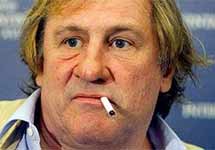
President Vladimir Putin signed a decree on the admission of French actor Gerard Depardieu to Russian citizenship. The document is published on the Kremlin website. The text indicates that the actor’s statement is satisfied.
On December 20, Putin said that he was ready to provide Depardieu citizenship. “If Gerard really wants to have a residence permit or a Russian passport, we will assume that this is a resolved issue,” the president said at a press conference in Moscow. At the same time, he emphasized that he hopes that any solution in this matter will not affect the very good traditional relations of Russia with France.
Depardieu decided to leave France due to a 75 percent income tax introduced by the country's president, socialist Francois Hollande. Such an increase in taxes for those whose income exceeds one million euros per year was one of the main points of the Olland election campaign. During the election company, Depardieu supported the current president Nicolas Sarkozy.
The decision of the department on emigration caused criticism from the Prime Minister of France Jean-Mark Airo. He called the decision "miserable and nonpatriotic." The actor responded to the prime minister with a letter in which he emphasized that the concept of "patriotism" is outdated and he considers himself a citizen of the world, not France, and will not allow himself to insult.
On December 19, the Le Monde newspaper announced that recently, Depardieu has been considering options for moving to Belgium, Montenegro or Russia. In the company of close friends, the publication claimed, the actor joked that he had a house in Belgium, in Montenegro - friends and business, and from Russia he was "sent by Putin's passport."
On December 29, the Constitutional Council of France canceled the "rich man", included in the law on the budget for 2013. According to the Council, the tax "does not observe equality before state fees." The main supervisory authority of France noted that the new tax is checked on the income of one person, while income taxes in France should take into account the earnings of the whole family. As the Le Monde emphasizes, not the tax itself is recognized not by the constitution, but by the mechanism of its calculation.
On the same day, Airo released the communique, saying that "the government will prepare a new document taking into account the decision of the Constitutional Council." In turn, the Minister of Economics of France Pierre Moskovichi said that the government did not refuse the principle of introduction of a tax of 75 percent. "The new initiative will be presented in 2013 and will act in relation to income received in 2013 and 2014," the minister said.
The 75 percent extraordinary tax should have been valid in an exceptional manner in the next two years. It was more symbolic than an almost effective measure. In the case of its introduction, this tax would pay about 1,500 French. The average amount of tax per person would be 140 thousand euros per year. The tax caused a fierce polemic, it was disputed in the Constitutional Council of the right party "Union for the People's Movement".
The opposition stated that this measure would force rich Frenchmen to become tax immigrants. After the introduction of the tax, the richest citizen of France, the head of the LMVH company, Bernard Arno decided to become a subject of Belgium and submitted an appropriate statement to the parliamentary commission of this country on naturalization. The emigration was also announced by other wealthy French.
In May, Hollande defeated Sarkozy in the presidential election with an advantage of slightly more than one percent of the vote. The turnout in the elections was extremely high for France and amounted to 81.25 percent.