
Translated material
When will cars go without drivers?
Further, among the automakers in the production of an autonomous machine, Toyota advanced. At the exhibition in Nevada, she introduced the Lexus machine, which has a whole range of sensors and sensors that allow it to follow the GPS marchrut, navigate in the flow of machines, slow down in case of danger, go around the pit, revenge routes due to traffic jams, etc.
The Toyota car also has a built -in radar and several video cameras that allow onboard systems to observe the space around the machine - just as the ordinary driver does, focusing on mirrors.
"We are working on a machine that will not fall into unforeseen situations. Zero accident on the roads is our ultimate goal," said the representative of Toyota at the presentation of his new items.
The presented Lexus LS car not only goes on its own, but also displays information about why it makes this or that decision on the screen of the on -board computer. This was done so that in the event of an emergency, the driver can immediately take control of the car on himself.
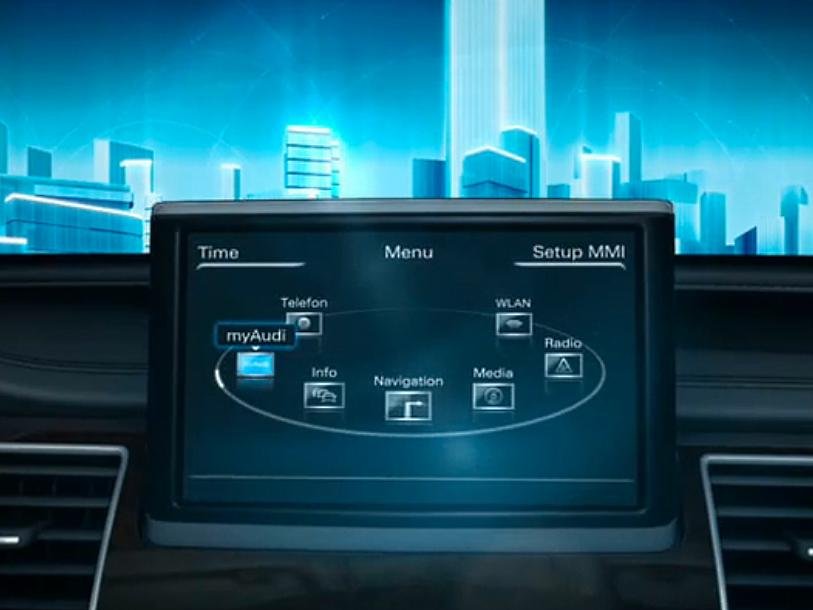
The German Audi also connected to the trend. According to the Popular Science publication, the masterpiece of the German Audi A7 automobile industry can park on his own, drive up to the owner after the "order" of a smartphone, leave the parking lot and go along the highway. The car also knows how to competently, without straining the driver, move in traffic jams. It is believed that in this car it is safe to move at speeds up to 60 km/h.
Audi says that so far the development of technology is hindered by obsolete legislation: similar machines in the United States are allowed only in Nevada and California.
It is worth noting that Volvo intends to release its first self -governing car in 2014. The company announced this even earlier, before the exhibition.
The technology of autonomous machines is also interested in IT companies, which in the future expect to start selling their technologies to automakers. Technologies that allow the car to drive without the participation of the driver, in particular, the company Glympse. She is already working with Ford.
Chrysler has a smart navigation. The on-board system of the company will manage them, allow the user to sit on the Internet, listen to music from the Internet radio, exchange messages on social networks, etc.
Ricky Khudi, the head of the Audi unit engaged in electronics, said in an interview with Autoweek that 90% of the innovations that his concern are engaged in electronics are involved today. Cars become corny "smarter". The main thing that the company is working on is the technology of self -parking of the car, as well as systems that help to comfortably move in traffic jams. Audi, by the way, became the first auto company to get a license to sell an autonomous software in Nevada. The same company was the first to integrate data from the Google Street View into its navigation system. In the very near future, expensive brand models will receive LTE modules for constant communication with the Internet.
Hudie allocated five main trends in the field of automotive industry for the coming years. Among them: autonomous cars that can move without a driver; advanced interfaces that help a person easily and simply "communicate" with the machine; Information and entertainment technologies for demonstrating digital content (Audi begins to equip cars with 3D displays and makes acoustic systems with 23 speakers and a capacity of 1400 W); advanced, controlled by a computer, headlights included instantly and break through the fog; Ultrasonic radars and night vision devices.
The terms when cars are massively learned to drive themselves, automakers do not call automakers. Audi President in the USA Scott Keo says this will happen soon. “As soon as journalists are trumpeting about something on every corner, it quickly becomes a fact,” he says.