
Translated material
The Canadian Indians outraged by the government blocked transport highways
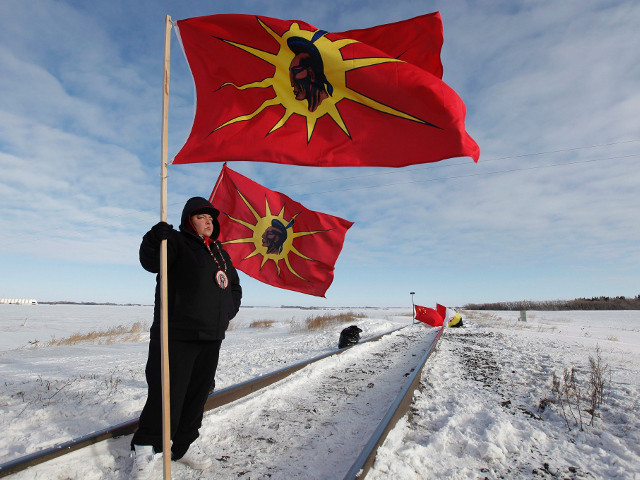
Thousands of Canadian Indians held a national day of action, protesting against violation of their rights by the government, headed by Prime Minister Stephen Harper.
In particular, they paralyzed for some time the movement on the Four -lane bridge "Ambassador" across the Detroit River, which connects Windsor (Ontario Province) with the car capital of the United States - Detroit.
This bridge, as ITAR -TASS reports, is considered the most loaded border crossing in North America: 2.7 million trucks follow in both directions annually through it, transporting goods totaling $ 120 billion - this is almost a quarter of the total trade between Canada and the United States.
The Indians also blocked the movement on the bridge in the city of Miramichi (New Bransuik Province) and the railway tracks in the vicinity of Winnipg (Province of Manitoba), held demonstrations in dozens of cities, including the British consulate in Toronto.
According to the organizers, thereby they want to attract the attention of not only the government, but all the Canadians to the Indian movement "no - inaction" that arose in October last year.
“We do not set ourselves with the goal of blocking the main transport highways of Canada,” said the activist of the movement of Lauren Garvi -chiple. “We hold protests in places where we will be noticeable and where we will be heard.”
The participants in the movement require the cancellation of the amendments to the laws adopted in December initiative, simplifying the conditions for the sale or lease of land in reservations, as well as weakening environmental control over many lakes and rivers.
The Indians accuse Harper’s office of that these amendments were proposed without consulting with them, that Ottawa violates the contracts signed in the second half of the 19th and early 20th centuries with tribes and does not do much to improve living conditions in reservations.
The activists of the movement have already forced Harper to hold a meeting on January 11 from the delegations of the leaders of the first nations. So in Canada calls about 600 Indian tribes and Inuits Eskimos, the total number of which exceeds 1.3 million people.
According to the results of this meeting, the government promised to "pay more attention" to the problems of indigenous peoples and "carry out real measures to improve living conditions in Indian communities." Two days later, Ottawa announced that she would allocate $ 331 million for two years to improve water supply systems in a number of reservations.
However, Harper is not going to cancel the amendments in December. As said on Wednesday, January 16, his spokeswoman Andrew McDugal, "the government does not plan to review them."
At the same time, the Finance Minister James Flartorty made it clear that it is now "extremely undesirable" so that the protests of the Indians have a negative impact on the country's economy.