
Translated material
No need to angry Gosduru
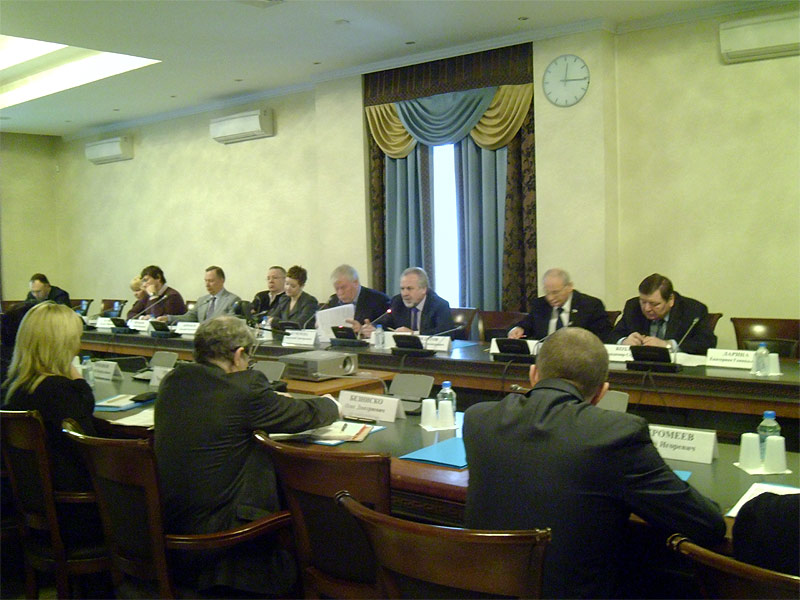
On January 24, a round table was held in the Public Chamber of the Russian Federation on the topic "Professional and ethical aspects of illumination of crimes in the media." The audience said that the media should self -regulate in order to avoid restrictions on their activities from above.
Pavel Gusev, Chairman of the OP Commission on the support of the media and the general director of the MK Publishing House, was the first and immediately criticized the State Duma deputies who do not miss the opportunity to amend the media law, as a result of which he begins to be prohibitive, as this increases their fame and provides PR. According to him, there was even talk in parliament about the introduction of interest restrictions on the ratio of positive and negative information.
To counteract this trend, Gusev offers the media himself to engage in self -regulation. “Ethics, Code, Charter of Journalists - this is the fact that it can save freedom of speech and limit the deputy“ stunning ”initiatives in the media,” he said.
However, what exactly the media should self -regulate, the opinions of the KS participants dispersed. Gusev himself presented the main claim to too much desire to take a comment from relatives of people who committed a crime, or victims of various disasters.
This criticism was supported by a member of the Public Chamber and the head of the Human Rights Organization "Resistance" Olga Kostina. She is outraged by the show of children in the media in the event of some incident with them, which, according to her, is prohibited in Europe under the threat of criminal prosecution. In addition, it is indignant about the non -compliance of the boundaries of personal information by many journalists. For example, she considers it unacceptable that journalists can literally hunt for a person who does not want to speak with them: “There is no this in the country of the world, this is an unthinkable story, this is an occasion for an official investigation, and we get away with our hands.”
The chairman of the Commission of the Public Chamber of the Russian Federation on the safety problems of citizens Anatoly Kucheren went on. He gave a list of phrases that are often used in the media and stated that they can give rise to incorrect perception by citizens of events. So he does not like that the phrase “fight against corruption” is often found with “personnel rearrangements”. In the Kucheins eyes, it is not always true to combine these two phenomena, and these “slangs” form a wrong attitude among citizens.
In addition to the “dismemberment”, the deputy of the state Boris Reznik in the media is worried that Grandfather Hassan is praised, and in relation to power the phrase “bloody regime” can be used. He also remembered Vladimir Pozner, whose behavior does not approve, although he did not support the request for him: “When a journalist of this level calls the State Duma“ State Duma ”, I think this is wrong.” Reznik immediately recalled the 1994 Moscow Charter, which, unfortunately, does not work.
In the latter, he was supported by the president of the Vowel Power Protection Fund, Alexei Simonov: “They did not remember the charter after its signing, because it interferes with working.”
As a result, it was decided to create an expert group that should take care of the ethical regulation of the media. And to reconsider the charter of journalists and, possibly, supplement. And in the end, according to Pavel Gusev, it should be made mandatory for signing by all graduates of journalistic faculties.